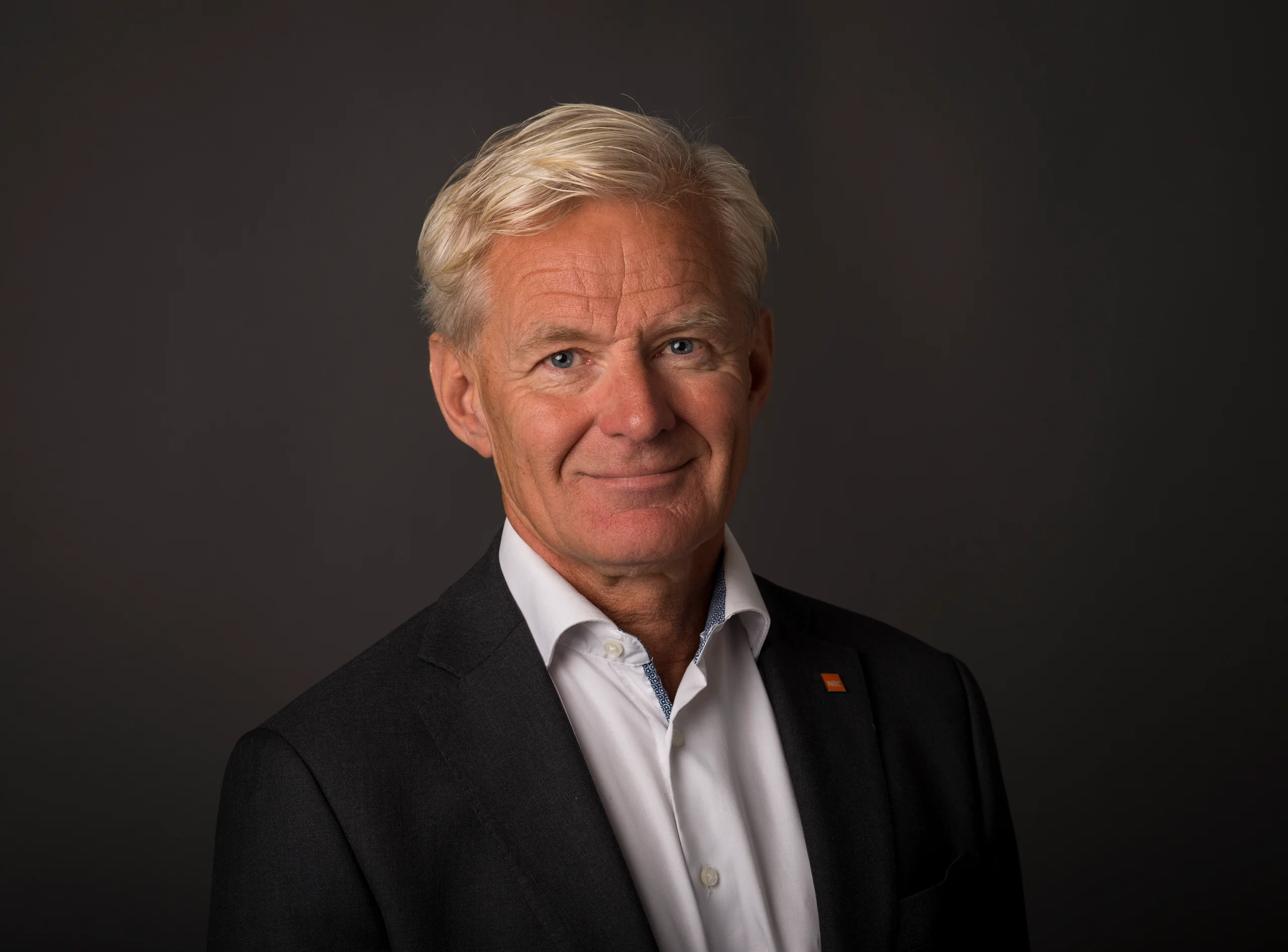
Jan Egeland
 Norway
Diplomat•humanitarian leader•political scientist
Birthday
September 12, 1957
Birth Sign
Virgo
Birthplace
Stavanger, Norway
Age
69 years old
Height
5 ft 9 in (175 cm)
About
Jan Egeland is a Norwegian diplomat and humanitarian leader who has spent decades at the center of global crisis response. Since 2013 he has served as Secretary General of the Norwegian Refugee Council, one of the world's largest organizations dedicated to protecting and assisting displaced people. His work there has made him a frequent voice in international media, calling attention to emergencies from Sudan to Afghanistan.
Before the NRC, Egeland held some of the most senior humanitarian posts on the planet. As UN Undersecretary-General for Humanitarian Affairs from 2003 to 2006, he coordinated the global response to the Indian Ocean tsunami, the Darfur crisis, and wars in Iraq and Afghanistan. He also led Human Rights Watch's Europe division and served as State Secretary in Norway's Ministry of Foreign Affairs.
Today Egeland remains a tireless advocate for civilians caught in conflict. In 2026 alone he has warned of famine in Sudan, mass displacement in the Middle East, and the plight of Afghan migrants in Iran. His authority comes not from celebrity but from decades of on-the-ground experience and a reputation for blunt, data-driven advocacy.
Early Life & Background
Jan Egeland grew up in Stavanger, a coastal city in southwestern Norway shaped by the oil industry. His family was politically engaged, and politics was a dinner-table topic from an early age. That environment steered him toward the University of Oslo, where he studied political science and international relations, earning his cand.polit. degree.
His first professional steps were in research. During the 1980s he worked at the Norwegian Institute of International Affairs (NUPI), eventually becoming its director. That role put him in contact with policymakers and academics, but his real entry into public life came through the Labour Party. In 1990 he was appointed State Secretary in the Norwegian Ministry of Foreign Affairs, a post he held until 1997.
In that position Egeland helped shape Norway's foreign policy and aid strategies. He worked on the early stages of what would become the Oslo Accords, gaining experience in high-stakes diplomacy. But his time in government also exposed him to the limits of official channels, pushing him toward human rights work. In 1997 he left the ministry to join Human Rights Watch, first as deputy director and then as Europe director.
Career Growth
Egeland's breakthrough came in 2003 when UN Secretary-General Kofi Annan appointed him Undersecretary-General for Humanitarian Affairs and Emergency Relief Coordinator. The role put him in charge of global emergency response, and he quickly became the public face of humanitarian coordination. His leadership during the 2004 Indian Ocean tsunami was widely praised for mobilizing rapid international aid and reforming how the UN handled disasters.
He also took on crises that were less visible. In Darfur he pushed for humanitarian access despite government obstruction, and he repeatedly called out the international community for failing to protect civilians. His tenure ended in 2006, but the experience shaped his approach for years to come.
Back in Norway, Egeland led the Norwegian Red Cross from 2006 to 2013, then took the helm at the Norwegian Refugee Council. Under his leadership the NRC has grown into a global force, operating in dozens of countries with around 14,000 staff. He has become a leading voice on refugee issues, frequently testifying before parliaments and writing op-eds. In 2026 he continues to lead the NRC, issuing urgent warnings about famine in Sudan and the effects of the Middle East conflict.
Career Timeline
Public Image & Style
In the media, Jan Egeland comes across as serious, authoritative, and deeply compassionate. He speaks in urgent, data-driven terms, often citing specific numbers of displaced people or funding shortfalls. His style is less about emotional appeal and more about making the case that action is both necessary and possible.
On social media, particularly X (Twitter) under @NRC_Egeland, he posts operational updates from NRC missions and calls on world leaders to act. He appears frequently on BBC, CNN, Al Jazeera, and in outlets like The Economist, where his opinions carry weight.
He is not a celebrity in the entertainment sense, but among policymakers, academics, and humanitarian workers he commands deep respect. His credibility comes from having been in the field, from the tsunami to Darfur, and from a record of speaking truth to power even when it is uncomfortable.
Fame & Fandom (iFAMOUS Rankings)
Jan Egeland commands a global stage defined by sober urgency rather than adoration. His audience consists of policymakers, aid workers, and citizens tracking the fallout of wars in Sudan, Afghanistan, and Iran, not a community seeking celebrity connection or ritualistic engagement. There is no organized fanbase with a specific name, nor are there viral campaigns or fan-funded projects driving his visibility. The world knows him for his data-driven warnings about displacement and his advocacy for utilizing Norway's sovereign wealth fund to support humanitarian crises. While he inspires deep professional respect within the sector, this translates to policy influence rather than pop culture fandom. iFANN has evaluated his public footprint and determined that he does not currently hold a placement in the Global Top 1,000 rankings. Consequently, no numeric rank or score is assigned to his current fame level.
Interesting Facts and Legends
Jan Egeland navigates international diplomacy with fluency in Norwegian, English, and German, a skill set that smooths his path across European and global platforms. Before ascending to senior humanitarian roles, he briefly served in the Norwegian Parliament before moving to the Ministry of Foreign Affairs, a detail often omitted from standard biographies. He balances high-stakes leadership with academia, teaching at the University of Stavanger while running the Norwegian Refugee Council. In 2007, he received the Theodor Heuss Prize, a German award recognizing democratic and humanitarian contributions. Egeland also contributes regularly to The Economist, analyzing peace prospects in the Middle East. A lesser-known but significant stance involves his vocal advocacy for using Norway's sovereign wealth fund to boost humanitarian aid, a position that has sparked intense debate in his home country. Recent years have seen him issue stark warnings regarding the situation in Afghanistan, noting how the world turned its back on civilians five years after the Taliban takeover. He further highlighted that four million Afghan migrants were being forgotten amidst conflict in Iran. In mid-2026, he warned that a return to war in Iran would be utterly reckless, predicting devastation for millions of refugees.
Notable Quotes
“Millions are fleeing and aid systems are being pushed beyond the breaking point.”
“We must use the wealth fund to help civilians suffering from the consequences of war.”
“A return to war in Iran would be utterly reckless.”
“The United States-Israel war on Iran is driving mass displacement.”
Family & Personal Life
Jan Egeland is married to Anne Kristin Sydnes, and the couple has been together for decades. Sydnes has her own background in politics and development work, and she has been a steady presence alongside Egeland's demanding career. They keep their family life deliberately private, so details about their children are scarce.
The couple lives in Norway, where Egeland's work with the NRC often takes him abroad for weeks at a time. Despite the travel, they have maintained a stable home life. Egeland has spoken in interviews about the importance of family support in sustaining his humanitarian work, though he rarely shares personal anecdotes publicly.
Notable Connections
Relationships & Dating History
Jan Egeland has been married to Anne Kristin Sydnes for many years, and the couple remains together as of 2026. Sydnes, who has her own background in politics and development, has been a steady presence throughout his career. There are no public records of previous marriages or divorces.
The couple keeps their personal life out of the spotlight, so little is known about how they met or their early years together. What is clear is that their partnership has endured through Egeland's demanding roles at the UN, the Red Cross, and the NRC. In interviews, he has credited family support as essential to his work, though he rarely goes into detail.
As of 2026, Egeland is married to Sydnes, and there are no reports of separation or new relationships.
- MarriedAnne Kristin SydnesCurrentLong-term spouse, together for decades.
Salary, Net Worth In 2026
$1 Million
iFANN Editorial Team estimate
Jan Egeland's net worth remains modest compared to business leaders, reflecting a career dedicated to public service and non-profits. As Secretary General of the Norwegian Refugee Council, his salary aligns with senior executives in the Norwegian public sector or large NGOs, likely ranging between NOK 1.5 million and NOK 2.5 million annually, roughly $140,000 to $230,000 USD. He owns property in Norway, typical for a middle-to-upper-middle-class professional. Unlike entrepreneurs, he holds no major equity stakes or large real estate portfolios. His wealth accumulates primarily from decades of salary earnings and pension contributions. There are no reports of business ventures or endorsement deals, as he has devoted his career entirely to humanitarian work. Per iFANN's editorial analysis, his net worth is estimated at around $1 Million as of 2026, a conservative figure based on public sector pay scales and standard Norwegian living costs.
Awards Won (1)
Jan Egeland's honors reflect his humanitarian impact rather than entertainment awards. He received the Theodor Heuss Prize in 2007 for his work on democracy and human rights. He holds honorary doctorates from the University of Oslo and the University of Stavanger, recognizing his contributions to political science and humanitarian action.
2007 · Human Rights
Humanitarian work
Known For
UN Undersecretary-General for Humanitarian Affairs
2003 · Emergency Relief Coordinator
Secretary General of the Norwegian Refugee Council
2013 · Leader
Keywords
Sources
Quick Facts
- Profession
- Diplomat, humanitarian leader
- Born
- September 12, 1957
- Birthplace
- Stavanger, Norway
- Gender
- Male
- Spouse
- Anne Kristin Sydnes
- Birth Sign
- Virgo
Personal Details
- Full Name
- Jan Egeland
- Height
- 5 ft 9 in (175 cm)
- Spouse
- Anne Kristin Sydnes
- Education
- University of Oslo (cand.polit.)
Frequently Asked Questions
Who is Jan Egeland?
How old is Jan Egeland?
What did Jan Egeland do at the UN?
Is Jan Egeland married?
What is Jan Egeland doing in 2026?
Social Media
Join the community
fans discussing