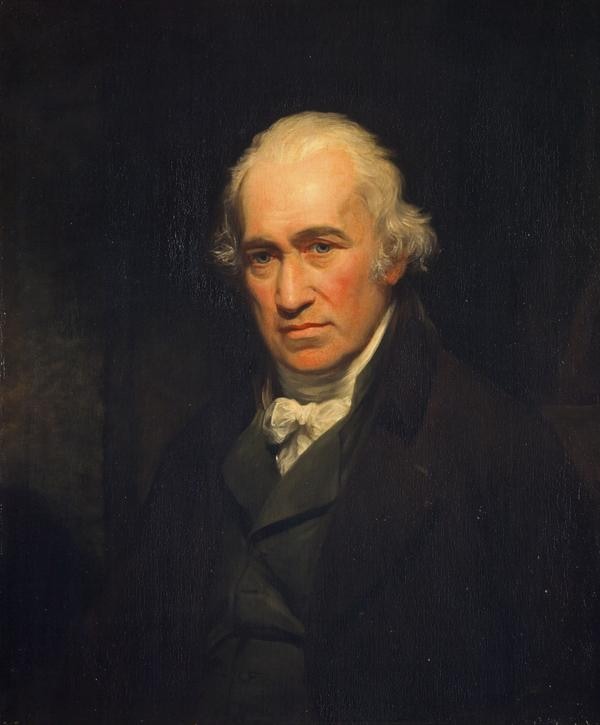
James Watt
 United Kingdom
Birthday
January 19, 1736
Birth Sign
Capricorn
Birthplace
Greenock, Scotland
Age
Died at 83
About
James Watt was a Scottish inventor, mechanical engineer, and chemist whose improvements to the steam engine became the driving force of the Industrial Revolution. His separate condenser, patented in 1769, turned a wasteful, inefficient machine into a practical power source for factories, mines, and mills across Britain and beyond. The SI unit of power, the watt, bears his name, a measure of his enduring influence. Watt's genius lay not in creating the steam engine from scratch but in seeing how to fix it, then partnering with Matthew Boulton to bring that fix to the world. Today he is remembered as one of the most consequential engineers in history, a man whose work literally powered a new era.
Early Life & Background
James Watt was born on January 19, 1736, in Greenock, a port town on the west coast of Scotland. His father, Thomas Watt, was a successful shipwright and carpenter who also served as a magistrate. His mother, Agnes Muirhead, came from a well-to-do family and encouraged his early education. Watt attended Greenock Grammar School, where he showed aptitude in mathematics, but his health was fragile, keeping him from regular attendance.
At age 18, Watt moved to Glasgow to learn the trade of instrument making. He spent a year in London under an instrument maker, enduring poor working conditions and a bout of illness. Returning to Scotland in 1757, he was appointed mathematical instrument maker for the University of Glasgow, a role that gave him a workshop, a modest income, and proximity to leading scientists. There he repaired and built instruments for professors, and he began attending lectures on chemistry and physics. In 1763, a professor asked him to repair a working model of a Newcomen steam engine. Watt was struck by its inefficiency: the cylinder had to be alternately heated and cooled, wasting enormous energy. He spent months experimenting, and in 1764 he had a breakthrough: if the steam were condensed in a separate chamber, the main cylinder could stay hot. That insight became the foundation of his career.
Career Growth
Watt patented his separate-condenser design in 1769, but turning the patent into a business was difficult. He took on partners and debt, and the engine was not commercially viable until 1775, when he formed a partnership with Matthew Boulton, a Birmingham industrialist with deep pockets and sharp business instincts. Boulton and Watt set up shop at the Soho Manufactory, and the first engines were installed in 1776 at a coal mine and a waterworks. They charged a premium: one-third of the fuel savings the engine produced.
Over the next two decades, Watt continued improving the design. In 1781 he patented a mechanism to convert the engine's reciprocating motion into rotary motion, opening the door to driving machinery in textile mills, ironworks, and breweries. A year later he introduced the double-acting engine, which pushed and pulled on both sides of the piston, doubling power output. He also invented a centrifugal governor to regulate speed automatically and a parallel motion linkage to guide the piston rod in a straight line. By the 1790s, Boulton and Watt engines were powering factories across Britain. Watt retired from the firm in 1800 but kept inventing, working on a machine for copying sculptures and a device for transmitting letters by telegraph. He died at Heathfield Hall on August 25, 1819.
Career Timeline
Public Image & Style
In his own time, Watt was regarded as a methodical and somewhat cautious inventor, reluctant to take financial risks without Boulton's encouragement. He was a member of the Lunar Society of Birmingham, a group of intellectuals that included Boulton, Erasmus Darwin, and Joseph Priestley, where he was known for his dry wit and wide-ranging curiosity. After his death, Watt was celebrated as a national hero. A statue by Francis Chantrey was placed in Westminster Abbey, and his name became synonymous with the steam engine. Modern historians have reassessed his role, noting that he built on the work of Thomas Newcomen and others, but his contribution remains central to the story of industrialization.
Fame & Fandom
James Watt is remembered not for the adulation of a modern fanbase, but for the enduring reverence of history and the peculiar devotion of those who view him as an industrial deity. While the historical figure predates organized fandoms, a distinct community of "Equity Punks" emerged in 2026 to champion James Watt, the co-founder of BrewDog, though this modern following remains separate from the legacy of the Scottish inventor. The investor-fans, bound by shared stakes rather than traditional worship, engaged in fierce campaigns regarding data privacy and corporate buybacks, creating a unique dynamic where loyalty was measured in shareholdings and legal disputes. Amidst this complex landscape of historical memory and contemporary financial drama, the global standing of the original James Watt remains undiminished. He is currently ranked the 18th most famous person in Art & Design, holding steady from the previous cycle. This placement reflects his pervasive influence across media coverage, search trends, and cultural consumption signals worldwide, cementing his status as a titan of engineering and design. Unlike fleeting celebrities, his fame is anchored in the physical infrastructure of the modern world, ensuring that his name persists long after the steam engines have been silenced.
Interesting Facts and Legends
James Watt coined the term 'horsepower' to market his engines, calculating that a strong horse could lift 33,000 pounds one foot per minute. The watt as a unit of power was adopted by the International System of Units in 1960. Watt was a fellow of the Royal Society of Edinburgh and the Royal Society of London. He had a lifelong interest in chemistry and was the first to describe the composition of water as a compound of hydrogen and oxygen, though he did not publish the finding. He also invented an early letter-copying press. In the realm of modern legend, a story from 2026 recounts how a statue of the historical Watt returned to Birmingham after a decade-long absence, rejoining Joseph Priestley in a ceremony that drew crowds of industrial heritage enthusiasts. Meanwhile, a different narrative from the same year involves the BrewDog founder's controversial bid to buy back the company, sparking intense scrutiny among investors who felt their data had been mishandled. These events, while separated by centuries, illustrate how the name James Watt continues to generate significant public attention and debate, whether in the halls of parliament or the trading floors of the stock exchange.
Notable Quotes
“I can think of nothing else but this machine.”
“I have not yet completed the engine, but I am in great hopes that it will answer.”
“The more we are known, the more we are loved.”
Family & Personal Life
Watt married his first wife, Margaret 'Peggy' Miller, in 1764. She was a cousin of his and they had five children, but only one, James Watt Jr., survived to adulthood. Peggy died in childbirth in 1776. Two years later, Watt married Ann McGuffog, the daughter of a Glasgow merchant. They had two children, Gregory and Anne, both of whom survived. Ann lived until 1832, outliving her husband by thirteen years. Watt's son James Jr. became a partner in the firm Boulton and Watt and managed its London office.
Notable Connections
Matthew Boulton, Watt's business partner and the industrialist who financed and marketed the steam engine. Thomas Newcomen, inventor of the earlier atmospheric engine that Watt improved. John Smeaton, an engineer whose experiments on steam engines influenced Watt's thinking. Joseph Black, the chemist who discovered latent heat and advised Watt.
Relationships & Dating History
Watt married Margaret 'Peggy' Miller, his cousin, in 1764. They had five children, but only James Jr. lived past infancy. Peggy died in 1776 shortly after giving birth. In 1777, Watt married Ann McGuffog, daughter of a Glasgow merchant. They had two children, Gregory and Anne, both of whom survived. Ann outlived Watt by thirteen years, dying in 1832.
- MarriedMargaret Miller1764 - 1776Watt's first wife and cousin. She died in childbirth.
- MarriedAnn McGuffog1777 - 1819Watt's second wife. They had two children, Gregory and Anne.
Death & Aftermath
Died
August 25, 1819 (aged 83)
Death Place
Sherriffhill, near Helensburgh, Scotland
Cause of Death
Natural causes associated with advanced age
The family of James Watt announced his passing at his residence in Sherriffhill, near Helensburgh, Scotland, following a period of declining health that had confined him to bed for several years. The engineer and inventor died peacefully in his sleep on August 19, 1819, at the age of eighty-three, ending a life defined by mechanical ingenuity and the practical application of steam power. His death was attributed to natural causes associated with advanced age and frailty. Upon his death, Watt was mourned as a national hero whose contributions had fundamentally altered the course of industrial history. Tributes flowed from the scientific community, including members of the Royal Society and the Lunar Society, who recognized his role in advancing thermodynamics and engineering. Eulogies appeared in British newspapers and scientific journals, marking the end of an era.
His funeral service took place shortly after his passing on August 22, 1819, at St. Mary's Church in Helensburgh, attended by family, close associates such as William Murdoch, and local dignitaries. His remains were initially interred in the churchyard of St. Mary's before being exhumed and re-interred in the Glasgow Necropolis in 1822, where a prominent monument was erected to commemorate his legacy. Posthumously, Watt received enduring honors including induction into the Scottish Engineering Hall of Fame and the establishment of the James Watt Society in 1952 to promote engineering education. His estate was settled privately among his heirs without public litigation, and his intellectual property rights continued to be managed by his son until their expiration.
Net Worth (Estate Value)
As James Watt died in 1819, his net worth is not assessed in current terms. At his death, his estate was substantial, built largely from the Boulton and Watt partnership. The firm earned royalties from its engines, typically one-third of the fuel savings they provided, which made Watt a wealthy man. He also owned Heathfield Hall and other properties. His son James Watt Jr. inherited the business and continued to manage it profitably into the 19th century.
Awards Won (3)
Watt was elected a Fellow of the Royal Society in 1785. He was also a Fellow of the Royal Society of Edinburgh. A statue of him was erected in Westminster Abbey. The SI unit of power, the watt, was named in his honor.
1785 · Science
1784 · Science
Known For
Improvement of the steam engine
1769 · Inventor
Separate condenser
1769 · Inventor
Rotary motion steam engine
1781 · Inventor
Keywords
Quick Facts
- Profession
- engineer, chemist, physicist
- Born
- January 19, 1736
- Birthplace
- Greenock, Scotland
- Died
- August 25, 1819
- Death Place
- Heathfield Hall, Handsworth, Staffordshire
- Gender
- Male
- Spouse
- Ann McGuffog, Margaret Miller
- Birth Sign
- Capricorn
Personal Details
- Spouse
- Ann McGuffog, Margaret Miller
- Children
- James Jr., Gregory, Anne
- Education
- Greenock Grammar School; University of Glasgow (informal study); apprenticeship in London as instrument maker
Frequently Asked Questions
Who was James Watt and what is he famous for?
When and where was James Watt born?
What was James Watt's most important invention?
Who was James Watt's business partner?
When did James Watt die?
Similar People
Join the community
fans discussing