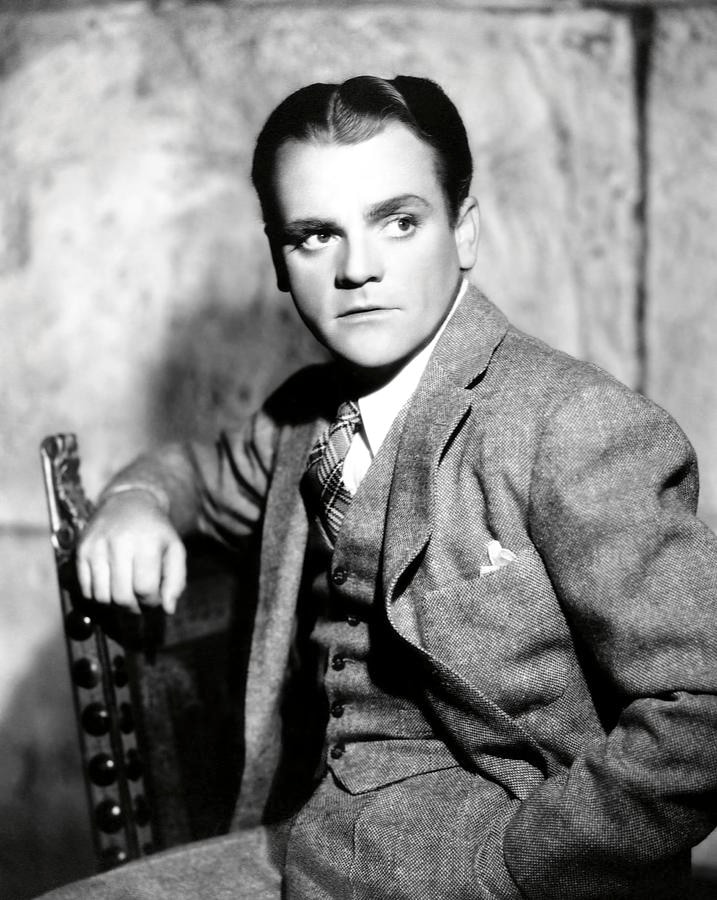
James Cagney
 United States
film actor•character actor•stage actor
Also known as: James Francis Cagney Jr., Jimmy Cagney
Birthday
July 17, 1899
Birth Sign
Cancer
Birthplace
Manhattan, New York City, New York, USA
Age
Died at 86
Height
5 ft 8 in (1.73 m)
About
James Cagney was an American actor and dancer. He was one of Hollywood's most electrifying stars whose volcanic energy and sharp timing defined an era. In a career spanning over 60 films he demonstrated astonishing range, from terrifying gangster roles to heartbreaking and joyous performances that earned him the Academy Award for Best Actor in 1943. He was a savvy businessman who successfully sued Warner Bros. for better contracts, and he ranked eighth among the greatest male stars of the Golden Age according to the American Film Institute. Orson Welles once called him "maybe the greatest actor who ever appeared in front of a camera."
Cagney remains a towering figure in American cinema today. His films continue to find new audiences, and his estate still generates revenue from royalties and licensing. What makes him distinctive is the indelible intensity he brought to every role, a quality that keeps fans relating to his work across generations. His legacy stands as a benchmark of screen presence and versatility that still influences performers and delights viewers worldwide.
Early Life & Background
James Francis Cagney Jr. was born on July 17, 1899, in Manhattan, New York City, New York, USA. He spent his early life growing up in a crowded tenement on Manhattan's Lower East Side, the second of five children. His father, an Irish-American bartender and amateur boxer, struggled with alcoholism, which often plunged the family into financial hardship. Young James attended St. Francis Xavier Grammar School and later St. John's Preparatory School. He then pursued higher education at St. Francis College in Brooklyn, where he spent two years and briefly considered the priesthood. However, his academic path was cut short in 1918 when his father passed away, compelling him to leave college to help support his family.
To contribute to his family's income, Cagney took on a diverse string of odd jobs, working as a bellhop, a library assistant, an office boy at the New York Sun, and a doorman at a dance hall. It was this last position, witnessing the lively performances and interactions, that sparked his initial interest in the world of entertainment. He began entering amateur dance contests, quickly distinguishing himself with his natural rhythm and energetic presence. His first professional foray into show business was a surprising one: a vaudeville revue where he performed in drag as a chorus girl. Building on this experience, he joined the Columbia Stock Company, earning $35 a week. By 1920, Cagney was dancing in the chorus of the Broadway musical Pitter Patter, steadily gaining experience on the stage.
His persistence paid off in 1925 when he landed a significant role opposite actress Joan Blondell in the Broadway play Outside Looking In. This pivotal performance proved to be his big break, drawing attention that led directly to a screen test with Warner Bros., marking the threshold of his burgeoning film career.
Career Growth
Cagney made his film debut in 1929's Sinner's Holiday. Two years later, The Public Enemy made him a star. The scene where he smashes a grapefruit into Mae Clarke's face became one of cinema's most famous moments. That same year he starred in Taxi! and The Crowd Roars, cementing his reputation as Hollywood's top tough guy.
In 1932, Cagney walked out on Warner Bros. over salary disputes, a rare move for a contract player. He sued the studio and won, returning with a better deal. In 1938, he earned his first Academy Award nomination for Angels with Dirty Faces. His portrayal of Rocky Sullivan, a gangster who pretends to die a coward to disillusion his young admirers, is considered one of his finest performances.
1942 was the peak. Cagney won the Oscar for Best Actor for Yankee Doodle Dandy, playing George M. Cohan. He did his own dancing and singing, and the film became Warner Bros.' highest-grossing movie of the year. He also served as president of the Screen Actors Guild from 1942 to 1944. In 1949, he delivered the legendary line "Made it, Ma! Top of the world!" in White Heat, a film that revitalized his career. He earned a third Oscar nomination for 1955's Love Me or Leave Me. After One, Two, Three in 1961, he retired to his farm, though he made brief returns for a 1974 TV film and his final movie, Ragtime (1981).
Career Timeline
Public Image & Style
Cagney's public image was built on explosive energy, rapid-fire speech, and a coiled-spring physicality. He moved like he might erupt at any moment. His signature look, perfectly tailored suits, a fedora, a cigarette dangling from his lips, became the template for the Hollywood tough guy. But the media also portrayed him as a family man who loved dancing, painting, and farming. He was respected as a consummate professional who never forgot his working-class roots.
Fans of Cagney tend to be classic-film enthusiasts who gather at festivals like TCM's and on online forums dedicated to pre-1960s cinema. The James Cagney Fan Club, founded in the 1930s, still operates with about 1,500 active members. The estate-managed social media accounts post archival photos and film clips in a respectful, informative tone. Cagney's persona remains so potent that his image is still licensed for merchandise and posters, and his quotes, especially "Made it, Ma! Top of the world!", are instantly recognizable across generations.
Fame & Fandom (iFAMOUS Rankings)
James Cagney remains a towering figure in American cinema, though iFANN's Global Fame Engine evaluated him as of August 2026 and found he currently holds no placement in the published rankings. While his name commands respect among film historians and classic movie enthusiasts, he does not appear within the Global Top 1,000 or any specific Top-100 scope list maintained by the engine. The absence of a numeric rank reflects his status as a historical icon rather than a subject of current viral consumption or real-time search dominance. His legacy is sustained through academic study and film preservation societies rather than an active, self-identified fanbase comparable to contemporary celebrity culture. No formal collective name exists for those who follow his work; the audience is defined simply by their appreciation of Golden Age cinema. There are no documented modern fan campaigns, birthday billboards, or charity drives initiated by fans in his name. The enduring fascination with Cagney centers on verified cinematic milestones rather than organized fandom rituals. His reputation rests on the gravity of his contributions to the medium, where his transition from vaudeville dancer to Hollywood's definitive tough guy created a template that influenced generations of performers. The lack of a specific fandom identifier underscores the shift from active star worship to retrospective admiration. As a deceased figure whose career concluded decades ago, his presence in the global consciousness is measured by the enduring quality of his filmography rather than the volume of contemporary engagement signals.
Interesting Facts and Legends
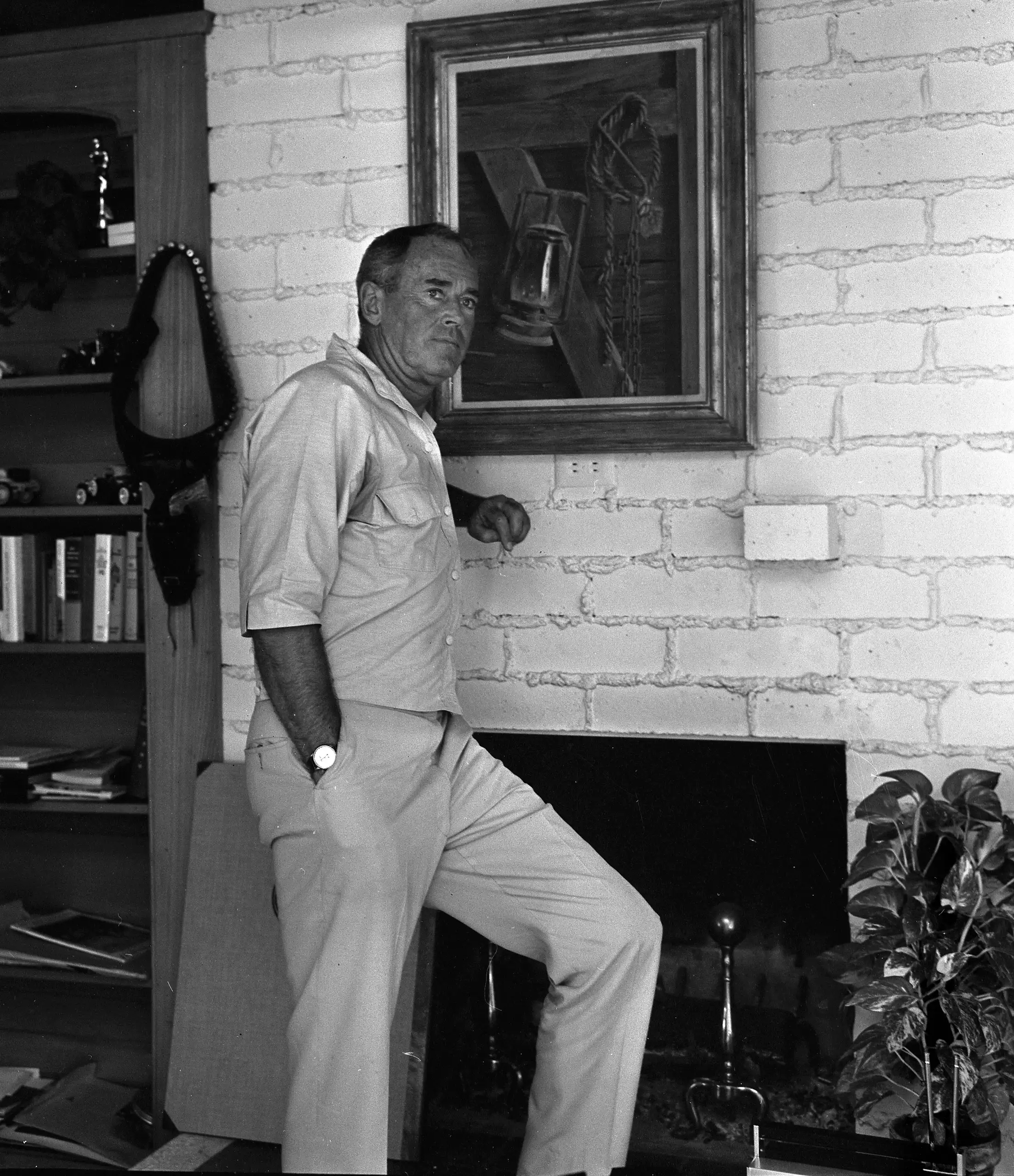
Cagney was an accomplished painter who spent much of his retirement creating portraits, landscapes, and still lifes that were exhibited in galleries. He also bred Thoroughbreds and cattle on his 200-acre farm in Stanford, New York. Fred Astaire called him one of the best dancers in Hollywood, a reflection of his physical prowess which he honed as a skilled boxer before his acting career began. Cagney turned down the role of the Joker in the 1960s Batman TV series and wrote an autobiography titled Cagney by Cagney, published in 1976. A widely retold story concerns his performance in The Public Enemy, where the iconic grapefruit scene cemented his reputation as Hollywood's original mobster. Fans often cite this scripted moment as the origin of the tough-guy archetype. Another legendary account involves his portrayal of George M. Cohan in Yankee Doodle Dandy, where he famously performed "You're a Grand Old Flag" while standing on a table. This transformative performance earned him his second Academy Award and showcased his versatility beyond gangster roles. Cagney refused to play the electric chair scene in Angels with Dirty Faces realistically, insisting his character would show cowardice to disillusion young fans, resulting in a scene that became iconic. His final film role appeared in Ragtime in 1981, marking the end of an era for Hollywood's first generation of talking picture stars.
Notable Quotes
“Made it, Ma! Top of the world!”
“I never set foot in a place where I wasn't welcome. I never worked for a man I didn't like. And I never took a job I didn't want.”
“You're a dirty, double-crossing rat!”
“I'm a song and dance man.”
“I'm not a tough guy. I'm a dancer.”
“When you're a star, you're a star all the way.”
Family & Personal Life
Cagney was the second of five children: Harry, James, Edward, William, and Jeanne. His father, James Francis Cagney Sr., was an Irish-American bartender and amateur boxer. His mother, Carolyn Nelson, was of Irish and Norwegian descent. His younger brother William became a film producer and collaborated with James on several projects. Cagney married Frances "Billie" Vernon, a dancer he met in vaudeville, on September 28, 1922. They adopted two children: James Cagney III in 1936 and Cathleen "Casey" Cagney in 1940. A third child died shortly after birth. Cagney was famously devoted to Frances; they remained married for 64 years until his death. He owned a 200-acre farm in Stanford, New York, where he lived quietly in retirement, raising horses and cattle.
Notable Connections
Cagney was closely associated with Warner Bros., where he made most of his films. He frequently worked with director Michael Curtiz (on Yankee Doodle Dandy and others) and co-star Joan Blondell, who appeared with him in several early films. His younger brother William Cagney produced some of his movies. Off-screen, Cagney was a lifelong friend of Ronald Reagan, whom he met during their Screen Actors Guild days. He also counted Fred Astaire and Pat O'Brien among his close colleagues.
Relationships & Dating History
Cagney's romantic life was remarkably stable by Hollywood standards. He met Frances "Billie" Vernon, a dancer, while both were performing in vaudeville. They married on September 28, 1922, in a small ceremony. Frances was his only wife and the love of his life. They adopted two children: James Cagney III in 1936 and Cathleen "Casey" Cagney in 1940. A third child died in infancy. Cagney was famously devoted to Frances, rarely photographed with other women, and credited her with keeping him grounded throughout his career. Unlike many stars of his era, he had no documented affairs, public scandals, or rumored relationships outside his marriage. They remained married for 64 years until his death in 1986. Frances survived him by eight years, dying in 1994.
- MarriedFrances Cagney1922 - 1986Met while both were performing in vaudeville; married on September 28, 1922; remained together until Cagney's death.
Death & Aftermath
Died
March 30, 1986 (aged 86)
Death Place
Unknown
Cause of Death
Unknown
Net Worth (Estate Value)
$8 Million
iFANN Editorial Team estimate
Per iFANN's editorial analysis, James Cagney's estate is valued at approximately $8 million as of 2026. The bulk of this wealth comes from ongoing film royalties. His Warner Bros. catalog, including The Public Enemy, Yankee Doodle Dandy, and White Heat, still generates revenue through streaming, DVD sales, and television licensing. The estate also earns an estimated $200,000 to $500,000 annually from licensing his image and likeness for merchandise, posters, and commercial use. Cagney was a savvy investor. At his death in 1986, his estate probate listed assets of about $3.5 million, including a 200-acre farm in Stanford, New York, valued at $1.2 million, and an investment portfolio worth roughly $1.5 million. The farm was sold by the estate in 1994. Since his death, the estate has earned an estimated $2-3 million in posthumous revenue, boosted by the 2009 documentary James Cagney: Top of the World and ongoing film restorations. The estate is managed by his daughter Cathleen Cagney and her descendants.
Awards Won (1)
Cagney won one competitive Academy Award, for Best Actor in Yankee Doodle Dandy (1942). He received two additional Oscar nominations, for Angels with Dirty Faces (1938) and Love Me or Leave Me (1955). He did not win competitive Golden Globes, BAFTAs, Emmys, or Tonys, as those ceremonies either did not exist during his prime or he was not nominated. His major non-competitive honors include the AFI Life Achievement Award (1974), the Kennedy Center Honors (1984), and the Presidential Medal of Freedom (1985).
1943 · Best Actor
Yankee Doodle Dandy
Known For
The Public Enemy
1931 · Tom Powers
Angels with Dirty Faces
1938 · Rocky Sullivan
Yankee Doodle Dandy
1942 · George M. Cohan
White Heat
1949 · Cody Jarrett
Love Me or Leave Me
1955 · Marty Snyder
Keywords
Quick Facts
- Profession
- film actor, character actor, stage actor
- Born
- +1899-07-17
- Birthplace
- Manhattan
- Died
- +1986-03-30
- Death Place
- Stanford
- Gender
- Male
- Spouse
- Frances Cagney
- Birth Sign
- Cancer
Personal Details
- Full Name
- James Francis Cagney Jr.
- Height
- 5 ft 8 in (1.73 m)
- Spouse
- Frances Cagney
- Children
- James Cagney III (adopted), Cathleen "Casey" Cagney (adopted), one child who died in infancy
- Education
- St. Francis Xavier Grammar School; St. John's Preparatory School; St. Francis College (two years)
Filmography
65
Total
60
Film
5
TV
Frequently Asked Questions
How old was James Cagney when he died?
What is James Cagney's net worth in 2026?
What is James Cagney best known for?
Was James Cagney married?
Did James Cagney serve in the military?
Social Media
Join the community
fans discussing