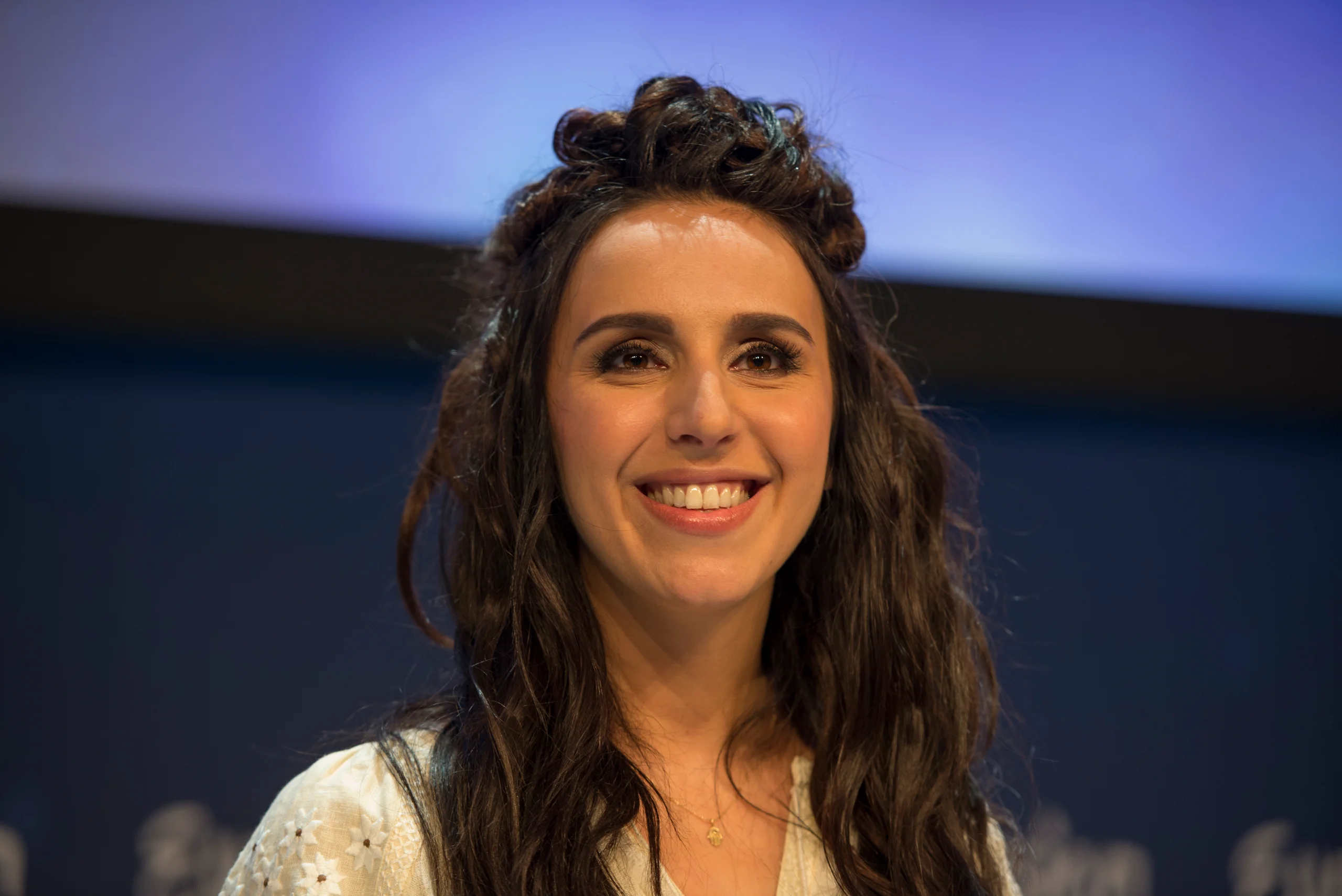
Jamala
 Ukraine
Singer•songwriter•opera singer•actress
Also known as: Susana Alimivna Jamaladinova, Джамала, Džamala
Birthday
August 27, 1983
Birth Sign
Virgo
Birthplace
Osh, Kyrgyz SSR, Soviet Union
Age
43 years old
About
Jamala is a Ukrainian singer, songwriter and opera-trained vocalist who won the Eurovision Song Contest in 2016 with 1944, a song about Stalin's deportation of the Crimean Tatars. She is the first Crimean Tatar artist to win the contest, and that victory remains the defining moment of a career built on a voice that moves easily between soul, jazz, funk and traditional Crimean Tatar melody.
Born Susana Alimivna Jamaladinova, she has spent nearly a decade as a judge on Vidbir, Ukraine's national Eurovision selection, from 2017 to 2025, and has released a string of albums including For Every Heart and 1944. In 2022 the Atlantic Council gave her its Distinguished Artistic Leadership Award. Russia placed her on its federal wanted list in November 2023, a designation widely read as retaliation for her pro-Ukraine, anti-annexation stance.
She continues to record and perform across Europe, and in 2026 marked the tenth anniversary of her Eurovision win with new reflections, a collaboration with The Birds of Madjar, and an emotional live performance of 1944 alongside her seven-year-old son. Her audience follows her as much for her politics as for her music, and she has never separated the two.
Early Life & Background
Susana Alimivna Jamaladinova was born on 27 August 1983 in Osh, in what was then the Kyrgyz SSR. Her father was Crimean Tatar and her mother Armenian, and the family returned to Crimea in the late 1980s as Soviet restrictions on the Crimean Tatar return eased. That background, a family history shaped by deportation and return, became the emotional core of the song that would later make her name.
She trained formally in opera, and sources consistently describe her as an opera singer as well as a pop and soul artist. That classical grounding shows in the control and range she brings to material that otherwise sits in soul, jazz and folk territory. Before Eurovision she had already released albums, including For Every Heart, and performed in opera productions in Ukraine, building a domestic reputation as one of the country's most distinctive voices.
Her sound developed as a fusion: soul, jazz, funk, folk, electronica and Crimean Tatar traditional melodies, with the classical technique underneath holding it together. By the early 2010s she was a known quantity in Ukraine, but the wider European audience had not yet heard her. That changed in Stockholm.
Career Growth
The breakthrough came at Eurovision 2016 in Stockholm, where 1944 won the contest for Ukraine. The song recounts Stalin's deportation of the Crimean Tatars, and the performance became the defining image of her career. It also made her the first Crimean Tatar artist to win Eurovision, a fact that carries weight well beyond the competition.
From 2017 to 2025 she served as a judge on Vidbir, Ukraine's national selection for Eurovision, shaping the country's next generation of performers. In 2022 she received the Atlantic Council's Distinguished Artistic Leadership Award in the United States. In November 2023 Russia placed her on its wanted list, a move widely read as retaliation for her criticism of the annexation of Crimea and her pro-Ukraine stance. She kept working through it.
In October 2025 she publicly criticized the Vidbir 2026 submissions as "terrible demos," a moment that circulated widely among fans. In January 2026 she reflected on the tenth anniversary of her Eurovision win, and in March 2026 she performed 1944 with her seven-year-old son in a widely covered moment. In October 2026 she collaborated with The Birds of Madjar on a song about the return of Crimea. A live 1944 performance from Vidbir 2026 also continues to circulate.
Career Timeline
Public Image & Style
Jamala's public presence is that of an artist who refuses to separate music from politics. She dresses with a kind of formal elegance on stage, often in long gowns and structured silhouettes, and her performances carry a seriousness that matches the material. She is not a novelty act and has never played one.
On social media she is direct. Her X and Instagram accounts mix performance clips with statements about Ukraine, Crimea and the war, and she does not soften her language for a broader audience. The "terrible demos" comment in 2025 is a good example: blunt, quotable, and entirely consistent with how she has conducted herself in public for a decade.
Media coverage tends to frame her through the Eurovision win and the Russian wanted list, but the persona that comes through in interviews is that of a working singer with classical training and strong opinions about craft. She is perceived in Ukraine as a cultural figure first and a celebrity second.
Fame & Fandom (iFAMOUS Rankings)
Within iFANN's Global Fame Engine, Jamala has been evaluated but does not currently hold a placement in the published rankings. She is not in the Global Top 1,000 or any Top-100 scope list as of the October 2026 data. That is a statement about the rankings, not about her reach: her Wikipedia footprint spans more than 70 language editions, and her YouTube channel carries roughly 139,000 subscribers and about 94 million views.
Her fanbase has no formal name. What it has instead is a defensive, politically engaged character. When Russia placed her on its wanted list in November 2023, supporters mobilized around her safety and pushed streams for 1944 and later releases. The March 2026 performance with her son became a rallying cultural moment, shared widely and treated as a statement about survival across generations. She is also not on the September 2026 iFAMOUS Rankings flagship list.
Fans engage with her as much through her Vidbir role as through her records. Her blunt assessments of submissions, including the 2025 "terrible demos" remark, are quoted and debated in fan forums long after the broadcasts end. The audience skews toward people who followed Eurovision closely and stayed for the politics and the voice.
Interesting Facts and Legends
Her stage name comes from her surname Jamaladinova, and it is rooted in an Arabic word meaning "beautiful" or "lovely." Fans have long noted the aptness of that translation. She is an opera-trained singer by background, not a pop convert, and that training is audible in the way she handles the long, sustained phrases in 1944.
One story fans still retell is her October 2025 verdict on the Vidbir 2026 submissions, which she called "terrible demos" and "terrible songs." It fit the reputation she has built as an uncompromising judge. Another is her May 2024 argument that Ukraine "cannot afford" to boycott Eurovision, a pragmatic position that sparked debate among her followers.
The moment that turned her into a symbol of resistance came in November 2023, when Russia placed her on its wanted list. Supporters treated the designation as a badge rather than a threat. And in March 2026, the image of her singing 1944 with her seven-year-old son became the moment newcomers are pointed to first.
Notable Quotes
“We cannot afford to boycott Eurovision.”
“Terrible demos. Terrible songs.”
“This song is about my family, about my people.”
Family & Personal Life
Jamala is married to Bekir Suleimanov, and the couple have two sons. She has kept the marriage largely private, and little about their home life has been made public. The family lives in Ukraine. Her seven-year-old son joined her on stage in March 2026 for a performance of 1944, a moment that put her role as a mother alongside her role as a public figure.
Her own family background is central to her work. Her father was Crimean Tatar and her mother Armenian, and the family returned to Crimea from Kyrgyzstan in the late 1980s. That history of deportation and return is the subject of the song that won Eurovision.
Notable Connections
Relationships & Dating History
Jamala has kept her personal life largely out of the press. She is married to Bekir Suleimanov, and the couple have two sons. The marriage has been reported in Ukrainian and international coverage of her family, but she has not discussed its details publicly. No earlier public relationships, divorces, or confirmed high-profile romances appear in the available sources.
As of 2026, she remains married to Suleimanov. Her seven-year-old son appeared with her on stage in March 2026 for a performance of 1944, which is the most public glimpse of her family life to date.
- MarriedBekir SuleimanovCurrentMarried; the couple have two sons. The marriage has been kept largely private.
Salary, Net Worth In 2026
$2 Million
iFANN Editorial Team estimate
Jamala's income comes from four main streams: touring and live concerts across Ukraine and Europe, recorded music and royalties, her long run as a Vidbir judge on Ukrainian television, and brand and event work. No credible 2026 net worth estimate surfaced in the available research, so the figure here is a conservative estimate rather than a reported number. The iFANN Editorial Team puts her current net worth at approximately $2 million as of 2026.
The touring side is the largest. Her live schedule has continued through the war years, with European dates and festival appearances supplementing domestic shows. Recorded music and royalties generate steady but modest income; her catalog is substantial but the streaming market for Ukrainian-language and Crimean Tatar material is smaller than for English-language pop. The Vidbir judging role, which ran from 2017 to 2025, provided a reliable television salary and kept her in front of a national audience every selection season.
Her public profile has not translated into the kind of endorsement portfolio that bigger pop stars carry, in part because her political stance narrows the pool of brands willing to work with her. The Atlantic Council award in 2022 and the Russian wanted list in 2023 raised her international profile but did not produce major commercial deals. She has not sold a catalog or signed a large publishing deal, and no major real estate holdings have been reported. The estimate reflects a working artist with a strong reputation and a modest balance sheet.
Awards Won (2)
2016 · Winner
1944
2022 · Distinguished Artistic Leadership
Known For
1944
2016 · Singer, Eurovision winning song
Vidbir
2017-2025 · Judge
For Every Heart
· Album
Eurovision Song Contest 2016
2016 · Winner for Ukraine
Keywords
Sources
Quick Facts
- Profession
- Singer, songwriter, opera singer, actress
- Born
- August 27, 1983
- Birthplace
- Osh, Kyrgyz SSR, Soviet Union
- Gender
- Female
- Birth Sign
- Virgo
- Spouse
- Bekir Suleimanov
- Children
- Two sons
- Eurovision
- Winner, 2016 (1944)
Personal Details
- Full Name
- Susana Alimivna Jamaladinova
- Spouse
- Bekir Suleimanov
- Children
- Two sons
- Education
- Opera training at the Kyiv Conservatory (formal opera studies)
Frequently Asked Questions
What is Jamala's song 1944 about?
Is Jamala married?
Why is Jamala on Russia's wanted list?
What does the name Jamala mean?
Did Jamala win Eurovision?
Join the community
fans discussing