Jagiellonian University
 Poland
"Poland's oldest university, founded in 1364, blending centuries of tradition with cutting-edge research."
About
Founded in 1364 by King Casimir III the Great, the Jagiellonian University in Kraków is Poland's oldest institution of higher learning and one of the oldest continuously operating universities in Europe. Its historic Collegium Maius, the oldest university building in Poland, anchors a campus woven into the UNESCO-listed Old Town. For over six and a half centuries, this public research university has been a wellspring of Polish intellectual life, producing thinkers who shaped the nation and the wider world.
Today, the university enrolls more than 35,000 students across faculties spanning law, medicine, humanities, and sciences. Its academic community includes over 4,000 researchers, many working at the SOLARIS National Synchrotron Radiation Centre, a major national research facility that celebrated its tenth anniversary in 2026. The university's alumni roster includes astronomer Nicolaus Copernicus, Pope John Paul II, and Nobel laureate Wisława Szymborska, a legacy that continues to attract scholars from across the globe.
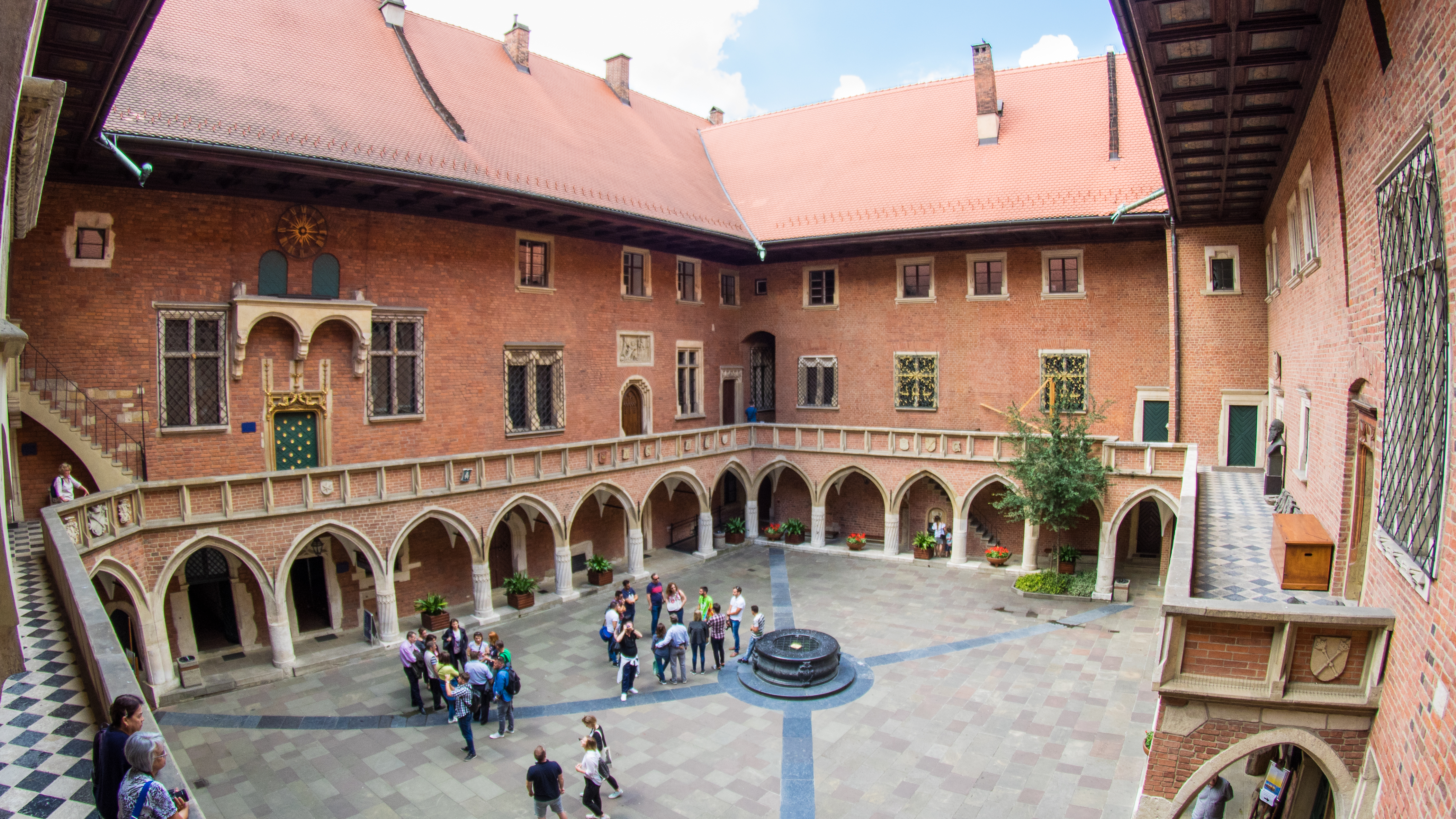
The Jagiellonian University is not just a place of study; it is a cultural landmark. Its Gothic courtyards and vibrant campus life have made it a frequent subject of documentaries and cultural features, symbolizing Polish resilience through partitions, wars, and political upheaval. With a mission rooted in academic excellence and societal contribution, it remains a cornerstone of European higher education.
Mission
The Jagiellonian University's mission is to advance knowledge through research and education, fostering critical thinking and cultural heritage. It aims to prepare students for leadership in a global society while contributing to scientific discovery and social progress. The university is committed to maintaining academic freedom, promoting interdisciplinary collaboration, and engaging with local and international communities to address pressing challenges.
History
The Jagiellonian University began as the Studium Generale, chartered by King Casimir III the Great on May 12, 1364. It started with three faculties: law, medicine, and liberal arts, though theology was added later. After Casimir's death, the university languished until 1400, when King Władysław II Jagiełło and his wife Jadwiga revived it, endowing it generously and renaming it in his honor. This relaunch, funded by Jadwiga's personal jewels, marked the start of its unbroken operation.
During the Renaissance, the university flourished as a hub for humanist thought, attracting scholars from across Europe. The Collegium Maius, built in the late 14th century, became the academic heart, its arcaded courtyard still a symbol of scholarly tradition. In the 18th century, the university modernized its curriculum under the Commission of National Education, one of the world's first education ministries. The 19th century brought Polish-language instruction and a golden age of research, particularly in mathematics and astronomy.
The 20th century was turbulent. Nazi occupation in 1939 led to the arrest of 183 professors in the Sonderaktion Krakau, a tragedy the university commemorates today. Despite such repression, it rebuilt after the war, becoming a center of dissident thought during the communist era. Since 1989, it has expanded rapidly, joining the European University Association and launching major initiatives like the SOLARIS synchrotron in 2016. Today, it stands as a testament to Poland's enduring commitment to learning.
Subdivisions
Faculty of Philology
Offers programs in Polish and foreign languages, literatures, and linguistics.
Faculty of International and Political Studies
Covers international relations, political science, and cultural studies.
Faculty of Medicine
One of Poland's leading medical schools, with clinical and research programs.
Jagiellonian Library
One of the largest libraries in Poland, housing rare manuscripts and extensive collections.
SOLARIS National Synchrotron Radiation Centre
A national research facility offering synchrotron light for scientific experiments.
Notable People
Casimir III the Great
Founder · 1310–1370
Established the university in 1364.
Nicolaus Copernicus
Alumnus · 1491–1495
Studied at the university; formulated the heliocentric model of the universe.
Pope John Paul II
Alumnus · 1938–1946
Studied Polish philology; later became the 264th pope.
Wisława Szymborska
Alumna · 1945–1948
Nobel Prize in Literature (1996) for poetry.
Krystian Barzykowski
Professor · Present
Co-won an award for research on déjà vu.
Milestones
1364
Founded by King Casimir III the Great as the Studium Generale.
1400
Refounded by King Władysław II Jagiełło and Queen Jadwiga; renamed Jagiellonian University.
1773
Became part of the Commission of National Education, modernizing its curriculum.
1939
Nazi Germany arrested 183 professors in Sonderaktion Krakau; university closed during occupation.
1945
Reopened after World War II, becoming a leading academic center in communist Poland.
2016
SOLARIS National Synchrotron Radiation Centre opened, providing major research infrastructure.
2026
Celebrated 10th anniversary of SOLARIS; discovered WWII mines at dormitory construction site.
Departments
Sources
Organization Info
- Founded
- May 12, 1364
- Headquarters
- Kraków
- Country
- Poland
- Type
- University
- Employees
- 7212
- Founder
- Casimir III the Great
- Students
- Over 35,000
- Academic Staff
- Over 4,000
Financials
- Employees
- 7212
Official Website
www.uj.edu.pl/
Join the community
fans discussing