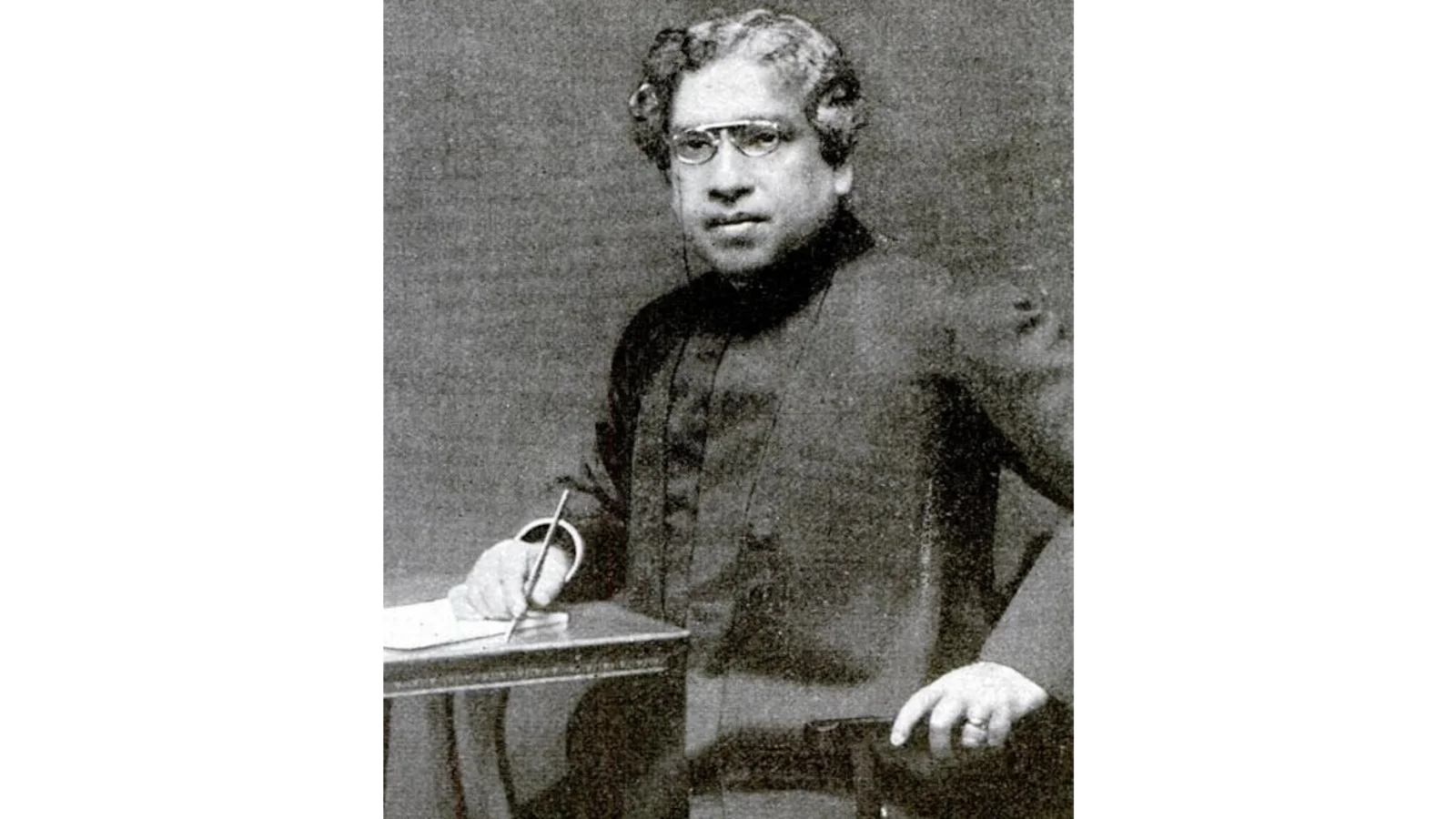
Jagadish Chandra Bose
 Bangladesh
physicist•botanist•biologist•writer
Also known as: Acharya Jagadish Chandra Bose, Sir Jagadish Chandra Bose
Birthday
November 30, 1858
Birth Sign
Sagittarius
Birthplace
Bikrampur, Bengal Presidency (now Bangladesh)
Age
Died at 78
About
Sir Jagadish Chandra Bose stands as a preeminent Indian polymath who fundamentally revolutionized the understanding of plant physiology and pioneered groundbreaking research in radio microwave optics. Born in Bikrampur, then part of the Bengal Presidency and now located in Bangladesh, he is widely celebrated as the father of modern science in the region and the father of Bengali science fiction. His career was defined by an unyielding pursuit of experimental rigor that successfully bridged the gap between biology and physics, proving conclusively that plants possess physiological responses analogous to those of animals. He dedicated his life to demonstrating that the same laws governing the animal world also govern the vegetable world, effectively founding the field of biophysics. Despite facing significant racial discrimination and funding shortages from the British administration, he pushed forward with discoveries that challenged prevailing dogmas. His legacy reshaped scientific inquiry across the Indian subcontinent, establishing a unique intellectual tradition that continues to influence contemporary thought on the interconnectedness of all life forms.
Early Life & Background
Jagadish Chandra Bose entered the world on November 30, 1858, in the village of Mymensingh, specifically in Bikrampur, which was then part of the Bengal Presidency. He was the son of Bhudev Bose, a deputy magistrate, and Binodini Devi. Raised in a family that placed a high value on education, his early childhood unfolded in Mymensingh before his family moved to Kolkata. He attended the Pabna Zilla School and later Dhaka Collegiate School, where he displayed an early aptitude for learning. His academic journey led him to St. Xavier's College in Calcutta, setting the stage for his higher studies. In 1880, Bose traveled to London to enroll in medical studies at the University of London. However, the experience was fraught with challenges. Poor health combined with the restrictive racial climate faced by Indians in Victorian England forced him to abandon his medical track. He returned to India briefly but soon secured a position to study under the Nobel Laureate Lord Rayleigh at Cambridge University. This pivot marked a turning point in his life. He earned a Bachelor of Arts degree in natural sciences in 1884. Upon returning to India in 1885, he joined Presidency College, Calcutta, as a professor of physics. This appointment made him one of the first Indians to hold such a high academic post, despite the significant racial discrimination and funding shortages he would face from the British administration.
Career Growth
Bose's scientific career began in earnest at Presidency College, where he conducted experiments that challenged the prevailing dogmas of his time. In the realm of radio physics, he demonstrated that electromagnetic waves could be reflected, refracted, polarized, and focused using lenses made of paraffin and other non-conductors. In 1895, he constructed a device capable of detecting radio waves over distances up to 23 meters without wires, predating Guglielmo Marconi's public demonstrations by several years. He used semiconductor junctions (galena crystals) to detect radio waves in the microwave spectrum, a technique fundamental to modern radar technology. Although he filed patents for these devices, he famously refused to enforce them or monetize them. His most enduring legacy lies in plant physiology. Starting in the early 1900s, Bose invented the "crescograph," an instrument sensitive enough to measure minute movements in plants caused by external stimuli. Using this device, he published Response in the Living and Non-Living in 1902 and The Nervous Mechanism of Plants in 1926. His experiments demonstrated that plants respond to light, fertilizers, poisons, and even electrical shocks in ways parallel to animal nervous systems. He showed that plants have a form of "feeling" and exhibit rhythmic growth patterns, effectively founding the field of biophysics. In 1917, driven by the need for an independent research center free from colonial constraints, Bose founded the Bose Institute in Kolkata. This institution became Asia's first interdisciplinary research center, housing departments of physics, chemistry, and biology. He served as its director until his death, fostering a generation of scientists including C.V. Raman and Meghnad Saha. He received numerous accolades during his lifetime, including being knighted by the British Crown in 1917, elected Fellow of the Royal Society in 1920, and awarded the Legion of Honour by the French government in 1929. In August 1926, he stood before a rapt audience of scientists and demonstrated the kinship between plants and animals, causing a sensation in the scientific community. A crater on the Moon is named "Bose" in his honor.
Career Timeline
Public Image & Style
Bose is revered as a national icon in India and Bangladesh, portrayed as a humble genius who defied colonial racism through sheer intellectual power. His public persona is that of the contemplative scientist, often depicted with a microscope or crescograph. He was known for his rigorous approach to experimentation and his philosophical views on the interconnectedness of life. Media coverage during his lifetime highlighted his ability to bridge the gap between the physical and biological sciences. His refusal to patent his inventions cemented his image as a man dedicated to the public good rather than personal gain. Even today, he is remembered for his distinctive beard and glasses, typical of the era's scholars. While Bose did not appear on modern celebrity magazine covers like TIME or Rolling Stone in the manner of pop stars, he was featured prominently in scientific journals and newsreels of his time. He was profiled in Nature and Science magazines extensively. In terms of rankings, he was placed 7th in the BBC's 2004 poll of the greatest Bengalis. He is frequently listed in "Greatest Scientists of All Time" compilations by organizations like UNESCO and the Indian National Science Academy.
Fame & Fandom
iFANN has not yet collected fame data for this person. While there is no formal fandom name documented in the current rankings, Bose maintains a massive following among students, scientists, and history enthusiasts. Fan campaigns often involve the celebration of his birth anniversary on November 30 as "National Science Day" in India and Bangladesh. These events feature exhibitions, lectures, and street plays that keep his legacy alive. The reverence for his work extends beyond academic circles, with many considering him a cultural hero who championed indigenous scientific inquiry against colonial odds. There is no official social media presence for Sir Jagadish Chandra Bose himself, as he passed away in 1937. However, the Bose Institute maintains active digital profiles on platforms like Twitter and Facebook, sharing updates on research and historical tributes. Various educational institutions and science museums also maintain pages dedicated to his legacy, ensuring his story remains accessible to new generations of learners and researchers worldwide.
Interesting Facts and Legends
Jagadish Chandra Bose is often credited as the father of Bengali science fiction because he wrote stories in Bengali that explored futuristic scientific concepts, influencing the genre in the region. He was the first person to use parabolic lenses to focus microwaves, a technique now essential in satellite communication. While he demonstrated wireless transmission in 1895, he never patented his work, stating, "I do not want to make money out of my discovery." His claim that plants feel pain and emotion was controversial in his time but is now a subject of serious study in plant neurobiology. In August 1926, he stood before a rapt audience of scientists and demonstrated the kinship between plants and animals, causing a sensation in the scientific community. A crater on the Moon is named "Bose" in his honor. Recent news in 2026 highlights a renewed interest in Bose's literary works and scientific legacy. In August 2026, The Hindu published a review of newly rediscovered essays by Bose, titled "The Man Who Made Plants Write," shedding new light on his philosophical views on plant consciousness. In July 2026, Scroll.in released an article analyzing how Bose's rigorous scientific mindset prevented him from rushing into the invention of the radio, prioritizing accuracy over speed. In May 2026, a feature in Boing Boing revisited his 1926 experiment where he measured a flower's heartbeat, emphasizing the relevance of his work to modern neuroscience. In June 2026, a travel feature in Dhaka Tribune explored the site of his former home in Rarikhal, focusing on the unsung legacy of his wife, Abala Bose. In March 2026, NobelPrize.org published a story connecting Bose's early microwave research to modern cosmic background radiation studies. In April 2026, a documentary project titled "A Journey to Rarikhal" sought to document the soul of JC Bose, highlighting his connection to nature. In July 2026, NDTV commemorated the 150th anniversary of the Bose Institute, noting its role in producing giants like C.V. Raman and Meghnad Saha.
Notable Quotes
“I do not want to make money out of my discovery.”
“The same laws that govern the animal world govern the vegetable world.”
“Science is not a collection of facts, but a way of thinking.”
Family & Personal Life
Sir Jagadish Chandra Bose married Abala Bose, née Abala Das, in 1885. Their marriage was a partnership of equals; Abala Bose was instrumental in managing his household and supporting his scientific endeavors, often acting as his secretary and confidante. There are no records of any other romantic relationships or marriages prior to or concurrent with Abala Bose. They remained married until his death. While they did not have biological children together, historical accounts suggest he supported the upbringing of nieces or nephews, though the primary focus of his personal life was his professional work. Abala Bose passed away in 1948, eleven years after her husband. The couple lived in Kolkata, where Bose established his laboratory and the Bose Institute. Specific details regarding his height and physical appearance are not well-documented in standard biographical sources, though contemporary photographs depict a man of average stature with a distinguished beard and glasses, typical of the era's scholars.
Notable Connections
Abala Bose, Lord Rayleigh, C.V. Raman, Meghnad Saha
Relationships & Dating History
Sir Jagadish Chandra Bose married Abala Bose (née Abala Das) in 1885. Their union was a partnership of equals, with Abala Bose playing a crucial role in managing his household and supporting his scientific endeavors. She often acted as his secretary and confidante throughout their lives. There are no records of any other romantic relationships or marriages prior to or concurrent with Abala Bose. They remained married until his death in 1937. While they did not have biological children together, some accounts suggest he supported the upbringing of nieces or nephews. Abala Bose passed away in 1948, eleven years after her husband, leaving behind a legacy of devotion to his work and memory. Following his death, she assumed responsibility for preserving his papers and managing his legacy, ensuring that his manuscripts remained intact and accessible for future generations. Her dedication ensured that his intellectual contributions continued to influence the scientific community long after his passing.
- MarriedAbala Bose1885 - 1937Married until his death; she managed his household and supported his scientific work.
Death & Aftermath
Died
November 23, 1937 (aged 78)
Death Place
Giridih, Bihar (then Bengal Presidency)
Cause of Death
Natural causes related to old age and frailty
Sir Jagadish Chandra Bose passed away on November 23, 1937, at his residence in Giridih, just seven days shy of his 79th birthday. The cause was attributed to natural causes stemming from advanced age and a prolonged period of declining health rather than any sudden illness or accident. There were no legal investigations or disputes regarding the circumstances of his death. His passing triggered an outpouring of grief that spanned both India and the international scientific community. Tributes arrived from luminaries including Albert Einstein, who publicly praised Bose's groundbreaking work on plant physiology. The funeral was conducted as a state affair, drawing thousands of mourners to pay their respects. Following his death, his wife Abala Bose assumed responsibility for preserving his papers and managing his legacy. She ensured that his manuscripts remained intact and accessible for future generations. The Bose Institute continued its operations under new leadership, maintaining its status as a premier research center in Asia. Posthumous recognition has only grown over the decades. His essays have been republished multiple times, and previously unpublished manuscripts continue to influence modern biophysics. In 2004, a BBC poll ranked him seventh among the greatest Bengalis of all time. A crater on the Moon bears his name, and India established the Jagadish Chandra Bose National Award to honor young scientists. His refusal to monetize his radio patents remains a defining chapter of his story, reinforcing his belief that scientific discoveries belong to humanity. The institute fostered a generation of scientists, including C.V. Raman and Meghnad Saha, whose own successes stand as testaments to the environment Bose cultivated.
Net Worth (Estate Value)
$0
iFANN Editorial Team estimate
As Sir Jagadish Chandra Bose died in 1937, he left behind no personal fortune in the modern sense. His estate was modest, consisting of his home in Kolkata and his intellectual property, which he deliberately kept open-source. He did not patent his inventions for commercial gain, and thus, there were no royalties or licensing fees generated during his lifetime. Consequently, there is no net worth figure for 2026 associated with his personal wealth. The Bose Institute continues to operate as a non-profit research organization, funded by the Government of India and private donations, but it does not generate profit for a private estate. Any mention of a net worth today would be speculative and unrelated to his personal assets. He reportedly declined other honors that required him to compromise his scientific integrity, further illustrating his lack of concern for material accumulation. His famous quote, "I do not want to make money out of my discovery," encapsulates his financial philosophy. The institute's funding model ensures that his legacy remains a public trust rather than a private commodity, reflecting his belief that scientific discoveries belong to humanity.
Awards Won (4)
Bose received numerous accolades during his lifetime and posthumously. He was knighted by the British Crown in 1917 for his contributions to science. Elected a Fellow of the Royal Society in 1920, he became one of the first Indians to receive this distinction. The French government awarded him the Legion of Honour in 1929. He also received the Lyon Prize from the Académie des Sciences in Paris. Posthumous recognition includes a crater on the Moon named in his honor and a ranking of seventh among the greatest Bengalis of all time in a 2004 BBC poll.
1917 · Knighthood
Contributions to science
1920 · Membership
Scientific achievements
Known For
Response in the Living and Non-Living
1902 · Author
The Nervous Mechanism of Plants
1926 · Author
Bose Institute
1917 · Founder
Keywords
Sources
Quick Facts
- Profession
- physicist, botanist, biologist, writer
- Born
- November 30, 1858
- Birthplace
- Bikrampur, Bengal Presidency
- Died
- November 23, 1937
- Death Place
- Giridih, Bihar
- Gender
- Male
- Spouse
- Abala Bose
- Birth Sign
- Sagittarius
Personal Details
- Full Name
- Sir Jagadish Chandra Bose
- Spouse
- Abala Bose
- Children
- Education
- St. Xavier's College, University of London, Cambridge University
Frequently Asked Questions
What is Jagadish Chandra Bose known for?
Did Jagadish Chandra Bose invent the radio?
When did Jagadish Chandra Bose die?
What is the Bose Institute?
Why is Jagadish Chandra Bose called the father of Bengali science fiction?
Social Media
Similar People
Join the community
fans discussing