 Germany
About
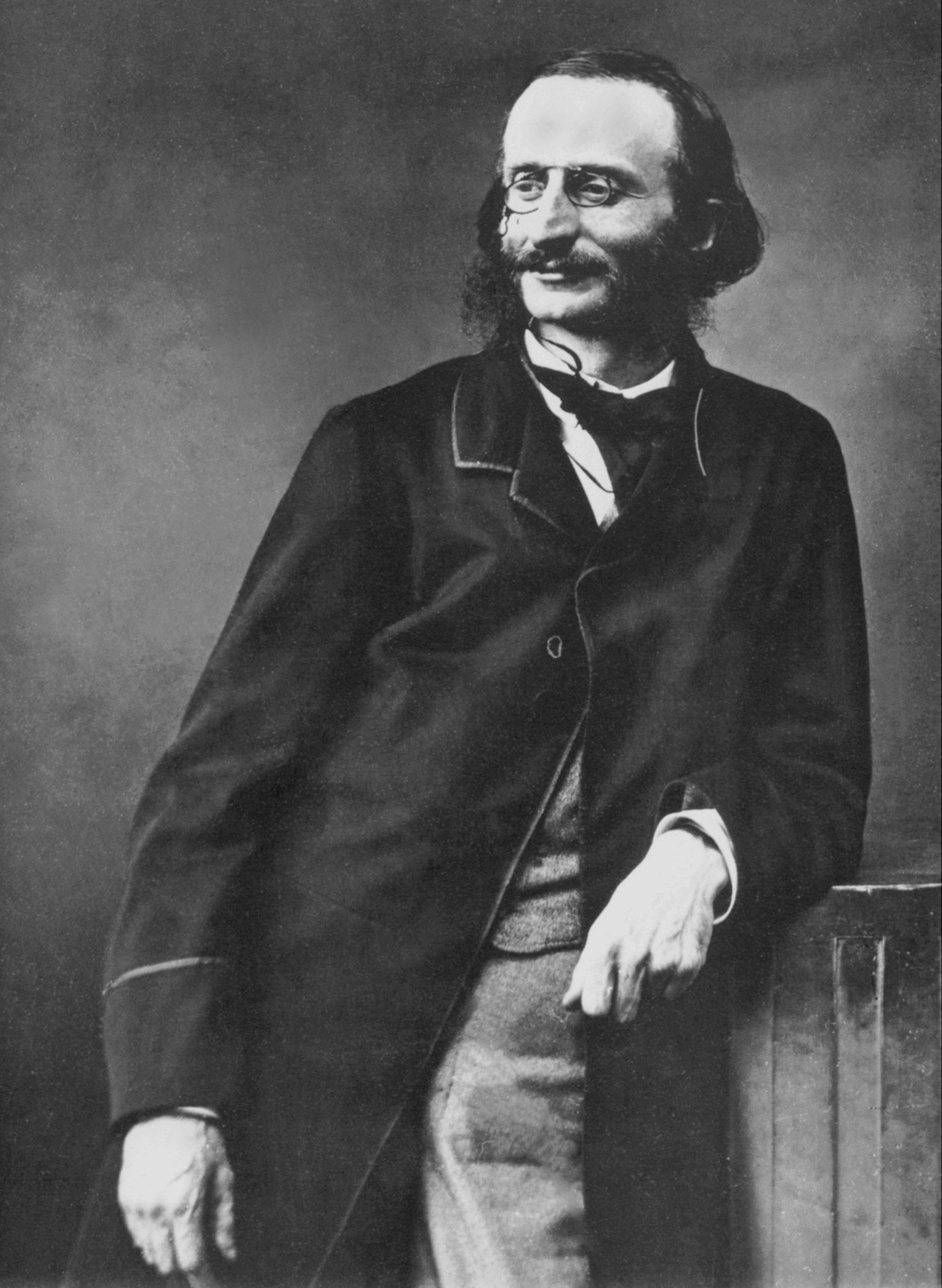
Jacques Offenbach, born 20 June 1819 in Cologne, was a German-born French composer, cellist, and impresario whose light operas defined the musical stage of the Second Empire. The son of a synagogue cantor, he showed early musical promise and at 14 entered the Paris Conservatoire, though he left after a year, finding academic study unfulfilling. He stayed in Paris, and from 1835 to 1855 he earned his living as a cellist, gaining international fame, and also worked as a conductor. But his real ambition was to write comic pieces for the musical theatre. When the Opéra-Comique showed no interest, he leased a small theatre in the Champs-Élysées in 1855. Over the next three years, he presented more than two dozen of his own short works, many of which became popular. In 1858, Offenbach produced his first full-length operetta, Orphée aux enfers (Orpheus in the Underworld), with its famous can-can. The piece was an enormous success and has remained his most performed work. During the 1860s, he wrote at least eighteen full-length operettas plus many one-act pieces, including La belle Hélène (1864), La Vie parisienne (1866), La Grande-Duchesse de Gérolstein (1867), and La Périchole (1868). These works, with their risqué humor about sexual intrigue and gentle satirical jabs, combined with Offenbach's gift for melody, made him internationally known. Translated versions were hits in Vienna, London, elsewhere in Europe, and the United States. All told, he composed nearly 100 operettas, and his influence on later composers like Franz von Suppé, Johann Strauss II, and Arthur Sullivan was profound. Offenbach's fortunes were tied to the Second French Empire of Napoleon III, whose court he genially satirized. The emperor granted him French citizenship and the Légion d'honneur. But with the Franco-Prussian War in 1870 and the fall of the empire, Offenbach fell out of favor in Paris due to his imperial connections and German birth. He continued to succeed in Vienna, London, and New York, and in the 1870s he re-established himself in Paris with revivals and new works, including a popular US tour. In his final years, he worked on his opera The Tales of Hoffmann, but he died on 5 October 1880, before its premiere. The opera, completed by others, has entered the standard repertory, and many of his operettas are still staged today.
Fame & Fandom
The audience for Jacques Offenbach consists of opera enthusiasts, classical music scholars, and patrons of the arts who appreciate his historical significance rather than engaging in personal idolization rituals; no formal collective name exists for this group. His legacy is defined by the enduring performance of his works in professional venues rather than grassroots activism or organized fan campaigns. In the landscape of modern fame metrics, he holds a distinct position among his peers. He is the 29th most famous person in Classical, a standing that has remained steady since the previous cycle. This placement within the iFANN Global Fame Rankings reflects a sustained global attention across media coverage, search trends, and consumption signals worldwide. The rankings belong to the iFANN Global Fame Rankings, a system that tracks influence without relying on transient viral spikes. While the composer passed away long ago, his cultural footprint remains substantial enough to secure a high ordinal rank in his specific industry sector. The data indicates that his work continues to generate significant engagement compared to other figures in the field. There are no documented instances of fan-funded projects or social media-driven chart pushes associated with his name, distinguishing his relationship with the public from that of contemporary celebrities. The absence of a named fandom does not diminish his stature; instead, it underscores a respect rooted in artistic merit rather than personality cults. His status as a leading figure in 19th-century musical theatre ensures his continued relevance in academic and professional circles.
Interesting Facts and Legends
Born Jacob Eberst in Cologne in 1819, the composer adopted the name Jacques Offenbach upon moving to Paris and later became a naturalized French citizen in 1860. A verified historical anecdote recorded by the Library of Congress notes his presence at the 1876 Centennial Exposition in Philadelphia, where he conducted an orchestra featuring John Philip Sousa playing violin. This event highlights the international respect he commanded among musicians of different generations. The cultural mythology surrounding him is heavily tied to his invention of the operetta genre and the premiere of *Orphée aux enfers* (*Orpheus in the Underworld*) in 1858. This production introduced the Can-can, a dance that sparked significant moral panic and controversy in Parisian society due to its perceived indecency and high-energy nature. While specific anecdotes of crowds shutting down streets are not detailed in all records, the dance itself became so iconic that it effectively disrupted the social norms of the era, becoming synonymous with Offenbach's name. Stories from his Bonnaroo appearance do not exist; rather, the folklore centers on this mid-19th-century scandal where high art met popular uproar. Modern productions continue to celebrate these innovations, such as recent reviews of *Les Contes d'Hoffmann* (*The Tales of Hoffmann*) and *Orphée aux enfers* at the Salzburg Festival and Great Lakes Operetta. His body of nearly 100 operettas defined the mid-19th century, blending satire with melody to create a lasting impact on the musical stage.
Death & Aftermath
Died
+1880-10-05 (aged 61)
Death Place
Paris, France
Cause of Death
reported complications from heart disease and exhaustion
Jacques Offenbach collapsed while conducting a rehearsal of the overture to his final masterpiece, Les Contes d'Hoffmann, in late September or early October 1880, marking the culmination of years of relentless work as an impresario and composer. He passed away shortly thereafter on October 5, 1880, in Paris, France, at the age of sixty-one. The musical community responded with immediate mourning, recognizing him as the father of operetta and a central figure in French cultural life, while peers dedicated performances to his memory rather than organizing modern-style vigils. His funeral took place three days later on October 8, 1880, at the Père Lachaise Cemetery in Paris, attended by family, close friends, and prominent figures from the Parisian music scene who honored him with excerpts from his operettas and unfinished opera.
Following his passing, his estate was managed by his wife Louise and their children, who oversaw the publication of remaining manuscripts and arranged for Ernest Guiraud to complete Les Contes d'Hoffmann. The completed opera premiered in 1881 and quickly became one of the most frequently performed works in the operatic repertoire, ensuring his legacy endured through global productions and academic study well into the twenty-first century.
Awards & Accolades
Keywords
Quick Facts
- Profession
- composer, cellist, conductor
- Born
- +1819-06-20
- Birthplace
- Cologne
- Died
- +1880-10-05
- Death Place
- Paris
- Gender
- Male
- Spouse
- Herminia de Alcain
- Birth Sign
- Gemini
Personal Details
- Spouse
- Herminia de Alcain
Join the community
fans discussing