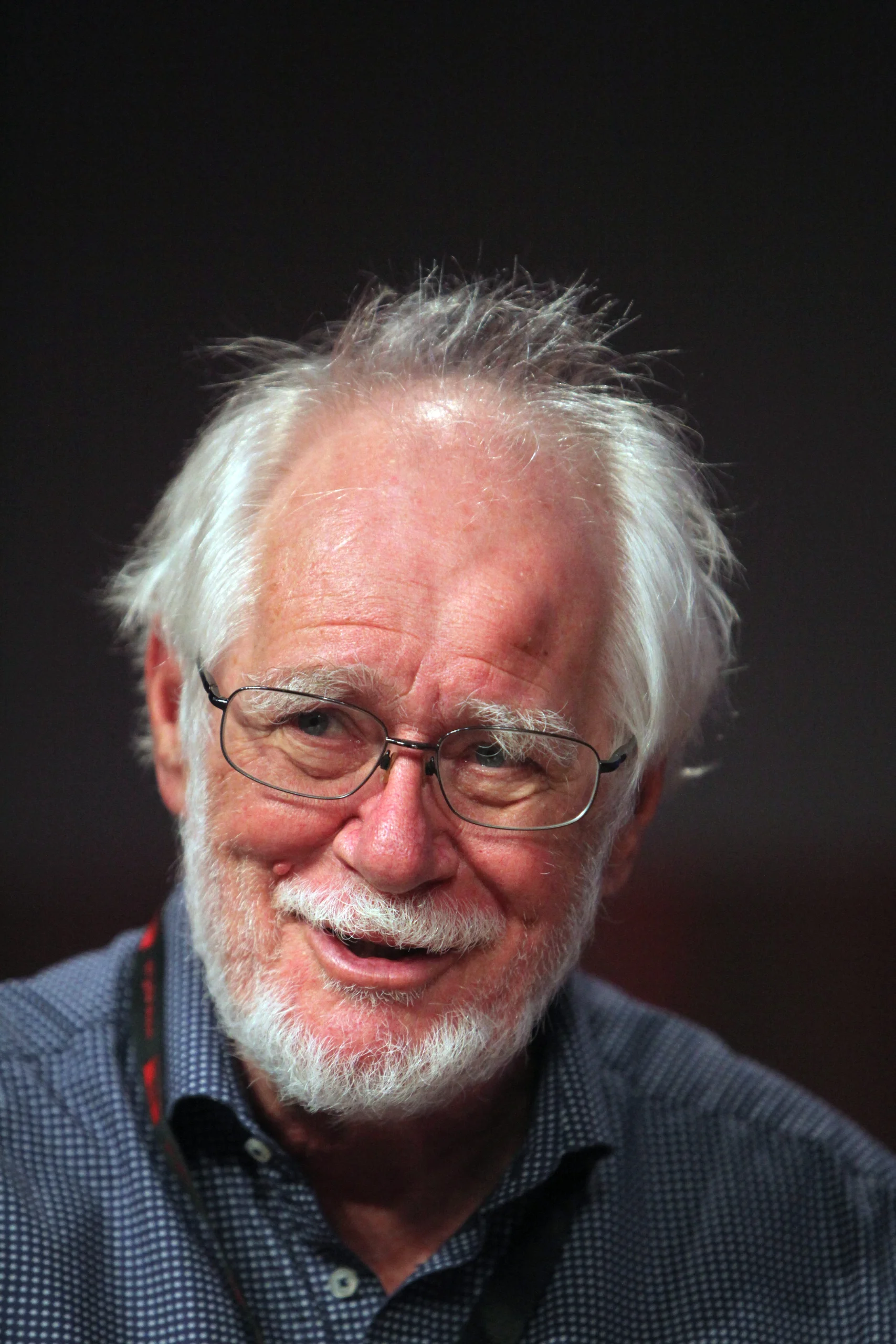
Jacques Dubochet
 Switzerland
Birthday
June 8, 1942
Birth Sign
Gemini
Birthplace
Aigle, Switzerland
Age
84 years old
About
Jacques Dubochet is a Swiss biophysicist who transformed how scientists see the invisible. He won the 2017 Nobel Prize in Chemistry for developing cryo-electron microscopy, a technique that lets researchers image biomolecules in their natural, hydrated state without damaging them. The method has become a cornerstone of structural biology, helping scientists understand everything from viruses to proteins linked to Alzheimer's disease.
Now an honorary professor at the University of Lausanne, Dubochet remains a beloved figure in the scientific community. He's known not just for his technical brilliance but for his humility and philosophical outlook. His Nobel banquet speech, where he mused about the size of the world versus the size of his head, captured the hearts of many. He continues to mentor young scientists and champion the value of basic research.
Early Life & Background
Jacques Dubochet was born on June 8, 1942, in Aigle, a small town in the Swiss Alps. His father was a watchmaker, a precise craft that perhaps foreshadowed his own meticulous work. Growing up in the mountains, he developed a love for nature and a curiosity about how things work.
His early schooling took place in the cantons of Wallis and Vaud. He was initially drawn to physics, studying at the École Polytechnique Fédérale de Lausanne and the University of Lausanne. But a pivotal shift happened when he moved toward molecular biology, a field then in its infancy. He did experimental work in the Valais region and Lausanne, getting hands-on experience with the tools that would later define his career.
Dubochet has shared a personal hurdle from his childhood: he was afraid of the dark. That fear, he says, ironically led him to study light and optics, which eventually brought him to electron microscopy. It's a reminder that even the most brilliant scientists have their own human struggles.
Career Growth
Dubochet's breakthrough came during his time at the European Molecular Biology Laboratory (EMBL) in Heidelberg, Germany, where he worked for decades. In the late 1970s and early 1980s, he developed the vitrification method. Before this, electron microscopy required freezing samples, but ice crystals formed and destroyed the delicate structures. Dubochet showed that if water is cooled extremely rapidly, it becomes a glass-like solid without crystals, preserving biomolecules in a near-native state.
This discovery, combined with the work of Joachim Frank on image processing and Richard Henderson on structure determination, led to modern cryo-EM. The three shared the 2017 Nobel Prize in Chemistry. After retiring from EMBL, Dubochet returned to Switzerland as an honorary professor at the University of Lausanne. He has continued to advocate for science education and the importance of curiosity-driven research. In 2018, the Royal Photographic Society awarded him and his colleagues the Progress Medal for their contributions to imaging.
Career Timeline
Public Image & Style
Jacques Dubochet is seen as a humble and visionary scientist. He's often photographed in casual academic attire, projecting an approachable, down-to-earth demeanor. The media and scientific community revere him for making the invisible visible, but he never sought the spotlight. His public statements reflect a philosophical view of science, emphasizing the collective nature of discovery. He doesn't have a pop-culture fandom, but he is widely respected by structural biologists and chemists around the world. His Nobel speech, with its poetic musings, made him a beloved figure even beyond scientific circles.
Fame & Fandom
Jacques Dubochet occupies a unique space in the public consciousness, distinguished by profound scientific impact rather than celebrity status. His audience consists primarily of structural biologists, chemists, and those following major scientific milestones, rather than a traditional fanbase that organizes campaigns or creates fan art. There is no formal fandom name associated with him, nor are there documented rituals, birthday billboards, or charity drives organized by followers in his honor. The digital interactions surrounding his name remain limited to general announcements of his achievements, such as the 2017 Nobel Prize recognition, which garnered attention from the broader public but did not spawn an organized movement. Unlike pop culture figures, Dubochet has never engaged in direct personal interaction with a mass audience of followers, and his legacy remains strictly within the realm of academic contribution and historical scientific advancement. The concept of a fan-artist relationship does not apply to his career profile, as his work serves the collective advancement of knowledge rather than commercial entertainment. Consequently, there are no viral on-stage incidents, crowd reactions, or mythological stories generated by fans. While he is widely respected by the scientific community for making the invisible visible, this reverence manifests as professional admiration rather than fandom enthusiasm. iFANN has evaluated his global standing, and the data indicates that Jacques Dubochet is currently unranked in the Global Top 1,000 or any Top-100 scope list. He does not hold a placement in the published rankings at this time.
Interesting Facts and Legends
Jacques Dubochet once revealed that his first hurdle in life was overcoming a fear of the dark, a paradoxical challenge that steered him toward studying light and optics. His breakthrough is often described as creating 'iceless frozen water,' since vitrified water does not form ice crystals. Born and educated entirely in Switzerland before moving to Germany for his research post, he maintained strong ties to his homeland throughout his career. In his Nobel banquet speech, he mused, 'The world is large, very large. My head is small, quite small. There is no way I can put the world in my head. Nevertheless, I have been trying...' He has emphasized that 'Knowledge is our best common good,' a motto reflecting his collaborative spirit. A frequently cited biographical anecdote concerns his childhood learning difficulties; he was recognized as dyslexic as a young child, a fact featured in his Nobel biography. The defining moment of his public life remains winning the 2017 Nobel Prize in Chemistry alongside Joachim Frank and Richard Henderson for developing cryo-electron microscopy. This achievement is often described in media as providing a 'Google Earth for molecules' or capturing 'life in atomic detail.'
Notable Quotes
“The world is large, very large. My head is small, quite small. There is no way I can put the world in my head. Nevertheless, I have been trying...”
“Knowledge is our best common good.”
“I was afraid of the dark.”
Family & Personal Life
Details about Jacques Dubochet's family are sparse, as he has kept his personal life private. He was born in Aigle, Switzerland, to a watchmaker father, a profession that may have influenced his precision-oriented approach to science. There is no public information about siblings, a spouse, or children. He resides in Switzerland, likely near Lausanne, where he maintains his academic ties. His family background in the Swiss Alps seems to have instilled in him a deep connection to nature, which is evident in his scientific interests.
Notable Connections
Jacques Dubochet is closely associated with Joachim Frank and Richard Henderson, with whom he shared the 2017 Nobel Prize in Chemistry. Frank developed image processing algorithms, while Henderson solved the structure of bacteriorhodopsin using electron microscopy. Together, their combined work created modern cryo-EM. Dubochet also has strong ties to the University of Lausanne, where he serves as an honorary professor and mentors the next generation of scientists.
Relationships & Dating History
Jacques Dubochet has kept his personal life out of the public eye. There is no credible information about his dating history, marriages, or children. He has never publicly discussed a spouse or partner, and no records of engagements or divorces exist in biographical sources. As of 2026, his relationship status remains unknown, as he has chosen to maintain privacy in this aspect of his life. He appears to have focused entirely on his scientific career and academic pursuits.
Salary, Net Worth In 2026
$5 Million
iFANN Editorial Team estimate
Jacques Dubochet's net worth is not publicly documented, as is common for scientists of his stature. His income primarily came from his academic salary as a researcher and professor. The Nobel Prize in 2017 came with a monetary award, but the exact amount he personally received isn't widely reported. Per iFANN's editorial analysis, estimates suggest his net worth is around $5 Million as of 2026, though this is largely speculative. His financial situation is modest compared to celebrities, reflecting a career dedicated to knowledge rather than wealth. He has not engaged in commercial ventures, and his legacy lies in his scientific contributions rather than financial accumulation.
Awards Won (2)
Jacques Dubochet was awarded the Nobel Prize in Chemistry in 2017, sharing it with Joachim Frank and Richard Henderson for developing cryo-electron microscopy. In 2018, he received the Progress Medal from the Royal Photographic Society alongside his co-laureates. He is also a member of the European Molecular Biology Organization, recognizing his significant contributions to molecular biology.
2017 · Chemistry
Development of cryo-electron microscopy
2018 · Imaging Technology
Contribution to imaging technology
Known For
Cryo-electron microscopy
2017 · Developer
Nobel Prize in Chemistry
2017 · Laureate
Keywords
Sources
Quick Facts
- Profession
- Biophysicist
- Born
- June 8, 1942
- Birthplace
- Aigle, Switzerland
- Gender
- Male
- Birth Sign
- Gemini
- Nobel Prize
- Chemistry, 2017
Personal Details
- Full Name
- Jacques Dubochet
- Education
- École Polytechnique Fédérale de Lausanne, University of Lausanne
Frequently Asked Questions
What did Jacques Dubochet win the Nobel Prize for?
Is Jacques Dubochet still alive?
Where was Jacques Dubochet born?
Does Jacques Dubochet have any children?
What is Jacques Dubochet's most famous invention?
Similar People
Join the community
fans discussing