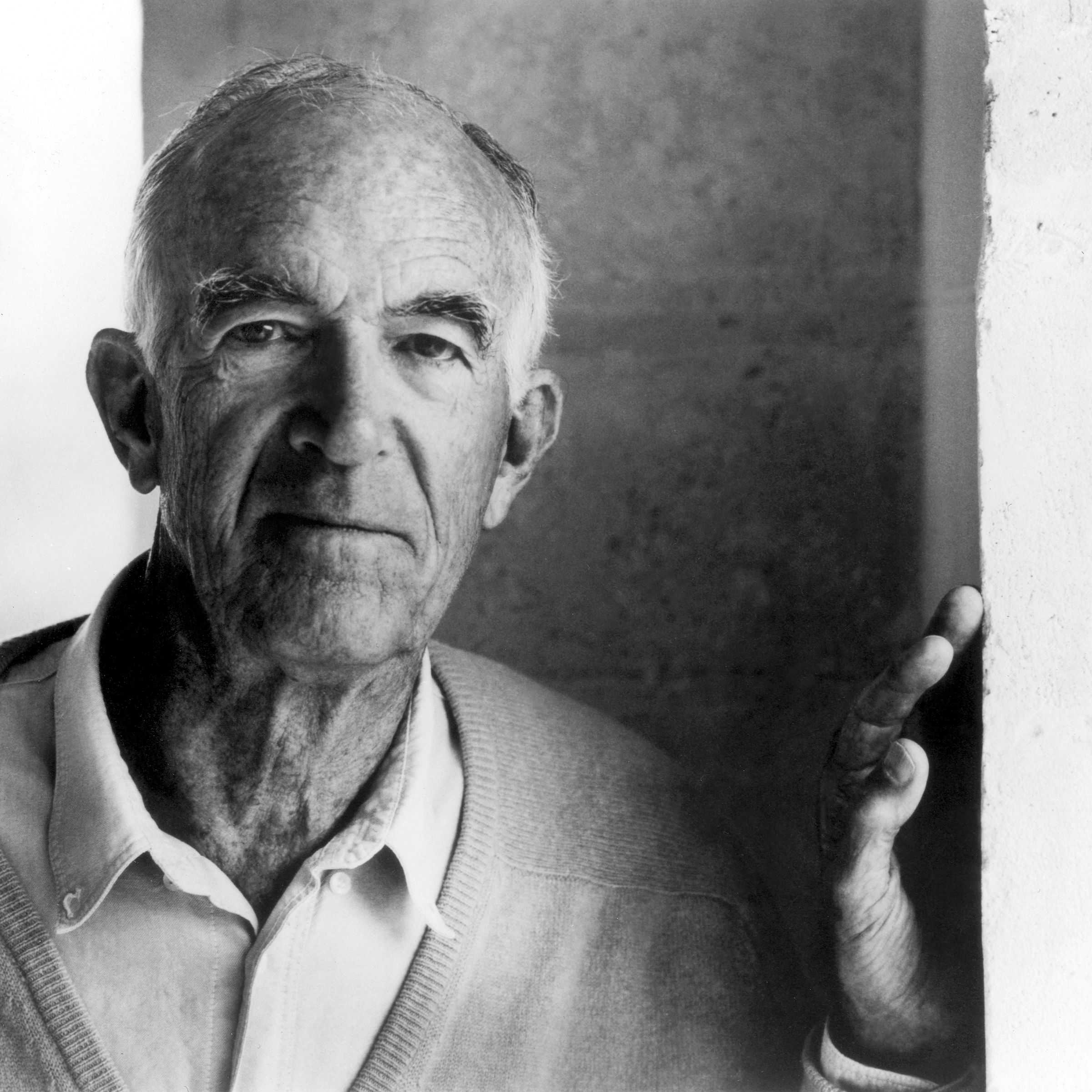
Jørn Utzon
 Denmark
Also known as: Joern Utzon, Jørn Oberg Utzon, Jorn Utzon
Birthday
April 9, 1918
Birth Sign
Aries
Birthplace
Copenhagen, Denmark
Age
Died at 90
About
Jørn Utzon was a Danish architect whose design for the Sydney Opera House made him one of the most influential figures in 20th-century architecture. Born in Copenhagen in 1918, he studied at the Royal Danish Academy of Fine Arts before developing a philosophy that fused organic forms with deep respect for landscape and light. His work, though relatively small in volume, left an outsized mark on the profession.
Utzon's fame rests on a single extraordinary building, but his broader portfolio includes the serene Bagsværd Church, the monumental Kuwait National Assembly, and the intimate Can Lis house in Mallorca. In 2003, he received the Pritzker Architecture Prize, the field's highest honor, and in 2007 the Sydney Opera House became a UNESCO World Heritage Site during his lifetime. He died in 2008 at the age of 90, leaving behind a legacy that continues to inspire architects worldwide.
Early Life & Background
Jørn Oberg Utzon was born on April 9, 1918, in Copenhagen, the son of Aage Utzon, a naval architect. Growing up around his father's drafting table, young Jørn absorbed the principles of hull design and shipbuilding, which later surfaced in his fascination with curved, shell-like structures. He spent much of his childhood in Aalborg, where his father ran a shipyard, and developed a keen eye for the interplay of form and function.
In 1937, Utzon enrolled at the Royal Danish Academy of Fine Arts, where he studied under the influential architect Kay Fisker. His education was interrupted by World War II, but he managed to graduate in 1942. During and after the war, he worked in Stockholm and Helsinki, absorbing the Nordic modernist traditions of Gunnar Asplund and Alvar Aalto, both of whom became lifelong influences. His travels took him across North Africa, Mexico, and the United States, where he studied Islamic architecture, Mayan temples, and the organic modernism of Frank Lloyd Wright.
Returning to Denmark, Utzon set up his own practice and began designing housing projects. The Kingo Houses near Helsingør, completed in 1957, demonstrated his belief that architecture should foster community and human connection. These low-rise courtyard homes, arranged along the contours of the landscape, earned him critical acclaim and set the stage for his leap onto the world stage.
Career Growth
On January 29, 1957, Utzon's radical design for a new opera house in Sydney won an international competition, beating out 232 other entries. His concept, inspired by the spherical geometry of orange segments, featured soaring white shells that seemed to billow like sails. Construction began in 1959, but the project soon encountered immense engineering challenges. The shells required innovative structural solutions, which were eventually provided by the engineer Ove Arup, but the collaboration was fraught.
Political interference and budget overruns strained Utzon's relationship with the New South Wales government. In 1966, he resigned in protest, leaving the project before its completion. He never returned to Australia and never saw the finished building, which opened in 1973 with significant alterations to his interior designs. For decades, Utzon remained in self-imposed exile, but his reputation grew as the Opera House became an icon.
Beyond Sydney, Utzon continued to produce significant work. Bagsværd Church, completed in 1976 near Copenhagen, is a masterpiece of light and concrete, with a billowing cloud-like ceiling. The Kuwait National Assembly (1982) adapted his shell vocabulary to a hot climate, while the Can Lis house in Mallorca (1971) and the Paustian House in Copenhagen (1987) showcased his sensitivity to site and material. In 1999, Utzon was reconciled with the Opera House when he was commissioned to design a new reception hall and a set of design principles for future renovations, which he executed remotely with his son Jan. In 2003, he received the Pritzker Prize, and in 2007, the Opera House was named a UNESCO World Heritage Site.
Career Timeline
Public Image & Style
Utzon's public persona is that of a poetic visionary who never compromised his principles. He is often portrayed as a misunderstood genius, driven from his greatest work by political forces, yet vindicated when the Sydney Opera House became a World Heritage Site. His design philosophy, as he articulated it, centered on adding to the existing landscape rather than imposing on it. He believed that architecture should serve human needs and create spaces for people to come together, a view that set him apart from the more dogmatic modernists of his era.
In photographs, Utzon appears as a calm, contemplative figure, often with a pipe in hand. He gave few interviews and rarely sought the spotlight, preferring to let his buildings speak. This reticence only added to his mystique, and his 2003 Pritzker Prize acceptance was widely seen as a quiet triumph over decades of exile.
Fame & Fandom (iFAMOUS Rankings)
The community surrounding Jørn Utzon operates through a distinct lens of architectural reverence rather than celebrity worship. His legacy is anchored by physical structures, most notably the Sydney Opera House, which draws enthusiasts who engage with his work through preservation societies and academic institutions like the Utzon Center in Aalborg. Unlike pop stars with organized fan clubs, Utzon's admirers are historians, architects, and preservationists who honor his reclusive nature and humanistic design philosophy through study and advocacy for his built works. There is no formal name for this collective, as the audience identifies primarily through their professional or academic connection to architecture rather than a shared fandom moniker. The interaction between Utzon and the public remained strictly mediated by his buildings; he was known for being difficult to access and did not participate in the ritualistic behaviors common to modern fame. While recent releases of his travel diaries and photography have deepened the understanding of his creative process, these efforts remain institutional rather than grassroots campaigns driven by a fanbase. The iFANN Global Fame Engine has evaluated Jørn Utzon and determined that he currently holds no placement in the published rankings, meaning he does not appear in the Global Top 1,000 or any Top-100 scope list at this time.
Interesting Facts and Legends
Jørn Utzon won the international competition for the Sydney Opera House in 1957 against 233 entries from 32 countries, a victory often attributed to juror Eero Saarinen championing the radical shell-like design. His career took a dramatic turn when he resigned from the project in 1966 due to escalating costs and political disputes, effectively exiling himself from his own masterpiece for decades. This event remains a central tragedy in architectural lore, framing the building as a symbol of both artistic triumph and bureaucratic failure until his reconciliation with Australia in 1999. Upon his death in 2008, the Sydney Opera House illuminated in gold to honor the architect, marking the end of an era for Danish design. Recent cultural revivals have included the publication of his personal travel diaries and new photography collections of his home, Can Lis, which have humanized the legendary figure by revealing his conceptual thinking and deep connection to organic forms.
Notable Quotes
“The building is not just a building, it is a place where people can come together.”
“The basis of all architecture is the human being.”
“We must add to the existing landscape, not destroy it.”
Family & Personal Life
Jørn Utzon married Lisbeth Falsig, and the couple had three children: Jan, Lin, and Kim. Jan followed in his father's footsteps and became an architect, working closely with him on the later Sydney Opera House interior projects, including the Utzon Room and the design principles that guide renovations to this day. The family split their time between Denmark and Mallorca, where Utzon built the Can Lis house as a family retreat. After Utzon's death in 2008, his family remained active in preserving his legacy, with Jan serving as a trustee of the Utzon Center in Aalborg.
Notable Connections
Jørn Utzon collaborated with a number of notable figures throughout his career. His most consequential partnership was with the structural engineer Ove Arup, whose firm solved the engineering challenges of the Sydney Opera House shells, though their relationship later soured. Utzon's son Jan worked closely with him on the Opera House's later interior projects. In his early years, he was influenced by the architects Gunnar Asplund and Alvar Aalto, and he later served as a mentor to younger Danish architects, including Bjarke Ingels, who has publicly acknowledged Utzon's impact.
Relationships & Dating History
Jørn Utzon was married to Lisbeth Falsig, and the couple remained together until his death. They had three children: Jan, Lin, and Kim. The family lived in Denmark and later in Mallorca, where Utzon designed the Can Lis house. No other romantic relationships, engagements, or divorces are documented in credible sources. As of 2026, Utzon is deceased, and he was married to Lisbeth at the time of his death.
- MarriedLisbeth Falsig1940 - 2008Married for over 60 years; they had three children together.
Death & Aftermath
Died
November 29, 2008 (aged 90)
Death Place
Copenhagen, Denmark
Cause of Death
Heart attack
Family members announced the passing of Jørn Utzon on November 29, 2008, confirming that the renowned Danish architect had died peacefully at his home in Copenhagen. He was ninety years old and had spent his final days in the city where he had lived since resigning from the Sydney Opera House project decades earlier. Multiple sources including Britannica and Designboom confirm that he passed away from a heart attack.
The architectural community reacted with profound mourning as news spread across major institutions and publications like Designboom and The Guardian, which published remembrances reflecting on his legacy and the tragedy of his earlier departure from the Opera House. Tributes poured in from peers who highlighted his status as a Pritzker Prize laureate and his unique ability to fuse organic forms with deep respect for landscape.
Details regarding the specific date, location, and attendees of Jørn Utzon's funeral or memorial service have never been made public, and it is widely understood that his funeral was a private affair held in Copenhagen. Following his death, the Utzon estate continued to manage his legacy through the Utzon Center in Aalborg, which opened in 2019 to house his archives and promote his work. Posthumous releases included exhibitions of his travel diaries and photography organized by the center in 2018, alongside various monographs and films that continued to explore his work.
Net Worth (Estate Value)
$5 Million
iFANN Editorial Team estimate
Because Jørn Utzon died in 2008, his financial legacy is tied to his estate rather than his personal income. The iFANN Editorial Team's analysis of his career earnings, architectural royalties, and the ongoing value of his designs points to an estate valued at roughly $5 million as of 2026. This figure reflects the income generated by licensing his drawings, the ongoing sales of his architectural models and prints, and the management of his archive, which was donated to the Danish Architecture Centre in 2017.
Utzon's professional income during his lifetime came primarily from architectural commissions, which were relatively few but prestigious. He did not engage in commercial endorsements or real estate speculation, and his wealth was never documented in the same way as that of contemporary architects who built large commercial portfolios. The estate's revenue streams are modest but steady, driven by the enduring interest in his work and the cultural value attached to his name.
Awards Won (4)
Jørn Utzon received the most prestigious honors in architecture, including the Pritzker Prize in 2003, the RIBA Royal Gold Medal in 1978, and the Alvar Aalto Medal in 1982. He was also made an honorary Companion of the Order of Australia in 2003. These awards recognized his visionary contributions to the field, particularly his design for the Sydney Opera House.
2003 · Architecture
Lifetime achievement
2003 · Honorary
Services to architecture
Known For
Sydney Opera House
1973 · Architect
Bagsværd Church
1976 · Architect
Kuwait National Assembly
1982 · Architect
Kingo Houses
1957 · Architect
Can Lis
1971 · Architect
Keywords
Sources
Quick Facts
- Profession
- architect
- Born
- April 9, 1918
- Birthplace
- Copenhagen
- Died
- November 29, 2008
- Death Place
- Helsingør
- Gender
- Male
- Birth Sign
- Aries
Personal Details
- Full Name
- Jørn Oberg Utzon
- Spouse
- Lisbeth Falsig
- Children
- Jan Utzon, Lin Utzon, Kim Utzon
- Education
- Royal Danish Academy of Fine Arts (1937–1942)
Frequently Asked Questions
Why did Jørn Utzon leave the Sydney Opera House project?
Did Jørn Utzon ever see the Sydney Opera House?
What is Jørn Utzon's most famous building?
What other buildings did Jørn Utzon design?
What awards did Jørn Utzon win?
Similar People
Join the community
fans discussing