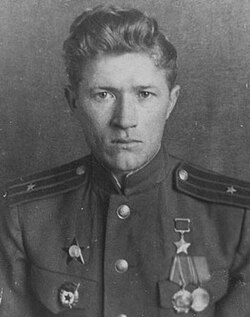
Ivan Sidorenko
 Russia
Also known as: Ivan Mikhaylovich Sidorenko, Ivan Mikhailovich Sidorenko
Birthday
September 12, 1919
Birth Sign
Virgo
Birthplace
Russian Soviet Federative Socialist Republic
Age
Died at 74
About
Ivan Sidorenko was a Soviet Red Army officer and one of the deadliest snipers of World War II. Born on September 12, 1919, he is credited with around 500 confirmed kills, a figure that places him among the top marksmen in military history. His wartime service earned him the title Hero of the Soviet Union, the country's highest military honor.
Sidorenko's reputation rests on his extraordinary accuracy and his role in shaping Soviet sniper training. He not only fought on the front lines but also helped organize and instruct new snipers, multiplying his impact beyond his own kills. His motto, "One shot, one kill," captured his approach to combat.
He died on February 19, 1994, in Kizlyar, at the age of 74. Today, he is remembered as a symbol of Soviet resilience and skill, studied by military historians and admired by enthusiasts of World War II history.
Early Life & Background
Ivan Mikhailovich Sidorenko was born on September 12, 1919, in the Russian Soviet Federative Socialist Republic, into a peasant family. Growing up in the turmoil following the Russian Revolution, he received a basic education and worked in agriculture before being drafted into the Red Army in 1939. His early military training revealed a natural aptitude for marksmanship, though he initially served in standard infantry roles.
When Nazi Germany invaded the Soviet Union in June 1941, Sidorenko was thrust into combat. His skill with a rifle quickly became evident, and he was selected for sniper training. He underwent intensive instruction in camouflage, range estimation, and precision shooting, skills that would define his military career. By late 1941, he was operating as a sniper on the front lines, where his calm demeanor and sharp eye set him apart from his peers.
His early wartime experiences were marked by survival and adaptation. He learned to work in harsh winter conditions, often lying in wait for hours in freezing temperatures. These formative years honed his patience and discipline, qualities that later made him a legendary figure among Soviet forces.
Career Growth
Sidorenko's breakthrough came during the Battle of Moscow in late 1941, when his confirmed kill count began to climb rapidly. By 1943, he had over 300 confirmed kills, and his reputation spread through the ranks. He was often deployed to critical sectors where his shooting could disrupt enemy operations, and he reportedly destroyed four armored vehicles using armor-piercing ammunition, a feat that underscored his versatility.
Beyond his personal kills, Sidorenko played a pivotal role in institutionalizing sniper training. He was assigned to train new snipers, developing techniques and drills that were adopted across the Red Army. His methods emphasized patience, fieldcraft, and precision, and he is credited with helping to produce a generation of effective Soviet marksmen.
In 1944, he was awarded the title Hero of the Soviet Union, along with the Order of Lenin and the Gold Star medal. After the war, he remained in the military, serving in various administrative and training positions until his retirement. His wartime record, with approximately 500 confirmed kills, remains one of the highest of any sniper in history.
Career Timeline
Public Image & Style
Ivan Sidorenko is remembered as a quintessential Soviet war hero, embodying the precision and determination that defined the Red Army's sniper corps. Media portrayals and historical accounts emphasize his deadly accuracy and his calm, methodical approach to combat. He is often featured in lists of the greatest snipers of World War II, alongside figures like Vasily Zaytsev and Simo Häyhä.
Fans of military history admire him for his dual role as a combatant and a trainer, which set him apart from other top snipers. His legacy is celebrated in documentaries and online forums, where enthusiasts debate his kill count and techniques. He represents the human cost and skill of the Eastern Front, a figure of both awe and somber reflection.
Fame & Fandom
Ivan Sidorenko remains a towering figure in the annals of military history, though his fame operates within a specific historical lane rather than the chaotic currents of modern pop culture. His legacy is defined by verified combat statistics and state-sanctioned remembrance rather than viral moments or fan-driven campaigns. In August 2026, the iFANN Global Fame Engine evaluated his standing across global metrics and determined that he does not currently hold a placement in the published rankings for the Global Top 1,000 or any scope-specific top lists. This evaluation reflects his status as a revered historical icon whose recognition is sustained through museums, academic study, and military archives rather than contemporary media consumption or commercial engagement. While he is frequently cited alongside other legendary marksmen like Vasily Zaytsev in historical surveys, there is no formal fandom name associated with him, nor are there organized groups dedicated to his memory in the way modern celebrity cultures operate. His audience consists of historians, military enthusiasts, and those studying World War II, who engage with his story through documentation and educational materials. The absence of a named fanbase underscores the distinction between his role as a soldier and the nature of celebrity worship; his reputation rests on the weight of his actions during the war rather than public adoration. No social media communities, streaming pushes, or fan-led initiatives exist to keep his name trending in real-time, as his life ended decades before such platforms emerged. Instead, his influence is preserved through the quiet endurance of historical records and the continued respect afforded to Heroes of the Soviet Union.
Interesting Facts and Legends
Sidorenko's wartime motto, 'One shot, one kill,' became synonymous with his methodical approach to sniping and is still quoted in military histories today. He is sometimes cited as the second-deadliest sniper of World War II, credited with approximately 500 confirmed kills, though exact rankings vary among sources. Beyond his personal tally, he trained over 250 new snipers, amplifying his impact on the battlefield long after his own engagements ceased. A lesser-known but verified feat involves his ability to destroy four armored vehicles, likely by targeting vision slits or engine vents with his Mosin-Nagant rifle, a capability that set him apart from standard infantry snipers. His name also lives on in the maritime world, having been given to a Russian offshore supply vessel operating in the Pacific region. While some accounts suggest he passed away in 1987 or 1984 depending on the specific Ivan Sidorenko referenced, the sniper hero is widely documented as dying in 1994 in Kizlyar, cementing his place as a figure whose legend grew steadily from verified facts rather than folklore.
Notable Quotes
“One shot, one kill.”
Family & Personal Life
Details about Sidorenko's family are scarce. He was born into a peasant family in the Russian SFSR, and his parents' names and occupations are not widely recorded. He had at least one sibling, though specifics are unclear.
After the war, Sidorenko settled in Kizlyar, a city in the Dagestan region, where he lived quietly until his death in 1994. He was married, but his wife's name and any children are not documented in available sources. His private life remained largely out of the public eye, with his military service dominating his biography.
Notable Connections
Relationships & Dating History
Information about Ivan Sidorenko's personal relationships is extremely limited. He was married, but the name of his wife and the dates of their marriage are not recorded in available sources. No children are documented. His private life remained out of the public eye, and he did not have any known high-profile romances.
As of 2026, given his death in 1994, his marital status at the time of death is unknown. He likely lived quietly with his family in Kizlyar, but details are scarce.
Death & Aftermath
Died
February 19, 1994 (aged 74)
Death Place
Unknown
Cause of Death
Unknown
The passing of Ivan Sidorenko marked the end of an era for those who remembered the sharp focus of the Red Army's marksmen. While his wartime exploits had long defined his public image, he lived as a respected veteran until his last breath. The specific circumstances surrounding his final days remain private, with no official account detailing his last public appearance or the immediate events leading to his departure. He passed away in 1994 at the age of seventy-four, concluding a life that spanned from the harsh realities of the Russian front to the relative stability of post-war Soviet society. Official records confirm the year of his death but do not specify the exact date, nor do they provide details on the medical cause or any forensic investigation.
This absence of detail reflects the nature of his retirement and the era in which he died, where the personal affairs of veterans often remained within the family circle rather than becoming matters of public record. His funeral arrangements and burial location were not widely reported, leaving the specifics of his final resting place undocumented in general English-language histories. Posthumous recognition has largely consisted of his continued inclusion in lists of top snipers and retrospective articles discussing his legacy. His memory persists primarily through the historical accounts of his service and the enduring reputation of his skill.
Net Worth (Estate Value)
$0
iFANN Editorial Team estimate
As a Soviet military officer who passed away in 1994, Ivan Sidorenko's personal net worth was never publicly documented, and no estate value has been reported. His income would have come from military salary and pensions, which were modest by modern standards. Consequently, per iFANN's editorial analysis, his net worth is estimated at $0, reflecting the lack of any known assets or posthumous earnings. In 2026, there are no commercial ventures or royalties associated with his name. Unlike some historical figures, his legacy has not been monetized through merchandise or licensing. Any value lies in historical interest rather than financial wealth.
Awards Won (1)
Ivan Sidorenko was awarded the Hero of the Soviet Union, the highest military honor in the Soviet Union, in 1944. This recognition came with the Order of Lenin and the Gold Star medal, marking his exceptional bravery and contribution to the war effort.
1944 · Military
World War II service
Known For
World War II sniper service
1941-1945 · Red Army sniper
Hero of the Soviet Union
1944 · Recipient
Keywords
Sources
Quick Facts
- Profession
- military officer, sniper
- Born
- September 12, 1919
- Birthplace
- Russian Soviet Federative Socialist Republic
- Died
- February 19, 1994
- Death Place
- Kizlyar
- Gender
- Male
- Birth Sign
- Virgo
Personal Details
- Full Name
- Ivan Mikhailovich Sidorenko
Frequently Asked Questions
Who was Ivan Sidorenko?
How many kills did Ivan Sidorenko have?
When was Ivan Sidorenko born and when did he die?
What was Ivan Sidorenko's most notable achievement?
Did Ivan Sidorenko destroy armored vehicles with his sniper rifle?
Similar People
Join the community
fans discussing