 Turkey
About
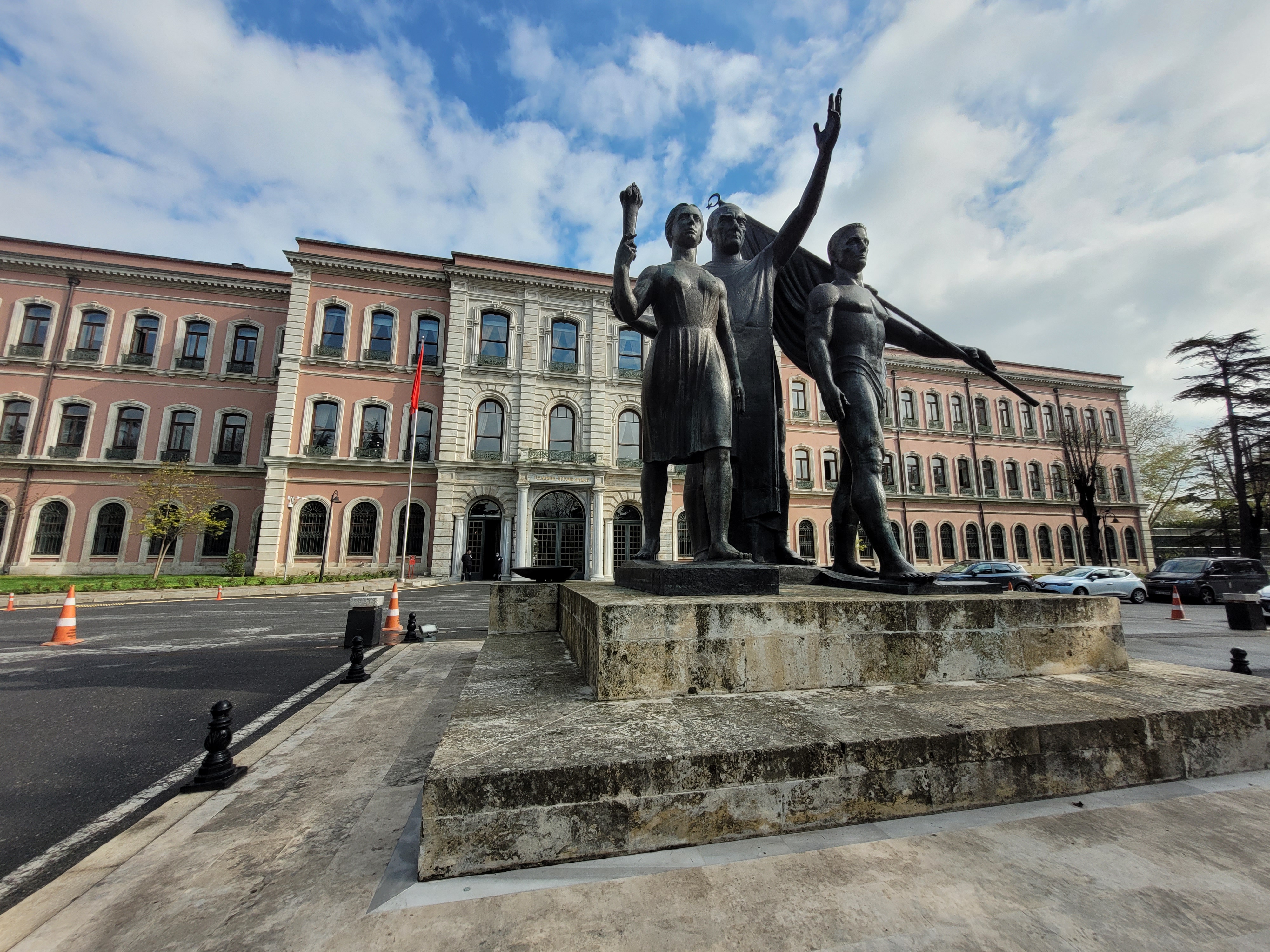
Istanbul University, known in Turkish as İstanbul Üniversitesi, stands as a public research institution at the heart of Istanbul. Its origins trace back to May 30, 1453, when Sultan Mehmed II ordered its founding just one day after the Ottoman conquest of Constantinople. What began as a medrese for Islamic theology and law evolved over centuries into a comprehensive Western-style university. In 1933, Mustafa Kemal Atatürk reorganized the school under its current name, establishing it as the first university of the modern Turkish Republic. Today the campus near Beyazıt Square enrolls nearly 59,000 students across dozens of faculties, maintaining a reputation that spans from medicine to the humanities.
The main campus features imposing gates and courtyards that have witnessed generations of student life, political protests, and academic debate. Its library houses rare manuscripts and Ottoman-era documents, serving as a critical resource for researchers studying the region's history. The medical faculty at Çapa operates a major teaching hospital and remains internationally recognized. Beyond local influence, the university collaborates with institutions worldwide and consistently ranks among the top ten universities established in Europe.
Political tensions have recently impacted daily operations. In March 2025, the executive board revoked the diplomas of roughly 30 alumni, an action widely interpreted as politically motivated. By May 2026, the Turkish government seized the university amid a criminal probe, leaving students and faculty in limbo. Despite these challenges, the institution continues to host international conferences and maintain its role as a center for scientific output ranging from astrophysics to social sciences.
Mission
The official mission states the goal is to be "the leading university which creates valuable knowledge both for Turkey and the world, and bring-up competent individuals." This involves producing research that addresses national needs while contributing to global scholarship. The institution aims to train graduates who are skilled in their fields and ethically grounded. It also functions as a custodian of Turkey's intellectual heritage, balancing the preservation of traditions with the embrace of innovation.
History
Sultan Mehmed II decreed the founding of a medrese on May 30, 1453, immediately following the fall of Constantinople. For centuries, the institution operated within the traditional Ottoman madrasa system, producing scholars like Ali Kuşçu. By the 19th century, the Ottoman Empire began modernizing its education system, adopting European academic models. A pivotal transformation occurred in 1933 under Mustafa Kemal Atatürk's reforms, which reorganized the institution into its current form as Istanbul University. This reorganization attracted prominent German academics fleeing Nazi persecution, including physicist Arthur von Hippel and chemist Fritz Arndt, who helped establish modern research laboratories and curricula.
The medical faculty, founded in 1827 at Çapa, gained international recognition early on. Throughout the 20th century, the university expanded its faculties and student body while surviving significant political upheavals, including military coups and student protests in the 1960s and 1970s. In March 2025, the executive board revoked the diplomas of roughly 30 alumni, a move widely seen as politically motivated. More significantly, in May 2026, the Turkish government ordered the closure of the university amid a criminal probe into its administration. Reports indicate that the liberal institution was seized, causing uncertainty for students and faculty.
Subdivisions
Faculty of Medicine
Founded in 1827 at Çapa, this faculty includes a major teaching hospital and is internationally recognized.
Faculty of Law
One of the most prestigious legal schools in the country, producing many high-ranking officials.
Faculty of Letters and Science
Offers extensive programs in humanities and natural sciences.
Faculty of Forestry
Specialized in environmental studies and forestry management.
Institute of Social Sciences
Focuses on advanced research in various social fields.
State Conservatory
Dedicated to music and performing arts education.
Notable People
Ali Kuşçu
Scholar · 15th Century
Renowned astronomer and mathematician associated with the early medrese system.
Arthur von Hippel
Professor · 1933
German physicist who helped establish modern research laboratories after fleeing Nazi persecution.
Fritz Arndt
Professor · 1933
Chemist who contributed to the curriculum reform during the 1933 reorganization.
İsmet İnönü
Alumni · Early 20th Century
Former Prime Minister of Turkey and key figure in the republic's founding.
Milestones
1453
Founded by Sultan Mehmed II on May 30, one day after the conquest of Constantinople
1827
Establishment of the Faculty of Medicine at Çapa
1933
Reorganized under its current name, becoming the first university in modern Turkey
1960s–1970s
Survived significant political upheavals, including military coups and student protests
2025
Executive board revoked diplomas of roughly 30 alumni on March 18
2026
The university was seized and shuttered by the Turkish government amid a criminal probe
Departments
Sources
Organization Info
- Founded
- +1453-05-30
- Headquarters
- Istanbul
- Country
- Turkey
- Type
- University
- Founder
- Mehmed II
Official Website
www.istanbul.edu.tr
Join the community
fans discussing