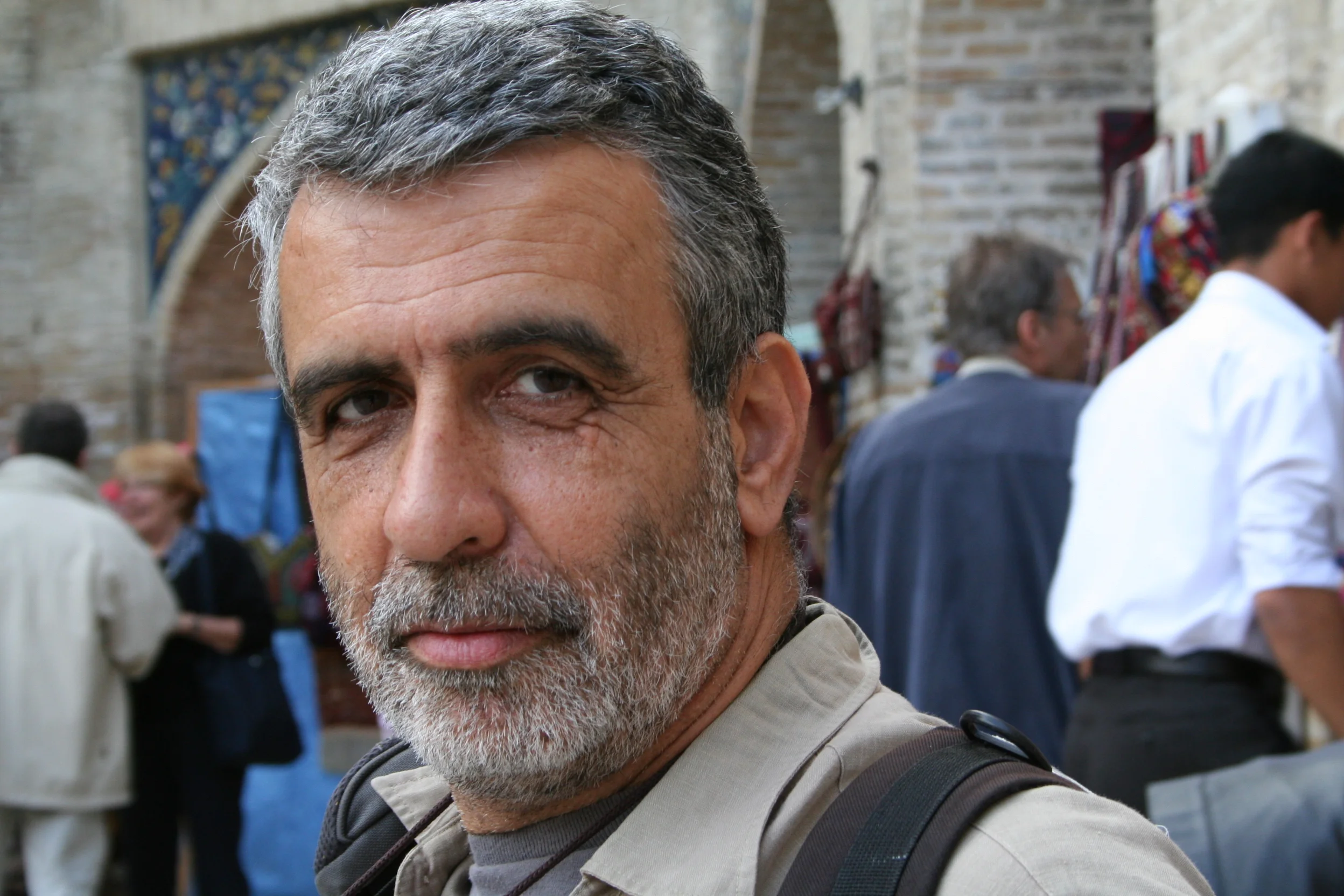
Israel Finkelstein
 Israel
archaeologist•professor•author
Also known as: Yiśraʼel Finḳelshṭain, Yisrael Finkelshtain
Birthday
March 29, 1949
Birth Sign
Aries
Birthplace
Petah Tikva, Israel
Age
77 years old
Height
5 ft 9 in (175 cm)
About
Israel Finkelstein is an Israeli archaeologist and professor emeritus at Tel Aviv University, widely recognized for reshaping how scholars understand ancient Israel and the biblical narrative. His research, particularly the Low Chronology theory, argues that the united monarchy of David and Solomon did not exist as a powerful empire in the 10th century BCE, but rather that the kingdoms of Israel and Judah rose later. This controversial stance has made him a central figure in biblical archaeology, and his work has reached a broad audience through best-selling books like The Bible Unearthed (2001).
As of 2026, Finkelstein continues to lead excavations at Megiddo, one of the most significant archaeological sites in the Near East, and serves as director of the School of Archaeology and Maritime Cultures at the University of Haifa. His career is marked by a commitment to using hard archaeological evidence to test long-held assumptions, and his findings have sparked debates that extend beyond academia into religious and public spheres. He has received numerous honors, including the Dan David Prize in 2005 and membership in prestigious academies worldwide.
Finkelstein's influence is measured not just in awards but in the widespread adoption of his methods and theories by a new generation of scholars. His books have been translated into over 30 languages, and his lectures draw large audiences both in person and online. For fans of archaeology and biblical history, he represents a rigorous, evidence-based approach that challenges conventional wisdom while remaining accessible to the public.
Early Life & Background
Israel Finkelstein was born on March 29, 1949, in Petah Tikva, then part of Mandatory Palestine, to parents who were Holocaust survivors. His father survived the Łódź Ghetto, and his mother the Theresienstadt Ghetto. Growing up in a secular Zionist household, he developed an early fascination with history and the land of Israel, driven by a desire to uncover the realities behind the biblical stories that were part of his cultural heritage.
He pursued undergraduate studies at Tel Aviv University, where he was drawn to archaeology. After completing his degree, he began working on excavations, and in 1983 he earned his Ph.D. from Tel Aviv University under the supervision of Yigael Yadin, a towering figure in Israeli archaeology. Yadin's influence was profound, but Finkelstein would later challenge his mentor's conclusions.
Before his breakthrough, Finkelstein held research positions at the Hebrew University of Jerusalem and taught at the University of Chicago and the Sorbonne in Paris between 1990 and 2000. His early fieldwork at major sites like Megiddo, Hazor, and Gezer was meticulous and laid the groundwork for his later theories. In the late 1980s and early 1990s, he began to question the traditional High Chronology, which dated the united monarchy to the 10th century BCE, and proposed the Low Chronology instead, arguing that the archaeological evidence pointed to a later rise of the Israelite kingdoms.
Career Growth
Finkelstein's career breakthrough came with the 2001 publication of The Bible Unearthed, co-authored with Neil Asher Silberman. The book became an international bestseller, translated into over 30 languages, and brought the archaeological debate about the Bible into mainstream consciousness. It argued that the Bible was largely a product of the 7th century BCE, written to support King Josiah's reforms, and that the united monarchy was a later literary construct.
Following this, he published David and Solomon: In Search of the Bible's Sacred Kings and the Roots of the Western Tradition (2006) and The Forgotten Kingdom: The History and Legacy of the Northern Kingdom of Israel (2013), both of which further developed his ideas. In 2024, he released In the Service of Empires: How Ancient Jerusalem Became Great, arguing that Jerusalem thrived primarily as a vassal state under foreign empires rather than as an independent power.
His ongoing excavations at Megiddo have continued to yield significant findings. In 2025, his team reported new evidence that may confirm the biblical account of the battle between King Josiah and Pharaoh Necho II, potentially the first physical evidence of the battle at Armageddon. As of 2026, he remains active in research and public speaking, with a growing digital presence through his YouTube channel.
Career Timeline
Public Image & Style
In the academic world, Finkelstein is seen as a rigorous, data-driven scientist who is unafraid to challenge orthodoxies, even those held by his own mentors. His public image is that of a contrarian who follows the evidence wherever it leads, which has made him a hero to some and a target for others, particularly conservative religious groups who see his theories as undermining the Bible's historicity.
He is often portrayed in the media as a controversial figure, but his colleagues respect him for his methodological precision and his willingness to engage in open debate. His writing style is accessible, which has helped him reach a wide audience beyond academia. He has a modest social media presence, with a YouTube channel and Facebook page managed by his team, but he does not engage directly on platforms like Instagram or Twitter.
Fans of biblical archaeology appreciate his clarity and his ability to explain complex stratigraphy and chronology in layman's terms. He is frequently invited to speak at conferences and public events, where his talks are known for being both informative and entertaining. His influence has spawned a school of thought, sometimes called the Finkelstein School, which emphasizes the primacy of archaeological evidence over textual tradition.
Fame & Fandom (iFAMOUS Rankings)
Israel Finkelstein commands a global audience composed of scholars, students, and readers of his extensive bibliography rather than a traditional celebrity fanbase. His influence stems from decades of rigorous fieldwork at Megiddo and the publication of influential texts like The Bible Unearthed, which have sparked enduring debates regarding the historical accuracy of biblical narratives. Unlike pop culture icons, he does not possess an organized fandom with rituals, campaigns, or official names, nor are there documented instances of fan-driven projects or service acts dedicated to his person. His interactions remain firmly within the realms of academic lectures, media interviews, and scholarly publications. As of August 2026, the iFANN Global Fame Engine has evaluated this profile and determined that Israel Finkelstein has been evaluated but does not currently hold a placement in the published rankings, including the Global Top 1,000 or any scope-specific top-100 lists. This absence of a numerical rank reflects his standing as a specialized academic authority rather than a mass-market personality whose fame fluctuates with viral trends or commercial consumption metrics. While his work generates significant discussion and controversy, particularly among religious groups and conservative historians, these reactions constitute intellectual engagement rather than fandom activity. The distinction between him and other figures bearing similar surnames remains a frequent point of clarification in public discourse, yet it does not generate legendary status or mythological lore in the manner of entertainment figures. His legacy is defined by the steady accumulation of archaeological data and the persistent revision of historical timelines, ensuring his name remains prominent in academic circles without crossing into the realm of widespread celebrity worship.
Interesting Facts and Legends
Israel Finkelstein speaks Hebrew, English, German, and French fluently, a skill that has served him well in international collaborations. He has been involved in the excavation of Megiddo for over four decades, making it one of the longest-running archaeological projects in the region. Despite his controversial views, he maintains respectful dialogue with religious communities, emphasizing that his work seeks to understand the past, not attack faith. He has a distinctive habit of wearing casual attire, often khakis and a field jacket, even at academic conferences, reflecting his hands-on approach to archaeology. In his spare time, he enjoys hiking in the Israeli countryside, which he considers an extension of his fieldwork. His favorite artifact from Megiddo is a small ivory carving of a lion, which he keeps in his office. Finkelstein is also known for his sharp wit in lectures, often using humor to defuse tension when discussing contentious topics. He once joked that if the Bible were a newspaper, it would be the op-ed page, not the front page. A widely retold story in academic circles involves his role alongside Neil Silberman in challenging the traditional historical account of the United Monarchy of David and Solomon, arguing that the biblical narratives were largely later literary constructs rather than historical facts. This stance sparked decades of fierce debate within the fields of archaeology and biblical studies, creating a narrative around him as a provocateur of historical revisionism.
Notable Quotes
“The Bible is not a history book in the modern sense... it is a collection of traditions that were written down much later than the events they describe.”
“Jerusalem was great not because it was a capital of an independent empire, but because it served the interests of great powers.”
“Archaeology is not about proving the Bible right or wrong; it is about understanding what actually happened in the past.”
Family & Personal Life
Finkelstein is intensely private about his family. He is married, but he has never publicly revealed his wife's name, their wedding date, or any details about their children. This privacy extends to all family matters, and he rarely mentions them in interviews or his writing.
His parents' experiences as Holocaust survivors deeply shaped his worldview, and he has spoken about how their stories influenced his commitment to uncovering historical truth. He has said that his father's survival of the Łódź Ghetto and his mother's of the Theresienstadt Ghetto gave him a profound sense of responsibility to document the past accurately.
He and his wife live in Israel, and he has mentioned in passing that they enjoy traveling together, though he never specifies destinations or details. His family life remains a deliberate blank spot in his public biography, a choice he has maintained throughout his career.
Notable Connections
Neil Asher Silberman is Finkelstein's most frequent collaborator, co-authoring The Bible Unearthed and David and Solomon. The two share a passion for making archaeology accessible to the public. Finkelstein also works closely with his colleagues at the Megiddo expedition, including David Ussishkin and Eitan Klein, with whom he has co-directed excavations and published numerous studies.
Relationships & Dating History
Israel Finkelstein has kept his personal life remarkably private throughout his career. There are no public records of any relationships before his marriage, and he has never discussed dating or romantic partners in interviews or his writing. He is married, but his wife's name, their wedding date, and any details about their relationship remain unknown to the public.
His marriage has been a constant in his life, but he has never shared how he met his wife or any anecdotes about their life together. This privacy is unusual for a public intellectual, but Finkelstein has consistently maintained that his personal life is not a matter of public interest. As of 2026, he is married, and there is no evidence of any separation or divorce.
- MarriedCurrentFinkelstein is married, but his wife's identity is not publicly known.
Salary, Net Worth In 2026
$5 Million
iFANN Editorial Team estimate
Per iFANN's editorial analysis, Israel Finkelstein's net worth stands at $5 Million as of 2026. Unlike celebrities in entertainment or sports, his income is not tracked by finance outlets, but it derives primarily from his long academic career and book sales. His tenure at Tel Aviv University, where he has been a professor since the 1980s, provided a steady salary, and his best-selling books, especially The Bible Unearthed, have sold hundreds of thousands of copies worldwide. Beyond book royalties, he earns from lecture fees at universities and conferences around the world, often commanding substantial sums for public talks. He also holds positions as director of the School of Archaeology and Maritime Cultures at the University of Haifa, which adds to his income. Real estate investments in Israel, where property values have risen steadily, likely contribute to his wealth, though specific holdings are not public. His net worth has grown gradually over the years, reflecting the enduring popularity of his work. The continuing relevance of his theories ensures a steady stream of royalties from his books, which remain in print in multiple languages. While not a wealthy man by celebrity standards, he is comfortably well-off, with a net worth that reflects a distinguished career in academia and publishing.
Awards Won (1)
Israel Finkelstein's contributions have been recognized with major honors. He received the Dan David Prize in 2005, shared with Amihai Mazar, for his research on the early Iron Age. He is a member of the Israel Academy of Sciences and Humanities, the French Académie des Inscriptions et Belles-Lettres, and the American Academy of Arts and Sciences. He has also received honorary doctorates from the University of Vienna and the University of Leuven.
2005 · Archaeology
Research on the 10th and 9th centuries BCE
Known For
The Bible Unearthed
2001 · Co-author
David and Solomon
2006 · Co-author
The Forgotten Kingdom
2013 · Author
Low Chronology Theory
1990 · Originator
Megiddo Excavations
1985 · Director
Keywords
Sources
Quick Facts
- Profession
- archaeologist, professor, author
- Born
- March 29, 1949
- Birthplace
- Petah Tikva, Israel
- Gender
- Male
- Birth Sign
- Aries
- Height
- 5 ft 9 in (175 cm)
- Education
- Tel Aviv University (Ph.D., 1983)
- Net Worth
- $5 Million
Personal Details
- Full Name
- Israel Finkelstein
- Height
- 5 ft 9 in (175 cm)
- Education
- Tel Aviv University (Ph.D., 1983)
Frequently Asked Questions
Who is Israel Finkelstein?
What is the Low Chronology theory?
Is Israel Finkelstein married?
What is Israel Finkelstein's most famous book?
Where does Israel Finkelstein work now?
Similar People
Join the community
fans discussing