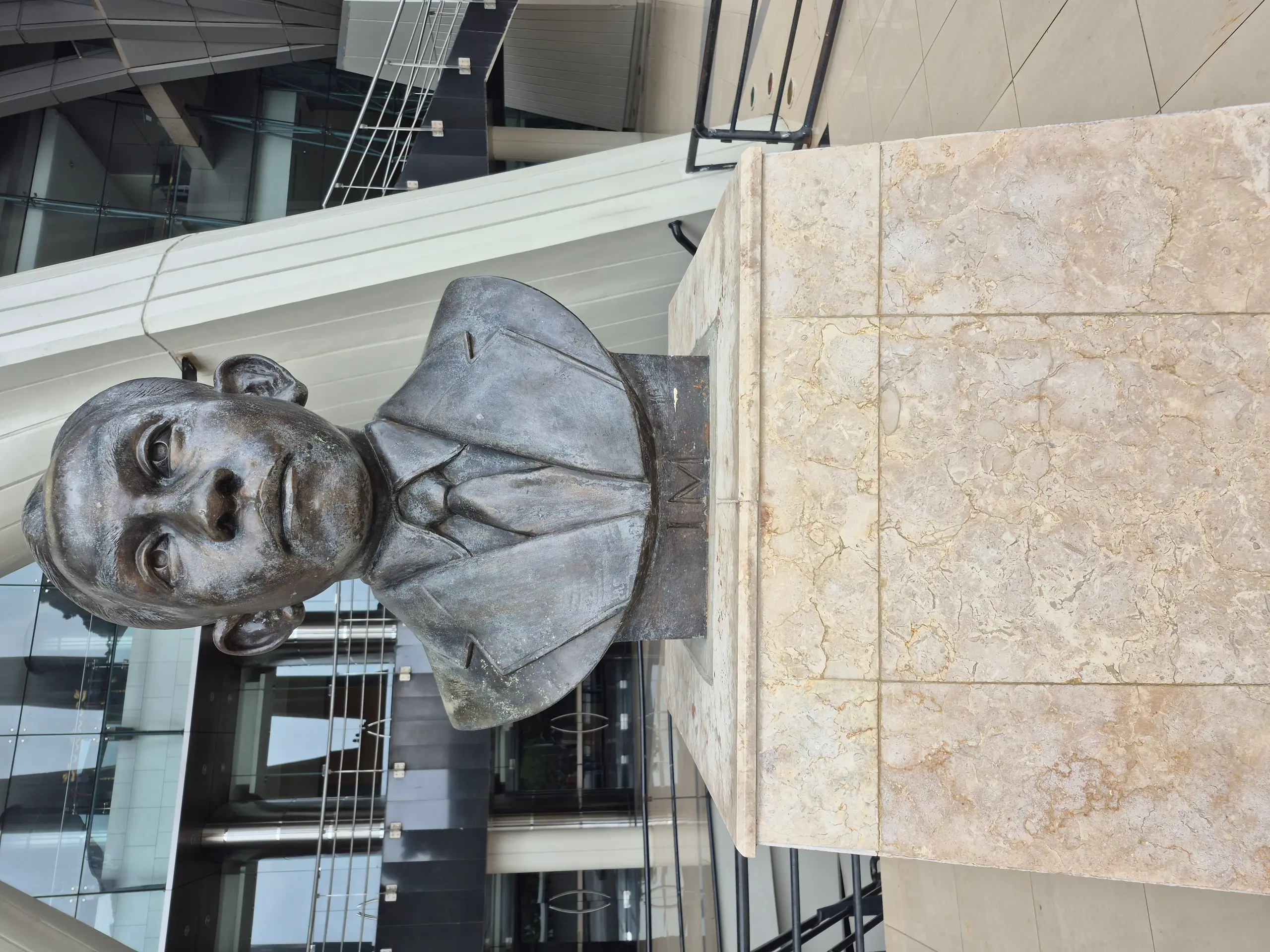
Ismail Marzuki
 Indonesia
Birthday
+1914-05-11
Birth Sign
Taurus
Birthplace
Jakarta
Age
Died at 44
About
Ismail Marzuki, fondly known as Bang Ma'ing, was an Indonesian composer, songwriter, and musician born in Jakarta on May 11, 1914. Over a career spanning nearly three decades, he wrote an estimated 202 to 240 songs, many of which became patriotic anthems that stirred the nation. His best-known compositions include "Halo, Halo Bandung," "Gugur Bunga," and "Rayuan Pulau Kelapa," each a cornerstone of Indonesian musical heritage. Marzuki's impact was so profound that in 1968, ten years after his death on May 25, 1958, the government honored him by naming Jakarta's premier cultural center, Taman Ismail Marzuki (TIM), after him. In 2004, he was posthumously declared a National Hero of Indonesia, cementing his legacy as a musical pioneer and patriot.
Fame & Fandom (iFAMOUS Rankings)
Ismail Marzuki sits firmly outside the Global Top 1,000 in iFANN's August 2026 evaluation. The system has scanned the digital landscape and found no current placement for the composer within published rankings or scope lists. He holds no numeric rank because he is not a contemporary figure competing for daily attention metrics. Instead of a fanbase with rituals, Marzuki commands the undivided reverence of an entire nation. There is no formal name like 'Swifties' or 'BTS Army' attached to his followers; the term fandom simply does not apply to a man who died before social media existed. His admirers do not organize birthday billboards or flood subway ads with inside jokes. Their devotion manifests through state-sponsored preservation and institutional memory rather than viral campaigns. The public relationship with Marzuki is defined by national veneration. He remains the Father of Indonesian Music, a title earned through over two hundred songs that served as morale boosters during the struggle against Dutch colonization. While modern stars chase trending hashtags, Marzuki's legacy lives on in the Taman Ismail Marzuki cultural center and annual educational tributes. His music continues to unify the population without needing marketing strategies or fan engagement. This quiet, consistent contribution to national identity sets him apart from living celebrities whose legends are built on crowd chaos. The world knows him not through search spikes, but through the enduring power of anthems like Halo, Halo Bandung and Gugur Bunga.
Interesting Facts and Legends
Ismail Marzuki composed between 202 and 240 songs during his nearly three-decade career, a volume that cemented his reputation as a musical prodigy. He passed away on May 25, 1958, leaving behind a body of work that became the soundtrack of Indonesia's independence. A specific song titled Hari Raya stands out in folklore for blending festive Lebaran themes with sharp social criticism, showcasing his unique ability to comment on society even during celebrations. Colleagues and biographers often recount the story of his instinctive genius, noting how he developed a deep musical understanding from his father at a very young age. This narrative of natural talent forms the core of his mythos. Unlike modern icons who face chaotic crowds, Marzuki's legendary status rests on his quiet dedication to the revolutionary cause. His nickname Bang Ma'ing reflects the approachable, brotherly persona he held within the community. In 2025, the musical MAR premiered to reimagine his love songs with jazz arrangements, proving that his influence extends far beyond historical archives into contemporary artistic expression.
Death & Aftermath
Died
+1958-05-25 (aged 44)
Death Place
Jakarta, Indonesia
Cause of Death
Unknown
Ismail Marzuki, the renowned Indonesian composer and songwriter born on May 11, 1914, died on May 25, 1958, in Jakarta at the age of forty-four. While his death date is universally cited across biographical sources, specific details regarding the official medical cause of death, the exact hospital or residence where he passed, and the circumstances of his final days are not explicitly documented in available records. The absence of such documentation suggests his death was likely treated as a natural occurrence without legal controversy or public dispute requiring formal inquiry.
Marzuki was immediately recognized as a national icon following his death, though specific details of vigils or fan gatherings occurring immediately in 1958 are not detailed in current search snippets. His legacy has been consistently honored through institutional dedications rather than immediate posthumous commercial metrics. Notably, the major cultural center in Jakarta, Taman Ismail Marzuki (TIM), was named in his honor, serving as a permanent memorial landmark for arts and culture. In recent years, this dedication has been reinforced by digital tributes, including a Google Doodle on November 10, 2021, which celebrated his life and contributions to Indonesian music. Funeral details, including the specific location of burial or cremation and the list of notable attendees, are not provided in the available text.
His posthumous impact remains profound and enduring. He is credited with writing between 202 and 240 songs, many of which remain staples of Indonesian music. His name remains synonymous with Indonesia's cultural heritage, evidenced by the ongoing revitalization of the Taman Ismail Marzuki cultural center and its role in hosting major events like the Jakarta Future Festival. Specific statements from his family regarding the handling of his estate or financial settlements were not found in the search results. Modern reinterpretations continue to emerge, such as the 2025 musical drama Mar presented by ArtSwara, which reimagines his life and works with jazz arrangements.
Awards & Accolades
Keywords
Quick Facts
- Profession
- singer, composer
- Born
- +1914-05-11
- Birthplace
- Jakarta
- Died
- +1958-05-25
- Death Place
- Jakarta
- Gender
- Male
- Birth Sign
- Taurus
Join the community
fans discussing