 France
“It is a film of extraordinary technical prowess and moral squalor, a work of art that is also an act of aggression.”
A.O. Scott
The New York Times
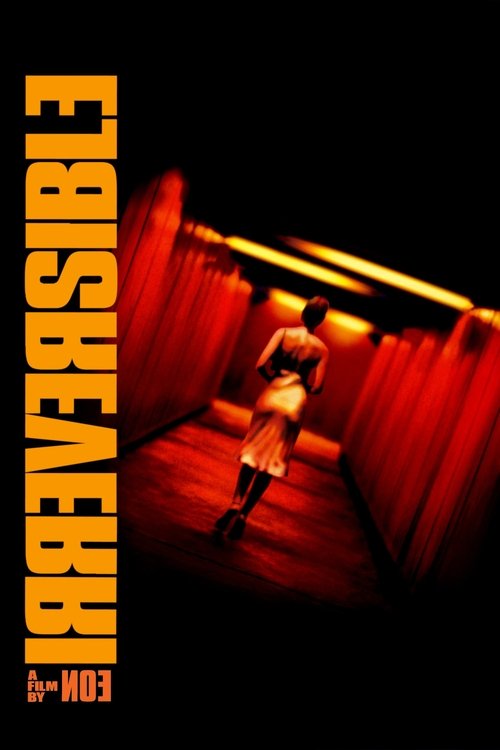
Gaspar Noé's Irreversible (2002) is a brutal, unflinching drama that unfolds in reverse chronology. The story begins with the aftermath of a violent act: a woman named Alex (Monica Bellucci) has been raped in a Parisian underpass. Her lover Marcus (Vincent Cassel) and ex-boyfriend Pierre (Albert Dupontel) set out to find the perpetrator, a pimp known as the Tapeworm (Jo Prestia), and exact revenge. The film then moves backward in time, showing the events leading up to the assault, including a party where the trio argued, and finally a blissful morning before everything went wrong.
Shot on a budget of $3.5 million, the movie grossed $6.5 million worldwide. Noé uses a disorienting camera style, swirling, handheld shots, to mirror the characters' descent into chaos. The nonlinear structure forces viewers to sit with the violence before understanding its context, a choice that sparked both praise and outrage. The score by Thomas Bangalter (of Daft Punk) adds a throbbing, electronic dread. Irreversible is not a film for the faint of heart; it's a raw, confrontational exploration of time, trauma, and the limits of vengeance.
Availability and pricing can change. Confirm on the provider's site before purchasing.
Time destroys everything. That message hits you before the first image fades in. A camera spins through a dark, red-lit underground club called Rectum, where men engage in sadomasochistic acts. The disorientation is immediate. A title card appears: "Time destroys everything."
Two men are pulled apart by police outside the club. Marcus (Vincent Cassel) has a broken arm. Pierre (Albert Dupontel) is covered in blood. A man known only as Butcher delivers a monologue about how time ruins everything. The narrative then rewinds.
Marcus and Pierre search for a pimp called Le Tenia, the Tapeworm. Marcus is wired on cocaine and rage, reckless and aggressive. Pierre, more restrained, tries to calm him. They question a transsexual prostitute named Concha, who points them toward Rectum.
The central tragedy emerges gradually. Alex (Monica Bellucci), Marcus's girlfriend and Pierre's ex, has been raped and beaten in an underpass near a party they all attended. She lies in a hospital, unconscious. Marcus and Pierre, consumed by grief and fury, vow to find the man who did it.
Moving further back, the film shows the party itself. Alex, Marcus, and Pierre attend a gathering at a friend's apartment. Marcus drinks heavily and flirts with other women, sparking tension with Alex. Pierre, still carrying feelings for her, tries to mediate. Frustrated, Alex leaves early, taking the underpass alone, a decision that leads to the assault.
Before the party, Alex and Marcus are at home, tender and loving. They make love. Alex reveals she might be pregnant. Marcus is supportive. She shares a dream about a red tunnel splitting in two, which she interprets as a premonition. The final scenes show Alex reading a book about time and destiny in a sunny park, happy and at peace. Then a black screen: "Time destroys everything."
Official Straight Cut Trailer
Trailer International
Critical Consensus
Irreversible is deeply polarizing. Some praise its unflinching, technically audacious depiction of trauma; others condemn it as exploitative and nihilistic. Its reverse chronology, disorienting cinematography, and notorious nine-minute rape scene make it one of the most controversial films of the 2000s.
“It is a film of extraordinary technical prowess and moral squalor, a work of art that is also an act of aggression.”
A.O. Scott
The New York Times
“The movie is like a punch in the stomach, but it's a punch that has been carefully choreographed and aimed with precision.”
Roger Ebert
Chicago Sun-Times
“A film of such visceral, stomach-churning power that it leaves you feeling physically assaulted.”
Peter Bradshaw
The Guardian
“A technically dazzling but morally dubious exercise in audience provocation that pushes the limits of screen violence.”
Todd McCarthy
Variety
“Noé's film is a brutal, unrelenting descent into the darkest corners of human behavior, executed with undeniable skill but questionable purpose.”
David Rooney
The Hollywood Reporter
Monica Bellucci
Alex
Vincent Cassel
Marcus
Albert Dupontel
Pierre
Jo Prestia
Le Tenia
Philippe Nahon
The Man (Butcher)
Stéphane Drouot
Stéphane
Jean-Louis Costes
Fistman
Mick Gondouin
Mick
Mourad Khima
Mourad
Layde Hellal
Layde
Dominique Nato
Commissioner
Michel Fesche
Taxi Driver
Director
Gaspar Noé
Writer
Gaspar Noé
Composer
Thomas Bangalter
Cinematographers
Benoît Debie, Gaspar Noé
Producers
Christophe Rossignon, Brahim Chioua, Vincent Cassel
Cannes Film Festival (2002)
Palme d'Or: Nominated
César Awards (2003)
Best Actor: Nominated
César Awards (2003)
Best Editing: Nominated
César Awards (2003)
Most Promising Actor: Nominated
European Film Awards (2003)
Best Actress: Nominated
Sitges Film Festival (2003)
Best Film: Nominated
Stockholm Film Festival (2003)
Bronze Horse: Nominated
Join the community
fans discussing