Intellivision
"The intelligent television console from Mattel Electronics."
Overview
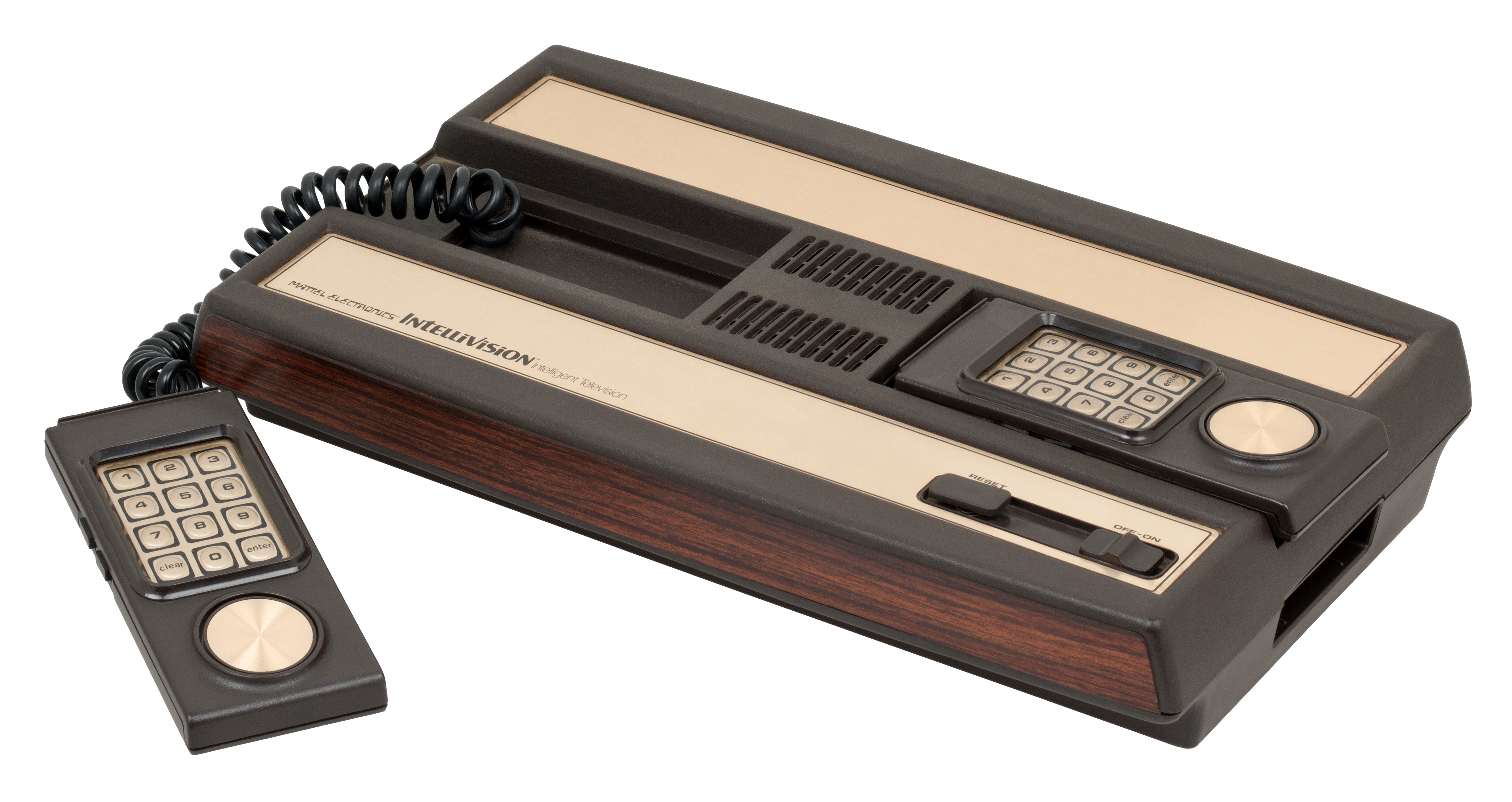
Mattel Electronics launched the Intellivision in late 1979 to challenge the dominance of the Atari 2600 with a system designed for sophistication rather than simple block pushing. The name served as a portmanteau of "intelligent television," signaling a marketing strategy focused on depth and realism. Unlike competitors that relied on standard joysticks, this machine introduced a unique multi-button keypad controller. This input method allowed for precise directional control and complex data entry, enabling developers to build sports simulations and strategy titles with physics engines that felt closer to real life.
The console arrived in November 1979 in the United States before expanding its reach in early 1980. It maintained a strong market presence until production ceased in 1990. By 1981, the system had secured nearly 20% of the US market share, selling over 3.75 million units by 1983. A massive workforce of approximately 1,800 employees supported the platform, including a dedicated team of 110 game developers who produced cartridges continuously from 1978 through the end of the line.
Gameplay
Players navigated menus and managed resources using the distinctive keypad, which combined directional arrows with numbered buttons for commands. This layout facilitated deep tactical gameplay in sports simulations like Baseball and Football, where accurate statistics and player movements replaced arcade-style abstraction. Action titles such as Astrosmash required quick reflexes and strategic resource management, while RPGs like Dungeons & Dragons: Role-Playing Game offered complex turn-based mechanics and inventory systems.
Multiplayer support was robust, typically accommodating two players simultaneously via dual-port controllers. Sports games featured competitive head-to-head modes, whereas strategy titles like Utopia allowed for split-screen or pass-and-play interactions. The system did not support downloadable content or expansion packs; new experiences arrived exclusively through physical cartridges.
Trailers

Keywords
Sources
Game Info
- Developer
- Mattel Electronics
- Publisher
- Mattel Electronics
- Engine
- Custom Mattel Architecture
- Release Date
- November 1979
- Age Rating
- Everyone
- Modes
- Single-player, Two-player simultaneous, Pass-and-play
- Platforms
- Intellivision, Atari Jaguar (via emulation), Intellivision Sprint
- Original Release
- November 1979
- Production End
- 1990
- Total Games Released
- 136+
- Market Share (1981)
- Nearly 20%
- Units Sold (1983)
- Over 3.75 Million
- Simultaneous Colors
- 16
- Modern Revival
- Intellivision Sprint (October 2025)
- Built-in Games (Sprint)
- 45
Join the community
fans discussing