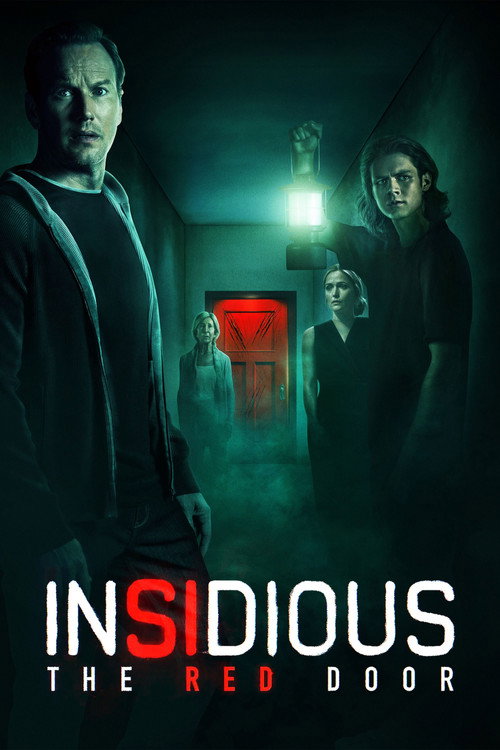
United States
“The movie is a skillful exercise in generating fear, using the oldest tricks in the book, but doing them well.”
Roger Ebert
RogerEbert.com

Part of a Collection
Insidious Collection
In 2010, James Wan and Leigh Whannell, the duo behind Saw, unleashed Insidious on unsuspecting audiences. Made for just $1.5 million, this haunted house story became a phenomenon, grossing over $100 million worldwide and launching a five-film franchise. The film stars Patrick Wilson and Rose Byrne as Josh and Renai Lambert, parents whose young son Dalton (Ty Simpkins) falls into a mysterious coma after exploring the attic of their new home. What follows is a descent into a nightmare realm called the Further, where malevolent spirits prey on the living.
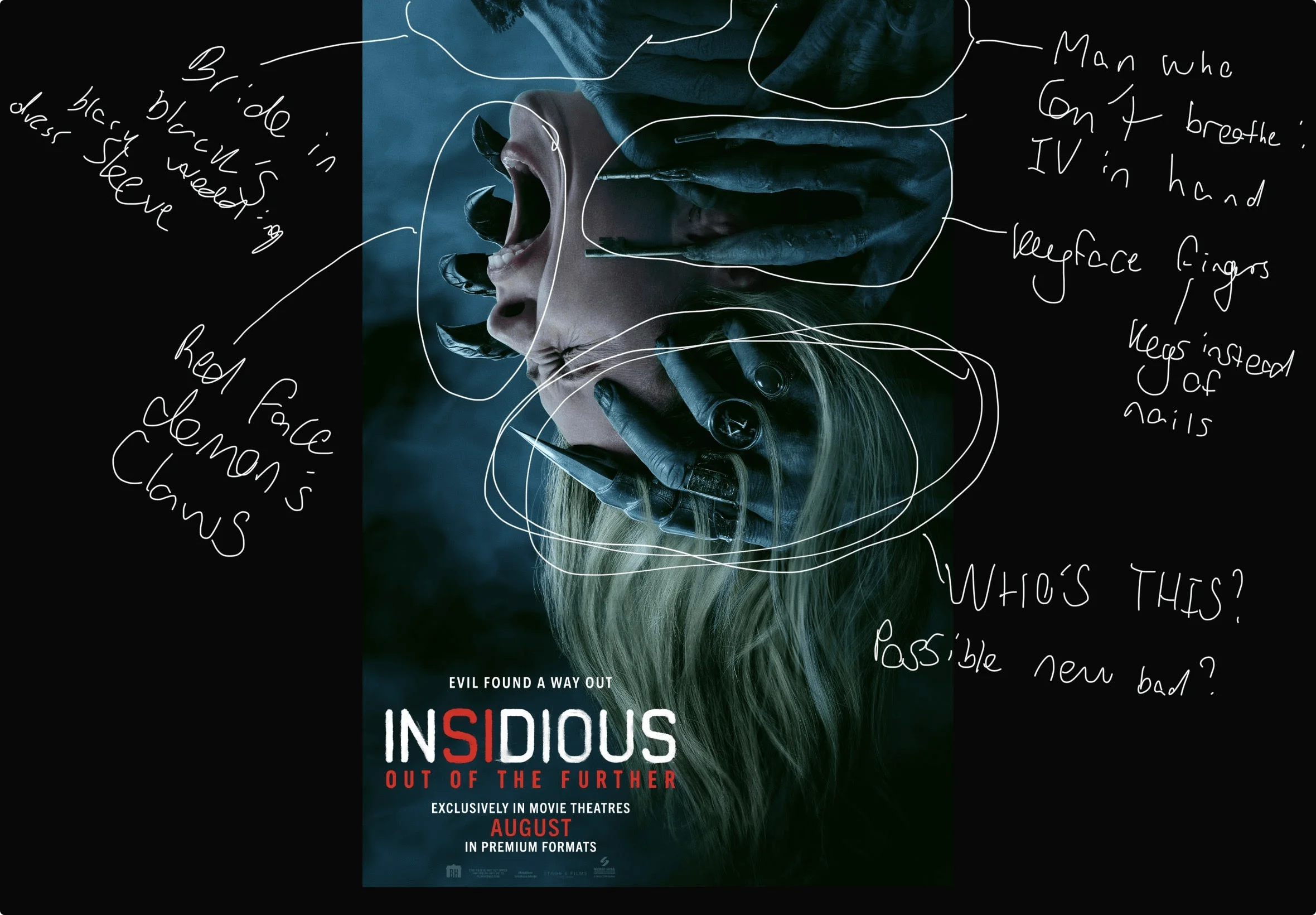
Rather than relying on gore, Insidious builds tension through masterful sound design and Joseph Bishara's unsettling score. The film's most famous scene, set to Tiny Tim's ukulele rendition of Tip-Toe Through the Tulips, became an instant horror classic. Wan's practical effects approach, using makeup and puppetry instead of CGI, gives the ghosts a tangible, nightmarish quality. The Lipstick-Face Demon, also played by composer Bishara, has become one of modern horror's most recognizable villains.
Insidious marked a turning point for Blumhouse Productions, proving that micro-budget horror could achieve blockbuster returns. The film's success paved the way for Wan's The Conjuring universe and established a new template for mainstream horror: slow-burn dread punctuated by explosive scares. Critics praised its old-school approach, though some felt the second half lost momentum. With a 67% Rotten Tomatoes score and an IMDb rating of 6.8, Insidious remains a beloved entry in 2010s horror.
Availability and pricing can change. Confirm on the provider's site before purchasing.
The Lambert family has just moved into a spacious Victorian house. Josh Lambert, a high school teacher, and his wife Renai, a musician, hope the new home will bring stability for their three children: ten-year-old Dalton, mischievous middle child Foster, and baby Kali. Dalton, a curious and artistic boy, explores the attic and finds an old music box. He climbs a ladder, falls, and hits his head. He seems fine, but the next morning, he cannot be woken. Doctors diagnose him with an unexplained coma, finding no brain damage or physical cause.
Weeks pass. Renai, who has put her music career on hold, begins experiencing strange phenomena. She hears voices on the baby monitor, objects move on their own, and footsteps echo through empty rooms. Josh dismisses her fears as stress. But the activity escalates. Renai sees a demonic red-faced figure standing in Dalton's room. Foster reports a ghost boy in his bedroom. After an invisible force attacks Renai, the family decides to move into the home of Josh's mother, Lorraine.
The paranormal activity follows them. The spirits are not haunting the house; they are haunting Dalton. Desperate, the family contacts Elise Rainier, a renowned psychic medium, along with her associates Specs and Tucker. Elise explains that Dalton has a rare gift: he can astral project, sending his consciousness out of his body while sleeping. After his fall, he became trapped in a dark dimension called the Further, a realm filled with tortured souls and demons. His body is an empty vessel, and entities are fighting to possess it.
Elise reveals that Josh also had this ability as a child. Lorraine confesses that a dark entity, an old woman in a veil, stalked Josh. Elise helped suppress his abilities through hypnosis, causing him to forget. Now, to save Dalton, Josh must reawaken his powers and enter the Further. The plan is dangerous: Josh will astral project while Elise guides him via seance. If his body is left unattended, other spirits could claim it. The film's tension builds as Josh prepares to confront the entity that has haunted his family for decades.
Official Trailer
Critical Consensus
Insidious relies on classic haunted-house tropes and effective jump scares rather than gore, delivering a genuinely creepy experience that showcases James Wan's skill with atmosphere, though the script occasionally falters in its second half.
“The movie is a skillful exercise in generating fear, using the oldest tricks in the book, but doing them well.”
Roger Ebert
RogerEbert.com
“Wan proves he's a master of the old-school scare, building tension through sound and shadow rather than CGI spectacle.”
Peter Debruge
Variety
“A throwback to '70s and '80s horror that earns its scares through meticulous pacing and a deeply unsettling sound design.”
Sheri Linden
The Hollywood Reporter
“The movie is at its best when it's content to simply let the audience sit in dread, waiting for the next inevitable jolt.”
Mike D'Angelo
The A.V. Club
Patrick Wilson
Josh Lambert
Rose Byrne
Renai Lambert
Lin Shaye
Elise Rainier
Ty Simpkins
Dalton Lambert
Barbara Hershey
Lorraine Lambert
Leigh Whannell
Specs
Angus Sampson
Tucker
Andrew Astor
Foster Lambert
Joseph Bishara
Lipstick-Face Demon
Philip Friedman
Bride in Black
Director
James Wan
Writer
Leigh Whannell
Composer
Joseph Bishara
Cinematographers
John R. Leonetti, David M. Brewer
Producers
Jason Blum, Steven Schneider, Oren Peli
Fangoria Chainsaw Awards (2012)
Best Wide-Release Film: Won
Fright Meter Awards (2011)
Best Horror Movie: Won
Empire Awards (2012)
Best Horror: Nominated
Join the community
fans discussing