“The difference is that Inkigayo relies more heavily on digital which in return needs 'gp support' and can't rely on sales and voting as much.”
Anonymous Reddit user
r/kpophelp
 South Korea
"Your Sunday music ritual, live from Seoul."
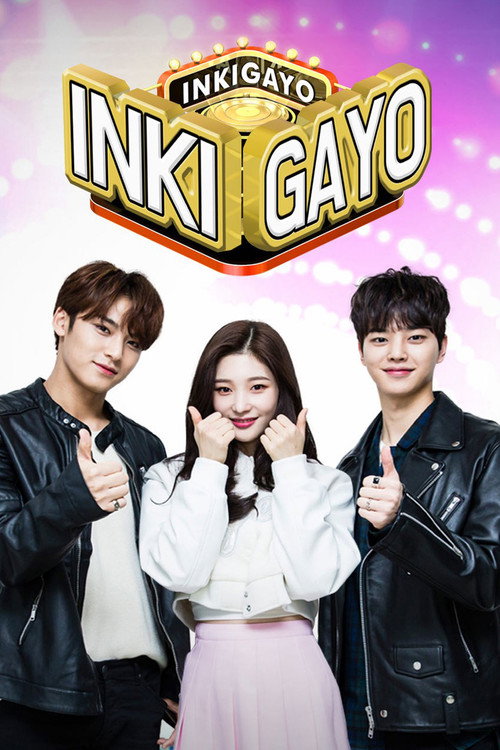
Sunday afternoons in South Korea have meant one thing for K-pop fans since 1998: Inkigayo. SBS's flagship music program has outlasted countless competitors, survived a brief cancellation in the 90s, and evolved into a weekly ritual that tracks the pulse of K-pop in real time. From the SBS Open Hall in Seoul, the show broadcasts live every week, bringing together rookie groups making their debut, veteran acts staging a comeback, and everyone in between.
What sets Inkigayo apart from other music shows is its scoring system. Where some programs lean heavily on physical album sales or dedicated fan voting, this one puts more weight on digital streaming numbers. That means an artist needs broader public support to win, not just a passionate fandom. It changes the strategy behind each comeback and fuels endless discussion among fans about who really deserved the trophy.
The show has cycled through dozens of MCs over the years, pulling hosts from the biggest idol groups in the industry. These hosts conduct interviews, announce winners, and bridge the gap between the stage and the audience at home. With over 1,600 episodes and counting, Inkigayo remains an essential stop on any K-pop promotion cycle.
Stream
Availability and pricing can change. Confirm on the provider's site before purchasing.
Every Sunday at 3:50 PM KST, the SBS Open Hall in Seoul fills with the sound of live music as Inkigayo goes on air. The premise is simple: a lineup of K-pop artists perform their latest songs, and one of them walks away with the week's number one trophy. But the path to that trophy involves a complex calculation that combines digital music sales, album sales, social media buzz, fan votes via SMS and app, and a panel of expert judges.
The show's structure follows a predictable but effective rhythm. Each episode opens with a group stage or a medley, then moves into individual performances. Artists promoting new music get a Comeback Stage where they perform multiple songs, often with elaborate staging. Those wrapping up a promotion cycle get a Goodbye Stage, a chance to thank fans before moving on. Between performances, the MCs conduct short interviews, tease upcoming acts, and build anticipation for the winner announcement.
The central tension of every episode is the race for number one. Unlike M! Countdown or Music Bank, Inkigayo weights digital streaming more heavily than physical sales or voting. This means a song that goes viral on Melon or Genie has a real shot at winning, even if its fandom is smaller. It also means that artists with massive dedicated fanbases sometimes lose to songs with broader mainstream appeal, which generates no small amount of drama on social media.
Over the course of a year, the show tracks the full arc of the K-pop industry. January brings post-holiday comebacks, spring sees major releases from top groups, summer is packed with upbeat tracks, and the year-end period slows down for award shows and special programming. Inkigayo occasionally cancels broadcasts in December to make room for the SBS Gayo Daejeon, a massive year-end music festival.
The show's rotating cast of MCs provides continuity. Typically drawn from active idol groups, these hosts serve as the audience's guide. Past MCs have included members of Girls' Generation, SHINee, EXO, BTS, TWICE, and NCT. They bring their own fanbases and personalities, which subtly shifts the show's energy every few months. Behind the scenes, production involves a mix of live and prerecorded performances, a logistical choice that sometimes confuses the in-studio audience but ensures smooth broadcasts.
Since its revival in 1998, Inkigayo has produced over 1,600 episodes. It has documented the rise of Hallyu, the global explosion of K-pop, and the careers of hundreds of artists. Winning on this show remains a significant milestone for any K-pop act, a sign that their music has connected with the wider public.
Critical Consensus
Inkigayo has been a reliable weekly fixture for K-pop fans since 1998, offering a blend of live performances and competitive chart rankings. Its scoring system, which prioritizes digital streaming, sets it apart from rival shows. While not critically reviewed by major Western outlets, it maintains a devoted audience.
“The difference is that Inkigayo relies more heavily on digital which in return needs 'gp support' and can't rely on sales and voting as much.”
Anonymous Reddit user
r/kpophelp
“It obviously makes sense from a production point of view, as to why some are live, some are prerecorded. But it must be very weird for the audience.”
Anonymous Reddit user
r/kpop_uncensored
“Right now…it's Girls' Generation. Check out Girls' Generation's performance of 'Mr.Mr.' on SBS's 'Inkigayo'.”
bhost909
Soshified
“'Inkigayo' will not air for three weeks, December 14, 21, and 28. We ask for viewers' understanding.”
Soompi staff
Soompi
Join the community
fans discussing