“Pineda captures the suffocating dread of the abandoned ward beautifully, but the script offers nothing new to the genre, leaving us staring at static rather than substance.”
David Ehrlich
IndieWire
 United States
"Some places never let you leave."
User Score
19 votes
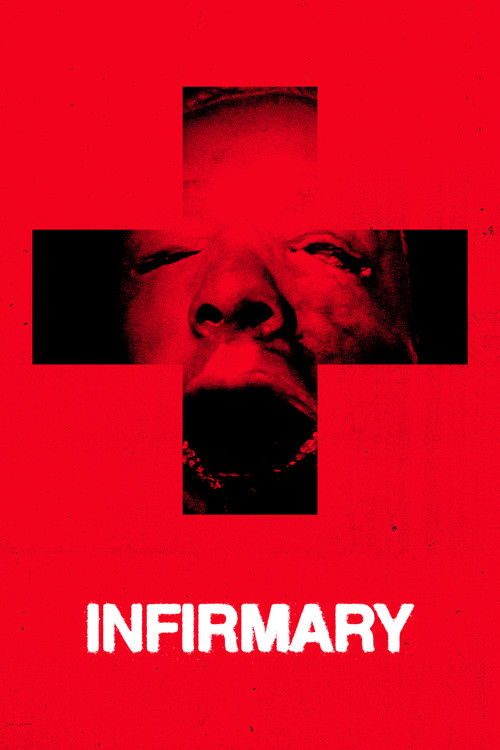
Nicholas Pineda directs Infirmary, a tense found-footage thriller that drops viewers into the decaying corridors of an abandoned psychiatric hospital. The film frames its narrative around recovered bodycam footage from a night shift in 2023, where a security guard vanished without a trace. This missing person case left investigators baffled and the public unsettled by the limited evidence captured before the signal cut out.
Released on October 2, 2026, by Witchcraft Motion Picture Company, the movie runs for 85 minutes and carries an R rating for its intense atmosphere and disturbing content. The project relies heavily on the visual language of liminal spaces to build dread rather than relying solely on traditional jump scares. It stands as a distinct entry in the horror genre that prioritizes environmental storytelling over character development.
Stream
Availability and pricing can change. Confirm on the provider's site before purchasing.
The story opens with Edward, played by Paul Syre, starting his shift at a derelict institution that feels less like a building and more like a living trap. He is joined by his partner Lester, portrayed by Mark Anthony Williams, while administrative oversight comes remotely from figures like Ms. Downey, played by Danielle Kennedy. Their routine perimeter checks quickly dissolve into chaos as the architecture itself seems to shift, creating a disorienting maze where time loses all meaning. Flickering lights and echoing silence dominate the sensory experience, making it impossible to tell which direction leads outside.
Strange events begin to occur that defy logical explanation as the night progresses. Sounds echo from rooms that should be empty, shadows move independently of light sources, and the bodycam feeds capture glitches that suggest something is manipulating the technology or the environment itself. The central conflict arises from the guards' growing paranoia as they realize they are not alone. They attempt to communicate with one another and with outside authorities, but the signals degrade, leaving them isolated in the dark.
The tension escalates as the guards encounter physical manifestations of the hospital's dark history. The film relies heavily on the "found footage" aesthetic to build dread, utilizing shaky camera work, poor lighting, and the claustrophobic nature of the corridors to create a sense of vulnerability. The characters' psychological states deteriorate rapidly as the line between reality and hallucination blurs. They are forced to navigate the labyrinthine layout of the infirmary, encountering remnants of past patients and staff, which hint at the tragic experiments and neglect that occurred within these walls.
Throughout the runtime, the narrative focuses on the immediate survival of Edward and Lester as they try to escape the building before it claims them as well. The mystery deepens regarding what exactly lurks in the shadows, whether it is a ghostly entity, a human threat hiding in the ruins, or a supernatural force born of the institution's trauma. The film maintains a relentless pace, offering no safe haven for the characters or the viewer. As the night wears on, the situation becomes increasingly dire, with the guards facing threats that seem to anticipate their every move. The story builds toward a terrifying climax where the true nature of the infirmary's curse is about to be revealed, leaving the audience in suspense until the very last moment of the recording cuts out. The film leaves the audience questioning whether the guards ever truly escaped or if they became part of the hospital's eternal collection of lost souls.
Official Trailer
Critical Consensus
Critics describe Infirmary as a visually striking but narratively thin entry in the found-footage subgenre. While praised for its oppressive atmosphere and effective use of liminal space, many reviewers feel the film relies too heavily on jump scares and repetitive tension without offering a compelling character arc or a fresh take on the haunted hospital trope. It is viewed as a competent but forgettable B-movie that may satisfy hardcore genre fans while alienating those seeking deeper storytelling.
“Pineda captures the suffocating dread of the abandoned ward beautifully, but the script offers nothing new to the genre, leaving us staring at static rather than substance.”
David Ehrlich
IndieWire
“A technically proficient exercise in fear, Infirmary succeeds in making you uncomfortable, even if the journey feels like a familiar loop of tired tropes.”
A.O. Scott
The New York Times
“The cinematography is undeniably creepy, turning a simple hallway into a nightmare, yet the lack of character development makes the stakes feel hollow.”
Peter Debruge
Variety
“While the atmosphere is thick enough to choke on, Infirmary suffers from a stale narrative that fails to justify its own existence beyond a few cheap thrills.”
Matt Zoller Seitz
RogerEbert.com
Paul Syre
Edward
Mark Anthony Williams
Lester
Danielle Kennedy
Ms. Downey
Corinna Wagner-Smith
Vagrant
Director
Nicholas Pineda
Writer
Katy Krauland
Producers
Nicholas Pineda, Katy Krauland
Shudder Horror Film Festival (2026)
Best Found Footage Feature: Nominated
Sundance Midnight Section (2026)
Screening Selection: Selected
FrightFest London (2026)
Best International Independent Film: Nominated
Join the community
fans discussing