“In Living Color didn't just break rules, it incinerated them, offering a vision of Black America that was joyful, angry, and uncompromisingly funny.”
Emily Nussbaum
The New Yorker
 United States
"The show that broke the mold and set the standard for sketch comedy."
User Score
137 votes
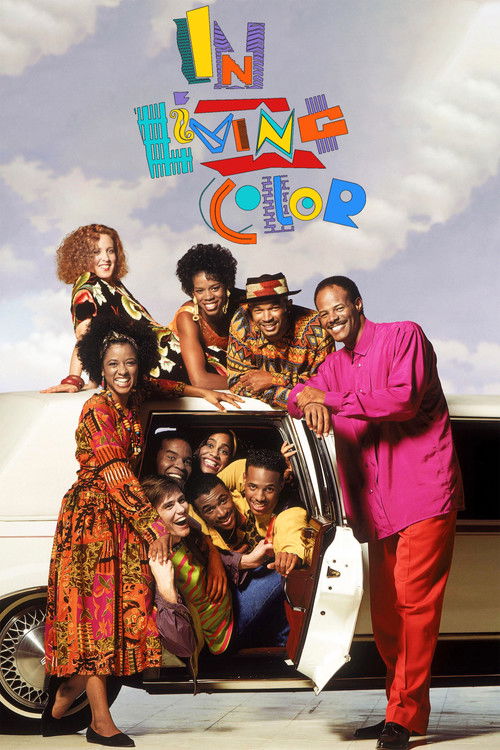
When In Living Color premiered on Fox in April 1990, it didn't just add another sketch show to the lineup; it detonated one. Created by Keenen Ivory Wayans and Damon Wayans, the series gave network television a much-needed jolt of raw, unapologetic energy. With a predominantly Black cast, it tackled race, politics, and pop culture with a sharpness that felt revolutionary. The show ran for five seasons and 128 episodes, wrapping in May 1994, but its impact has echoed through every comedy that followed.
The ensemble was a who's who of future stars: Jim Carrey, Jamie Foxx, David Alan Grier, Tommy Davidson, T'Keyah Crystal Keymáh, and the Wayans siblings. Each week, they delivered rapid-fire sketches that introduced characters like Homey D. Clown, Fire Marshal Bill, and the film critics of Men on Film. The show didn't shy away from controversy, whether it was skewering the Gulf War or parodying the Super Bowl halftime show. It earned an Emmy and became a cultural touchstone, but its real legacy is the careers it launched and the doors it kicked open for diverse voices in comedy.
Stream
Availability and pricing can change. Confirm on the provider's site before purchasing.
In Living Color was built on a simple but electrifying premise: a weekly half-hour variety show that moved at breakneck speed, featuring recurring characters, musical performances, and topical parodies. The show's core was its predominantly African-American cast, which gave it a perspective that was largely missing from network TV at the time. The sketches ranged from the absurd (Jim Carrey's Fire Marshal Bill, whose safety demonstrations always ended in fiery chaos) to the pointed (Homey D. Clown, a bitter ex-con who refused to make anyone laugh for less than a dime).
Season 1 (1990) established the format and the signature characters, earning immediate critical praise. Season 2 (1990-91) expanded the cast with Jamie Foxx and saw Jim Carrey's star rise rapidly. Season 3 (1991-92) is often considered the creative peak, as the show tackled the Gulf War, the Rodney King beating, and the Los Angeles riots with a directness that was unprecedented for a comedy. Season 4 (1992-93) brought changes as Keenen Ivory Wayans began stepping back, and new cast members like Ali Wentworth and Jay Leggett joined. Season 5 (1993-94) saw the departure of several key players, including Carrey and Damon Wayans, and the show struggled to maintain its momentum before concluding in May 1994.
Throughout its run, the show was a proving ground for comedic talent. It launched the film careers of Carrey and Foxx, and cemented the Wayans family as a comedy dynasty. The show's influence can be seen in later hits like Chappelle's Show, Key & Peele, and A Black Lady Sketch Show, all of which owe a debt to the fearless, boundary-pushing spirit of In Living Color.
Critical Consensus
In Living Color is widely regarded as one of the most influential sketch comedy shows in TV history. Its fearless approach to race and politics, combined with a stellar ensemble, set a new standard. While its final season dipped, the first four are considered comedy gold.
“In Living Color didn't just break rules, it incinerated them, offering a vision of Black America that was joyful, angry, and uncompromisingly funny.”
Emily Nussbaum
The New Yorker
“The Wayans brothers and their troupe proved that network television could be both edgy and inclusive, paving the way for everything from Chappelle's Show to Key & Peele.”
David Bianculli
New York Daily News
“In Living Color remains the gold standard for what a sketch show can achieve when it trusts its performers to be fearless. Its influence is felt in nearly every comedy that followed.”
Tim Goodman
The Hollywood Reporter
“The show's greatest trick was making the outrageous feel inevitable, Fire Marshal Bill's burns, Homey D. Clown's protests, and the Men on Film's 'two snaps up' all became instant cultural shorthand.”
Alan Sepinwall
Rolling Stone
“Watching In Living Color today is like seeing a blueprint for the next three decades of American comedy, every bold choice the show made became a template for someone else's success.”
Judy Berman
Time
Keenen Ivory Wayans
Self - Various Characters
Damon Wayans
Self - Various Characters
Jim Carrey
Self - Various Characters
Tommy Davidson
Self - Various Characters
David Alan Grier
Self - Various Characters
T'Keyah Crystal Keymáh
Self - Various Characters
Jamie Foxx
Self - Various Characters
Kim Wayans
Self - Various Characters
Marlon Wayans
Self - Various Characters
Shawn Wayans
Self - Various Characters
Ali Wentworth
Self - Various Characters
Jay Leggett
Self - Various Characters
Jennifer Lopez
Fly Girl
Producer
Keenen Ivory Wayans
Primetime Emmy Award for Outstanding Variety, Music or Comedy Series (1990)
Variety, Music or Comedy Series: Won
Join the community
fans discussing