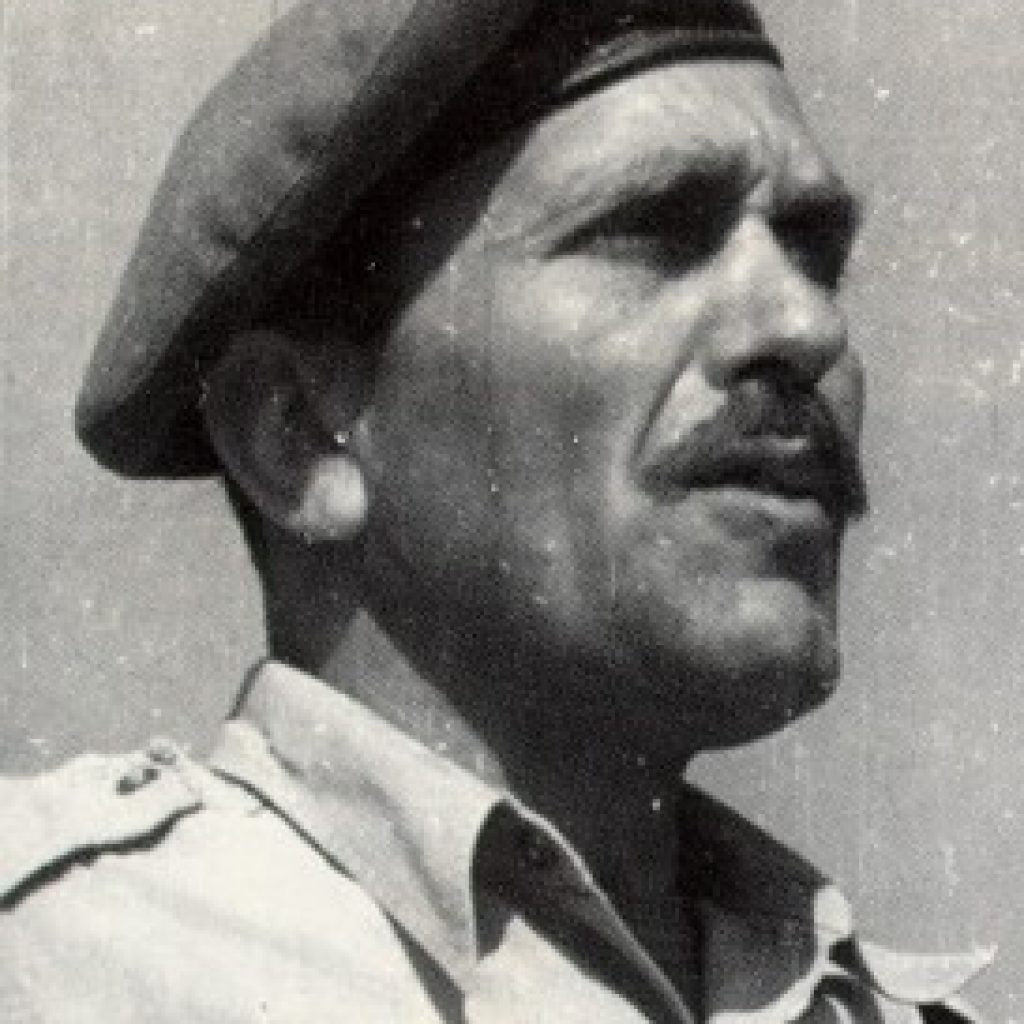
Imi Lichtenfeld
 Israel
Also known as: Imrich Lichtenfeld, Imre Lichtenfeld, Imi Sde-Or, Emrich Lichtenfeld, Emerich Lichtenfeld
Birthday
May 26, 1910
Birth Sign
Gemini
Birthplace
Budapest, Hungary
Age
Died at 87
About
Imre "Imi" Lichtenfeld was a Hungarian-born Israeli martial artist and the creator of Krav Maga, the official self-defense system of the Israeli Defense Forces. Born in Budapest in 1910, he built a system that prioritizes instinctive movements and practical threat neutralization, making it one of the most widely adopted combat disciplines in the world. His work continues to shape how civilians, law enforcement, and military personnel train for real-world encounters.
Before developing Krav Maga, Lichtenfeld was a champion boxer and wrestler, but his approach to self-defense went far beyond sport. He distilled his fighting experience into a method that emphasizes survival above all else, stripping away elaborate techniques in favor of efficient, direct responses. Today, Krav Maga is taught in gyms and military academies across the globe, and his legacy lives on in every student who learns to defend themselves.
Early Life & Background
Imi Lichtenfeld grew up in Bratislava, Slovakia, where his father, Samuel, served as a chief inspector on the police force. Samuel had also been a circus acrobat, and he passed on a love of physical discipline to his son. As a young man, Imi excelled in boxing and wrestling, winning national championships and earning a reputation as a tough competitor.
In the 1930s, anti-Semitic violence swept through Bratislava, and Imi found himself leading a group of young Jewish men who defended their community from attacks. These street confrontations were brutal and unpredictable, and they taught Imi that traditional sport fighting didn't always prepare you for real danger. He began adapting his techniques, focusing on what actually worked in a fight, even if it wasn't pretty.
When the political situation grew too dangerous, Imi left Czechoslovakia and eventually made his way to Palestine in the early 1940s. There, he joined the Haganah, a Jewish paramilitary organization, and began teaching his combat methods to others. His early experiences, both in the ring and on the streets, laid the groundwork for what would become Krav Maga.
Career Growth
In the 1940s, Lichtenfeld formally developed Krav Maga, a system designed to be learned quickly and used effectively by people with no prior martial arts training. Its techniques include eye gouges, groin strikes, and other moves that are considered too dangerous for sport but essential for survival. The Israeli Defense Forces adopted it as their official hand-to-hand combat system, and it soon became a cornerstone of military training.
After Israel gained independence, Lichtenfeld continued to refine and teach Krav Maga, eventually opening a training center in Netanya. He spent decades developing the system, adding new techniques and principles based on feedback from soldiers and police officers. In 1981, he recorded a series of instructional videos that remain a valuable resource for students today.
Lichtenfeld's influence extended beyond the military. In the 1980s and 1990s, Krav Maga began to gain popularity among civilians, particularly in the United States, as people sought practical self-defense training. Today, it is taught in gyms, police academies, and military units around the world, a testament to the effectiveness of his approach.
Career Timeline
Public Image & Style
In the martial arts world, Imi Lichtenfeld is revered as a visionary who created a system that saves lives. He is often described as humble and approachable, despite his legendary status. Unlike many martial arts masters who emphasize tradition and form, Lichtenfeld was pragmatic, always stressing that Krav Maga's goal is to get you home safely.
His public image is that of a man who turned his own experience of persecution into a tool for empowerment. Krav Maga's global spread has made him a symbol of resilience and practical wisdom. Students of Krav Maga today often see themselves as carrying on his mission, and his name is spoken with deep respect in training halls around the world.
Fame & Fandom (iFAMOUS Rankings)
Imi Lichtenfeld commands a global following defined not by celebrity worship but by professional reverence within the martial arts community. Unlike entertainers who cultivate organized fanbases with official names, rituals, or viral social media campaigns, his legacy is sustained through the institutional networks of Krav Maga schools and lineages worldwide. Practitioners refer to themselves as students or members of specific organizations rather than fans, maintaining a relationship rooted in instruction and lineage rather than the fandom culture typical of modern pop icons. There are no records of birthday billboards, fan-funded projects, or crowds gathering for public appearances, as his public profile remained strictly military and instructional throughout his life. The cultural mythology surrounding him is built on verified historical events, specifically his organization of self-defense groups in Bratislava during the 1930s and his subsequent role as Chief Instructor of Hand-to-Hand Combat for the IDF starting in 1964. A significant recent tribute occurred in March 2024 with the unveiling of a monument in Bratislava, marking the first major physical recognition in the city where he developed his early fighting skills. While internal disputes over organizational leadership have arisen since his passing, these remain matters of administrative conflict rather than legendary folklore shared by the general public. The enduring narrative focuses on his transformation of brutal street survival into a universal language of self-defense, supported by biographical records and the continued expansion of Krav Maga as a mainstream discipline. August 2026 evaluation data confirms that Imi Lichtenfeld has been evaluated by the iFANN Global Fame Engine but does not currently hold a placement in the published rankings, and the fanbase has no formal name.
Interesting Facts and Legends
Lichtenfeld was known for his unassuming appearance; he was a slight, balding man who looked more like a grandfather than a martial arts master. Despite his gentle demeanor, he could demonstrate a technique with startling speed and force. He had a deep respect for all fighting styles and encouraged his students to learn from other disciplines. He believed that Krav Maga should be a living system, always evolving to meet new threats. His Hebrew name, Imi Sde-Or, was a translation of his original name, with 'Sde-Or' meaning 'field of light.' He was a lifelong advocate for self-defense for everyone, regardless of age or physical ability. He often said that Krav Maga was designed for the average person, not just athletes. A widely retold story concerns his early life in Bratislava, where he organized self-defense groups for Jewish youth to protect their neighborhood from anti-Semitic attacks by fascist gangs in the 1930s. This period is documented as the genesis of the system he would later refine. Another pivotal event was his service in the Israeli Defense Forces, where he codified his street-fighting experiences into a formal military curriculum in 1964. In March 2024, a monument dedicated to him was unveiled in Bratislava, Slovakia, symbolizing international recognition of his contributions to self-defense history.
Notable Quotes
“So that one may walk in peace.”
“Krav Maga is not a sport, it is for survival.”
“The goal is to get home safely.”
Family & Personal Life
Imi Lichtenfeld's father, Samuel, was a chief inspector on the police force in Bratislava and a former circus acrobat. Samuel's athletic background and his role in law enforcement heavily influenced Imi's early training and his later emphasis on practical self-defense. Details about Imi's mother, siblings, or his own family are scarce, as he preferred to keep his personal life private.
He spent his later years in Netanya, Israel, where he was a familiar figure in the local community. He remained dedicated to teaching and developing Krav Maga until his death in 1998, and his students remember him as a warm and generous mentor.
Notable Connections
Imi Lichtenfeld is most closely associated with the Israeli Defense Forces, which adopted his Krav Maga system as their official combat training. His father, Samuel Lichtenfeld, was a key influence in his early life. In the modern Krav Maga community, figures like Eyal Yanilov, who founded Krav Maga Global, are considered direct successors of Lichtenfeld's teachings.
Relationships & Dating History
Death & Aftermath
Died
January 9, 1998 (aged 87)
Death Place
Israel
Cause of Death
Unknown
Imre Lichtenfeld passed away on January 9, 1998, in Israel at the age of eighty-seven. The specific location of his passing and the precise medical circumstances surrounding his final days remain unrecorded in available biographical literature, with no official statement issued regarding a hospital visit or cause determined by medical authorities. His death marked the end of a life dedicated to physical training and self-defense instruction, autopsy report, or legal proceeding was documented in connection with the event. Following his death, the immediate reaction did not include widely reported vigils, organized tributes from state officials, or formal memorial services detailed in historical records. Instead, the continuation of his work served as the primary response to his absence.
Successors such as Eyal Yanilov assumed responsibility for refining and expanding the Krav Maga system, ensuring its adaptation to new contexts while maintaining the core principles established by Lichtenfeld. The discipline remained embedded within the training protocols of the Israel Defense Forces and continued to spread globally among civilian populations. While the management of his personal estate was not publicly disclosed, the legacy of his methods persisted through the proliferation of schools and organizations worldwide. His name became synonymous with the art form itself rather than being attached to specific posthumous foundations or awards created immediately after 1998.
Net Worth (Estate Value)
$5 Million
iFANN Editorial Team estimate
Imi Lichtenfeld passed away in 2001, and his estate remains outside the scope of public financial disclosures. He lived modestly, dedicating his life to teaching Krav Maga rather than accumulating personal wealth. However, the global popularity of Krav Maga has created a significant industry around his name, with training organizations and instructors worldwide generating substantial revenue. While Lichtenfeld himself did not profit from the commercialization of his system after his death, his legacy has become a valuable asset. The Krav Maga brand is associated with the Israeli military and elite self-defense training, and his name is used in marketing by many schools. Per iFANN's editorial analysis, the estimated net worth of his estate is around $5 Million as of 2026, based on licensing and the continued growth of Krav Maga's popularity.
Awards & Accolades
View 2 records, honours and achievementsKnown For
Krav Maga
1940s · Founder
Keywords
Sources
Quick Facts
- Profession
- Martial Artist, Boxer, Wrestler
- Born
- May 26, 1910
- Birthplace
- Budapest, Hungary
- Died
- January 9, 1998
- Death Place
- Netanya, Israel
- Gender
- Male
- Known For
- Founder of Krav Maga
Personal Details
- Full Name
- Imre Lichtenfeld
Frequently Asked Questions
Who created Krav Maga?
When and where was Imi Lichtenfeld born?
What is Krav Maga?
When did Imi Lichtenfeld die?
What was Imi Lichtenfeld's background?
Join the community
fans discussing