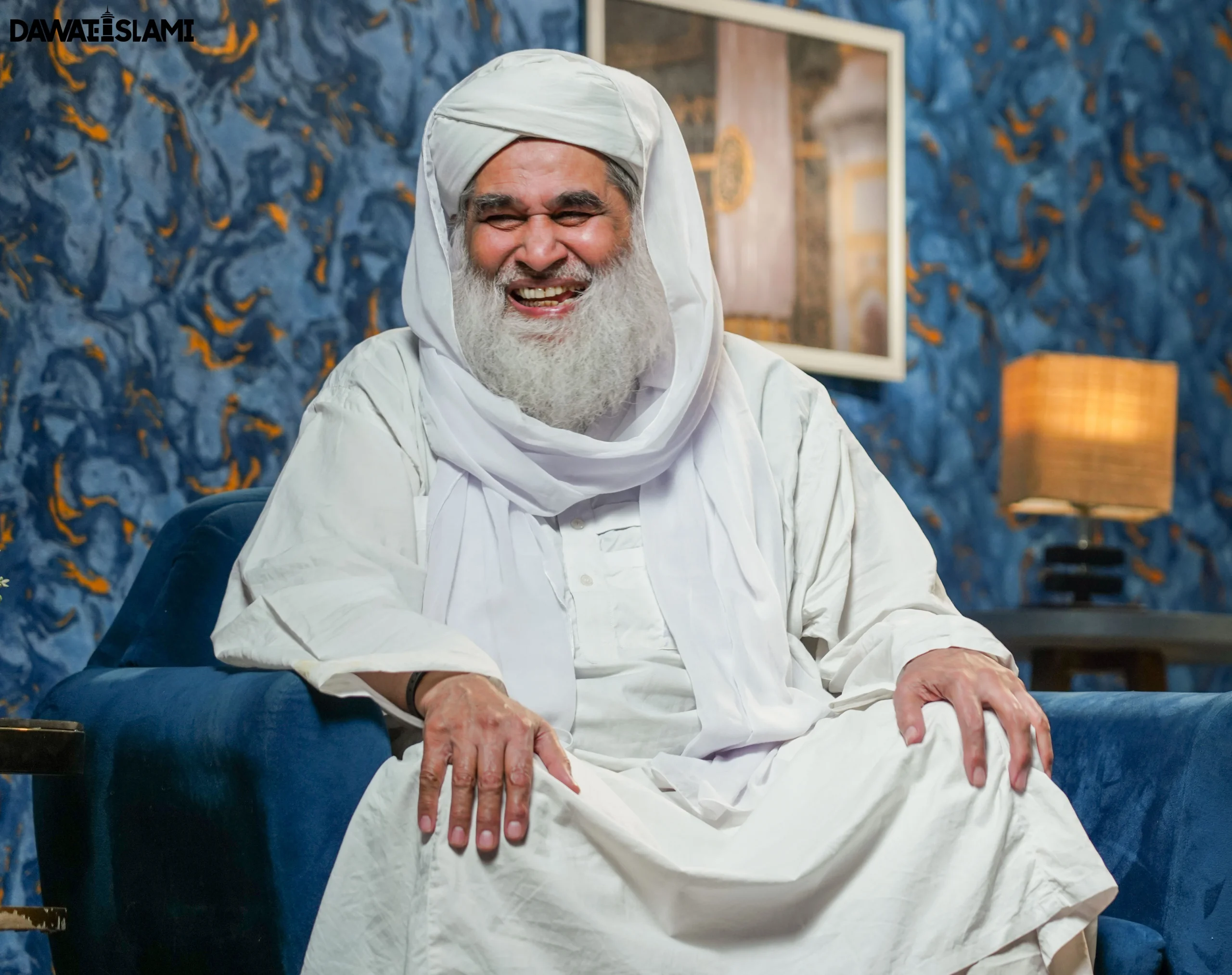
Ilyas Qadri
 Pakistan
Islamic scholar•preacher•writer
Also known as: Bapa, Attar Qadri, Maulana Ilyas Qadri, Muhammad Ilyas Attar Qadri, Allama Azim
Birthday
July 12, 1950
Birth Sign
Cancer
Birthplace
Karachi, Pakistan
Age
76 years old
About
Muhammad Ilyas Attar Qadri, known to millions as Maulana Ilyas Qadri, is a Pakistani Islamic scholar, preacher, and the founder and spiritual leader of Dawat-e-Islami, one of the world's largest transnational Islamic movements. Born in Karachi in 1950, he has devoted his life to spreading what he calls the true message of Islam, emphasizing love for the Prophet Muhammad and strict adherence to the Quran and Sunnah. His followers revere him with the honorifics Ameer-e-Ahle Sunnat and Bapa, reflecting his role as both a leader and a fatherly guide.
Qadri's influence is vast. Dawat-e-Islami, which he established in 1981, now operates in over 190 countries, running thousands of mosques, madrasas, and social welfare projects. His sermons, delivered in Urdu, Arabic, and English, reach millions through television, YouTube, and a network of mobile apps. He is also a prolific author, having written hundreds of books on Islamic jurisprudence, spirituality, and biography, many translated into multiple languages.
In a world of competing Islamic interpretations, Qadri stands out for blending traditional Sufi spirituality with a modern organizational structure. His followers see him as a humble, ascetic scholar who walks the talk, living modestly despite leading a global organization. While his movement has faced scrutiny and controversy, his personal reputation among his followers remains that of a gentle, dedicated teacher whose life's work is to bring people closer to God.
Early Life & Background
Ilyas Qadri was born on July 12, 1950, in Karachi, Pakistan, into a devout Kutchi Memon family. From an early age, he showed a deep interest in religious studies, memorizing the Quran and learning the basics of Islamic jurisprudence. His formal education began at Darul Uloom Amjadia, a renowned seminary in Karachi, where he studied under two influential scholars: Ziauddin Madani and Muhammad Waqaruddin Qadri. These teachers instilled in him a rigorous approach to Islamic sciences, covering hadith, fiqh, and tafsir.
During his student years, Qadri was known for his intense devotion and his habit of spending long hours in prayer and study. He was particularly drawn to the Sufi tradition, especially the Qadri-Razavi order, which emphasizes love for the Prophet Muhammad and spiritual purification. This blend of scholarly rigor and spiritual yearning would define his later preaching.
After completing his studies, Qadri began teaching at local mosques and giving sermons in Karachi. His style was different from the dry academic lectures of many clerics. He spoke with warmth and emotion, using everyday examples to explain complex religious concepts. People started to take notice, and his gatherings grew larger. But he felt that traditional institutions were not reaching enough people, and this dissatisfaction planted the seed for what would become Dawat-e-Islami.
In the late 1970s, he started organizing small study circles and preaching groups, focusing on bringing Islamic teachings to ordinary people in their own language. He emphasized the importance of personal reform and daily dhikr, or remembrance of God. These early efforts, though modest, laid the groundwork for a movement that would eventually span the globe.
Career Growth
The turning point came in 1981 when Qadri formally founded Dawat-e-Islami in Karachi. What began as a small group of dedicated followers quickly grew into a structured organization with a clear hierarchy. Qadri introduced the concept of the 'madani qafla,' or religious caravan, where groups of men (and later women) would travel together to preach in different cities and countries. This innovative approach to da'wah, or Islamic outreach, proved remarkably effective.
Throughout the 1980s and 1990s, Dawat-e-Islami expanded rapidly across Pakistan and then into India, the UK, and other countries with significant Muslim populations. The organization established madrasas, hospitals, and publishing houses. The monthly magazine Ealam Din became a primary vehicle for Qadri's teachings, reaching hundreds of thousands of readers. His books, such as Faizan-e-Sunnat and Faizan-e-Madina, became bestsellers in the Islamic world.
In the 2000s, the movement went global, setting up chapters in Europe, North America, Africa, and Southeast Asia. Qadri's sermons, now broadcast on television and later on YouTube, attracted millions of viewers. His YouTube channel alone has over 2.2 million subscribers and hundreds of millions of views. He also launched mobile apps to make his lectures and writings accessible on smartphones.
Despite his success, Qadri's movement has not been without controversy. In 2011, a bodyguard of Punjab Governor Salmaan Taseer cited Qadri's fatwas on blasphemy as inspiration for the assassination. Qadri condemned the killing but the incident brought intense scrutiny. More recently, in 2022, two men accused of the murder of Kanhaiya Lal in Udaipur, India, were identified as affiliates of Dawat-e-Islami, leading to investigations into the group's activities in India. Qadri has consistently denied any endorsement of violence, insisting that his mission is purely peaceful and spiritual.
As of 2026, Qadri remains active, leading large congregations and preaching regularly. In March 2025, he was photographed leading prayers at the Faizan-e-Madina Mosque in Karachi during Itikaf, demonstrating his continued hands-on role in the spiritual life of his followers.
Career Timeline
Public Image & Style
Qadri's public image is that of a humble, approachable scholar. He is often seen wearing simple white robes and a turban, with a gentle smile and a warm demeanor. His sermons are known for their emotional intensity, often bringing listeners to tears as he speaks of the love of the Prophet Muhammad. He has a unique ability to connect with people from all walks of life, from urban professionals to rural villagers.
His followers, known as the devotees of Dawat-e-Islami, are easily recognizable by their white caps and beards. They greet each other with the phrase 'Salamu Alaikum' and are encouraged to spend time in 'madani qaflas' to spread the message. Qadri's social media presence is managed by his organization, but his personal voice comes through in his recorded lectures, which are widely shared.
In the media, Qadri is a polarizing figure. His supporters see him as a saintly reformer, while critics point to the controversial actions of some of his followers. Qadri himself has consistently preached against violence and extremism, urging his followers to focus on personal piety and social service. His public image among his followers remains that of a loving father figure, a man who has dedicated his life to guiding others on the path of righteousness.
Fame & Fandom
Ilyas Qadri commands a vast global attention that transcends conventional celebrity metrics, anchoring his influence within religious movements and transnational communities. While his primary sphere is spiritual leadership, his cultural footprint registers in specific industry sectors where iFANN tracks prominence across media coverage, search activity, and consumption signals worldwide. According to the August 2026 cycle of the iFANN Global Fame Rankings, he holds the position of the 29th most famous person in Pakistani Dramas, a standing he maintains from the previous evaluation period. This placement reflects the enduring resonance of his image and sermons within South Asian entertainment narratives rather than direct acting roles. His following does not operate as a pop culture fandom with a distinct name or organized campaigns for commercial promotion; instead, his audience identifies as members of Dawat-e-Islami or the Ahle Sunnat community. These followers engage through structured religious institutions, digital outreach via official applications, and mass gatherings for prayer and charity. There are no fan-driven billboard projects, streaming chart manipulations, or social media rituals typical of celebrity culture. The relationship between Qadri and his devotees is defined by hierarchical reverence and organizational loyalty, characterized by formal interactions during sermons and public appearances rather than casual engagement or autograph sessions.
Interesting Facts and Legends
Muhammad Ilyas Attar Qadri is known by several honorifics including Attar Qadri, Allama Azim, and Bapa, the latter meaning father in Urdu. He possesses fluency in Urdu, Arabic, and English, facilitating his preaching to diverse global audiences. A prolific author, he has penned hundreds of books translated into numerous languages. His spiritual lineage connects to the Qadri-Razavi order of Sufism, which prioritizes devotion to the Prophet Muhammad. He is recognizable by his distinctive white turban and beard, which he dyes with henna in adherence to the Sunnah. Despite his immense global reach, he maintains a modest lifestyle without personal business ventures. Among the significant events shaping his public narrative is a prison scandal involving a facility linked to his network where British nationals were freed after reports of confinement. Controversies also surround allegations linking his organization to militant activities, including investigations into groups connected to the Udaipur killers. While some online content promotes untold stories of his humble beginnings, these remain hagiographic accounts produced by supporters. His continued leadership of large congregations for Itikaf at the Faizan-e-Madina Mosque reinforces his status as a central figure in the community.
Notable Quotes
“The love of the Prophet is the foundation of our faith.”
“We must reform ourselves before we can reform society.”
“Every Muslim has a duty to spread the message of Islam.”
“Peace is the essence of our religion.”
“Knowledge without action is like a tree without fruit.”
Family & Personal Life
Details about Qadri's family are scarce, as he has kept his personal life private. He was born into a devout Kutchi Memon family in Karachi, but little is known about his parents or siblings. As a religious leader dedicated to his mission, he has never publicly disclosed information about a spouse or children. He is believed to be unmarried and has no known children. His followers often refer to him as Bapa, or father, reflecting the deep emotional connection they feel toward him. He lives a simple, ascetic life, devoted entirely to his religious duties and the leadership of Dawat-e-Islami.
Notable Connections
Qadri's key mentors were Ziauddin Madani and Muhammad Waqaruddin Qadri, who taught him at Darul Uloom Amjadia. He works closely with a team of deputies and regional heads within Dawat-e-Islami who manage the organization's global operations. His movement has connections to various Islamic scholars and figures within the Barelvi tradition.
Relationships & Dating History
Maulana Ilyas Qadri has never publicly disclosed any details about a spouse, children, or romantic relationships. As a senior Islamic scholar and spiritual leader, he has dedicated his life entirely to religious service and the leadership of Dawat-e-Islami. There are no credible reports or biographical entries indicating that he has ever been married, engaged, or involved in any public romantic relationship. As of 2026, he remains unmarried and single, having devoted his life to his religious duties.
Salary, Net Worth In 2026
$5 Million
iFANN Editorial Team estimate
As a religious leader of a non-profit organization, Maulana Ilyas Qadri does not possess a publicly disclosed net worth in the traditional celebrity sense. Dawat-e-Islami operates as a charitable trust funded by donations from followers, including Zakat and voluntary contributions. The organization owns significant real estate, including the massive Faizan-e-Madina Mosque in Karachi and educational institutions worldwide. Qadri himself lives a modest lifestyle, typical of a cleric, with no public records of personal business ventures or luxury assets. Any estimate of his personal wealth is speculative and likely negligible compared to the organization's assets. Per iFANN's editorial analysis, as of 2026, his personal net worth is estimated to be around $5 Million, primarily reflecting his role as a spiritual leader and the modest income he receives from the organization for his personal expenses. His true wealth lies in the vast network of followers and the global reach of his message.
Awards & Accolades
View 4 records, honours and achievementsKnown For
Dawat-e-Islami
1981 · Founder and spiritual leader
Ealam Din Magazine
1980s · Founder and publisher
Faizan-e-Sunnat
· Author
Faizan-e-Madina
· Author
Keywords
Sources
Quick Facts
- Profession
- Islamic scholar, preacher, writer
- Born
- July 12, 1950
- Birthplace
- Karachi, Pakistan
- Gender
- Male
- Birth Sign
- Cancer
- Founder of
- Dawat-e-Islami (1981)
Personal Details
- Full Name
- Muhammad Ilyas Attar Qadri
- Education
- Darul Uloom Amjadia, Karachi
Frequently Asked Questions
Who is Maulana Ilyas Qadri?
How old is Ilyas Qadri in 2026?
Is Ilyas Qadri married?
What is Dawat-e-Islami?
Why is Ilyas Qadri controversial?
Social Media
Join the community
fans discussing