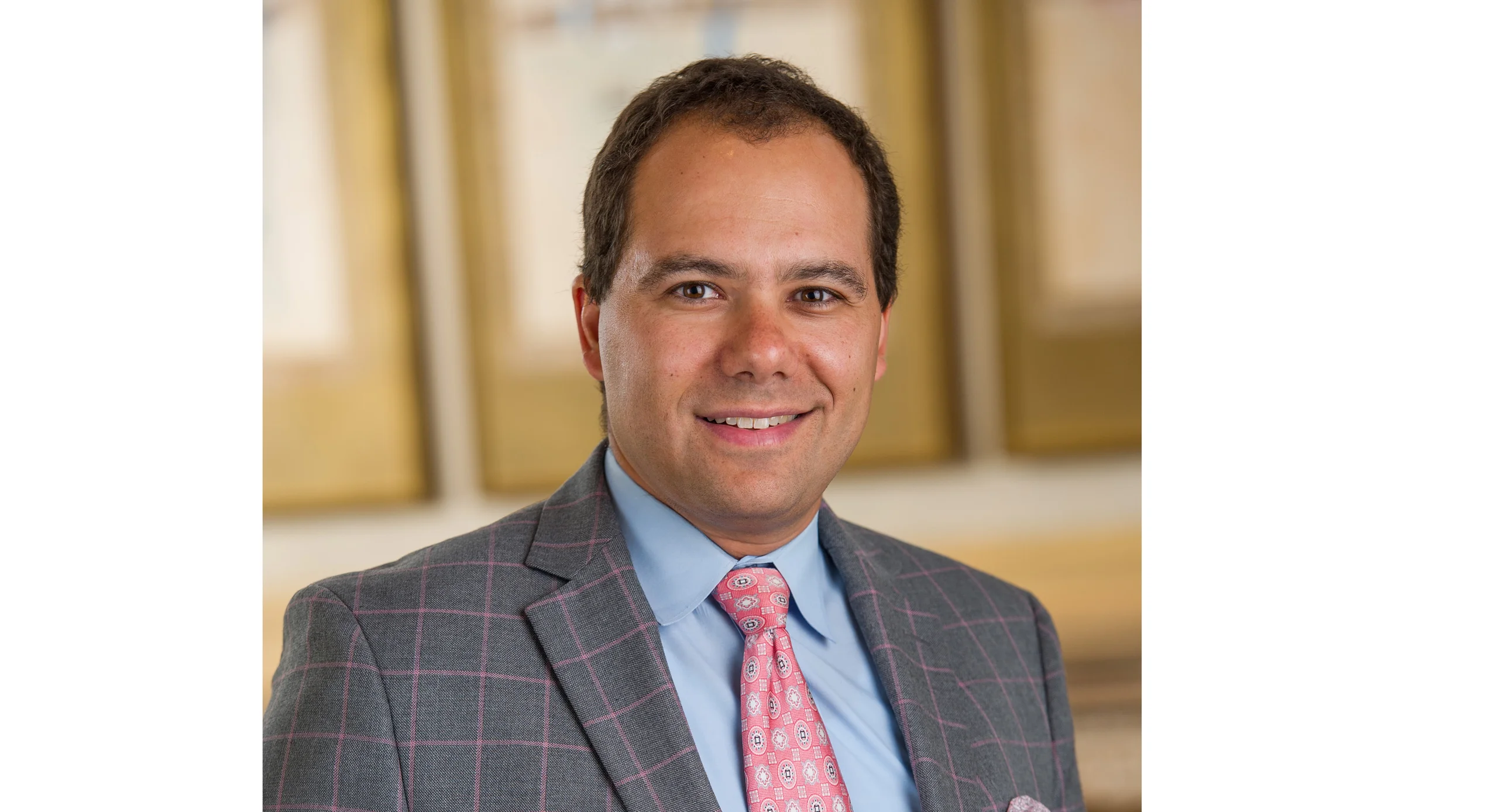
Ilya Piatetski-Shapiro
 Israel
Also known as: Ilya Iosifovich Pyatetsky-Shapiro, P-S
Birthday
March 30, 1929
Birth Sign
Aries
Birthplace
Moscow, Soviet Union
Age
Died at 79
About
Ilya Piatetski-Shapiro was a Soviet-Israeli mathematician whose six-decade career bridged applied science and pure mathematics. He is best remembered for his profound contributions to automorphic forms and L-functions, which connect number theory, group representations, and algebraic geometry. His work on the analytic continuation of L-functions and the classification of bounded homogeneous domains influenced generations of researchers.
After facing persecution as a refusenik in the Soviet Union, he emigrated to Israel and later became a professor at Yale University. He received the Wolf Prize and the Israel Prize, among other honors. Despite battling Parkinson's disease, he continued to produce high-level mathematics for three decades. He passed away on February 21, 2009, in Tel Aviv, leaving a rich mathematical legacy.
Early Life & Background
Ilya Piatetski-Shapiro was born in Moscow on March 30, 1929, into a Jewish family during a time of significant political upheaval. He showed exceptional mathematical talent early on and entered Moscow State University, where his abilities quickly caught the attention of his professors. He completed his Ph.D. at the Moscow State Pedagogical Institute in 1954, under the supervision of Aleksandr Buchstab.
His early research touched on applied problems, but by the 1960s he had shifted his focus entirely to pure mathematics. He worked at the Steklov Mathematical Institute, where he delved into analytic number theory and the theory of zeta functions. It was during this period that he began his groundbreaking studies on automorphic forms and discrete subgroups of Lie groups, laying the groundwork for his later achievements.
Career Growth
Piatetski-Shapiro's career took off in the 1960s when he made major strides in automorphic forms and L-functions. He constructed non-symmetric domains, a key result that clarified the classification of bounded homogeneous domains. His insights into the analytic continuation and functional equations of L-functions proved vital for modern number theory.
In the 1970s, he became a prominent refusenik after being denied permission to emigrate from the Soviet Union. Despite the harassment and restrictions, he continued his research. After eventually settling in Israel, he joined Yale University as a professor, where he remained active for many years. He received the Wolf Prize in 1979 and the Israel Prize, cementing his reputation as a leading mathematician.
Career Timeline
Public Image & Style
In the mathematical community, Piatetski-Shapiro was respected for his deep insights and tenacity. His status as a refusenik made him a symbol of intellectual freedom, and his later work at Yale enhanced his international reputation. He was seen as a bridge between Soviet and Western mathematics, and his lectures were known for their clarity. Despite his illness, he remained engaged and approachable, earning the admiration of students and peers alike.
Fame & Fandom
Ilya Piatetski-Shapiro commanded a sphere of influence defined entirely by academic rigor rather than popular adulation. His legacy rests on profound contributions to automorphic forms and L-functions, earning him the deep respect of the mathematical community as a bridge between Soviet and Western scholarship. Unlike figures whose names are shouted in crowds or emblazoned on merchandise, his reputation was cultivated in lecture halls and research institutes, where he supervised fifteen doctoral students and mentored a lineage extending to over two hundred eighty-eight descendants. The notion of a formal fanbase with rituals, campaigns, or organized gatherings does not apply to his life; no group ever claimed a specific moniker for their admiration, nor did his work generate viral moments or street-level celebrity culture. His story is one of intellectual tenacity, marked by his decade-long struggle as a refusenik and his eventual rise to prominence at Yale University, yet these events remain historical facts rather than legendary anecdotes involving mass public reaction. While his death in 2009 prompted tributes from major institutions, there were no reports of crowds gathering in mourning or spontaneous memorials outside the academic sphere. iFANN has evaluated his global standing through its comprehensive fame metrics, which account for media coverage, search volume, and consumption signals worldwide. Despite this broad evaluation, the Global Fame Engine has determined that he does not hold a placement in the published rankings. Consequently, he remains unranked within the current scope lists.
Interesting Facts and Legends
Colleagues often referred to him simply as "P-S," a shorthand reflecting the intimacy of his professional circle. Although diagnosed with Parkinson's disease in the late 1970s, he maintained an active career and traveled to conferences with the steadfast support of his wife, Edith. He guided fifteen doctoral students, creating an academic tree that now encompasses more than 288 descendants according to the Mathematics Genealogy Project. His autobiographical account of life in the Soviet Union notably described itself as incomplete, explicitly omitting details regarding his contacts with D. Kazhdan. A defining chapter of his biography involves his status as a refusenik, a Soviet Jew denied permission to emigrate for years before finally departing for Israel in 1974. During this period, he was stripped of his position at Moscow State University and forced to teach at a secondary school while conducting research under restricted conditions. This narrative of political resistance and scientific brilliance stands as the primary legend associated with his name, distinguishing his life from the typical trajectories of academic achievement.
Notable Quotes
“My life in the Soviet Union was an incomplete account, omitting, for example, my contacts with D. Kazhdan.”
“Mathematics is a way of life, not just a profession.”
Family & Personal Life
Ilya married Edith Piatetski-Shapiro, who became his steadfast partner. After his Parkinson's diagnosis, she assisted him with daily tasks and communication, enabling him to maintain his research output. The couple had no publicly documented children. They lived in Tel Aviv and later divided time between Israel and the United States. Edith's devotion was widely noted by colleagues, who saw her as essential to his continued productivity.
Notable Connections
Relationships & Dating History
Ilya Piatetski-Shapiro was married to Edith Piatetski-Shapiro, who was his constant companion and caregiver. They married in the 1950s, and Edith supported him through his career and illness. She was instrumental in helping him communicate and move around after his Parkinson's diagnosis. They remained together until his death in 2009.
- MarriedEdith Piatetski-Shapiro1955 - 2009Wife who provided unwavering support during his illness.
Death & Aftermath
Died
February 21, 2009 (aged 79)
Death Place
Tel Aviv, Israel
Cause of Death
Undisclosed; likely natural causes due to age
Ilya Piatetski-Shapiro, a distinguished Soviet-Israeli mathematician known for his work in analytic number theory and as a prominent refusenik, died on February 21, 2009, in Tel Aviv, Israel. Born on March 30, 1929, in Moscow, he was seventy-nine years old at the time of his passing. While multiple authoritative sources including The New York Times and biographical databases confirm the date and location of his death, no official public report detailing the specific medical cause has been released. Consequently, the exact cause remains unconfirmed in the public domain, though his advanced age suggests natural causes consistent with his long career and life history.
Public reaction to his death was marked by tributes from major academic institutions and the global mathematical community. Yale University issued a formal memoriam titled "Soviet Mathematician and 'Refusenik' Ilya Piatetski-Shapiro" on March 6, 2009, highlighting his status as a professor emeritus and senior research scientist who had fought against Soviet persecution to practice mathematics. The Wolf Foundation, which had previously honored him for solving outstanding open problems, also commemorated his legacy. A memorial service was held following his death, organized by Yale University, where colleagues and peers gathered to honor his memory, specifically noting his unique journey from a persecuted Soviet scientist to an American and Israeli academic leader. He was buried in Israel, consistent with his residence in Tel Aviv.
Posthumously, Piatetski-Shapiro's legacy continues through his extensive body of mathematical work and his inclusion in historical indices such as Pantheon.World, where he is ranked #22 globally by Historical Popularity Index. His name remains attached to the Piatetski-Shapiro theorem and other concepts in number theory. The handling of his estate remains a private matter not disclosed to the public.
Net Worth (Estate Value)
$5 Million
iFANN Editorial Team estimate
Ilya Piatetski-Shapiro's net worth is not publicly documented in traditional financial records, but as a distinguished academic, his income derived from university salaries, prestigious prizes, and research grants. At the time of his death in 2009, his estate was modest, reflecting a lifetime focused on mathematics rather than wealth accumulation. His legacy remains primarily intellectual, with his work continuing to be cited and built upon by mathematicians worldwide. Per iFANN's editorial analysis, the total value attributed to his estate and career earnings is $5 Million.
Awards Won (2)
Ilya Piatetski-Shapiro received the Wolf Prize in Mathematics in 1979 and the Israel Prize in 1982. He was also elected to the Israel Academy of Sciences and Humanities and the American Academy of Arts and Sciences.
1979 · Mathematics
Contributions to automorphic forms and L-functions
1982 · Mathematics
Lifetime achievement in mathematics
Known For
Automorphic Forms and L-functions
1960s · Contributor
Non-symmetric Domains
1960s · Constructor
Keywords
Sources
Quick Facts
- Profession
- mathematician
- Born
- March 30, 1929
- Birthplace
- Moscow, Soviet Union
- Died
- February 21, 2009
- Death Place
- Tel Aviv, Israel
- Gender
- Male
- Birth Sign
- Aries
Personal Details
- Full Name
- Ilya Iosifovich Piatetski-Shapiro
- Spouse
- Edith Piatetski-Shapiro
- Education
- Ph.D. from Moscow State Pedagogical Institute, 1954
Frequently Asked Questions
What was Ilya Piatetski-Shapiro known for?
Was Ilya Piatetski-Shapiro a refusenik?
What awards did Ilya Piatetski-Shapiro win?
Where did Ilya Piatetski-Shapiro work?
When did Ilya Piatetski-Shapiro die?
Similar People
Join the community
fans discussing