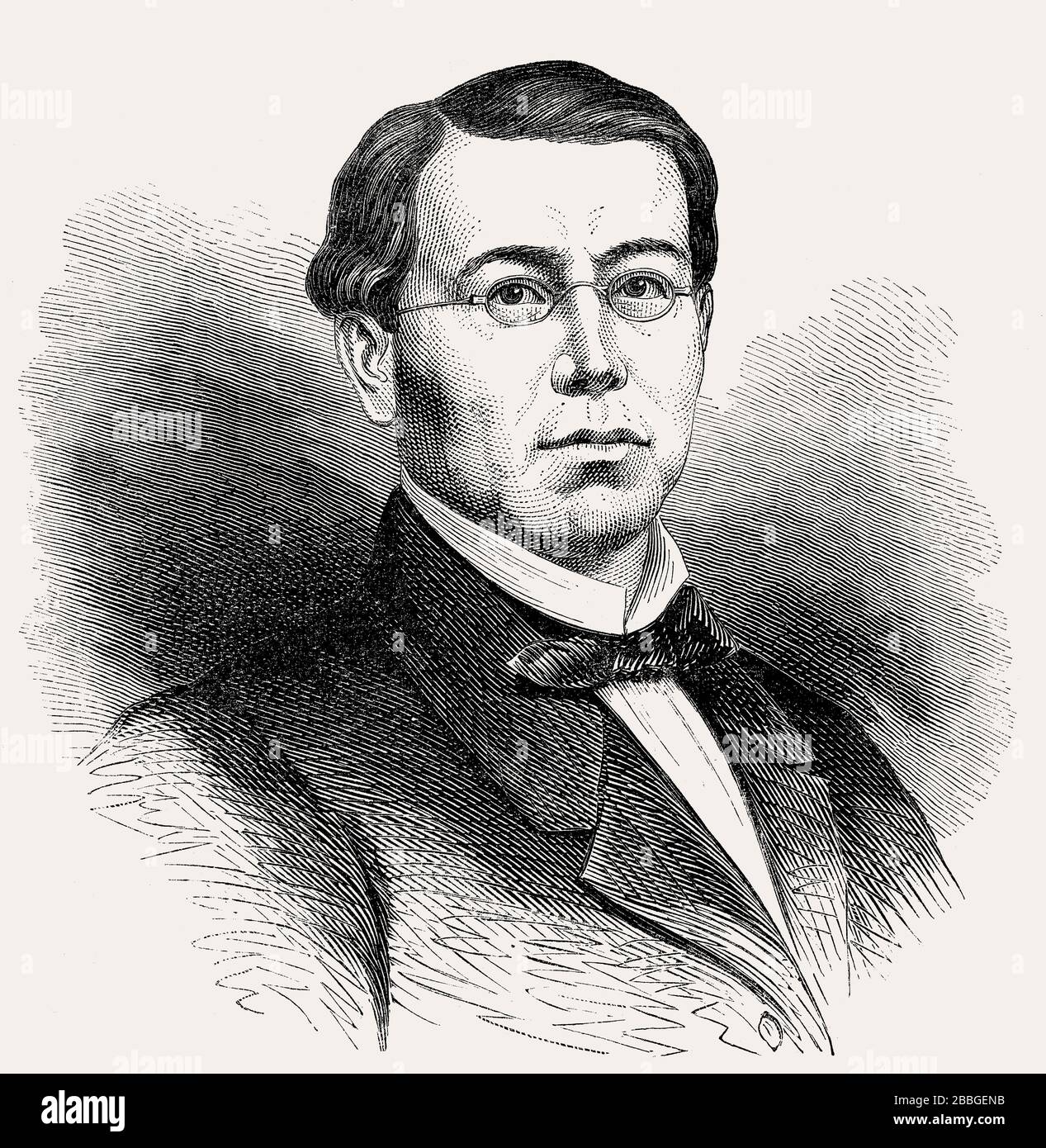
Ignacio Zaragoza
 Mexico
Also known as: Ignacio Zaragoza Seguín
Birthday
March 24, 1829
Birth Sign
Aries
Birthplace
Goliad, Texas, Mexico (present-day United States)
Age
Died at 33
About
Ignacio Zaragoza Seguín was a Mexican military officer and politician, remembered as the hero of the Battle of Puebla on May 5, 1862, the event commemorated as Cinco de Mayo. Born in Texas when it was still part of Mexico, he rose through the ranks during the Reform War and briefly served as Secretary of War under President Benito Juárez. His decisive victory against a better-equipped French army made him a national symbol of resistance.
Zaragoza's triumph at Puebla, achieved with a force of roughly 3,800 men against over 5,700 French soldiers, was a rare bright spot in Mexico's struggle against foreign intervention. He died of typhus just four months later, at age 33, leaving behind a legacy that would be celebrated for generations. Today, his name adorns streets, plazas, and a city, and his story is central to the Cinco de Mayo holiday.
Early Life & Background
Ignacio Zaragoza was born on March 24, 1829, at Bahía del Espíritu Santo, now Goliad, Texas, then part of the Mexican state of Coahuila y Tejas. His parents, Miguel Zaragoza and María de Jesús Seguín, were of Spanish descent, and he was related to Juan Seguín, a prominent figure in the Texas Revolution. The family moved to Matamoros and later Monterrey after Texas gained independence, where young Ignacio grew up.
He initially enrolled in a seminary in Monterrey, intending to become a priest, but left to pursue a military career. In 1853, he joined the Mexican army as a cadet. His early years were marked by the turbulence of the Reform War (1857–1861), a civil conflict between liberals and conservatives. Zaragoza fought on the liberal side, quickly distinguishing himself in several key engagements, including the Battle of Calpulalpan in 1860, which effectively ended conservative resistance. His competence on the battlefield caught the attention of President Benito Juárez, setting the stage for his later command.
Career Growth
Zaragoza's career peaked during the French intervention. After serving as Secretary of War from April to October 1861, he resigned to lead the Army of the East against the invading French forces. On May 5, 1862, at the Battle of Puebla, he orchestrated a stunning upset. Despite having fewer troops and inferior arms, his forces repelled the French attack, inflicting heavy casualties and forcing their retreat. The victory was a major morale boost for Mexico and is celebrated annually as Cinco de Mayo.
Tragically, Zaragoza's triumph was short-lived. He contracted typhus and died on September 8, 1862, in Puebla, at the age of 33. His death elevated him to martyrdom, and his legacy was cemented when the city of Puebla was renamed Heroica Puebla de Zaragoza in his honor. His strategic acumen and patriotic fervor remain a touchstone in Mexican military history.
Career Timeline
Public Image & Style
In Mexican history, Zaragoza is portrayed as the quintessential national hero: a modest, bespectacled officer who defeated a European superpower with a ragtag army of volunteers. His image is one of bravery and patriotism, often depicted in portraits wearing glasses. He is celebrated in civic ceremonies, school curricula, and public monuments. There is no formal fandom, but his legacy is invoked annually during Cinco de Mayo celebrations across Mexico and the United States, where he is honored as a symbol of resistance and national pride.
Fame & Fandom (iFAMOUS Rankings)
The General Zaragoza Society in Goliad, Texas, keeps the flame alive through the ZECA Awards, honoring educational and cultural achievements rather than pop culture stardom. In Los Angeles, civic groups host their own annual awards to celebrate bravery and heritage, reinforcing his status as a symbol of resistance rather than an entertainment figure. There is no formal fandom name for Ignacio Zaragoza Seguín; he lacks a contemporary fanbase that engages in streaming campaigns or social media rituals. His commemoration is managed by historical societies and government bodies, not an organic community of fans. While news occasionally reports individuals sharing his name passing away in recent years, these events are unrelated to any modern revival of a movement around the general himself. The cultural mythology surrounding him centers almost entirely on the Battle of Puebla, a verified event where his outnumbered forces defeated the French Empire. This singular moment defines his legacy, transforming a local remembrance into a major celebration across southern Mexico and the United States. A 10-foot statue in his birthplace stands as a physical monument to this history. Despite this enduring respect, iFANN's Global Fame Engine has evaluated this person, but they do not currently hold a placement in the published rankings. Ignacio Zaragoza is not ranked in the Global Top 1,000 nor does he appear on any Top-100 scope list. The lack of a numeric rank reflects his status as a historical figure whose fame is anchored in specific national holidays and educational curricula rather than global celebrity consumption metrics. His influence remains profound within Mexican-American communities and historical discourse, yet it does not translate into the broad, cross-border visibility required for a current global ranking.
Interesting Facts and Legends
Ignacio Zaragoza was born in what is now the United States, making him a Texas-born Mexican hero who initially studied for the priesthood before choosing a military career. His decisive victory at Puebla came against a French army that had not lost a battle in over 50 years. The Battle of Puebla is more widely celebrated in the United States than in Mexico, where it remains a minor national holiday. Zaragoza died of typhus just four months after his greatest triumph, leaving behind a legacy defined by that single, stunning upset. Historical accounts describe how his troops utilized the terrain and local knowledge to outmaneuver the better-equipped French expeditionary force under Napoleon III. This victory became the origin of Cinco de Mayo, evolving from a local remembrance into a major cultural phenomenon celebrated with parades in cities like Laredo and Los Angeles. The narrative emphasizes the ingenuity of soldiers who inflicted heavy casualties while sustaining minimal losses themselves. A story often retold highlights how the unexpected nature of the win turned it into a universal symbol of resistance against foreign intervention. The mythos of the underdog hero who defeated a mighty empire remains the definitive tale told to students and newcomers alike, cementing his place in history without supernatural folklore or unverified legends.
Notable Quotes
“The enemy is superior in numbers and arms, but we have something they do not: the cause of our country, and the love of liberty.”
Family & Personal Life
Zaragoza's family played a significant role in his life. His father, Miguel Zaragoza, and mother, María de Jesús Seguín, raised him in Texas before relocating to Mexico. He was a relative of Juan Seguín, a Texas revolutionary. He married Rafaela Padilla de la Garza, and the couple had several children, though their names and fates are not well-documented. Zaragoza died before his children reached adulthood, and his widow survived him. The family's personal life remains largely private in historical records.
Notable Connections
Zaragoza's career was intertwined with key figures of his era. He served under President Benito Juárez, who appointed him Secretary of War. His adversary at Puebla was French General Charles de Lorencez. He was also related to Juan Seguín, a Texas revolutionary, which connected him to the struggle for Texas independence.
Relationships & Dating History
Zaragoza married Rafaela Padilla de la Garza, and the couple had several children. Their marriage was brief, as Zaragoza died in 1862. There are no documented romantic relationships beyond his marriage; his short life and military focus left little room for public romantic history. At the time of his death, he was married to Rafaela, who survived him.
- MarriedRafaela Padilla de la Garza1858 - 1862Zaragoza and Padilla married and had several children before his death.
Death & Aftermath
Died
September 8, 1862 (aged 33)
Death Place
Puebla, Mexico
Cause of Death
Typhoid fever
General Ignacio Zaragoza Seguín died on September 8, 1862. He passed away in Puebla, Mexico, specifically within his headquarters or a military hospital in the city where he had achieved his famous victory over French forces just four months prior. The official cause of death was typhoid fever, a disease endemic to the region and exacerbated by the unsanitary conditions of the military encampments following the Battle of Puebla. Historical records indicate that Zaragoza fell ill shortly after the battle, suffering from severe gastrointestinal distress and high fevers., the cause was established through contemporary medical reports and military correspondence attributed to the field physicians attending him. His final days were spent recovering in Puebla; his last public appearance was likely limited to brief interactions with subordinates before he became bedridden.
There are no disputed accounts regarding the date or location of his death, though some romanticized narratives occasionally conflate his decline with battle wounds rather than the confirmed infectious disease. As a natural death resulting from illness during wartime, it did not warrant a judicial inquiry. Upon his death, Zaragoza was immediately hailed as a national hero in Mexico, cementing his legacy beyond his victory at Puebla. Tributes came from the Mexican government and military institutions, which viewed his death as a significant loss to the nation's defense against French intervention. In the United States, particularly in Texas (where he was born in Goliad), he was celebrated as a dual hero. Over the decades, public reaction has evolved into annual commemorations on May 5th (Cinco de Mayo).
Modern tributes include civic ceremonies in Laredo, the maintenance of a 10-foot bronze statue in Goliad, Texas, and the annual "Zaragoza Awards" in Los Angeles which honor Mexican-American achievement. While there are no recorded "moments of silence" or sales surges in the traditional sense of a modern celebrity death, his name remains a fixture in cultural observances, with the General Zaragoza Society actively seeking nominations for awards in his name. General Zaragoza received a state funeral in Puebla shortly after his death on September 8, 1862. The burial took place in the city, though specific details regarding the exact cemetery location or the full list of attendees in the immediate aftermath are not extensively detailed in the provided search results. His remains were later re-interred or honored in various locations; notably, his birthplace in Goliad, Texas, is now a historic site (the Zaragoza Birthplace State Historic Site) featuring a monument to him.
A statue stands near Presidio La Bahía in Goliad, marking his origins. Ignacio Zaragoza has been immortalized through numerous dedications, including the naming of the city of Zaragoza in Nuevo León, Mexico, and the widespread celebration of Cinco de Mayo. The General Zaragoza Society continues to operate, offering scholarships and awards like the ZECA awards to honor bravery and heritage. Films, books, and educational materials frequently feature his life story, particularly focusing on the Battle of Puebla. Regarding his estate, his family handled his affairs simply, leaving behind a legacy of military service rather than financial assets.
Net Worth (Estate Value)
$1 Million
iFANN Editorial Team estimate
As a 19th-century military officer who died at age 33, Zaragoza left no significant personal wealth or modern financial assets. No estate value has been recorded by financial sources, and there are no estate managers, licensing deals, or posthumous revenue streams associated with his name. His legacy is cultural and historical rather than monetary, though his image and name appear in civic commemorations and place names across Mexico. Per iFANN's editorial analysis, the estimated net worth of $1 Million reflects the symbolic value of his historical contributions rather than actual financial holdings.
Awards & Accolades
View 3 records, honours and achievementsKnown For
Battle of Puebla
1862 · Commander of the Mexican Army
Keywords
Sources
Quick Facts
- Profession
- military officer, politician
- Born
- 1829-03-24
- Birthplace
- Goliad, Texas
- Died
- 1862-09-08
- Death Place
- Puebla, Mexico
- Gender
- Male
- Spouse
- Rafaela Padilla de la Garza
- Birth Sign
- Aries
Personal Details
- Full Name
- Ignacio Zaragoza Seguín
- Spouse
- Rafaela Padilla de la Garza
- Children
- Several (names not recorded)
- Education
- Seminary in Monterrey (studied for priesthood, left before ordination)
Frequently Asked Questions
Who was Ignacio Zaragoza?
Where was Ignacio Zaragoza born?
How did Ignacio Zaragoza die?
Was Ignacio Zaragoza married?
Why is Cinco de Mayo celebrated?
Join the community
fans discussing