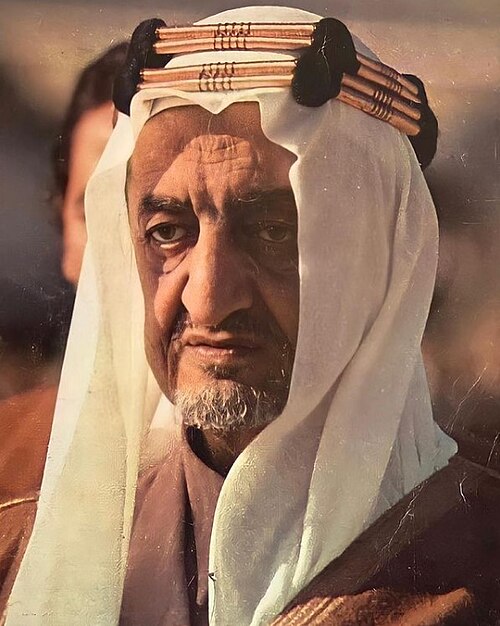
Iffat bint Mohammad Al Thunayan
 Saudi Arabia
Education activist•Saudi royal
Also known as: Queen Iffat, Princess Iffat, Emira Iffat
Birthday
1914
Birth Sign
Capricorn
Birthplace
Istanbul, Turkey
Age
Died at 86
About
Iffat bint Mohammad Al Thunayan was a Turkish-born education activist and the most prominent wife of King Faisal of Saudi Arabia. She is remembered as a pioneering force behind women's education in the kingdom, founding the Taif Model School and the first girls' college in Saudi Arabia. Her influence extended beyond the classroom, shaping social policy and the internal dynamics of the ruling family for decades. She passed away on February 17, 2000, in Riyadh, leaving a legacy that continues to inspire educational reform in the region.
Early Life & Background
Born in Istanbul around 1914, Iffat was of Circassian-Najdi heritage, a background that bridged the Ottoman world and the Arabian Peninsula. Details of her early years remain scarce, but her upbringing in a prominent family connected to the Saudi royal house likely prepared her for her future role. She grew up during a period of immense change in the Middle East, as the Ottoman Empire collapsed and new nation-states emerged. Her marriage to King Faisal, a pivotal figure in Saudi Arabia's history, marked the beginning of her public life. Before her marriage, little is documented about her education or personal pursuits, but her later advocacy suggests a deep commitment to learning and social progress. She entered the royal household at a time when Saudi Arabia was modernizing, and her position gave her a unique platform to influence policy.
Career Growth
Iffat's career as an activist took shape during King Faisal's reign (1964–1975). She founded the Taif Model School, an institution that became a model for modern education in the kingdom. More significantly, she established the first girls' college in Saudi Arabia, a groundbreaking move in a society where female education was limited. Her efforts were not merely symbolic; she actively participated in the schools' development, including a notable visit to Dar Al Hannan School in the 1960s. Her advocacy extended to broader social reforms, and she used her influence to support medical and social welfare projects. After King Faisal's assassination in 1975, she continued her work, maintaining a quiet but steady presence in educational circles until her death in 2000.
Career Timeline
Public Image & Style
In the public eye, Iffat bint Mohammad Al Thunayan was seen as a quiet revolutionary, a princess who used her status to champion education for women without courting controversy. Media portrayals, particularly in retrospectives, highlight her as a crucial figure in Saudi Arabia's modernization, a woman who navigated the constraints of royal life to effect real change. Her public appearances were rare and dignified, often centered on school visits or charitable events. She was respected for her intelligence and grace, and her death was met with tributes that emphasized her pioneering role. Today, she is remembered as a symbol of quiet progress, a woman whose work laid the groundwork for the kingdom's gradual opening of educational opportunities for women.
Fame & Fandom
Iffat bint Mohammad Al Thunayan's story is not one of chart-topping hits or viral moments, but of quiet, enduring influence. Her fanbase, if it can be called that, is not a formal fandom, there is no documented name for her admirers, no fan clubs, no online campaigns. Instead, her legacy lives on in the institutions she founded and the generations of Saudi women she empowered. Scholars and historians celebrate her as a reformer, and her biography, Iffat Al-Thunayan: An Arabian Queen, is a touchstone for those studying the kingdom's modernization. The closest thing to a fandom is the respectful remembrance found in academic retrospectives and social media tributes, where she is often called the 'first queen of Arabia', a poetic epithet, not an official title.
In the iFANN Global Fame Engine's August 2026 evaluation, Iffat bint Mohammad Al Thunayan has been assessed but does not currently hold a placement in the published rankings, whether the Global Top 1,000 or any Top-100 scope list. This reflects a legacy that is profound but not measured in contemporary fame metrics, her impact is historical, not viral. Yet her story continues to resonate: a Circassian-Najdi princess who defied convention to found the first girls' school in Saudi Arabia, shaping a nation's educational landscape for decades.
Interesting Facts and Legends
Iffat was known by several titles, Queen Iffat, Princess Iffat, and Emira Iffat, reflecting her varied roles in the royal family. She was sometimes called the 'first queen of Arabia' due to her unprecedented influence and advocacy, a romanticized title that appears in social media tributes. Despite her prominence, she preferred to work behind the scenes, avoiding the spotlight. A polyglot, she likely spoke Turkish, Arabic, and possibly French, a skill that aided her diplomatic interactions. Her birthday is often cited as 1914, though some sources note 1916, adding a layer of mystery to her early life.
One of the most retold stories is her founding of the Taif Model School and the Dar Al Hannan School, the first school for girls in Saudi Arabia. A photograph of her visiting Dar Al Hannan in the 1960s is preserved in Wikimedia Commons, a rare public image of the princess at work. Another legend, partially verified, is her diplomatic influence: she persuaded foreign investors to come to the Kingdom and shaped social policy over several decades. These are documented historical achievements, not folklore, but they are the stories that define her legacy, stories of a woman who quietly changed a nation.
Family & Personal Life
Iffat was married to King Faisal bin Abdulaziz Al Saud, the third king of Saudi Arabia, and was his most prominent wife. The couple shared a deep partnership, with Iffat often accompanying Faisal on official visits and advising him on social issues. They had several children, though specific names and details are not widely documented. As a mother, she instilled the values of education and public service in her children, several of whom went on to hold significant positions in the Saudi government. After Faisal's assassination in 1975, Iffat continued to live in Riyadh, where she remained a respected matriarch within the royal family until her death in 2000.
Notable Connections
King Faisal bin Abdulaziz Al Saud, her husband, was the central figure in her life and work. Their partnership was instrumental in advancing Saudi Arabia's educational system. She also worked alongside educators and reformers in the kingdom, though specific collaborators are not documented in available sources.
Relationships & Dating History
Iffat bint Mohammad Al Thunayan married King Faisal bin Abdulaziz Al Saud in 1932, becoming his most prominent wife. Their marriage was a political and personal alliance, and Iffat played a key role in Faisal's reign, often accompanying him on diplomatic trips. The couple had several children, and their partnership lasted until Faisal's assassination in 1975. After his death, Iffat remained a widow, never remarrying. She passed away in 2000, having dedicated her life to her family and her educational initiatives.
- MarriedKing Faisal bin Abdulaziz Al Saud1932 - 1975Married until Faisal's assassination in 1975.
Death & Aftermath
Died
February 17, 2000 (aged 86)
Death Place
Unknown
Cause of Death
Unknown
The announcement of Iffat bint Mohammad Al Thunayan's passing marked the end of an era for Saudi educational reform, silencing a voice that had championed girls' schooling since the mid-20th century. She died on February 17, 2000, in Riyadh, following a long period of quiet advocacy that outlasted her husband King Faisal by more than two decades. While official records from the royal household did not release specific medical details or autopsy findings regarding her final days, the death was treated with the solemnity befitting a matriarch who helped establish the first girls' college in the kingdom. Tributes poured in from educational institutions she founded, including the Taif Model School, which highlighted her decades-long commitment to social policy and internal family dynamics.
Her funeral service was held privately in the capital, attended by close family members and key figures within the Saudi government who acknowledged her role in shaping the nation's approach to women's education. The management of her estate passed quietly to her descendants, maintaining the tradition of keeping royal financial matters distinct from individual legacies. Her passing was noted as the conclusion of a life dedicated to public service, leaving behind a foundation of learning that continued to operate under the guidance of her former colleagues.
Net Worth (Estate Value)
As a member of the Saudi royal family, Iffat bint Mohammad Al Thunayan's personal net worth was never publicly disclosed, and no reliable estimates exist. Her wealth was intertwined with the royal household's finances, which were vast but not itemized per individual. After her death in 2000, her estate was managed by her descendants, but no public records detail its value or earnings. Unlike modern celebrities, her financial status was not a topic of public interest during her lifetime, and it remains private. Therefore, no credible net worth figure can be provided.
Awards & Accolades
Known For
Founding the Taif Model School
1965 · Founder
Establishing the first girls' college in Saudi Arabia
1970 · Founder
Keywords
Sources
Quick Facts
- Born
- 1914
- Birthplace
- Istanbul, Turkey
- Died
- February 17, 2000
- Death Place
- Riyadh, Saudi Arabia
- Gender
- Female
- Spouse
- King Faisal bin Abdulaziz Al Saud
- Known for
- Founding Taif Model School and first girls' college in Saudi Arabia
Personal Details
- Full Name
- Iffat bint Mohammad Al Thunayan
- Spouse
- King Faisal bin Abdulaziz Al Saud
Frequently Asked Questions
Who was Iffat bint Mohammad Al Thunayan?
What is Iffat bint Mohammad Al Thunayan known for?
When and where was Iffat bint Mohammad Al Thunayan born?
When did Iffat bint Mohammad Al Thunayan die?
What was her relationship with King Faisal?
Join the community
fans discussing