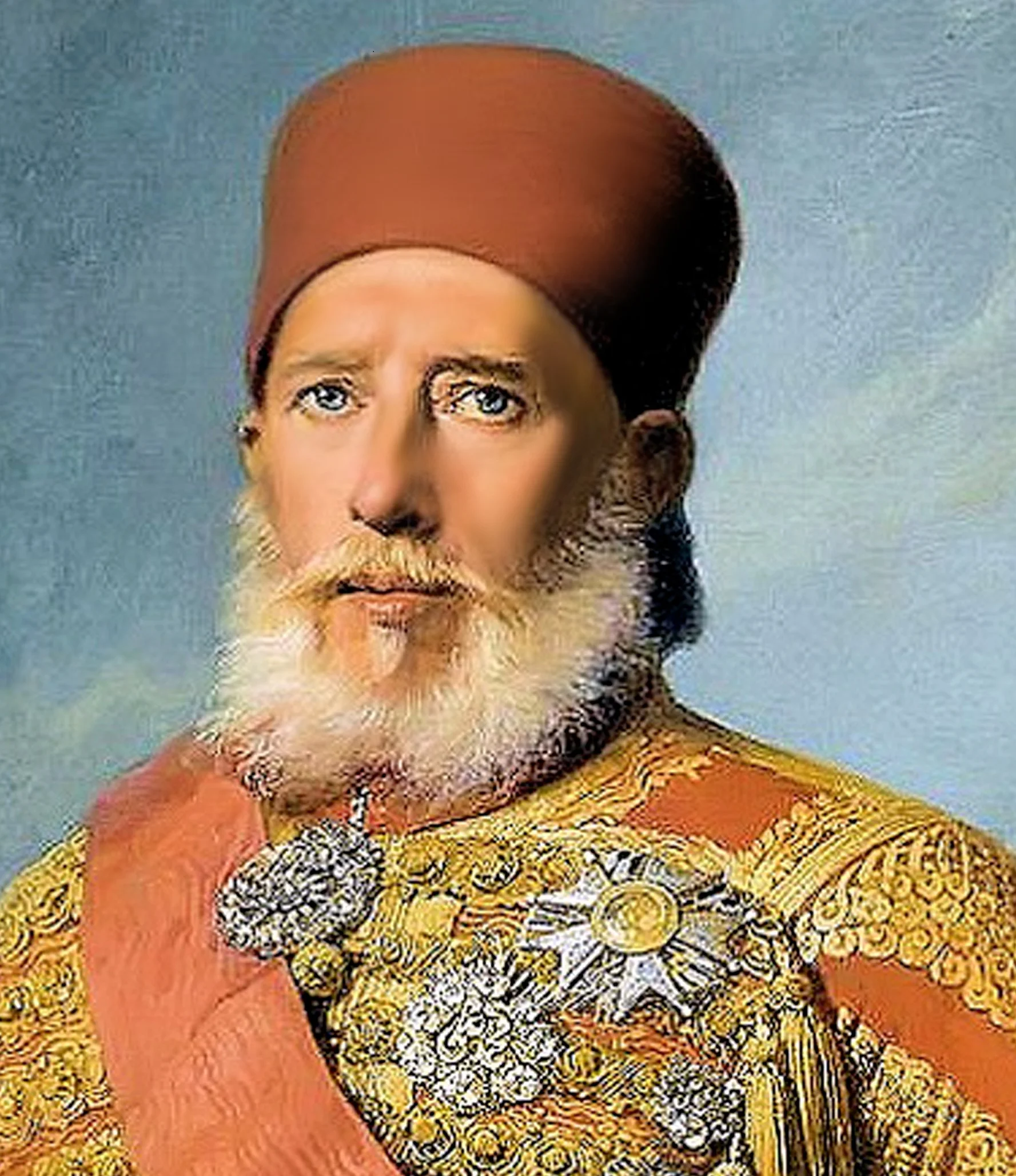
Ibrahim Pasha of Egypt
 Egypt
EgyptBirthday
1789-01-01
Birth Sign
Capricorn
Birthplace
Kavalla, Rumelia (now Kavála, Greece)
Age
Died at 59
About
Ibrahim Pasha was an Egyptian general and politician, the eldest son of Muhammad Ali, the Ottoman governor of Egypt. He commanded Egyptian forces in campaigns across Arabia, Sudan, Greece, and Syria, earning a reputation as one of the most capable military commanders of his era. His most celebrated victory came at the Battle of Konya in 1832, where his army routed the Ottomans and forced the cession of Syria and Adana to Egypt.
In 1848, with his father incapacitated by age, Ibrahim was appointed regent and became the effective ruler of Egypt and Sudan. His reign lasted only four months before his death on 10 November 1848. He was succeeded by his nephew Abbas, who later became khedive.
Ibrahim remains a celebrated figure in Egyptian history, remembered for his military brilliance and his efforts to modernize Egypt's defenses and administration. A statue of him stands prominently in Cairo, and his legacy was later championed by his grandson, King Fuad I.
Early Life & Background
Ibrahim was born in 1789 in the village of Nasratly, near Kavalla in Greek Macedonia, then part of the Ottoman Empire. His father, Muhammad Ali, was an Ottoman officer who would go on to establish a dynasty that ruled Egypt for over a century. In 1805, when Muhammad Ali secured the governorship of Egypt, the family moved to Cairo, and young Ibrahim was appointed ruler of the Citadel on August 28 of that year.
His early career was marked by rapid advancement. In 1807, he became Defterdar, or Minister of Finance, and in 1812 he was given charge of Upper Egypt while continuing in that role. The following year, he served as the official surveyor of the land, a task that produced one of the most important documents of the era regarding Egyptian agriculture.
Ibrahim's first taste of military command came in 1811, when his father sent him to Upper Egypt to subdue the remaining Mamluks and bring the Bedouin tribes under control. He remained as governor of the region until 1816, when the Ottoman Sultan rewarded his efforts with the title of pasha.
Career Growth
Ibrahim's military career took off in 1816 when he was sent to western Arabia to confront the Wahhabi-Saudi alliance that threatened the holy cities of Mecca and Medina. After three years of hard campaigning, he succeeded in defeating the Saudis and restoring Ottoman authority by 1819.
In 1821, he led campaigns in northern Sudan, and in 1824 he commanded an expedition to Greece to suppress the Greek revolt, subduing the Morea before a combined European fleet forced his withdrawal.
His greatest achievement came in Syria. In 1831, after a dispute between his father and the Ottoman Sultan, Ibrahim led an army through Palestine, defeated the Ottomans at Homs, and won a decisive victory at Konya on December 21, 1832. The Convention of Kütahya in May 1833 ceded Syria and Adana to Egypt, and Ibrahim became governor-general of the two provinces.
After his forces were driven from Syria in 1841, Ibrahim's health declined. He visited Europe in 1846, where he attracted attention in French and English circles. In 1848, he was appointed regent of Egypt and Sudan, but his rule was cut short by his death on November 10, 1848.
Career Timeline
Public Image & Style
Ibrahim Pasha is remembered in Egyptian history as a brilliant military commander and a modernizer. His campaigns were marked by both admiration for his tactical skill and criticism for the brutality of his methods, particularly in Greece. In Europe, his 1846 visit drew mixed reactions, with some admiring his reforms and others recoiling from the bloodshed associated with his name. His legacy was carefully curated by his grandson, King Fuad I, who ensured that Ibrahim's contributions to the dynasty were celebrated.
Fame & Fandom (iFAMOUS Rankings)
August 2026 places Ibrahim Pasha of Egypt at a precise point in the global consciousness. He is currently the 34th most famous person from Egypt, holding steady from the previous cycle within the iFANN Global Fame Rankings. This standing reflects a legacy that has survived two centuries of shifting empires and political upheaval, anchoring him as a central figure in national memory rather than a fleeting celebrity. His reputation rests on verified military triumphs and the modernization of an entire state, creating a fanbase that operates through historical reverence rather than social media campaigns or organized chart pushes. While no formal moniker exists for those who study his life, the sheer volume of academic inquiry and state-sanctioned commemoration suggests a dedicated audience that treats his history with the intensity often reserved for living icons.
The absence of a named fandom does not diminish his cultural weight. Instead, it highlights a different kind of devotion, one found in textbooks, museum exhibits, and the careful curation of family narratives by his grandson, King Fuad I. Unlike modern stars whose popularity fluctuates with viral moments, Ibrahim's fame remains constant, rooted in the tangible impact he left on Egyptian geography, agriculture, and governance. The rankings confirm that his story still resonates globally, proving that a general who ruled for only four months can outlast dynasties that lasted generations. This enduring presence is measured not by trending hashtags but by the persistent citation of his name in discussions about Middle Eastern history and military strategy worldwide.
Interesting Facts and Legends
Ibrahim Pasha was known to submit himself to training as a common soldier under Colonel Sève to reform the army in European style. During his brief regency, he completed the fortifications of Alexandria and developed plans for public schools in major cities. His grandson, King Fuad I, later shaped historical narratives to emphasize Ibrahim's contributions. A statue of Ibrahim stands in Cairo, and he was buried in the Hosh al-Basha Mausoleum of Imam al-Shafi'i.
Legends surrounding his life often focus on his decisive victory at the Battle of Nezib, where his forces nearly toppled the Ottoman Sultanate, cementing his status as a formidable military leader. Another enduring story credits him with introducing the mango fruit to Egypt, a culinary gift that transformed local agriculture and cuisine. These tales blend verified historical events with folklore, ensuring that his image remains vivid in the public imagination long after his death.
Family & Personal Life
Ibrahim was the eldest son of Muhammad Ali Pasha, the founder of the dynasty that ruled Egypt until 1952. His wife was Hoshiyar Qadin, a Circassian woman who bore him his most notable son, Isma'il Pasha, who became Khedive of Egypt in 1863. Ibrahim's grandson through Isma'il was King Fuad I, the first king of modern Egypt. The family's rule continued through his nephew Abbas, who succeeded him as regent and later as khedive.
Notable Connections
Ibrahim Pasha was closely associated with his father, Muhammad Ali Pasha, the founder of the dynasty. He worked with Colonel O.J.A. Sève, a French officer who served as his chief of staff and helped modernize the Egyptian army. His nephew Abbas Hilmi I succeeded him as regent, and his son Isma'il Pasha later became Khedive. His grandson, King Fuad I, played a key role in shaping Ibrahim's historical legacy.
Relationships & Dating History
Ibrahim Pasha married Hoshiyar Qadin, a Circassian woman, who became the mother of his son Isma'il Pasha. As a ruler of his era, he may have had other wives or concubines, but historical records do not provide verifiable details. He was married to Hoshiyar at the time of his death in 1848.
- MarriedHoshiyar Qadin1818 - 1848Mother of his son Isma'il Pasha; she was his known spouse at the time of his death.
Death & Aftermath
Died
1848-11-10 (aged 59)
Death Place
Cairo
Cause of Death
syphilis
Tributes poured in from peers, institutions, and officials across the Ottoman Empire, recognizing Ibrahim Pasha as a pivotal figure who had modernized the Egyptian army and expanded its reach into Syria and Sudan. His passing was treated as a major loss for the state, marked by significant gatherings of mourners and formal eulogies delivered by government leaders and religious figures in Cairo. The general died on November 10, 1848, in Cairo at the age of 59, having suffered from severe health complications for years. Historical accounts attribute his death to syphilis, a condition that had debilitated him with dropsy and other ailments in the months leading up to his final days.
A public funeral procession shortly after his death included high-ranking officials and military leaders, reflecting his status as a national hero. He was buried with full honors in the Mosque of Muhammad Ali within the Citadel of Cairo, joining his father and the ruling dynasty. His legacy endures through academic studies and historical texts that detail his campaigns, while his titles passed to his son before ultimately settling with his nephew Abbas I.
Net Worth (Estate Value)
As a 19th-century ruler, Ibrahim Pasha's wealth was tied to the state treasury of Egypt rather than personal assets. He controlled significant resources as commander of the army and governor of provinces, but no reliable figures exist for his personal net worth. His estate passed to the Muhammad Ali dynasty, which continued to rule Egypt for generations. No posthumous earnings comparable to modern celebrity estates are applicable.
Awards & Accolades
View 5 records, honours and achievementsKnown For
Battle of Konya
1832 · Commander
Governor-General of Syria and Adana
1833 · Ruler
Regent of Egypt and Sudan
1848 · Regent
Keywords
Sources
Quick Facts
- Profession
- military general, politician
- Born
- 1789
- Birthplace
- Kavalla, Rumelia (now Kavála, Greece)
- Died
- November 10, 1848
- Death Place
- Cairo, Egypt
- Gender
- Male
- Spouse
- Hoshiyar Qadin
- Children
- Isma'il Pasha
- Title
- Wāli of Egypt and Sudan (1848)
Personal Details
- Spouse
- Hoshiyar Qadin
- Children
- Isma'il Pasha
Frequently Asked Questions
Who was Ibrahim Pasha of Egypt?
Was Ibrahim Pasha the same person as Pargalı Ibrahim Pasha?
How did Ibrahim Pasha die?
What did Ibrahim Pasha accomplish?
Who succeeded Ibrahim Pasha?
Similar People
Join the community
fans discussing