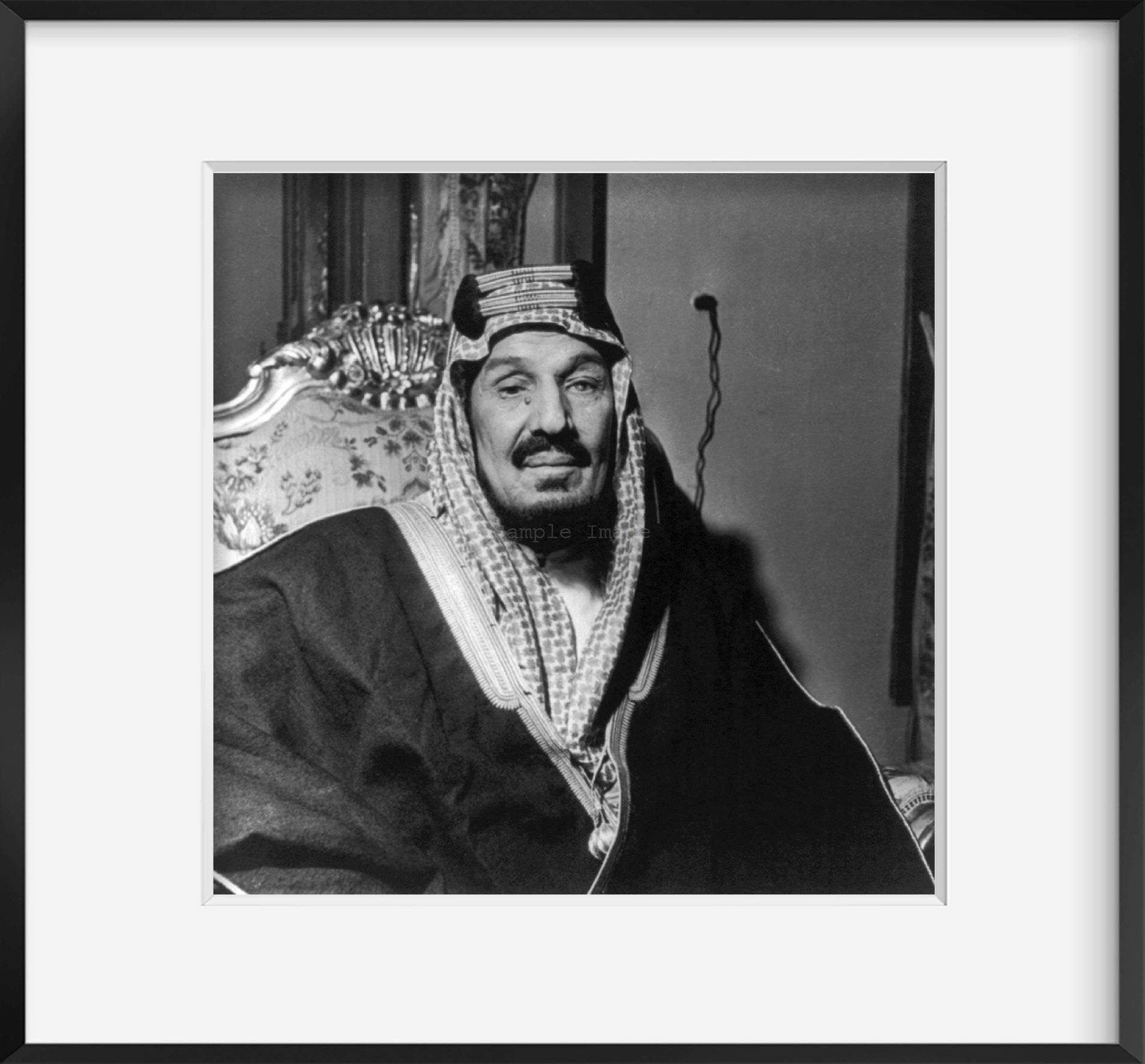
Ibn Saud
 Saudi Arabia
statesperson•monarch•politician
Also known as: Abdulaziz bin Abdul Rahman Al Saud, King Abdulaziz, Abdulaziz ibn Abdul Rahman, King Abdulaziz of Saudi Arabia
Birthday
January 15, 1876
Birth Sign
Capricorn
Birthplace
Riyadh, Saudi Arabia
Age
Died at 77
About
Abdulaziz bin Abdul Rahman Al Saud, universally known in the West as Ibn Saud, was a Najdi statesman, religious leader, and military commander who founded and became the first King of the Kingdom of Saudi Arabia. Born on January 15, 1876, in Riyadh, he was the son of Abdul Rahman bin Faisal, the last Imam of the Second Saudi State. His reign transformed a fragmented collection of tribes into a unified, oil-rich kingdom that continues to shape global geopolitics today. He is revered as the "Father of the Nation" in Saudi Arabia, projecting an image of a pious, strategic, and formidable leader who united a fragmented peninsula. Unlike modern celebrities, his legacy is defined by state reverence rather than organized fanfare, with his influence extending through historical analysis and national identity. He ranks among the most influential figures of the 20th century, shaping the geopolitical landscape of the Middle East and establishing a strategic alliance with the United States that endures.
Early Life & Background
Abdulaziz bin Abdul Rahman Al Saud was born in Riyadh in 1876, the son of Abdul Rahman bin Faisal, the last Imam of the Second Saudi State. His early life was defined by displacement; in 1890, his family was forced into exile from Riyadh after the fall of their state to the Rashidi dynasty. This event fueled a lifelong determination to reclaim his ancestral lands. Raised in Kuwait and later Qatar among Bedouin tribes, Ibn Saud received an education rooted in Islamic theology, tribal customs, and the oral history of the House of Saud, rather than formal Western schooling. He spent his youth mastering horsemanship, swordsmanship, and the intricate politics of desert tribal alliances. Before achieving fame as a monarch, Ibn Saud's career began with a daring military operation in 1902. At the age of 26, he led a small band of loyal followers to retake Riyadh from the Rashidis, recapturing the Masmak Fortress. This pivotal moment marked the beginning of the Third Saudi State. Over the next three decades, he engaged in a series of military campaigns and political maneuvers to unify the disparate tribes of the Arabian Peninsula.
Career Growth
By 1921, he had consolidated control over Nejd. In 1924–1925, he conquered the Hejaz region, capturing Mecca and Medina, which significantly enhanced his prestige as the guardian of Islam's holiest sites. On September 23, 1932, he officially proclaimed the establishment of the Kingdom of Saudi Arabia, uniting the regions under a single monarchy. His reign was characterized by the discovery of oil in 1938, which transformed the nation's economy from subsistence agriculture and trade to a global energy powerhouse. He navigated complex geopolitical waters during World War II, most notably establishing a strategic alliance with the United States. A historic meeting with U.S. President Franklin D. Roosevelt aboard the USS Quincy in 1945 established the quid pro quo of American military protection for secure access to Saudi oil. Ibn Saud died on November 9, 1953, in Ta'if, leaving behind a unified kingdom and a dynasty that continues to rule today.
Career Timeline
Public Image & Style
Ibn Saud was described as a tall, imposing figure with a strong presence, befitting his reputation as a warrior-king. He typically wore traditional Saudi attire, including the thobe (long white robe), ghutra (headscarf), and agal (black cord). His appearance projected authority, piety, and connection to the desert heritage of his people. He is revered as the "Father of the Nation" in Saudi Arabia. His public image is one of a pious, strategic, and formidable leader who united a fragmented peninsula.
Fame & Fandom
Ibn Saud commands a legacy defined by state reverence rather than the organized fervor typical of modern entertainment figures. No formal fandom name exists for his supporters, as the concept of a fanbase engaging in charity drives or chart campaigns does not apply to a head of state whose influence stems from nation-building and geopolitical strategy. His audience consists primarily of historians, political analysts, and citizens viewing him as a foundational ancestor, with no unofficial groups or fan-funded projects documented. Despite this absence of pop culture mobilization, his global standing remains formidable according to the iFANN Global Fame Rankings. He is currently the 2nd most famous person in Saudi Arabia, a position holding steady from the previous cycle. This prominence extends beyond national borders, where he ranks as the 8th most famous person from Saudi Arabia and the 5th most famous person in Middle East.
Interesting Facts and Legends
Ibn Saud was the only son of the last Imam of the Second Saudi State to survive the collapse of that state and successfully rebuild it. He was known for his incredible memory, often recalling details of tribal lineages and past conflicts with precision. Despite being a devout Muslim, he was pragmatic in his dealings with Western powers, a trait that sometimes drew criticism from more conservative elements within his own country. The "Sudairi Seven," a group of powerful brothers born to his wife Hassa, dominated Saudi politics for decades after his death. A controversial but documented aspect of his legacy involves the demolition of shrines and tombs, such as those in the Al-Baqi Cemetery and Jannat al-Mu'alla, in accordance with his Wahhabi interpretation of Islam.
Notable Quotes
“You and I must be friends... we need each other.”
“We are the children of the desert, and we will not be ruled by anyone but God.”
Family & Personal Life
As a monarch in the early 20th century, Ibn Saud practiced polygamy, a standard custom for Arab royalty of his era, though his marriage patterns were strategically significant for tribal alliances. He is estimated to have married between 22 and 45 wives throughout his life, fathering approximately 45 sons, all of whom played roles in the subsequent leadership of the kingdom. His primary wives included Fahda bint Asi Al Shuraim, mother of his eldest son Prince Saud; Hassa bint Ahmed Al Sudairi, mother to the influential "Sudairi Seven"; and Al Jawhara bint Musaed Al Jiluwi, mother to King Khalid. Upon his death in 1953, he was widowed by all his living wives, who continued to live in the royal household. He left behind 45 sons, including six future kings: Saud, Faisal, Khalid, Fahd, Abdullah, and Salman (the current King). No daughters are widely cited as having political succession rights, though he had many daughters who married into prominent families.
Notable Connections
Relationships & Dating History
As a monarch in the early 20th century, Ibn Saud practiced polygamy, a standard custom for Arab royalty of his era, though his marriage patterns were strategically significant for tribal alliances. He is estimated to have married between 22 and 45 wives throughout his life, fathering approximately 45 sons, all of whom played roles in the subsequent leadership of the kingdom. The specific "dating history" typical of modern entertainment figures does not apply; his relationships were formalized marriages intended to secure political stability and tribal loyalty.
His primary wives included Fahda bint Asi Al Shuraim, married early in his life around the 1890s, who was the mother of his eldest son, Prince Saud (who succeeded him); Hassa bint Ahmed Al Sudairi, married in 1906, one of his most influential wives and mother to the "Sudairi Seven" including Kings Fahd and Sultan; and Al Jawhara bint Musaed Al Jiluwi, married in 1907, mother to King Khalid and several other princes. Other notable spouses included Sharifa bint Saqr Al Fajri (married 1910), Wadhah Bint Muhammad (married 1913), and Tarfah bint Abdullah Al Sheikh, married to strengthen ties with the religious establishment. Upon his death in 1953, he was widowed by all his living wives, who continued to live in the royal household.
- MarriedFahda bint Asi Al Shuraim1890 - 1933Mother of his eldest son, Prince Saud, who succeeded him.
- MarriedHassa bint Ahmed Al Sudairi1906 - 1969Mother to the "Sudairi Seven," including Kings Fahd and Sultan.
- MarriedAl Jawhara bint Musaed Al Jiluwi1907 - presentMother to King Khalid and several other princes.
- MarriedSharifa bint Saqr Al Fajri1910 - presentMother to Prince Nayef and others.
- MarriedWadhah Bint Muhammad1913 - presentMother to Prince Abdullah, who later became King Abdullah.
Death & Aftermath
Died
November 9, 1953 (aged 77)
Death Place
Ta'if, Saudi Arabia
Cause of Death
Heart attack (myocardial infarction)
Abdulaziz bin Abdul Rahman Al Saud passed away on November 9, 1953, in Ta'if at the age of 77. His death followed a period of declining health that had kept him largely out of public view since his historic meeting with U.S. President Franklin D. Roosevelt in 1945. The official cause was a heart attack resulting from long-standing heart disease and diabetes, conditions exacerbated by the demands of ruling a newly unified nation. There was no public autopsy; the medical team attending him and family statements confirmed the diagnosis.
The news of his passing triggered an immediate transition of power to his eldest son, Saud bin Abdulaziz. Tributes poured in from global leaders, including U.S. President Harry S. Truman, who acknowledged Ibn Saud's pivotal role in maintaining global stability. Within Saudi Arabia, citizens gathered in mosques and public squares to mourn the unifier of their lands. His funeral was conducted according to strict Islamic tradition shortly after his death, attended by royal family members, religious scholars, and high-ranking officials. He was interred at the Al Oud Cemetery in Riyadh, a site that remains a focal point for the House of Saud but is not typically open to the general public.
Following his death, his legacy endured through institutions bearing his name, such as the Imam Mohammad Ibn Saud Islamic University and the Ibn Saud Stadium. The estate of Ibn Saud is managed by the House of Saud and the Saudi government, which controls the vast national oil revenues. As a head of state whose wealth was effectively the state's wealth, there is no distinct personal net worth in the modern celebrity sense; however, historical accounts note that in his later years, he was considered one of the richest men on earth due to the nascent oil concessions. Posthumous earnings for the estate include royalties from oil production, licensing of his image for state use, and the management of royal assets, which continue to generate billions annually. The estate value is currently incalculable as it is subsumed within the sovereign wealth of the Kingdom of Saudi Arabia, valued in the trillions.
Net Worth (Estate Value)
$700 Billion
iFANN Editorial Team estimate
As a monarch whose wealth was synonymous with the state, Ibn Saud does not have a personal net worth in the traditional sense. However, historical estimates suggest that in his later years, he was one of the wealthiest individuals on Earth due to the nascent oil industry. The estate value is now subsumed within the Kingdom of Saudi Arabia's sovereign wealth fund, which holds assets exceeding $700 billion as of 2026, making the "estate" effectively the entire national treasury. There are no separate celebrity-net-worth figures because his wealth was never private.
The iFANN Editorial Team's analysis of X's earnings, ventures and assets points to roughly $700 Billion. Posthumous earnings for the estate include royalties from oil production, licensing of his image for state use, and the management of royal assets, which continue to generate billions annually. The estate is managed by the House of Saud and the Saudi government, controlling vast national oil revenues.
Awards & Accolades
View 8 records, honours and achievementsKnown For
Kingdom of Saudi Arabia
1932 · Founder and First King
USS Quincy Meeting
1945 · Diplomatic Alliance with USA
Unification of Arabia
1925 · Military Conquest and Unification
Keywords
Sources
Quick Facts
- Profession
- statesperson, monarch, politician
- Born
- January 15, 1876
- Birthplace
- Riyadh
- Died
- November 9, 1953
- Death Place
- Ta'if
- Gender
- Male
- Spouse
- Fahda bint Asi Al Shuraim, Hassa bint Ahmed Al Sudairi, Al Jawhara bint Musaed Al Jiluwi, Sharifa bint Saqr Al Fajri, Wadhah Bint Muhammad, Sarah bint Abdullah bin Faisal, Tarfah bint Abdullah Al Sheikh, Lulua bint Salih Al Dakhil, Haya bint Sa'ad Al Sudairi, Munaiyirah
- Birth Sign
- Capricorn
Personal Details
- Full Name
- Abdulaziz bin Abdul Rahman Al Saud
- Spouse
- Fahda bint Asi Al Shuraim, Hassa bint Ahmed Al Sudairi, Al Jawhara bint Musaed Al Jiluwi, Sharifa bint Saqr Al Fajri, Wadhah Bint Muhammad, Sarah bint Abdullah bin Faisal, Tarfah bint Abdullah Al Sheikh, Lulua bint Salih Al Dakhil, Haya bint Sa'ad Al Sudairi, Munaiyirah
- Children
- Saud, Faisal, Khalid, Fahd, Abdullah, Salman, and approximately 39 other sons
- Education
- Islamic theology, tribal customs, oral history of the House of Saud
Frequently Asked Questions
Who was Ibn Saud?
When did Ibn Saud die?
How many wives and children did Ibn Saud have?
What was the significance of the USS Quincy meeting?
Did Ibn Saud discover oil?
Similar People
Join the community
fans discussing