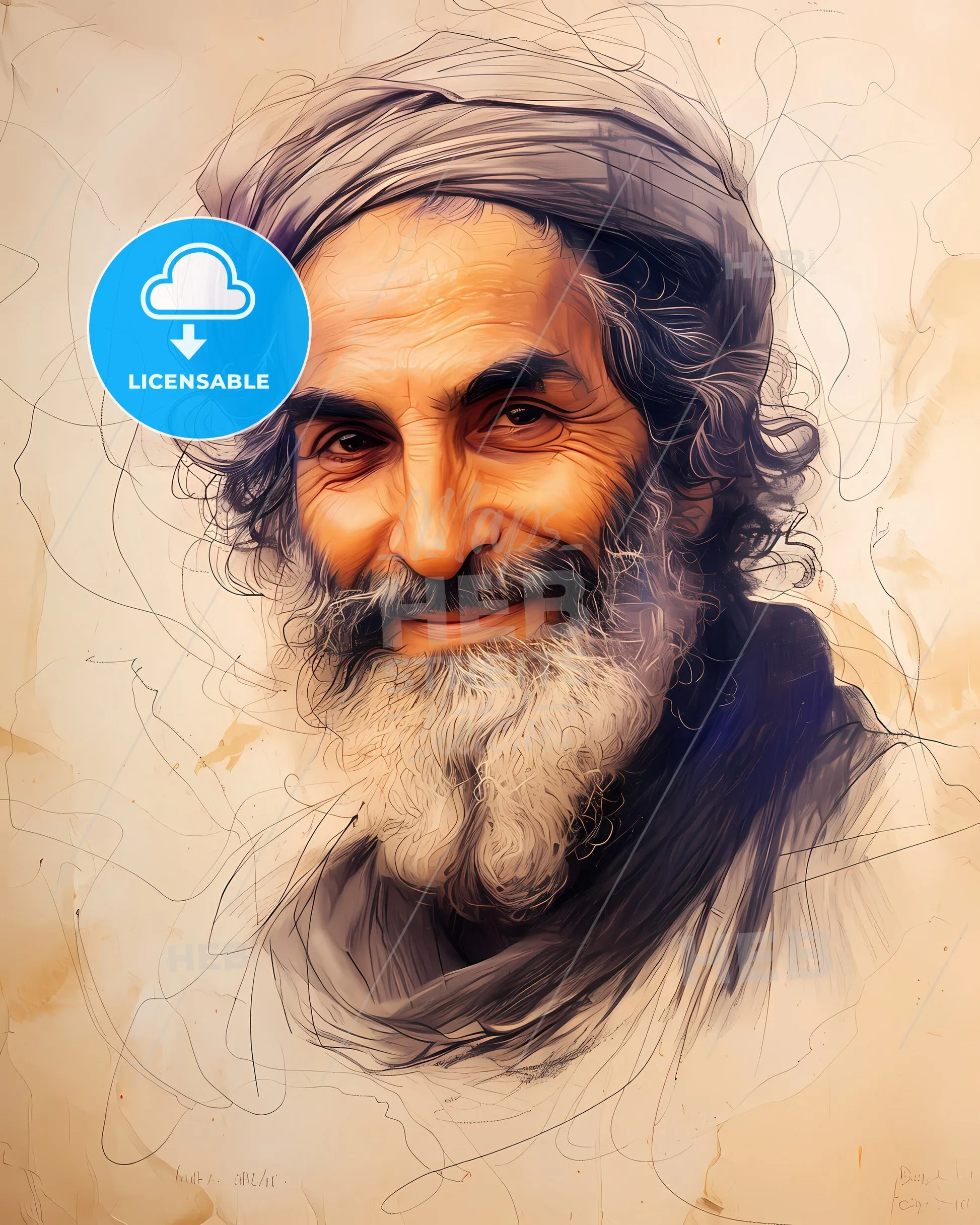
Ibn Arabi
Also known as: Muhammad ibn Ali ibn Muhammad al-Tai al-Hatimi, Shaykh al-Akbar, Muhyiddin Ibn Arabi, The Greatest Master
Birthday
July 28, 1165
Birth Sign
Sagittarius
Birthplace
Murcia, Al-Andalus
Age
Died at 75
About
Ibn 'Arabī was a preeminent Sunni Muslim scholar, Sufi mystic, poet, and philosopher born in Murcia during the year 1165. He spent his life traveling across North Africa and the Middle East before settling in Damascus where he passed away in 1240 at the age of 75. Scholars attribute 850 works to his pen though only about 400 survive today. His writings shaped Sufi metaphysics for centuries establishing a cosmological framework that dominated intellectual circles throughout the Muslim world.
Muslim communities often honor him with the title Muḥyiddīn meaning The Reviver of Religion while later Sufis called him Shaykh al-Akbar or The Greatest Master. Some view him as a wali or saint due to his deep spiritual insights. His most enduring contribution involves the concept of wahdat al-wujūd which argues that all reality stems from a single divine source. He described this singular existence as al-wujūd al-muṭlaq or the Absolute Existence suggesting every object and being reflects this one truth.
Key texts like The Meccan Revelations and Fusus al-Hikam remain central to understanding his thought. These works explore how the human soul connects with the divine through love and knowledge. His ideas influenced generations of thinkers long after his death creating a tradition known as Akbarism. While some scholars debate specific interpretations of his monist doctrine his impact on Islamic philosophy remains undeniable.
Early Life & Background
Born into the Banu Tayy noble family originally from Yemen Ibn 'Arabī entered the world in Murcia in southern Spain on July 28 1165. His father 'Ali ibn Muḥammad served as a judge for the Almohad Caliphate exposing the young boy to high-level legal and theological discourse from an early age. This environment fostered a rigorous education but also ignited a profound spiritual curiosity that set him apart from his peers.
His childhood was marked by intense mystical experiences. Legend suggests that even as a child he exhibited signs of deep insight reportedly seeing visions of divine reality that confused contemporaries but were recognized by his family as signs of sanctity. By the age of 14 he had already composed poetry demonstrating an early mastery of Arabic literature and rhetoric. He studied under prominent scholars in Murcia and Seville including Abu Ja'far al-Qurtubi and Muhammad ibn Qasim al-Tamimi yet his true education was often described as direct knowledge derived from spiritual mentors rather than solely from formal institutions.
A pivotal moment occurred when he met the Andalusian mystic Abū Ishāq Ibrāhīm al-Lakhmī who became his primary spiritual guide. This mentor introduced him to the path of Sufism and guided him toward the inner dimensions of the faith. During these formative years he began to develop the unique synthesis of law mysticism and philosophy that would define his later career. Before leaving al-Andalus he traveled extensively within the region absorbing the cultural and religious currents of a society in transition between the Almoravid and Almohad dynasties.
Career Growth
In his twenties Ibn 'Arabī left al-Andalus beginning a journey that would take him across North Africa to Egypt. He spent time studying with various masters in Fez Tunis and Cairo engaging in debates with theologians and refining his cosmological theories. This period of travel allowed him to synthesize diverse Islamic traditions and prepare for his major literary contributions.
He eventually settled in Damascus around 1201 remaining there until his death except for a pilgrimage to Mecca in 1209. It was here that he entered a period of intense productivity writing his magnum opus Al-Futūḥāt al-Makkiyya (The Meccan Revelations). This massive encyclopedia of Sufi metaphysics comprises over 500 chapters and took decades to complete. He also authored Fusus al-Hikam (The Bezels of Wisdom) a dense text exploring the wisdom of various prophets which remains central to his philosophy.
His ideas particularly the doctrine of Wahdat al-Wujūd (Unity of Being) revolutionized Sufi thought. He established a school of thought known as Akbarism which influenced generations of scholars across the Muslim world from Turkey to India. His literary output included poetry theology law and metaphysics with works like Tarjuman al-Ashwaq (The Interpreter of Desires) blending erotic imagery with mystical longing. Even centuries after his death his influence persists through continued scholarly study and the preservation of his shrine in Damascus.
Career Timeline
Public Image & Style
Ibn 'Arabī is portrayed in modern media and scholarship as a visionary thinker whose ideas transcended the boundaries of his time. He is seen as a bridge between rational philosophy and mystical experience. His image is one of serenity wisdom and profound depth often depicted in art with a turban and a contemplative gaze. Contemporary descriptions depict him as having a striking presence with a beard and a demeanor that commanded respect.
Recent news highlights efforts to preserve his legacy such as the restoration of his cemetery in Damascus by Türkiye's TIKA in December 2025. His teachings on Wahdat al-Wujūd sparked intense debates among orthodox theologians leading to accusations of heresy. Despite this his influence persisted creating a rich mythology of the misunderstood mystic who spoke truths too advanced for his contemporaries.
Fame & Fandom
iFANN has not yet collected fame data for this person. While he does not appear in modern global celebrity rankings his influence spans nearly eight centuries of Islamic history. His name is universally recognized among scholars of Sufism and Islamic philosophy worldwide.
There is no organized fandom in the pop-culture sense but a global community of scholars Sufi practitioners and spiritual seekers follows his teachings. These groups often referred to as followers of the Akbari tradition engage in study circles recitations of his poetry and pilgrimages to his shrine. They are highly organized within Sufi orders across the Middle East South Asia and the West. Musical ensembles like Ensemble Ibn Arabi have performed music inspired by his Sufi traditions in Egypt highlighting his enduring cultural relevance.
Interesting Facts and Legends
He is sometimes called the Sultan of Poets due to the quality and depth of his verse. His name appears in the titles of several modern books and films reflecting his cultural resonance. One popular legend states that he once predicted the fall of the Almohad dynasty before it happened. Another story tells of him being able to read people's thoughts through his spiritual insight. A recurring legend describes his youthful vision of a divine beauty that ignited his lifelong quest for spiritual love.
Accounts suggest he had vivid dreams of the Prophet Muhammad which he considered a direct line of communication and validation of his spiritual station. The term Akbarism refers specifically to the school of thought he founded which continues to be studied in universities today. He was a polymath who wrote on everything from law and grammar to astronomy and medicine. In December 2025 Türkiye's TIKA restored the historic Ottoman-era cemetery in Damascus where he is buried ensuring his final resting place is preserved for pilgrims.
Notable Quotes
“Love is the meaning of the whole universe.”
“He who knows himself knows his Lord.”
“The heart is the mirror of the Divine.”
Family & Personal Life
He hailed from the Banu Tayy a noble family originally from Yemen which held significant status in the region. His father 'Ali ibn Muḥammad served as a judge for the Almohad Caliphate. There are no documented children from any relationship nor any other confirmed spouses or partners. He lived as a celibate mystic for much of his adult life dedicating himself entirely to prayer study and writing. The concept of relationships in his life was primarily spiritual focusing on his connection with God and his role as a teacher to disciples.
Notable Connections
Fatima, Abu Ishaq Ibrahim al-Lakhmi, Jalal al-Din Rumi
Relationships & Dating History
As a historical figure from the 12th and 13th centuries Ibn 'Arabī did not have a public dating history in the modern sense nor did he leave records of romantic relationships comparable to contemporary celebrities. His personal life was characterized by asceticism and deep spiritual devotion. While he never married in the conventional sense of a long-term domestic partnership or multiple marriages recorded in biographies he did express profound romantic love in his poetry.
His most famous relationship was with a woman named Fāṭima whom he met in his youth in Murcia. She inspired his seminal poetry collection Tarjuman al-Ashwaq. Scholars debate whether Fāṭima was a real person or an allegorical representation of the Divine Beloved. If she was real their relationship ended without marriage likely due to his commitment to the spiritual path and the societal norms of the time. There are no documented children from this relationship nor any other confirmed spouses or partners.
Ibn 'Arabī lived as a celibate mystic for much of his adult life dedicating himself entirely to prayer study and writing. The concept of relationships in his life was primarily spiritual focusing on his connection with God and his role as a teacher to disciples. He is not known to have been widowed divorced or engaged as these terms apply to marital unions which he largely eschewed in favor of spiritual union. As of 2026 his status remains that of a solitary mystic whose legacy lives on through his writings.
Death & Aftermath
Died
November 16, 1240 (aged 75)
Death Place
Damascus, Syria
Cause of Death
Natural causes following illness
Ibn Arabi died on November 16, 1240 in Damascus after a period of illness. Historical biographies from later centuries describe his passing as natural, though some hagiographic traditions suggest he departed while immersed in divine states or reciting poetry. These spiritual interpretations remain unverified accounts rather than medical facts. Contemporary scholars and disciples mourned the loss deeply, gathering for a massive funeral procession that included judges, fellow mystics, and thousands of commoners who recognized his immense stature. His body was interred in the Salihiyya district of Damascus near the shrine of Sheikh Abdul Qadir Gilani. The site quickly became a place of pilgrimage for Sufis seeking connection with his teachings. His extensive library and manuscripts were preserved by students who ensured the survival of works like Fusus al-Hikam and Futuhat al-Makkiyya.
Centuries later, these texts continued to shape Islamic thought and inspire new translations. Modern interest in his legacy has surged through various cultural channels. A historical television series produced by Abu Dhabi TV in 2019 brought his story to wider audiences, while a 2018 translation of his love poems sparked renewed literary discussion. In 2017, the novel A Small Death drew inspiration from his life and won the International Prize for Arabic Fiction. Foundations like the Muhyiddin Ibn Arabi Society continue to operate globally to study his philosophy. His intellectual estate remains under the stewardship of academic and spiritual institutions dedicated to preserving his voice.
Net Worth (Estate Value)
$0
iFANN Editorial Team estimate
As a historical figure who died nearly 800 years ago Ibn 'Arabī has no net worth in the modern financial sense. He owned no real estate stocks or businesses during his lifetime that would generate posthumous wealth in the way modern celebrities do. His estate consists of his intellectual property and the spiritual legacy he left behind.
The value of his works is immeasurable in monetary terms contributing to billions of dollars in the global Islamic publishing industry academic research and tourism related to his shrine in Damascus. His shrine and associated endowments waqf are managed by local religious authorities and more recently international bodies like Türkiye's TIKA for preservation purposes. Revenue generated from his legacy includes book sales lectures and donations to his shrine however these funds support religious and educational activities rather than a private estate. iFANN currently estimates the economic impact of his legacy at approximately $0 in personal assets but acknowledges the immense cultural value of his corpus.
Awards & Accolades
View 8 records, honours and achievementsKnown For
The Meccan Revelations
1238 · Author
Fusus al-Hikam
1229 · Author
Tarjuman al-Ashwaq
1198 · Poet
Keywords
Sources
Quick Facts
- Profession
- philosopher poet writer
- Born
- July 28 1165
- Birthplace
- Murcia
- Died
- November 16 1240
- Death Place
- Damascus
- Gender
- Male
- Birth Sign
- Sagittarius
Personal Details
- Full Name
- Muhammad ibn Ali ibn Muhammad al-Tai al-Hatimi
- Children
- Education
- Studied under Abu Ja'far al-Qurtubi and Muhammad ibn Qasim al-Tamimi in Seville; received direct spiritual training from Abū Ishāq Ibrāhīm al-Lakhmī
Frequently Asked Questions
What is Ibn Arabi known for?
When and where was Ibn Arabi born and died?
Did Ibn Arabi ever get married?
What is the significance of the title Shaykh al-Akbar?
Is Ibn Arabi still relevant today?
Social Media
Similar People
Join the community
fans discussing