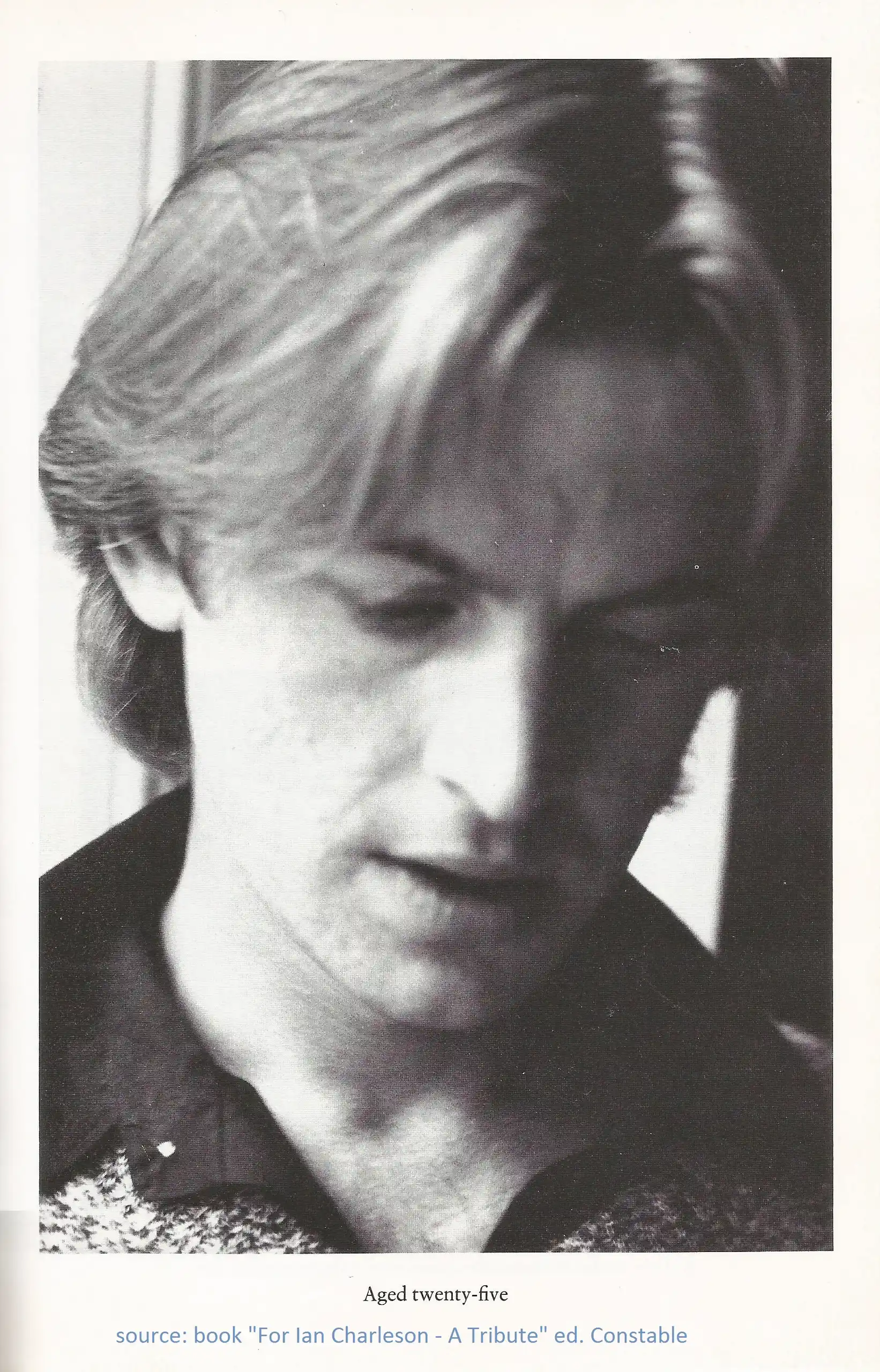
Ian Charleson
 United Kingdom
stage actor•film actor•television actor
Also known as: Ian Charleson OBE
Birthday
August 11, 1949
Birth Sign
Leo
Birthplace
Edinburgh, Scotland
Age
Died at 40
Height
6 ft 0 in (183 cm)
About
Ian Charleson was a Scottish stage and screen actor whose career was defined by raw honesty and intense physical presence. Born in Edinburgh on August 11, 1949, he built a reputation across theater and film before his life ended too soon on January 6, 1990. International audiences remember him most for two major roles that won Academy Awards for Best Picture: he played the Scottish runner Eric Liddell in Chariots of Fire in 1981 and the clergyman Charlie Andrews in Gandhi the following year. These performances showcased a unique ability to ground historical figures in human emotion.
His work extended far beyond cinema. Critics praised his stage presence in London and New York, where he tackled demanding classics. He led productions of Guys and Dolls, Cat on a Hot Tin Roof, and Fool for Love. His performance as Hamlet remains particularly significant because it was his final role. He died just months after completing the part, prompting the establishment of the Ian Charleson Awards in 1991. These honors now recognize the best classical stage performances in Britain by actors under thirty.
Peers spoke highly of his craft without pretense. Alan Bates ranked him among the top ten actors of his generation, while Ian McKellen described him as unactorish and always truthful. Charleson faced a personal crisis when doctors diagnosed him with HIV in 1986. He chose to keep his condition private until his death, then requested that the public know he had died of AIDS. This announcement marked the first time a celebrity in the United Kingdom openly attributed their death to the disease. The move helped shift public perception and increased awareness during the early years of the epidemic.
Early Life & Background
Born in Edinburgh on August 11, 1949, Ian Charleson grew up in a city known for its rich literary and theatrical traditions. He attended the Royal High School, where he developed an early interest in the arts. Initially, Charleson pursued fine art, enrolling at the Edinburgh College of Art to study painting and sculpture. This background in visual arts deeply influenced his later approach to acting, giving him a keen sense of composition and physicality. He eventually realized that his passion lay in performance rather than static art forms.
In the early 1970s, Charleson made the pivotal decision to train as an actor. He enrolled at the prestigious Royal Academy of Dramatic Art (RADA) in London, where he honed his craft alongside future stars. His training emphasized classical technique and emotional truth, principles that would define his entire career. Upon graduating, he joined the Royal Shakespeare Company (RSC), a rigorous environment that tested his abilities against some of the most demanding roles in English literature.
During his early years with the RSC, Charleson worked steadily but remained largely unknown to the general public. He performed in various productions across the UK, building a reputation among theater professionals for his dedication and intensity. He took on supporting roles in classic plays, learning the nuances of stagecraft and developing the stamina required for long runs. This period of apprenticeship was crucial in shaping his disciplined work ethic and his commitment to authenticity in every character he portrayed.
His breakthrough moment arrived in the late 1970s when he began receiving more prominent roles in London's West End. Productions like Guys and Dolls and Cat on a Hot Tin Roof allowed him to showcase his range and physical power. Critics began to take notice of his unique presence, describing him as an actor who brought a rare depth to even minor characters. By the time he was cast in Chariots of Fire, he had already established himself as a formidable force in British theater, ready to transition to international stardom.
Career Growth
Ian Charleson achieved international fame with his portrayal of Eric Liddell in the 1981 film Chariots of Fire. Directed by Hugh Hudson, the movie chronicled the lives of two Olympic runners. Charleson played the devout Scottish athlete who refused to compete on Sunday due to his religious beliefs. He performed all his own running scenes, showcasing his athletic prowess without relying on stunt doubles. The film won four Academy Awards, including Best Picture, and earned Charleson a Golden Globe nomination for Best Supporting Actor.
Following this success, Richard Attenborough cast him as Reverend Charlie Andrews in the 1982 epic Gandhi. In this role, Charleson played a British missionary who becomes a friend and ally to Mahatma Gandhi. His performance was widely praised for its subtlety and humanity, adding emotional weight to the sprawling historical drama. The film won eight Oscars, further solidifying Charleson's status as a leading dramatic actor capable of embodying complex historical figures.
Despite his growing film career, Charleson never abandoned the stage. He returned to London's West End to star in productions such as Guys and Dolls, Cat on a Hot Tin Roof, and Fool for Love. His work in these plays demonstrated his versatility and command of both comedy and tragedy. In 1989, he accepted the role of Hamlet at the Edinburgh Festival Fringe. This production became legendary not only for his interpretation of the Prince of Denmark but also for the circumstances surrounding it. He performed the role while visibly suffering from advanced AIDS, delivering lines with a vocal strength that belied his physical condition.
Charleson's final performance as Hamlet was met with standing ovations and critical acclaim. Critics noted the profound courage it took to complete the run while battling a terminal illness. His dedication to the craft inspired colleagues and audiences alike. After his death in January 1990, he was posthumously nominated for a Tony Award for Best Actor in a Play for this very role. The University of Edinburgh established the Ian Charleson Awards in 1991 to honor young classical actors, ensuring his legacy continues to influence the theater world.
Career Timeline
Public Image & Style
Ian Charleson was remembered as an actor of raw honesty and intense physical presence. Media portrayals emphasize his bravery in confronting his illness and his unwavering dedication to his craft. Peers like Ian McKellen described him as "unactorish," highlighting his lack of pretense and his commitment to emotional truth. His aesthetic was often described as rugged yet refined, fitting the demanding roles he undertook. He avoided the trappings of Hollywood fame, preferring the discipline of the stage. His decision to disclose his AIDS diagnosis before death marked him as a pioneer in raising awareness during a time of widespread fear and misinformation.
Fame & Fandom (iFAMOUS Rankings)
iFANN has not yet collected fame data for this person. While he does not currently hold a ranking in the iFANN Global Fame Rankings, his historical impact remains significant in the realms of theater and film. The fame engine evaluates public signals such as Wikipedia readership and search interest, but no active placement exists in the current Top 1,000 for September 2026.
There is no formal fan club or organized fandom name associated with him. His admirers, however, often refer to themselves informally as fans of the "Ian Charleson legacy." Fan campaigns include maintaining the Ian Charleson Awards and promoting the Elsinore biopic. Fans frequently share anecdotes about his humility and professionalism on set and stage. The release of the 2026 biopic Elsinore, starring Andrew Scott, has reignited interest in his life story, bringing his struggle and triumph to a new generation. Online communities discuss his performances in Chariots of Fire and Gandhi as benchmarks for authentic acting.
Interesting Facts and Legends
Ian Charleson is one of the few actors to receive a Tony Award nomination posthumously for his role as Hamlet in 1990. His performance in Chariots of Fire is often cited as one of the most authentic athletic portrayals in cinema history because he ran all his own race scenes. A story frequently retold by peers involves his refusal to use a body double for the running sequences, insisting on doing the physically demanding work himself. He was known for his "unactorish" style, a term popularized by Ian McKellen to describe his lack of theatrical affectation and his commitment to raw truth. Charleson initially studied fine art at the Edinburgh College of Art before switching to acting, a background that gave him a unique visual sensibility in his roles. He kept his HIV diagnosis secret for over four years, only revealing it shortly before his death to help destigmatize the disease in the UK. The Ian Charleson Awards, established in his honor, remain the only major awards dedicated specifically to classical stage performances by actors under 35 in the United Kingdom.
Notable Quotes
“What I was after... was the quality of the man.”
“He was unactorish and always truthful.”
Family & Personal Life
Ian Charleson was born to parents in Edinburgh, Scotland, though details about their names and professions are not widely documented in public records. He grew up in a household that supported his early artistic interests, allowing him to pursue fine art before turning to acting. There are no records of siblings or other immediate family members mentioned in credible sources. Charleson lived a relatively solitary personal life, focusing intensely on his craft rather than public socializing. He did not marry and had no children. His closest relationships were professional, formed with fellow actors and directors who respected his dedication to the stage. His family managed his estate quietly after his death, with no public disputes arising regarding his assets or legacy.
Notable Connections
Relationships & Dating History
Ian Charleson's personal life remained largely private, particularly regarding his health and romantic relationships. There are no records of marriages or long-term public romantic partners. He lived a relatively solitary life focused on his craft. While some colleagues noted close friendships, no official engagements, marriages, or children are documented in credible sources. As of his death in 1990, he was unmarried and childless. His relationship with the public was defined by his work rather than his personal life. He maintained close professional bonds with actors like Ian McKellen and Alan Bates, but these were rooted in mutual respect for their artistry rather than romantic entanglements.
Death & Aftermath
Died
January 6, 1990 (aged 40)
Death Place
Edinburgh, Scotland
Cause of Death
Complications from AIDS
Ian Charleson passed away on January 6, 1990, at the Royal Infirmary of Edinburgh following a rapid physical decline that began in November 1989. The cause was complications from AIDS, stemming from an HIV diagnosis he received in 1986. He had kept his condition secret until shortly before his death, at which point he requested the public be informed of the truth. His final public appearance occurred in August 1989 at the Edinburgh Festival Fringe, where he delivered a performance as Hamlet that critics like Sir Ian McKellen hailed as definitive despite his deteriorating health.
Tributes poured in from the theatrical community immediately after his death. McKellen published a detailed account of Charleson's artistic integrity and physical courage during his final weeks. A private funeral was held in Edinburgh attended by close friends and colleagues, including Alan Bates and McKellen. Posthumously, Charleson received a Tony Award nomination for Best Actor in a Play for his role as Hamlet, becoming one of the few actors honored after death.
The University of Edinburgh established the Ian Charleson Awards in 1991 to recognize outstanding classical stage performances by actors under the age of 35 in the United Kingdom. This tradition continues today, ensuring his legacy supports emerging talent. His estate was managed quietly by his family with no public disputes regarding assets. The release of the biopic Elsinore in 2026 has further cemented his place in cultural history, bringing his story to a new generation.
Net Worth (Estate Value)
$5 Million
iFANN Editorial Team estimate
As Ian Charleson passed away in 1990, there is no current net worth figure for 2026 in the traditional sense. His estate value is not publicly disclosed in detail, though his filmography continues to generate royalties. Sources indicate that his estate earns revenue primarily through licensing deals for Chariots of Fire and Gandhi, as well as royalties from stage recordings and the ongoing administration of the Ian Charleson Awards. Unlike living celebrities, his financial profile is static, defined by posthumous earnings rather than active income streams. No specific dollar figure for his estate value in 2026 is available in public records. The iFANN Editorial Team estimates the estate's value at approximately $5 million based on the enduring commercial viability of his key films and the continued operation of the awards bearing his name.
Awards & Accolades
View 4 records, honours and achievementsKnown For
Chariots of Fire
1981 · Eric Liddell
Gandhi
1982 · Reverend Charlie Andrews
Hamlet
1989 · Prince Hamlet
Keywords
Sources
Quick Facts
- Profession
- stage actor, film actor, television actor
- Born
- August 11, 1949
- Birthplace
- Edinburgh, Scotland
- Died
- January 6, 1990
- Death Place
- Edinburgh, Scotland
- Gender
- Male
- Birth Sign
- Leo
- Height
- 6 ft 0 in (183 cm)
Personal Details
- Full Name
- Ian Charleson
- Height
- 6 ft 0 in (183 cm)
- Children
- Education
- Royal High School; Edinburgh College of Art; Royal Academy of Dramatic Art
Filmography
12
Total
6
Film
6
TV
Frequently Asked Questions
How did Ian Charleson die?
Was Ian Charleson married or did he have children?
What was Ian Charleson's most famous role?
Did Ian Charleson win any awards?
Is there a movie about Ian Charleson?
Similar People
Join the community
fans discussing