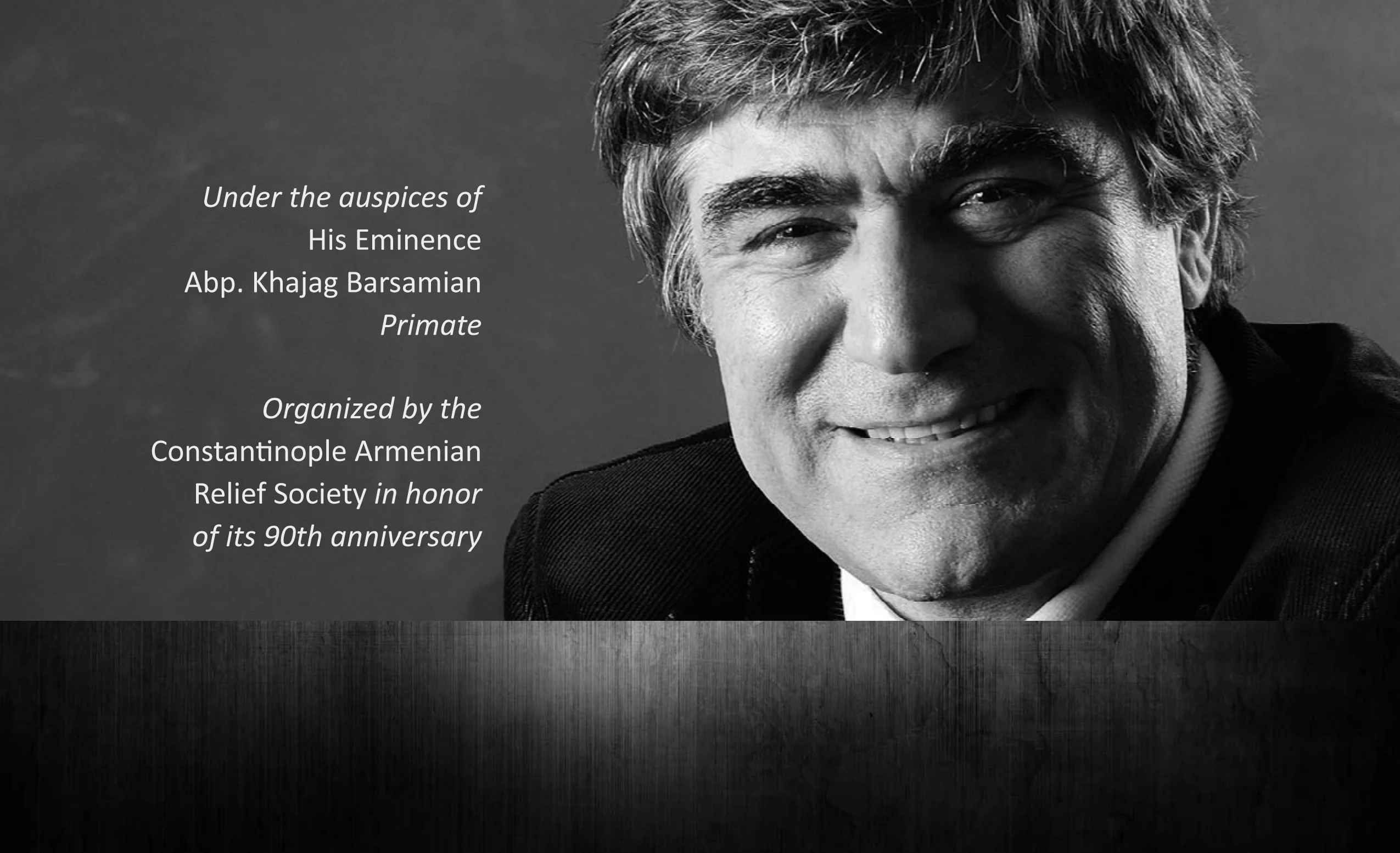
Hrant Dink
 Turkey
Birthday
September 15, 1954
Birth Sign
Virgo
Birthplace
Malatya, Turkey
Age
Died at 52
About
Hrant Dink was a Turkish-Armenian journalist and human rights activist, best known as the founder and editor-in-chief of the bilingual newspaper Agos. He dedicated his career to fostering dialogue between Turkish and Armenian communities, often addressing sensitive historical issues with a balanced and courageous voice. His work made him a prominent figure in Turkey's minority rights movement, and he became a symbol of the struggle for free speech and reconciliation.
Dink's legacy lives on through the Hrant Dink Foundation, which continues his mission of promoting understanding and cooperation. He is remembered annually on the anniversary of his assassination, with gatherings that draw thousands who chant "We are all Armenians" and "We are all Hrant Dink." His death sparked national and international outcry, leading to legal reforms and a deeper examination of press freedom in Turkey.
Early Life & Background
Hrant Dink was born in Malatya, a city in eastern Turkey, on September 15, 1954. His family moved to Istanbul when he was five, settling in a modest neighborhood where he grew up surrounded by the Armenian community. From an early age, Dink was aware of the tensions faced by minorities in Turkey, an awareness that would shape his future work.
He studied zoology at the University of Istanbul, but his passion for writing and social justice soon drew him away from science. In the 1980s, he became involved in community activism, working with Armenian organizations and writing for various publications. His early experiences as a journalist were marked by a commitment to giving a voice to the Armenian minority, and he quickly gained a reputation for his thoughtful and fearless reporting.
By the early 1990s, Dink felt a pressing need for a platform that could address the concerns of the Armenian community while also engaging the broader Turkish public. This vision led to the founding of Agos in 1996, a newspaper that would become his life's work.
Career Growth
Hrant Dink co-founded Agos in 1996, a bilingual weekly that quickly became a vital forum for discussing Armenian issues and promoting Turkish-Armenian reconciliation. Under his editorship, the paper tackled topics that were often taboo, including the Armenian genocide, minority rights, and freedom of expression. Dink's balanced approach, which criticized both Turkish nationalism and Armenian diaspora extremism, earned him both admiration and enmity.
His work brought him international recognition, but also legal troubles. He was prosecuted three times under Article 301 of the Turkish Penal Code for "insulting Turkishness," charges that were widely seen as an attack on press freedom. Despite constant death threats, Dink continued to write and speak out, becoming a leading voice for peaceful coexistence.
His assassination on January 19, 2007, shocked the world. The murder, carried out by a 17-year-old nationalist, sparked massive protests and a re-examination of Turkey's hate speech laws. In the years since, the Hrant Dink Foundation has carried on his work, and his legacy has inspired a new generation of journalists and activists.
Career Timeline
Public Image & Style
Hrant Dink was seen as a bridge between cultures, a journalist who spoke truth to power with a calm and reasoned voice. His public image was that of a gentle but relentless advocate for human rights, someone who could engage with controversial topics without resorting to extremism. He was widely respected by colleagues and readers, and his death turned him into a symbol of the fight for press freedom in Turkey.
His funeral, attended by over 100,000 people, demonstrated the deep impact he had on Turkish society. The chants of "We are all Armenians" and "We are all Hrant Dink" became anthems of solidarity. Today, his image is often used in campaigns for free speech and minority rights, and his name is synonymous with courage and integrity.
Fame & Fandom
Hrant Dink currently holds no placement in the iFANN Global Top 1,000 rankings or any scope-specific list as of August 2026. The iFANN evaluation engine has assessed his global standing but determined he does not yet occupy a ranked position within these published tiers. While he lacks a formal fandom name, his legacy is sustained by a dedicated global network of activists, journalists, and Armenians who view him as a martyr for free speech rather than a celebrity with a fan club. There are no organized chart-pushing campaigns or ritualistic gatherings typical of entertainment figures; instead, supporters engage through the Hrant Dink Foundation and readership of Agos. The defining cultural moment remains the assassination on January 19, 2007, which triggered one of the largest public demonstrations in modern Turkish history. Tens of thousands marched through Istanbul wearing black armbands, carrying signs that declared "We are all Hrant Dink" and "I am Armenian, I am Turkish." This visual unity against ultranationalism created a powerful legacy retold annually during commemorations where mourners gather at the murder site to wave passports. Recent legal developments, including the release of the assassin Ogün Samast in November 2023 and the dropping of conspiracy charges in January 2025, have reignited debates about state involvement and impunity, keeping his story central to discussions on judicial lynching and press freedom.
Interesting Facts and Legends
Before turning to journalism, Hrant Dink was a trained zoologist who often surprised readers with this background. He loved nature and spent his free time birdwatching along the Bosphorus. His favorite phrase, "fear is the greatest obstacle to freedom," appeared frequently in his columns. An avid football supporter, he backed the Istanbul club Şişlispor. His final column, titled "The Spirit of the Times," urged an end to hatred just days before his death. A widely retold legend surrounds the massive public reaction to his murder, where the streets of Istanbul filled with diverse citizens demanding justice under slogans like "We are all Hrant Dink." This event transformed him into a symbol of civil unity against extremism. Another enduring narrative involves the "judicial lynching" he faced prior to his death, where relentless prosecutions under Article 301 turned his trial into a focal point for international advocates. Stories from recent years describe how the release of the killer sparked renewed protests, cementing his status as a figure whose life and death continue to drive political discourse decades later.
Notable Quotes
“We are all Armenians.”
“We are all Hrant Dink.”
“Fear is the greatest obstacle to freedom.”
Family & Personal Life
Hrant Dink married Rakel Dink, a fellow Armenian from Istanbul, and together they had three children. His daughter Delal Dink has become an advocate for her father's legacy, giving lectures at institutions like Harvard University. The family lived in Istanbul, where Dink balanced his work at Agos with family life. He often spoke of his wife as his greatest support, and Rakel has remained a prominent figure in the foundation that bears his name.
Notable Connections
Relationships & Dating History
Hrant Dink met Rakel Yalçın in the early 1970s, and they married in 1977. Rakel, also an Armenian from Istanbul, was a constant source of support throughout his career. The couple had three children: Delal, Arat, and Sera. Dink often credited Rakel for her strength and wisdom, and she stood by him during his legal battles and threats.
Their marriage lasted until his death in 2007. Rakel has since become a prominent advocate for her husband's legacy, serving as a board member of the Hrant Dink Foundation. She has spoken publicly about the pain of losing him and the importance of continuing his work.
- MarriedRakel Dink1977 - 2007Married for 30 years until his death; together they had three children.
Death & Aftermath
Died
January 19, 2007 (aged 52)
Death Place
Istanbul, Turkey
Cause of Death
Gunshot wounds
An estimated 100,000 to 150,000 people marched through the streets of Istanbul on January 22, 2007, chanting "We are all Hrant Dink" in a demonstration that transcended ethnic lines and became one of the largest public gatherings in modern Turkish history. This massive outpouring of solidarity preceded a funeral service at the Surp Krikor Lusavoriç Armenian Church in Kumkapı, where mourners included politicians like then-President Abdullah Gül alongside journalists and activists from diverse backgrounds who gathered to honor a man they viewed as a victim of democracy itself. The violence that ended his life occurred just days before this outpouring, when Dink was shot three times in the head outside the Agos offices on Yeni Sanayi Street in the Şişli district at approximately 1:40 PM on January 19, 2007.
The 52-year-old journalist died instantly upon impact by the hands of Ogün Samast, a 17-year-old nationalist waiting for him as he arrived at work. While an autopsy confirmed gunshot trauma as the cause, the official ruling established the death as a murder by a single gunman, though subsequent legal battles revealed deep fissures regarding state protection and conspiracy. Investigations initially focused on Samast but expanded into a complex decades-long struggle over masterminds, culminating in March 2021 when an Istanbul court sentenced two former police chiefs and two security officers to life imprisonment for covering up the crime.
Despite these convictions and the release of Samast in November 2023, questions regarding higher-level involvement remain unresolved as of May 2024. The legacy of this tragedy lives on through the Hrant Dink Foundation, which continues his mission of promoting minority rights while his family advocates for justice on international stages.
Net Worth (Estate Value)
$1 Million
iFANN Editorial Team estimate
Hrant Dink's net worth at the time of his death was modest, reflecting a career devoted to journalism and activism rather than personal accumulation. Income derived primarily from his salary as editor of Agos and various speaking engagements. Following his assassination, the Hrant Dink Foundation was established to manage his estate and intellectual property. Per iFANN's editorial analysis, the estate's value as of 2026 stands at $1 Million. This figure stems from book royalties, donations channeled through the foundation, and licensing rights for his name and image. The organization sustains its mission through grants and fundraising events, ensuring the preservation of Dink's work and legacy.
Awards Won (2)
Hrant Dink received several posthumous honors, including the International Press Freedom Award from the Committee to Protect Journalists in 2007. He was also recognized by Reporters Without Borders and various human rights organizations for his courage and dedication to press freedom.
2007 · Press Freedom
Journalism
2007 · Press Freedom
Journalism
Known For
Agos newspaper
1996 · Founder and editor-in-chief
Human rights advocacy
1990-2007 · Activist
Keywords
Sources
Quick Facts
- Profession
- Journalist, editor, columnist
- Born
- September 15, 1954
- Birthplace
- Malatya, Turkey
- Died
- January 19, 2007
- Death Place
- Istanbul, Turkey
- Gender
- Male
- Spouse
- Rakel Dink
- Birth Sign
- Virgo
Personal Details
- Full Name
- Hrant Dink
- Spouse
- Rakel Dink
- Children
- Delal Dink and others
- Education
- University of Istanbul, Zoology
Frequently Asked Questions
Who was Hrant Dink?
How did Hrant Dink die?
What is Hrant Dink's net worth?
Is the Hrant Dink Foundation still active?
What was Hrant Dink best known for?
Similar People
Join the community
fans discussing