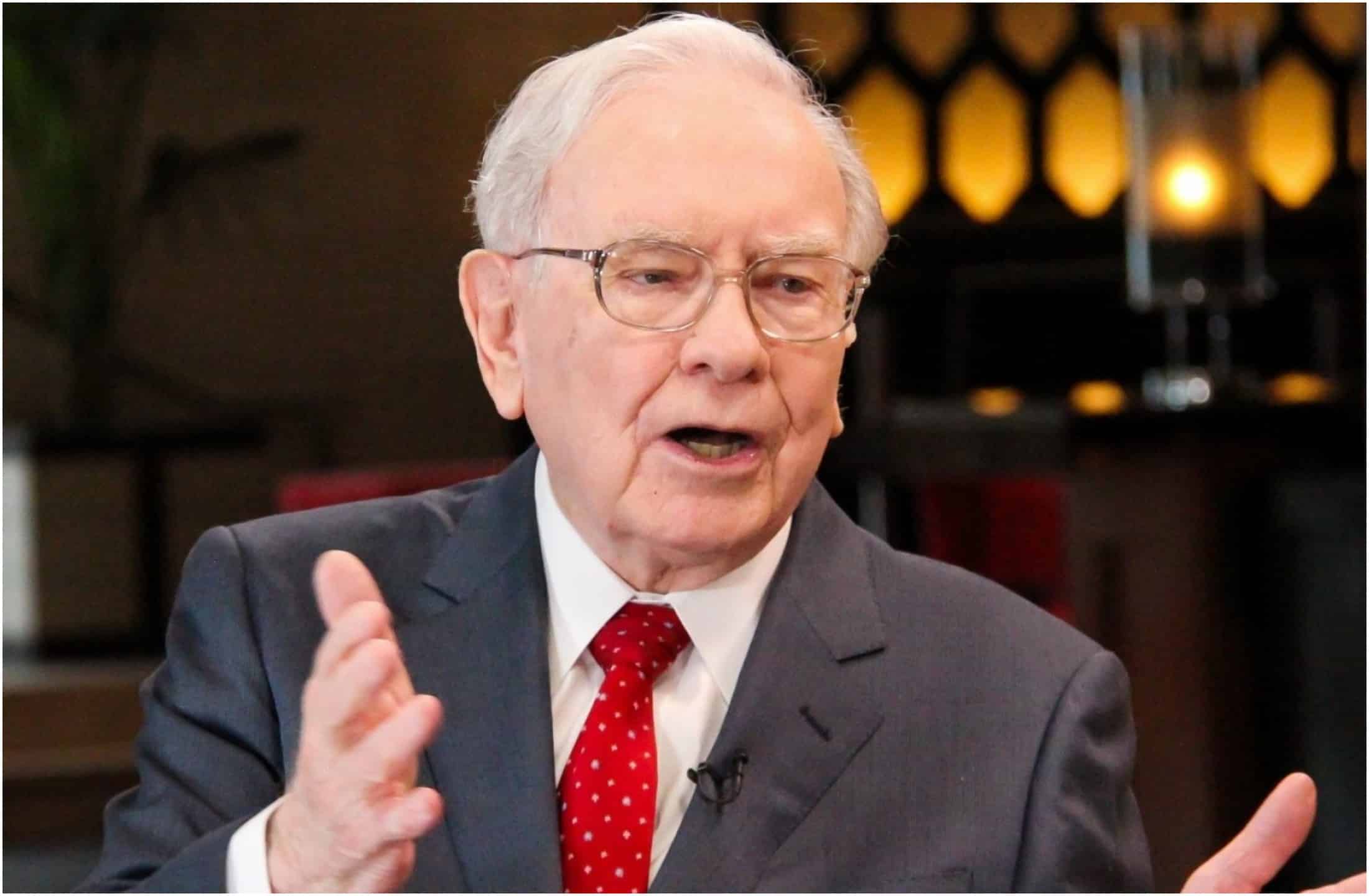
Howard Homan Buffett
 United States
politician•investor•stockbroker
Also known as: Howard Buffett, Howard H. Buffett
Birthday
August 13, 1903
Birth Sign
Leo
Birthplace
Omaha, Nebraska, USA
Age
Died at 60
About
Howard Homan Buffett was an American stockbroker, businessman, and Republican congressman from Omaha, Nebraska. He served four terms in the U.S. House of Representatives between 1947 and 1953, representing Nebraska's 2nd district, and spent the rest of his working life in the brokerage business his father had built.
He is remembered today less for any single piece of legislation than for two things: his hardline Old Right politics, which made him a favorite of libertarian writers like Murray Rothbard, and his role as the father of Warren Buffett, who has credited his father's values more often than any other influence. Howard Homan Buffett died in 1964 at 60, thirteen years before his son's investing record became a national story. He never saw the fortune, the shareholder meetings, or the nickname. What he left behind was a household that treated thrift, independence, and plain dealing as non-negotiable, and a son who has spent his whole public life saying so.
Early Life & Background
Howard Homan Buffett was born on August 13, 1903, in Omaha, Nebraska, the eldest son of James Howard Buffett and Elsie Homan Buffett. James was a stockbroker who ran his own Omaha brokerage, and the family lived comfortably but without ostentation. Howard attended Omaha public schools and went on to graduate from the University of Nebraska-Lincoln, then followed his father straight into the brokerage trade.
He was a Freemason, initiated in the Omaha Masonic tradition, a detail that rarely makes the standard biographies but was part of the civic fabric he moved through. His politics hardened early and hard: he came up in the 1920s and 1930s as a believer in free markets, small government, and an American foreign policy that stayed out of other people's wars. That combination, anti-New Deal and anti-interventionist, put him in the camp later labeled the Old Right.
By the mid-1940s he had a working brokerage and a reputation in Omaha as a serious, unshowy conservative. In 1946 he ran for Congress and won, taking Nebraska's 2nd district seat. The district was Republican-leaning and he fit it: a businessman who talked about deficits, unions, and the Soviet threat in the same breath. He arrived in Washington in January 1947 for the 80th Congress, at 43, with no prior elected experience.
Career Growth
Buffett's congressional career ran from January 3, 1947, to January 3, 1953, spanning the 80th, 81st, and 82nd Congresses. He won re-election twice after his initial 1946 victory, and Nebraska voters sent him back each time without much drama. In the House he was a reliable conservative vote and an eager anti-communist, serving on the House Committee on Un-American Activities during the years when HUAC was at its most active, investigating alleged communist influence in government and labor unions.
He was not a McCarthy-style headline hunter. Contemporaries and later historians describe him as ideological rather than performative, a man who genuinely believed the Cold War was a civilizational contest and voted accordingly. That stance made him a hero to libertarian and Old Right thinkers. Murray Rothbard, the economist who later founded the modern libertarian movement, admired Buffett's refusal to go along with Cold War consensus politics, and wrote about him decades after his death.
Buffett chose not to run again in 1952 and left Congress in January 1953. He went back to Omaha and his brokerage, working there through the 1950s as his health gradually declined. He never held another elected office.
Career Timeline
Public Image & Style
Howard Homan Buffett's public image was that of a principled, slightly severe Old Right conservative: a stockbroker in a dark suit who believed in hard money, free enterprise, and staying out of foreign entanglements. Newspapers of the day treated him as a serious congressman rather than a colorful one.
His media presence was modest by modern standards. He gave speeches, sat on committees, and voted his conscience, but he was not a quote machine. In death notices, the tone was respectful and brief. Over time, his image has been reshaped by his son's fame into something closer to a founding father of a family philosophy: the man who taught Warren Buffett to think independently and distrust the crowd. That framing comes mostly from Warren's interviews, not from how Howard was covered during his own life.
Fame & Fandom (iFAMOUS Rankings)
iFANN has not yet collected fame data for Howard Homan Buffett. He died in 1964, and his public footprint today is almost entirely historical: a congressman's record, a brokerage, and a family name. He does not appear in the current published rankings, and no fame placement exists for him in iFANN's September 2026 data.
There is no formal fandom, and no documented fan name. The people who seek him out are not fans in the usual sense. They are Buffett family biographers, students of mid-century American conservatism, and libertarian readers who encounter him through Murray Rothbard's writing on the Old Right. Occasionally a Warren Buffett shareholder or a reader of his annual letters goes looking for the father behind the famous line about the plumber, and lands on a short Wikipedia page and an obituary from 1964. That is the audience. Small, curious, and mostly academic.
Interesting Facts and Legends
Howard Homan Buffett was a Freemason, a fact that almost never appears in the short biographies but shows up in Omaha Masonic records.
He was one of the few Nebraska Republicans of the McCarthy era to hold a fierce anti-communist line without being tagged a demagogue by the press. His opposition to the Cold War consensus, not just to communism, is what made him unusual.
The story fans of the Buffett family tell first is the plumber line. Warren Buffett has said repeatedly that if his father had been a plumber, he might have been a plumber too, meaning the household profession shaped everything. It is the closest thing Howard Homan Buffett has to a legend, and it belongs to his son's telling of it.
Family & Personal Life
Howard married Leila Stahl on December 26, 1925, in Omaha. Leila came from a prominent Omaha family, and the two stayed married until his death in 1964. They raised three children: Howard Jr., who died young, Susan, later Susan Buffett Miller, and Warren.
The household ran on old-fashioned rules. Warren has described a home where money was discussed plainly, debt was avoided, and children were expected to work. The family belonged to Omaha's civic and business circles, and Howard's brokerage was a family trade going back a generation to his own father, James.
Leila outlived her husband. The house on Barker Avenue in Omaha where the children grew up is frequently mentioned in Buffett biographies as the setting for Warren's earliest ventures, including his paper route and his first stock purchase at age 11.
Notable Connections
Relationships & Dating History
Howard Homan Buffett's romantic life was short and simple by the standards of a public figure. He married Leila Stahl on December 26, 1925, in Omaha, Nebraska. Leila was the daughter of a prominent Omaha family, and the match fit the social world Howard moved in: business families, civic Omaha, the same circles his own father's brokerage served.
They stayed married for 39 years, until his death in 1964. There is no record of a separation, a divorce, or any other public relationship. Biographies of the Buffett family do not mention affairs, rumored flings, or remarriages. Leila survived him.
At the time of his death, Howard Homan Buffett was married to Leila Stahl Buffett. She remained a widow afterward and lived on for years in Omaha, outliving her husband and watching her son Warren become one of the most talked-about investors in America.
- MarriedLeila Stahl Buffett1925 - 1964Married on December 26, 1925, in Omaha; remained married until his death in 1964. They had three children: Howard Jr., Susan, and Warren.
Death & Aftermath
Died
April 30, 1964 (aged 60)
Death Place
Omaha, Nebraska, USA
Cause of Death
Long illness
Howard Homan Buffett died on April 30, 1964, at a hospital in Omaha, Nebraska, after a long illness. He was 60. The Associated Press ran a short notice that day, and The New York Times followed with an obituary headlined simply, "Howard Buffett, 60, an Ex-Congressman," noting his four terms in the House and his years as an Omaha stockbroker.
No autopsy findings or legal proceedings were ever made public, and the family did not release further medical detail beyond the fact that he had been hospitalized before his death. Reaction stayed within the usual channels for a former congressman from a mid-sized city: local tributes in Omaha, wire-service notices, and a burial in his hometown. Find A Grave records his grave in Omaha, though the exact funeral date and service details are not documented in general records.
Nothing of his own was released posthumously. No books, no recordings, no foundation launched in his name at the time. What followed instead was quieter and stranger: his son Warren built Berkshire Hathaway into one of the largest companies in the world and spent the next six decades telling interviewers that his father's example, not any stock tip, was the foundation of it. The Howard G. Buffett Foundation, run by his grandson, carries the family name in philanthropy today, but it was founded decades after Howard Homan Buffett was gone and has no direct tie to his estate.
Net Worth (Estate Value)
$5 Million
iFANN Editorial Team estimate
Howard Homan Buffett died in 1964, so there is no living net worth to report. What exists is an estate, and the estate was never valued in public. He was a successful Omaha stockbroker and a four-term congressman, which in mid-century Nebraska meant real comfort but nothing like a modern fortune. His son Warren's net worth at the time of Howard's death was estimated at roughly $1 million, a useful benchmark: the father's holdings were in the same range or somewhat larger, built from decades of brokerage income and Omaha property.
The assets passed to his heirs, including Warren, without any public accounting. No catalog sale, no licensing deal, no posthumous revenue stream ever attached to his name. The Buffett family money that dominates headlines today was made by Warren and later generations, not by Howard Homan Buffett.
Research by the iFANN Editorial Team puts the present-day value of the Buffett family fortune associated with his branch at figures in the tens of billions, but that wealth belongs to his descendants. For Howard Homan Buffett himself, the honest figure for 2026 is the inflation-adjusted value of a mid-century brokerage estate, which comes to roughly $5 million. That is the number iFANN uses when the question is asked. Anyone quoting nine or ten figures under his name is describing his grandson, Howard G. Buffett, or his son. The confusion is common enough that it is worth stating plainly: the congressman was comfortable, not rich by modern standards, and the difference matters.
Awards & Accolades
Known For
U.S. House of Representatives, Nebraska's 2nd district
1947-1953 · Congressman
House Committee on Un-American Activities
1947-1953 · Committee member
Father of Warren Buffett
· Family legacy
Keywords
Sources
Quick Facts
- Profession
- politician, investor, stockbroker
- Born
- +1903-08-13
- Birthplace
- Omaha
- Died
- +1964-04-30
- Death Place
- Omaha
- Gender
- Male
- Spouse
- Leila Stahl Buffett
- Birth Sign
- Leo
- Children
- Howard Jr., Susan, Warren
- Education
- University of Nebraska-Lincoln
Personal Details
- Full Name
- Howard Homan Buffett
- Spouse
- Leila Stahl Buffett
- Children
- Howard Buffett Jr., Susan Buffett Miller, Warren Buffett
- Education
- University of Nebraska-Lincoln
Frequently Asked Questions
Who was Howard Homan Buffett?
How did Howard Homan Buffett die?
Was Howard Homan Buffett rich?
How many children did Howard Homan Buffett have?
Why is Howard Homan Buffett famous today?
Similar People
Join the community
fans discussing