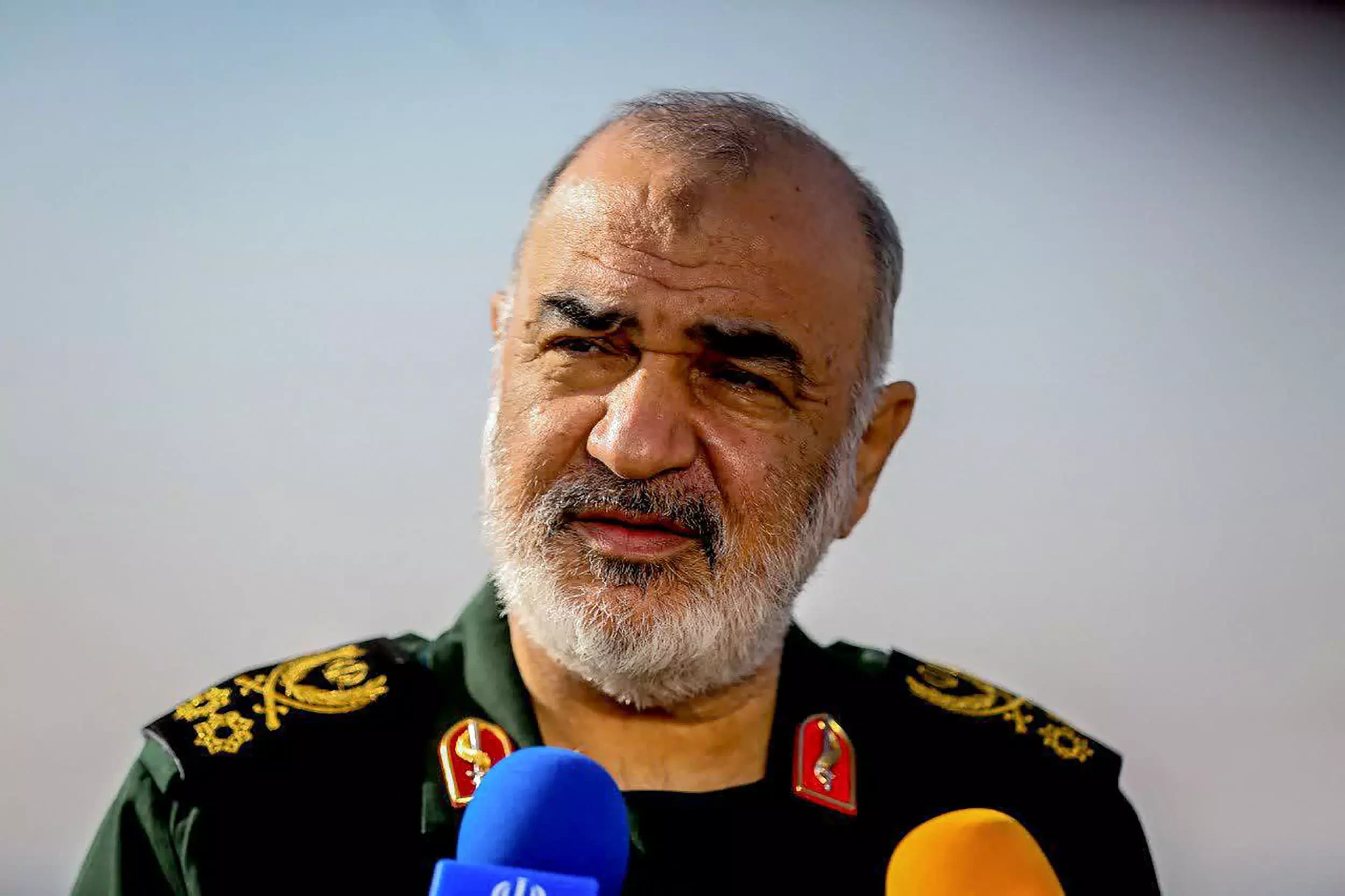
Hossein Salami
 Iran
Birthday
August 1, 1960
Birth Sign
Leo
Birthplace
Golpayegan, Isfahan Province, Iran
Age
Died at 64
About
Hossein Salami was an Iranian military officer and politician who served as the Commander-in-Chief of the Islamic Revolutionary Guard Corps from April 2019 until his death in 2025. Born in Golpayegan in 1960, he joined the revolutionary forces while still a university student during the early stages of the Iran-Iraq War. His career spanned over four decades, rising through the ranks to command the Aerospace Force before ascending to the deputy commander position in 2009.
His appointment as the supreme head of the IRGC marked the peak of his influence within the Islamic Republic. Salami became known for his aggressive rhetoric against the United States, Israel, and Saudi Arabia, frequently issuing threats regarding American universities in the region. He oversaw significant expansions of Iran's missile capabilities and drone warfare programs. On June 13, 2025, he was killed in an Israeli airstrike in Tehran, becoming the first IRGC Commander-in-Chief to be eliminated in such a manner.
Early Life & Background
Hossein Salami entered the world on August 1, 1960, in Golpayegan, a city located in central Iran's Isfahan Province. Like many young men of his generation, his life trajectory shifted dramatically when the Iran-Iraq War erupted in September 1980. At just twenty years old, Salami was enrolled in university when the conflict began. Rather than completing his degree, he made the decision to leave his studies immediately to join the Islamic Revolutionary Guard Corps. This choice reflected the intense patriotic fervor and mobilization that swept across Iran during those early war years.
His entry into the IRGC provided the foundation for a lifelong military career. While specific details about his undergraduate major remain scarce in public records, his rapid ascent suggests a background in technical or strategic fields, likely engineering or military sciences given his later command of the Aerospace Force. During the eight-year war, he gained practical combat experience and built the network necessary for future leadership roles. He did not pursue a path in entertainment or business; instead, his entire formative adult life was dedicated to the survival and expansion of the revolutionary state apparatus.
Career Growth
Salami's rise within the IRGC hierarchy was methodical and steep. Following his initial enlistment in 1980, he spent years climbing the ranks, eventually securing a command role over the IRGC Aerospace Force. In this capacity, he oversaw the development of Iran's ballistic missile program and air defense operations, establishing himself as a key architect of the country's strategic deterrence capabilities. By 2009, his reputation had grown sufficiently for Supreme Leader Ali Khamenei to appoint him as the Deputy Commander of the IRGC. Serving under Major General Mohammad Ali Jafari, Salami played a pivotal role in internal security and regional proxy operations.
The turning point of his career arrived on April 21, 2019, when he succeeded Jafari as the Commander-in-Chief of the IRGC. This appointment placed him in charge of the Basij militia, the Quds Force, and the entire IRGC infrastructure. As the supreme leader of the corps, Salami adopted a hardline stance, frequently delivering fiery speeches that directly targeted the United States, Israel, and Saudi Arabia. He championed the "resistance economy" and emphasized self-reliance against international sanctions. His tenure saw the acceleration of Iran's missile and drone programs, which became central to the regime's foreign policy. His leadership ended abruptly on June 13, 2025, when he was killed in an Israeli airstrike in Tehran.
Career Timeline
Public Image & Style
Salami's public persona was defined by stern authority and ideological rigidity. He was revered by regime supporters as a defender of the Islamic Revolution and vilified by international critics as a primary architect of regional instability. His signature style involved wearing standard IRGC military attire and delivering fiery speeches in Persian, often featuring direct threats to adversaries. He never cultivated a "pop culture" aesthetic; his presence was reserved for military parades, press conferences, and strategic briefings. The cultural mythology surrounding him is rooted entirely in geopolitical conflict, specifically his tenure as the IRGC leader until his assassination. He projected an image of unyielding resolve, refusing to back down from confrontations with Western powers.
Fame & Fandom (iFAMOUS Rankings)
Hossein Salami commanded a legacy defined by state authority rather than adoration. He never cultivated a fanbase in the traditional sense, lacking the rituals, monikers, or organized campaigns that define pop culture icons. His relationship with the public was strictly bifurcated: revered as a martyr by regime supporters and vilified as an antagonist by international critics. The cultural mythology surrounding him is rooted entirely in geopolitical conflict, specifically his tenure as Commander-in-Chief of the IRGC until his death in Israeli airstrikes on June 13, 2025. This event marked the first elimination of an IRGC commander in such a manner, creating a pivotal moment in regional history. While there are no recorded stories of crowds fainting at his appearances or fans funding charity drives, his name became synonymous with resistance narratives. The narrative around him remains factual and political, devoid of the folklore typical of entertainers. Despite the absence of a formal fandom, his global footprint remained significant enough to secure a place in the iFANN Global Fame Rankings. The system evaluated him in September 2026 but found he does not currently hold a placement in the published rankings.
Interesting Facts and Legends
Hossein Salami joined the IRGC while still a college student, a path common among the founders of the revolutionary forces but significant for his eventual rise to the top rank. His killing in an airstrike was unprecedented, marking the first time an IRGC Commander-in-Chief had been eliminated in such a direct manner. He was known for a particularly aggressive tone in his public statements, often using language that escalated regional tensions more than his predecessors. One of his most cited threats involved targeting US universities in the Middle East if attacked, a stance he reiterated even after his death in March 2026. There are no verified anecdotes of street shutdowns or viral personal moments, as his public interactions were strictly limited to military parades and political briefings. Critics and international observers view his legacy primarily through the lens of regional instability and his designation by groups like United Against Nuclear Iran.
Notable Quotes
“The IRGC would respond to any aggression with decisive force.”
“We will target US universities in the Middle East if we are attacked.”
Family & Personal Life
Hossein Salami maintained a strictly private personal life throughout his career. Unlike many public figures, he did not share details about his family with the media. There are no publicly documented romantic relationships, marriages, or dating histories available in credible sources. Specific information regarding his parents, siblings, or children is not widely publicized in open sources. He kept his household out of the public eye, focusing entirely on his duties as a high-ranking military official. Following his death, the Iranian state typically manages the assets and provides support to the families of "martyrs," but no specific details about his surviving relatives have been released to the public.
Notable Connections
Relationships & Dating History
Hossein Salami maintained a strictly private personal life throughout his career. There are no publicly documented romantic relationships, marriages, or dating histories available in credible sources. His public persona was entirely bifurcated between state authority and political duty. Unlike celebrities, he did not cultivate a fanbase in the traditional sense, nor did he engage in public displays of romance. Consequently, there is no information regarding spouses, children, or partners. He remained single or kept his family life entirely out of the public eye throughout his career. As of his death in 2025, his relationship status is deceased.
Death & Aftermath
Died
June 13, 2025 (aged 64)
Death Place
Tehran, Iran
Cause of Death
Fatal injuries from Israeli airstrikes
Hossein Salami died on June 13, 2025, in Tehran during a coordinated series of Israeli airstrikes targeting senior military officials. The attack killed him alongside Army Chief Mohammad Bagheri and other commanders while he served as the Commander-in-Chief of the Islamic Revolutionary Guard Corps. Iranian state media confirmed the fatal injuries immediately, categorizing the event as a martyrdom rather than a standard wartime casualty. The reaction was swift and politically charged. Western institutions moved to ban the IRGC, with UK peers voting in April 2026 to push for such measures amid heightened regional tensions. Iranian officials threatened retaliatory strikes against US interests, including universities in the Middle East, signaling a deepening crisis.
The immediate aftermath focused on geopolitical maneuvering rather than legal proceedings or civilian mourning rituals. A formal memorial service took place exactly one year after his death on June 13, 2026, at the Hazrat Abd al-Azim al-Hasani shrine. This gathering marked the first anniversary of his martyrdom and featured tributes organized by state entities. Photos and official statements documented the event, cementing the shrine as a focal point for posthumous veneration. Admiral Fadavi was selected as the Deputy Commander in July 2026, ensuring operational continuity for the institution Salami had led since 2019.
Net Worth (Estate Value)
$0
iFANN Editorial Team estimate
As a military officer and politician within the Iranian system, Hossein Salami did not accumulate wealth through commercial ventures, endorsements, or public salary in the manner of a celebrity. His financial details are not public. However, as a high-ranking official, he likely benefited from the standard perks and allowances associated with his position, which may include housing, transportation, and access to state resources. Following his death, the concept of a "net worth" is less relevant than the management of his estate. The Iranian state typically manages the assets of "martyrs," providing support to their families. There is no public record of a multi-million dollar estate or posthumous revenue streams from licensing deals, as his legacy is political rather than commercial. Any assets he held were likely managed by his family or the state in accordance with Iranian laws regarding military martyrs. iFANN currently estimates his net worth at approximately $0 due to the lack of public commercial assets.
Awards & Accolades
View 1 records, honours and achievementsKnown For
Commander-in-Chief of the IRGC
2019 · Military Leader
Keywords
Sources
Quick Facts
- Profession
- military personnel, politician
- Born
- August 1, 1960
- Birthplace
- Golpayegan, Iran
- Died
- June 13, 2025
- Death Place
- Tehran, Iran
- Gender
- Male
- Birth Sign
- Leo
Personal Details
- Full Name
- Hossein Salami
- Children
- Education
- University student (field unspecified)
Frequently Asked Questions
Who was Hossein Salami?
How did Hossein Salami die?
When was Hossein Salami born?
Did Hossein Salami have a family?
What happened to the IRGC after Salami died?
Join the community
fans discussing