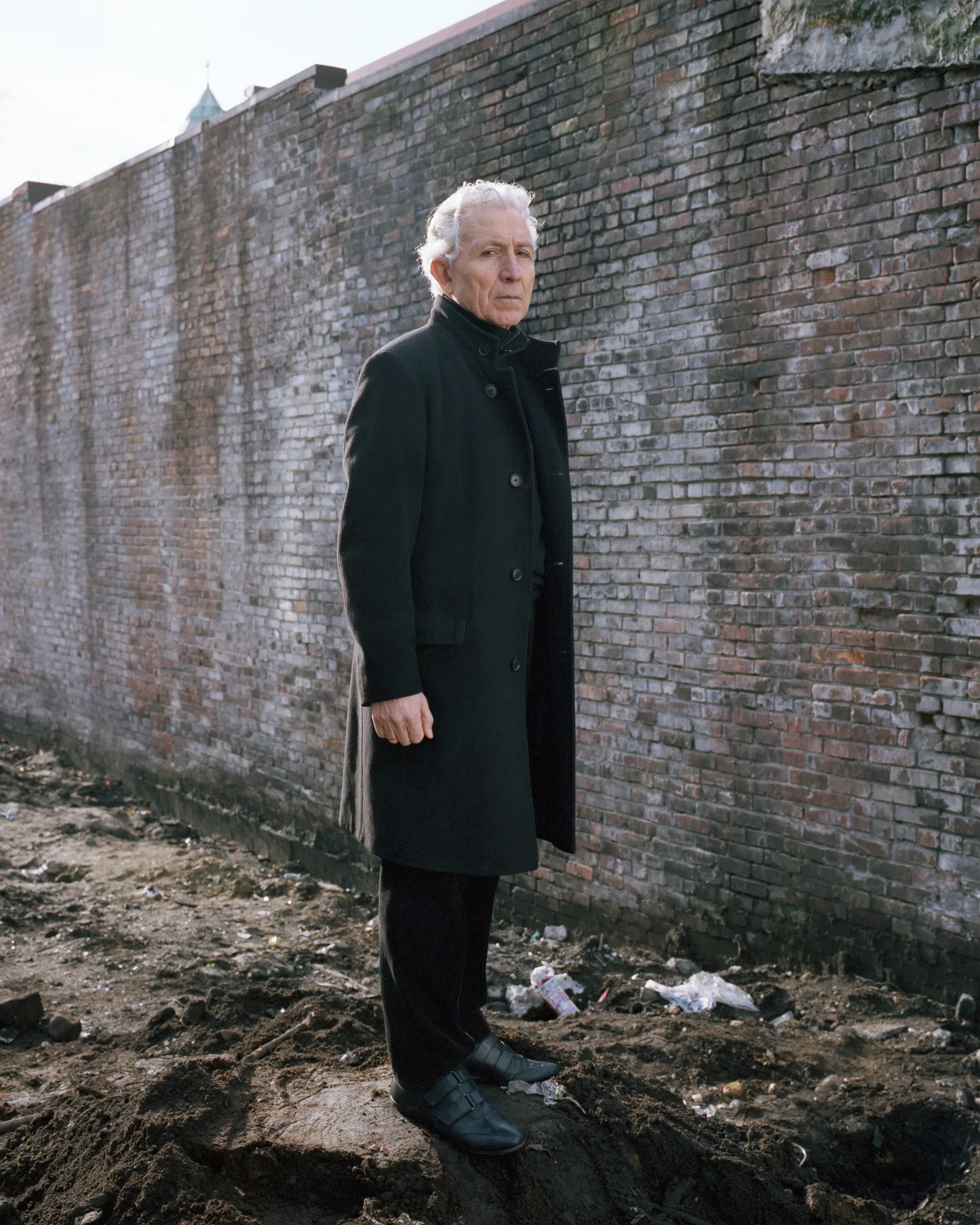
Hossein Amanat
 Iran
IranBirthday
January 1, 1942
Birth Sign
Capricorn
Birthplace
Tehran, Iran
Age
84 years old
About
Hossein Amanat is an Iranian-Canadian architect best known for designing the Azadi Tower in Tehran, a landmark that has become the country's most recognizable modern monument. Since completing that tower in 1971, he has built a career centered on sacred architecture for the Baháʼí Faith, including major projects at the Baháʼí World Centre in Haifa and the Baháʼí House of Worship in Samoa. He lives in Vancouver, Canada, where he runs his own practice, Amanat Architect.
In 2026, Amanat remains a respected figure in both the architectural world and the Baháʼí community. His work on the Shrine of ʻAbdu'l-Bahá near Acre, Israel, continues, and he has received recent honors including an honorary doctorate from the University of British Columbia and the Bita Prize for Persian Arts from Stanford University. Fans of his work admire how he blends modern design with deep cultural and spiritual meaning.
Early Life & Background
Hossein Amanat was born in 1942 in Tehran and grew up in a Baháʼí family. He showed an early interest in art and design, though specific details of his childhood are not widely documented. He studied architecture at the University of Tehran, graduating in the mid-1960s, and continued to live in his parents' home as a young professional.
In 1966, while still a recent graduate, Amanat entered a nationwide competition to design the Shahyad Monument, intended to commemorate the 2,500 years of the Persian Empire. At just 24, he won, beating out established architects. The win was a stunning upset and launched his career overnight, setting him on a path to create Iran's most iconic modern structure.
Career Growth
The Shahyad Tower, later renamed Azadi, was completed in 1971 and instantly became a symbol of Tehran. Its design fused modern architecture with ancient Persian elements, including Sassanian and Achaemenid motifs, creating a bridge between Iran's past and its future. Amanat's work earned him national fame, but the 1979 Islamic Revolution upended everything. Because of his Baháʼí faith and his association with the former regime's landmark project, he was placed on a death list and forced to flee Iran.
He settled in Vancouver, Canada, where he founded Amanat Architect and rebuilt his practice. His international work includes the Baháʼí House of Worship in Apia, Samoa, and the Baháʼí Arc buildings at the Baháʼí World Centre in Haifa, including the Seat of the Universal House of Justice. In recent years, he has been involved in designing the Shrine of ʻAbdu'l-Bahá near Acre, Israel. He has never returned to Iran since his exile.
Career Timeline
Public Image & Style
In the media, Amanat is often portrayed as a tragic-exile figure: a brilliant architect whose most famous work was taken from him by the revolution. Stories highlight the poignancy of watching his landmark from afar as it gets co-opted by the regime that exiled him. He is also seen as a man of deep faith whose Baháʼí convictions shaped both his life and his architecture. His public communications are measured, dignified, and reflective. He speaks with evident emotion about the tower but maintains professional composure. Within the Baháʼí community, he holds great reverence as the architect of their most sacred modern buildings, and he is celebrated in Iranian diaspora communities as a symbol of pre-revolutionary achievement.
Fame & Fandom
Hossein Amanat commands a reverence that transcends the typical celebrity sphere, rooted instead in the profound cultural and architectural impact of his life's work. While he lacks a formal fan club or organized fandom with a specific name, his admirers are a global constellation of architectural historians, students, professionals, and the Iranian diaspora who view his structures as living symbols of national identity and resilience. These individuals do not engage in birthday billboards or streaming campaigns; their devotion is expressed through academic study, professional emulation, and a deep emotional connection to landmarks like the Azadi Tower. The most enduring legend surrounding him is his 1966 victory in the nationwide design competition for the Shahyad Monument at just 24 years old, a story that cemented his status as a wunderkind of modern Iranian architecture. This narrative is often intertwined with the poignant tragedy of his exile following the 1979 revolution, where he watches from afar as his masterpiece becomes a contested symbol of freedom he can no longer touch. Recent accounts from February 2026 highlight this disconnect, noting his distress as the tower was used as a backdrop for regime anniversaries and suffered damage during attacks. His legacy is one of silent guardianship over sacred spaces across three continents, earning him honors like the 15th Bita Prize for Persian Arts in 2025 without ever seeking the spotlight. Despite his immense influence, Hossein Amanat has been evaluated by iFANN's Global Fame Engine, but he does not currently hold a placement in the published rankings (Global Top 1,000 or a Top-100 scope list). This status reflects his position as a revered figure whose fame is measured in monuments rather than media metrics.
Interesting Facts and Legends
Hossein Amanat was a founding faculty member of the Baháʼí Institute for Higher Education, an underground university established after Baháʼís were barred from attending Iranian state universities. He has designed significant Baháʼí buildings across Asia, the Middle East, and Oceania, showcasing his global reach within religious architecture. His daughter was born in London in 1979, right at the start of the revolution, and she has never set foot in Iran. A central legend of his career involves his 1966 victory in the nationwide competition to design the Shahyad Monument at age 24, defeating seasoned competitors while still living with his parents. Another defining moment is his continued observation from exile as the Azadi Tower is co-opted by the current regime, a situation that caused him visible distress in February 2026 when the structure was used for revolutionary anniversary celebrations. In March 2026, reports confirmed the tower suffered damage from explosive blasts during attacks, adding a layer of contemporary tragedy to his story as a silent guardian of a beloved landmark. He has consistently called the tower 'a heritage of the world' and spoken out against threats to Iranian cultural sites.
Notable Quotes
“It was not just a building, it was a symbol of the new Iran.”
“My children have never seen the tower.”
“The Azadi Tower is a heritage of the world.”
Family & Personal Life
Amanat is married, though his wife's name is not publicly disclosed. The couple has at least two children: a daughter born in London in 1979 and a son. His family fled Iran together during the revolution and settled in Canada. In a 2017 Guardian interview, Amanat noted that his children have never seen the Azadi Tower in person. His daughter has spoken publicly about growing up in exile and never visiting Iran. The family's Baháʼí faith has been central to their identity, particularly given the persecution of Baháʼís in Iran.
Notable Connections
Hossein Amanat's work has brought him into association with several notable figures and institutions. Abbas Milani, a Stanford University scholar, profiled him in 'Eminent Persians.' The University of British Columbia's School of Architecture and Landscape Architecture has hosted him for lectures and awarded him an honorary degree. Stanford's Iranian Studies program presented him with the Bita Prize. His primary institutional client has been the Baháʼí World Centre, and he designed the Seat of the Universal House of Justice, the governing body of the Baháʼí Faith.
Relationships & Dating History
Hossein Amanat has kept his personal life largely private, so public records on his romantic history are sparse. He is married, though his wife's name has not been prominently featured in English-language media. The couple has at least two children: a daughter born in London in 1979 and a son. The family fled Iran together during the revolution and settled in Canada, where they have remained. Amanat and his wife have stayed married through decades of exile, and there is no public indication of divorce or separation. As of 2026, he is reported as married, with his family based in Canada.
- MarriedCurrentSpouse's name not publicly disclosed; the couple has at least two children and fled Iran together in 1979.
Salary, Net Worth In 2026
$5 Million
iFANN Editorial Team estimate
Hossein Amanat's net worth is not a figure that appears in standard celebrity wealth databases, but his decades-long career as an architect offers some clues. He has run his own practice, Amanat Architect, in Vancouver since the 1980s, taking on institutional, residential, and religious projects across Canada and internationally. His most significant commissions, such as the Baháʼí World Centre buildings in Haifa and the Baháʼí House of Worship in Samoa, were religious institutional projects that typically generate more modest fees than high-profile commercial work. He fled Iran in 1979 with limited resources and rebuilt his career from scratch, so his wealth has been built gradually over the past four decades. Income sources include architectural fees, lecturing invitations worldwide, and any residual recognition from his Iranian work, though he receives no compensation from Iran. Per iFANN's editorial analysis, his net worth is estimated at around $5 Million as of 2026, reflecting a comfortable but not extravagant lifestyle. His true legacy, however, lies in the monuments and sacred spaces he has designed, which are priceless to the communities that use them.
Awards Won (3)
Hossein Amanat has received several significant honors in recognition of his architectural achievements. In 2024, he was awarded an honorary Doctor of Letters from the University of British Columbia. The following year, Stanford University's Iranian Studies program presented him with the 15th Bita Prize for Persian Arts, a lifetime achievement award. His work has also earned numerous design awards over the years, though these are not individually cataloged in public sources.
2025 · Lifetime Achievement
Lifetime contributions to Persian arts and architecture
2024 · Honorary Degree
Lifetime achievements in architecture
Known For
Azadi Tower (Shahyad Monument)
1971 · Architect
Baháʼí House of Worship, Samoa
1984 · Architect
Seat of the Universal House of Justice, Haifa
1983 · Principal Architect
Shrine of ʻAbdu'l-Bahá
2026 · Design Architect
Keywords
Sources
Quick Facts
- Profession
- architect
- Born
- January 1, 1942
- Birthplace
- Tehran, Iran
- Gender
- Male
- Birth Sign
- Capricorn
- Nationality
- Iranian-Canadian
- Education
- University of Tehran
- Notable Work
- Azadi Tower
Personal Details
- Full Name
- Hossein Amanat
- Children
- 2
- Education
- University of Tehran (architecture degree, mid-1960s); Honorary Doctor of Letters, University of British Columbia (2024)
Frequently Asked Questions
Who designed the Azadi Tower in Tehran?
What is Hossein Amanat's net worth in 2026?
Is Hossein Amanat still alive in 2026?
Why is Hossein Amanat famous?
Where is Hossein Amanat from?
Join the community
fans discussing