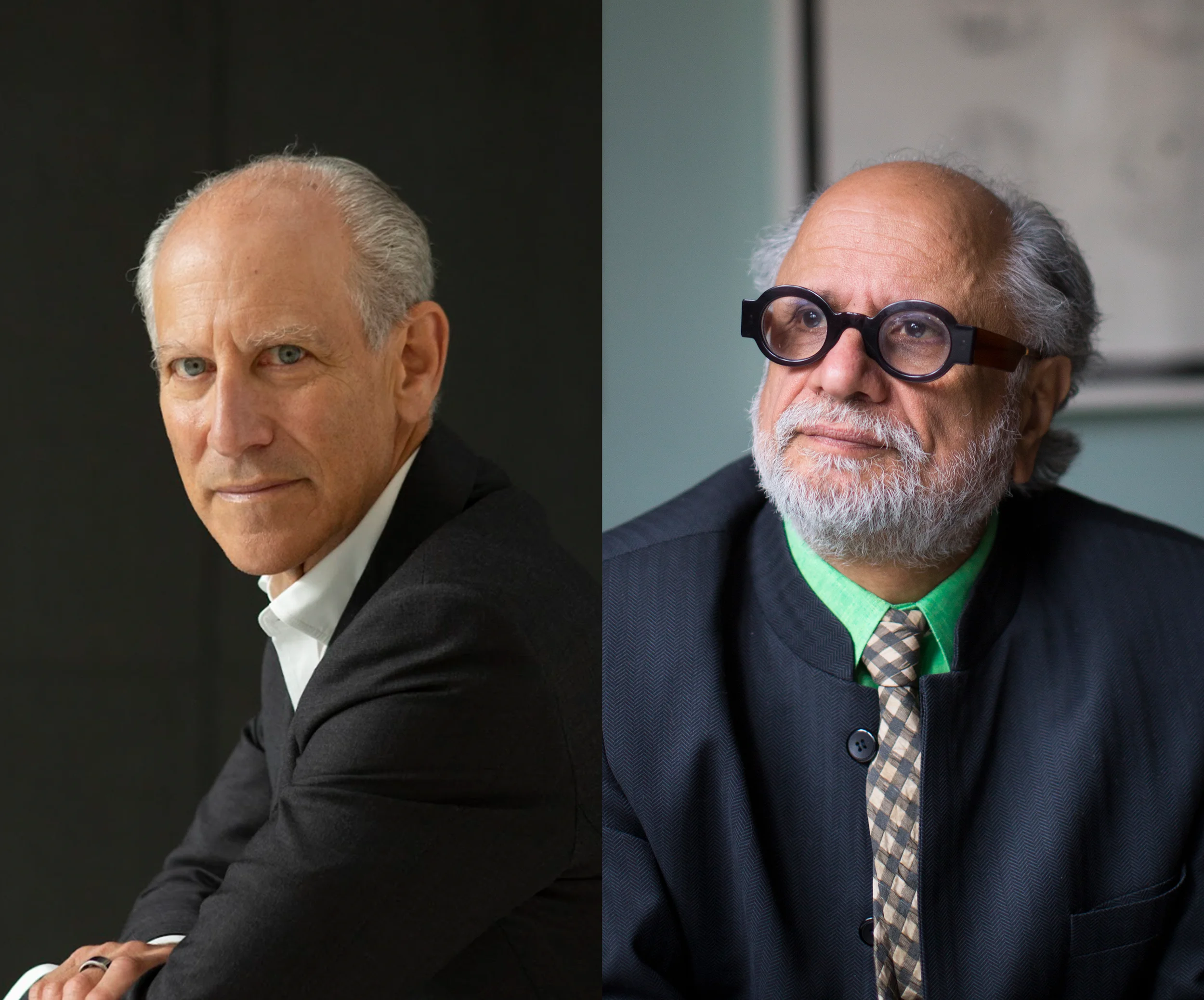
Homi K. Bhabha
 India
Indiaphilosopher•professor•literary critic
Also known as: Homi Bhabha, Homi Kharshedji Bhabha
Birthday
November 1, 1949
Birth Sign
Scorpio
Birthplace
Mumbai, India
Age
76 years old
About
Homi Kharshedji Bhabha is an Indian-born scholar and critical theorist who has reshaped postcolonial studies. He holds the Anne F. Rothenberg Professorship of the Humanities at Harvard University, with appointments in English and Comparative Literature. His work on hybridity, mimicry, and the Third Space has become foundational, influencing fields from literary criticism to anthropology and political theory. In 2012, India awarded him the Padma Bhushan for his contributions to literature and education. He remains an active voice in global debates on culture, human rights, and the humanities.
Early Life & Background
Born into a Parsi Zoroastrian family in Mumbai in 1949, Bhabha grew up in a city of layered histories and cultures. He studied at Elphinstone College in Mumbai, then moved to Oxford for graduate work, earning his M.Phil. and D.Phil. at Christ Church. His early reading of Derrida, Lacan, Foucault, and Edward Said shaped his thinking. While teaching at the University of Sussex in the 1980s, he published two essays that would define his trajectory: "The Other Question" (1983) and "Of Mimicry and Man" (1984). Both explored the ambivalence and instability at the heart of colonial discourse. In 1990, he edited and contributed to the anthology Nation and Narration, which brought together key voices in postcolonial theory and helped establish his place in the field.
Career Growth
The publication of The Location of Culture in 1994 marked Bhabha's breakthrough. The book introduced concepts like hybridity and the Third Space, arguing that colonial power is never absolute and that resistance happens through cultural negotiation. His ideas quickly spread across disciplines. He held visiting professorships at the University of Chicago and Princeton before joining the London School of Economics. In 2001, he was appointed the Anne F. Rothenberg Professor at Harvard, where he later directed the Mahindra Humanities Center. He has delivered major addresses at UNESCO in Paris and the Ruhrtriennale in Germany, and has engaged in public conversations with artists Anish Kapoor and William Kentridge. In 2020, he withdrew from a conference in Israel amid criticism from BDS supporters.
Career Timeline
Public Image & Style
Bhabha's public image is that of a rigorous, theoretically sophisticated scholar whose dense prose has been both praised for its depth and criticized for its difficulty. His signature concepts have become standard vocabulary in cultural studies. He has no organized fandom, but his audience includes academics, graduate students, and intellectuals worldwide. In media portrayals, he is consistently framed as a leading voice in postcolonial thought and a defender of the humanities. His public lectures draw large audiences, and he is known for engaging directly with contemporary political issues, from refugee dignity to the role of universities.
Fame & Fandom (iFAMOUS Rankings)
Homi K. Bhabha commands a profound, global attention that resonates through university corridors and intellectual circles rather than pop culture billboards or stadium crowds. His influence is measured in citations and the enduring power of his theories on hybridity and mimicry, shaping how scholars understand postcolonial identity worldwide. Despite this deep impact, iFANN's Global Fame Engine has evaluated this person, but they do not currently hold a placement in the published rankings (Global Top 1,000 or a Top-100 scope list). He remains an unranked figure in the broad spectrum of global celebrity metrics, reflecting his status as a specialized academic titan rather than a mass-market icon. The audience for Bhabha consists of students, researchers, and intellectuals who engage with his work at Harvard and UNESCO, but there is no formal fandom name documented for him. Unlike performers who have organized fan campaigns or birthday celebrations, Bhabha's legacy is defined by the rigorous application of his concepts in architecture, music criticism, and political theory. His interactions remain within the realm of high-level discourse, with no evidence of fan-driven chart climbs or viral moments typical of modern stardom.
Interesting Facts and Legends
Homi Kharshedji Bhabha is often confused with Homi J. Bhabha, the nuclear physicist who founded India's atomic energy program. The two are not related, though both were Parsi intellectuals from Mumbai. His concept of hybridity has been applied to architecture, urban studies, and music criticism. He has called for a more emotive language of human rights, arguing that legalistic framing falls short. In 2013, he spoke at UNESCO, advocating a 'new humanism' that peacefully addresses cultural difference. He has expressed optimism about Indian civil society, noting in 2023 that it is 'vibrant, and courageous, although it is beaten up and beaten down.' A defining moment in his career was the 1994 publication of 'The Location of Culture,' which introduced key concepts like the third space and immediately reshaped conceptions of globalization. Another notable event occurred in September 2020 when he withdrew from a conference in Israel following criticism regarding his stance, highlighting his engagement with political ethics. In September 2019, he delivered a speech at the Ruhrtriennale festival referencing harrowing images of refugees washing ashore in Tunisia, cementing his reputation as a thinker demanding dignity for displaced populations.
Notable Quotes
“Our civil society here is vibrant, and courageous, although it is beaten up and beaten down.”
“We need a new, emotive language of human rights.”
“The global need for a 'new humanism' that peacefully addresses cultural difference.”
Family & Personal Life
Bhabha is married to Jacqueline Bhabha, an attorney and professor of the practice of health and human rights at the Harvard T.H. Chan School of Public Health. She has written extensively on child migration and refugee rights. The couple has three children. They maintain a private family life, with few public details about their household. Jacqueline's work often intersects with themes of displacement and dignity that also appear in Homi's public addresses.
Notable Connections
Bhabha's intellectual debt to Edward Said is significant, as Said's pioneering work in postcolonial studies opened the field Bhabha would transform. His wife, Jacqueline Bhabha, is a human rights scholar whose work complements his own. He has engaged in public conversations with artists Anish Kapoor and William Kentridge, bridging theory and contemporary art.
Relationships & Dating History
Bhabha's personal life has remained remarkably private, with no documented romantic relationships other than his marriage. He is married to Jacqueline Bhabha, an attorney and Harvard professor specializing in human rights and migration law. The couple has three children together. Their marriage is ongoing as of 2026, and no public statements about how they met or any marital difficulties have been made.
- MarriedJacqueline BhabhaCurrentMarried, with three children. Jacqueline is a human rights scholar at Harvard.
Salary, Net Worth In 2026
$2 Million
iFANN Editorial Team estimate
As an academic, Bhabha's income comes primarily from his endowed professorship at Harvard, where senior faculty earn between $250,000 and $400,000 annually. Book royalties from The Location of Culture and Nation and Narration add to his earnings, as do speaking fees for lectures and conference appearances. Public sources do not track his finances, but per iFANN's editorial analysis, his net worth is estimated at around $2 million as of 2026, reflecting his long academic career and modest outside income.
Awards Won (1)
Bhabha's most significant honour is the Padma Bhushan, awarded by the Government of India in 2012 for his contributions to literature and education. His other recognitions are primarily academic appointments and fellowships rather than competitive awards.
2012 · Literature and Education
Lifetime achievement
Known For
The Location of Culture
1994 · Author
Nation and Narration
1990 · Editor and contributor
Keywords
Sources
Quick Facts
- Profession
- philosopher, professor, literary critic
- Born
- November 1, 1949
- Birthplace
- Mumbai, India
- Gender
- Male
- Spouse
- Jacqueline Bhabha
- Birth Sign
- Scorpio
- Education
- Elphinstone College, University of Bombay, Christ Church, Oxford (M.Phil., D.Phil.)
Personal Details
- Full Name
- Homi Kharshedji Bhabha
- Spouse
- Jacqueline Bhabha
- Children
- 3
- Education
- Elphinstone College, University of Bombay, Christ Church, Oxford (M.Phil., D.Phil.)
Frequently Asked Questions
Is Homi K. Bhabha related to Homi J. Bhabha, the nuclear physicist?
What is Homi K. Bhabha's most famous theory?
Where does Homi K. Bhabha teach?
What is Homi K. Bhabha's nationality?
What awards has Homi K. Bhabha won?
Similar People
Join the community
fans discussing