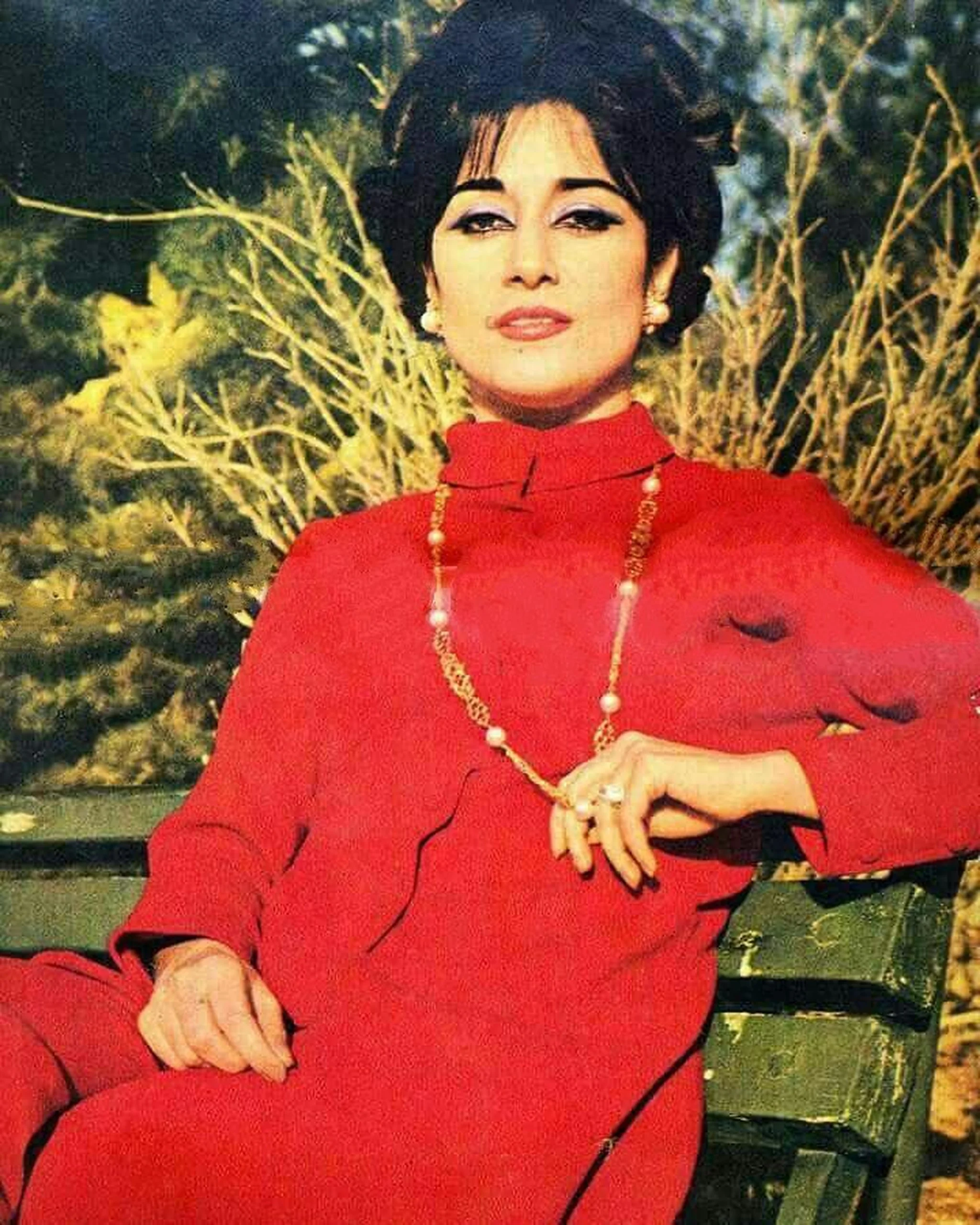
Homeyra
 Iran
IranAlso known as: Parvaneh Amir-Afshari, Homayra
Birthday
March 17, 1945
Birth Sign
Pisces
Birthplace
Tehran, Iran
Age
81 years old
About
Homeyra, born Parvaneh Amir-Afshari on March 17, 1945, in Tehran, is an Iranian singer celebrated as one of the most prominent voices of the golden age of Persian music. Her career spans over five decades, marked by a vocal range that her mentor Ali Tajvidi described as moving effortlessly from alto to soprano, a rare versatility that set her apart. She is widely regarded as a living legend, with a catalog of songs that remain beloved by Iranians at home and across the diaspora.
Today, Homeyra continues to connect with fans through official social media channels and streaming platforms, where her classic tracks like Gole Goleftam and Shazdeh Khanoom find new listeners. Her influence endures as a benchmark for Persian vocal excellence, and her music remains a cultural touchstone for generations.
Early Life & Background
Born into an aristocratic Tehrani family, Homeyra grew up surrounded by the cultural and artistic circles of Iran's capital. In a time when formal musical training for women was uncommon, her family's status gave her access to the country's finest musicians. She began studying classical Persian vocal technique under the tutelage of Ali Tajvidi, a renowned composer and violinist, who recognized her extraordinary range and shaped her early development.
By the 1960s, she was performing professionally in Tehran's vibrant music scene, a golden era of Persian music before the 1979 revolution. Her early performances blended classical traditions with popular sensibilities, quickly earning her a following. She was one of the last generation of singers trained and launched within Iran's domestic industry before political upheaval reshaped the cultural landscape.
Career Growth
Homeyra's breakthrough came in the 1960s under the mentorship of Ali Tajvidi, who composed and arranged many of her early works. Throughout the 1960s and 1970s, she released a string of hit songs that became staples of Persian popular music. Her 1976 track Shazdeh Khanoom remains one of her most cherished recordings.
After the Iranian Revolution disrupted the domestic industry, she continued her career abroad, performing primarily for the Iranian diaspora. Her later releases include the EPs Hedieh (2001) and Mahtabe Eshgh (2004), as well as albums like Dance Mix 1 and Ghanari (2008). The compilation 40 Golden Hits of Homeyra helped preserve her legacy for new generations. She maintains an active digital presence, sharing her catalog on YouTube, Instagram, and Facebook.
Career Timeline
Public Image & Style
Homeyra's public persona is that of a living legend of Persian music, consistently described as a veteran celebrity of the golden age. Her signature style combines emotionally resonant delivery with technical mastery, particularly her ability to traverse alto and soprano registers. Fans across generations treat her music as cultural heritage, and her official social media channels present her as an accessible icon sharing her catalog directly with listeners. Her media portrayal emphasizes her enduring influence rather than contemporary trends.
Fame & Fandom (iFAMOUS Rankings)
Homeyra's audience is a living archive of Iranian culture, spanning generations from those who witnessed the Golden Age to younger listeners discovering her voice through digital streams. Unlike modern pop stars with organized fan armies and viral campaigns, her supporters operate as a collective custodianship of a national legacy. There is no formal moniker for this group; they identify simply as admirers of the voice that defined an era, preserving her catalog through passive but steadfast engagement on platforms like Spotify and Facebook. Her influence persists without the need for active chart manipulation or social media rallies, relying instead on the enduring resonance of songs like 40 Golden Hits of Homeyra. This unique dynamic creates a quiet but powerful presence where the music itself acts as the primary bond between the artist and her global diaspora. The iFANN Global Fame Rankings track this sustained attention across media coverage and consumption signals worldwide, placing her firmly within the cultural consciousness. According to these rankings, she holds the position of the 41st most famous person in Iran, a status that has remained steady through recent cycles. This placement reflects her standing not just as a historical figure, but as an active participant in contemporary Persian musical life.
Interesting Facts and Legends
Born Parvaneh Amir-Afshari in Tehran on March 17, 1945, Homeyra stands as a pillar of the pre-revolutionary music industry, having launched her professional career before the 1979 upheaval. Her stage name appears in various transliterations including Homayra and حمیرا across different languages and platforms. A devoted biography exists on Wikipedia in at least ten languages, underscoring her reach throughout the global Iranian diaspora. She was married to her vocal mentor Ali Tajvidi, a union that profoundly shaped her artistic trajectory. Last.fm statistics reveal a dedicated niche following with over 57,000 playcounts, while her Spotify monthly listeners hover around 63,000. Fans often retell the story of her survival and relevance across shifting political regimes, viewing her as the continuity of Iranian culture through decades of change. This narrative frames her not merely as a singer, but as a living symbol of resilience. It is important to distinguish her from other individuals named Homeyra in recent news, such as activist Homeyra Sharifi, whose legal troubles are unrelated to the singer. Homeyra's legendary status rests on her vast discography, including staples like Begoo Che Begooyam and Meye Asheghane, which remain essential listening for anyone exploring the history of Persian music.
Family & Personal Life
Homeyra was born into an aristocratic Tehrani family, which provided her with unique access to cultural circles. Details about her parents and siblings remain largely undocumented. She was married twice, both times to prominent figures in Iranian music: Ali Tajvidi, her teacher and a celebrated composer, and Parviz Yahaghi, a noted violinist and composer. No information about children from either marriage is available.
Notable Connections
Homeyra's career was closely tied to two influential Iranian musicians. Ali Tajvidi, her first husband and teacher, composed and arranged many of her early works and helped define her vocal style. Parviz Yahaghi, her second husband, was a renowned violinist and composer. Both relationships connected her to the classical Persian music establishment.
Relationships & Dating History
Homeyra's public dating history is tied to her two marriages, both to prominent figures in Persian music. Her first husband was Ali Tajvidi, her vocal teacher and a celebrated composer. They married during her early career in the 1960s, and their union deeply influenced her musical development. The marriage eventually ended in divorce, though details are not widely documented.
Her second husband was Parviz Yahaghi, a noted violinist and composer. The timeline of their marriage is less clear, but it also ended in divorce. As of 2026, Homeyra is reportedly single, with no current romantic partner mentioned in available sources.
- MarriedAli Tajvidi1960 - presentHer vocal teacher and mentor; marriage ended in divorce.
- MarriedParviz YahaghiA noted violinist and composer; marriage ended in divorce.
Salary, Net Worth In 2026
$3 Million
iFANN Editorial Team estimate
Per iFANN's editorial analysis, Homeyra's net worth in 2026 is estimated at $3 million. This valuation is built primarily upon the longevity and breadth of her extensive music catalog. Her financial stability stems from historic recording royalties generated by her seminal releases in the 1960s and 1970s, alongside continued sales of compilation albums such as 40 Golden Hits of Homeyra. Digital streaming revenue on major platforms like Spotify, Apple Music, and YouTube Music provides a consistent modern income stream. Additionally, live performances tailored for diaspora communities, particularly in Los Angeles, have contributed significantly to her earnings over the years. While specific private financial records remain scarce, her enduring popularity and active digital presence suggest a robust and stable income derived from her legacy works. As of 2026, she remains engaged with fans through social media, ensuring her music reaches new generations.
Awards & Accolades
View 1 records, honours and achievementsKnown For
Gole Goleftam
· Singer
Shazdeh Khanoom
1976 · Singer
40 Golden Hits of Homeyra
2008 · Compilation
Keywords
Sources
Quick Facts
- Profession
- singer
- Born
- March 17, 1945
- Birthplace
- Tehran, Iran
- Gender
- Female
- Spouse
- Parviz Yahaghi, Ali Tajvidi
- Birth Sign
- Pisces
- Net Worth
- $3 Million
Personal Details
- Full Name
- Parvaneh Amir-Afshari
- Spouse
- Parviz Yahaghi, Ali Tajvidi
- Education
- Studied classical Persian vocal music under Ali Tajvidi in Tehran
Frequently Asked Questions
How old is Homeyra?
Who is Homeyra's husband?
What is Homeyra's real name?
What are Homeyra's most famous songs?
Is Homeyra still alive?
Social Media
Similar People
Join the community
fans discussing