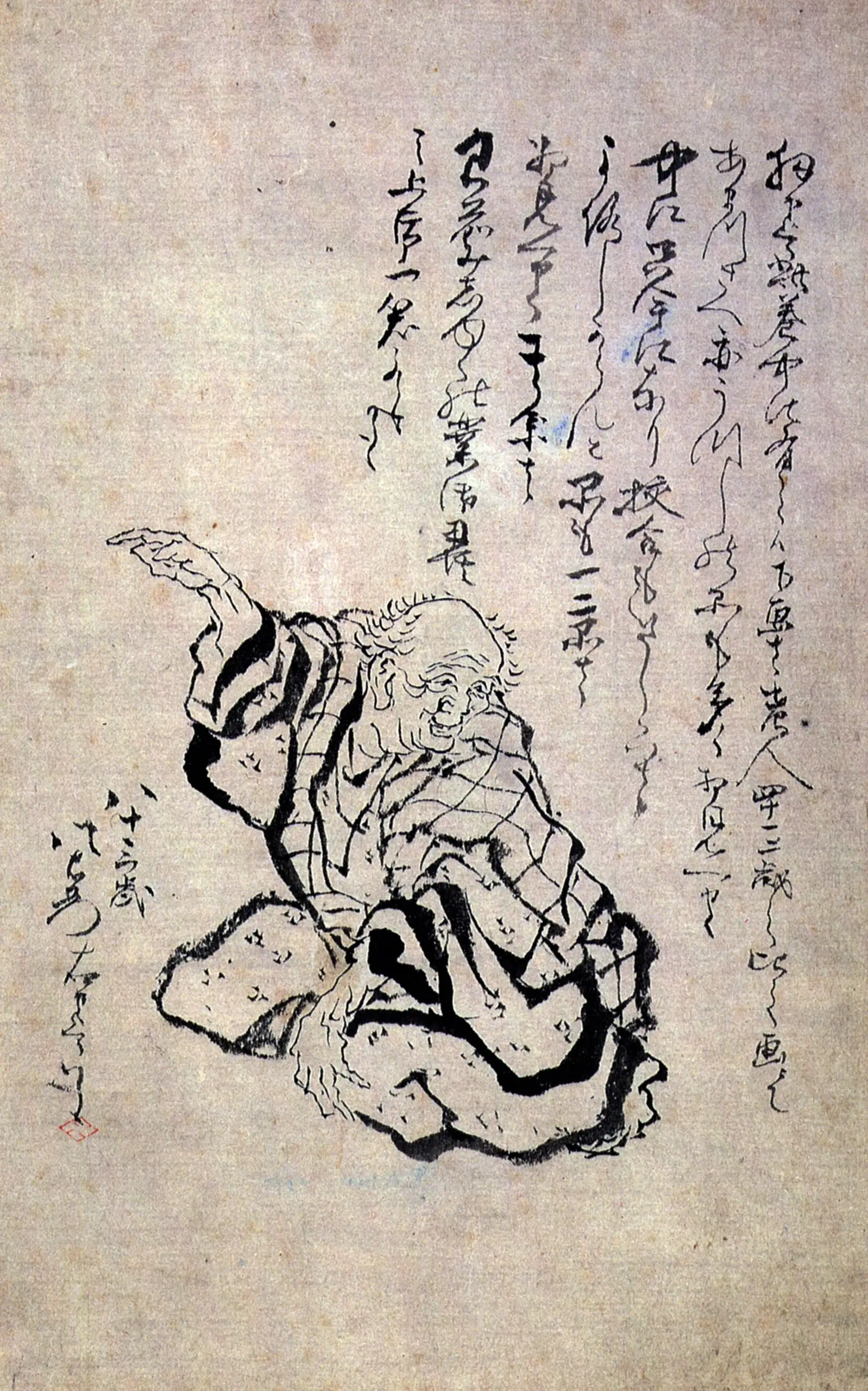
Hokusai
 Japan
painter•xylographer•illustrator
Also known as: Hokusai Katsushika, Taito Katsushika, Hachiemon Miuraya, Manji Rōjin, Tokimasa
Birthday
October 31, 1760
Birth Sign
Sagittarius
Birthplace
Honjo, Edo
Age
Died at 88
About
Katsushika Hokusai was a Japanese ukiyo-e artist active during the Edo period, born around October 31, 1760, in Honjo, Edo. He spent nearly nine decades creating art before his death on May 10, 1849, at his residence in Kameido, Sumida Ward. He is widely recognized as the first Japanese artist to achieve significant international fame, profoundly influencing the Impressionist movement in Europe through the Japonisme trend of the late 19th century. His prolific career produced over 30,000 distinct works, ranging from woodblock prints to paintings. While he began by illustrating actors and courtesans, he eventually revolutionized the genre by focusing on landscapes and nature. His signature style involves bold lines, dynamic compositions, and a deep appreciation for nature. Even in his final days, he remained dedicated to his craft, reportedly working on his last masterpiece just before passing away at the age of 88.
Early Life & Background
Hokusai entered the world as Tōkutarō into a modest family in the Honjo district of Edo, which is now part of modern-day Tokyo. Historical records from the Edo period are sometimes ambiguous regarding exact naming conventions before he adopted the name Hokusai in his late twenties, though some sources cite Hachiemon Miuraya as an early name. Little is definitively recorded about his parents, but he likely had an older brother who worked as a lacquerer. As a child, Hokusai showed an early aptitude for drawing, which led to his apprenticeship at the age of six with a woodblock publisher named Sengawa. He soon moved to the workshop of the engraver Shunsho, a prominent figure in the ukiyo-e school, where he began his formal training as an illustrator and printmaker. Before gaining widespread recognition, he worked under various masters, including the painter Maruyama Ōkyo, whose naturalistic style influenced Hokusai's later work. In his youth, he focused heavily on painting portraits of actors and courtesans, the traditional subjects of ukiyo-e, before pivoting to landscapes and nature. This period of constant reinvention laid the groundwork for the diverse body of work that would define his legacy.
Career Growth
Hokusai's professional journey began in earnest in 1778 when he started his apprenticeship under Shunsho, adopting the name "Shunrō." During the 1790s, he produced early works focusing on kabuki actors and beautiful women, establishing his reputation in Edo. A major milestone occurred in 1804 when he painted a massive portrait of the Buddha for the temple of Daibutsu in Kamakura, showcasing his mastery of scale. In 1814, he published Hokusai Manga, a collection of sketches that introduced his unique perspective on everyday life, anatomy, and nature. This series became a global phenomenon and is considered a precursor to modern manga. The 1830s marked his transition to landscape art with the creation of his most famous series, Thirty-Six Views of Mount Fuji. Throughout the 1840s, he continued producing art despite aging, creating the One Hundred Views of Mount Fuji series. His commercial success was driven by the popularity of woodblock prints among the merchant class in Edo, and his influence extended beyond Japan to inspire European artists like Van Gogh, Monet, and Degas.
Career Timeline
Public Image & Style
Hokusai is portrayed as a relentless seeker of truth and beauty, a master who never stopped learning. His public image is one of wisdom, perseverance, and artistic genius. His signature style involves bold lines, dynamic compositions, and a deep appreciation for nature. He adopted the title "Old Man Mad About Painting" (Manji Rōjin) in his later years, a moniker that reflected his lifelong dedication to art and his belief that he would only become a true artist after living to be 110. This persona of the eternal student continues to define how he is remembered in art history.
Fame & Fandom (iFAMOUS Rankings)
Hokusai's legacy is measured not just in the thirty thousand works he left behind, but in the enduring grip his imagery holds on global culture. He is currently the 38th most famous person in Japan, holding steady from the previous cycle, yet his influence remains steady: he also holds the 22nd most famous person from Japan and the 19th most famous person in East Asia, both showing minor fluctuations. In the wider world of art, he stands as the 43rd most famous person in Art & Design. These placements, tracked by the iFANN Global Fame Rankings, reflect a presence that spans media, search, and consumption signals globally.
There is no formal fandom name for Hokusai, no fan club, no coordinated campaigns. Instead, his admirers form a loose, global community of art lovers, scholars, and collectors. Their devotion manifests in pilgrimages to see The Great Wave at the Art Institute of Chicago, and in the 2026 Brussels Flower Carpet, where 750,000 dahlias recreated the iconic wave on the Grand-Place. Even a Hatsune Miku collaboration has reimagined his ukiyo-e for the digital age, proving his imagery remains endlessly adaptable. His famous declaration, that he was only truly learning to draw in his 70s, has become a mantra for artists everywhere, a quiet legend that continues to inspire.
Interesting Facts and Legends
In the final days of his life, Katsushika Hokusai reportedly declared a desire to live until age 110 just to perfect his craft. This legend of relentless evolution defines his story more than any single event. He changed his name over thirty times throughout his eight-decade career, adopting titles like "Old Man Mad About Painting" to reflect an obsession with artistic growth that never wavered. Recent scholarship has further deepened his lore by highlighting his daughter Oi as a "hidden hand" behind some masterpieces. His imagery sparked a unique digital revival in 2026 when virtual idol Hatsune Miku collaborated on a new ukiyo-e series. His legacy also manifested physically in Brussels, where a municipal project used 750,000 dahlias to recreate The Great Wave. These modern tributes demonstrate how his historical facts have turned into enduring cultural myths that continue to resonate with audiences today.
Notable Quotes
“If I am allowed to live ten more years, I will become a true artist.”
“I have been trying to copy the shapes of things since I was six... but what I have produced up to the age of seventy is not worth much.”
Family & Personal Life
Hokusai was married twice. His first wife, whose name is lost to history, bore him a daughter, Oi (also known as O-Ei). After her death, Hokusai married a second wife, also unnamed in most records, with whom he had no children. His daughter, Oi, played a crucial role in his later life; she was a skilled artist in her own right and assisted her father in coloring his prints. Recent scholarship suggests she may have been a "hidden hand" behind some of his masterpieces, contributing significantly to his output. She managed his household and studio affairs while he continued to produce art until the end of his life.
Notable Connections
Oi (O-Ei), Shunsho, Maruyama Ōkyo, Van Gogh, Monet, Degas
Relationships & Dating History
Hokusai was married twice. His first marriage took place in the late 1770s or early 1780s to an unnamed woman. The marriage ended with her death, leaving him with one daughter, Oi. After her passing, Hokusai married a second wife in the mid-1790s, also unnamed in most records. No children were born from this union. He remained married to his second wife until his death in 1849. There are no records of posthumous relationships or current partners as he has been deceased for nearly two centuries.
- MarriedUnnamed First Wife1778 - UnknownMother of his daughter Oi; died before Hokusai.
- MarriedUnnamed Second Wife1795 - 1849No children from this union; survived by Hokusai until his death.
Death & Aftermath
Died
May 10, 1849 (aged 88)
Death Place
Kameido, Sumida Ward, Edo
Cause of Death
Natural causes associated with advanced age
Historical records from the Edo period do not preserve the specific medical details or autopsy findings of his passing, leaving the cause as a natural conclusion to a long life rather than a forensic event. He died at the age of approximately eighty-nine, having outlived most of his contemporaries while continuing to produce art well into his eighties. The immediate aftermath involved the dispersal of his workshop and the continuation of his legacy through his daughter Oi, who had assisted him in coloring prints for decades. Centuries later, the silence of that day has been replaced by global reverence. Exhibitions in London and Tokyo now celebrate his impact, while the Sumida Hokusai Museum stands as a permanent reflection of his life. The artist remains a towering figure in art history, his death marking not an end but the beginning of his enduring influence on Western impressionism.
Net Worth (Estate Value)
$0
iFANN Editorial Team estimate
As Hokusai died in 1849, he left no estate in the modern financial sense. His works entered the public domain long ago, managed by museums and cultural institutions rather than a centralized estate. Therefore, there is no net worth figure for 2026. The value of his work is measured in auction prices and museum acquisitions, with individual prints selling for hundreds of thousands of dollars. For example, The Great Wave is estimated to be worth millions when considered as part of a collection, but no single asset belongs to an heir. The iFANN Editorial Team estimates his posthumous cultural value in the billions due to licensing and exhibition revenue, though this does not constitute personal wealth.
Awards & Accolades
View 9 records, honours and achievementsKnown For
The Great Wave off Kanagawa
1831 · Artist
Thirty-Six Views of Mount Fuji
1831 · Series Creator
Hokusai Manga
1814 · Illustrator
Keywords
Sources
Quick Facts
- Profession
- painter, xylographer, illustrator
- Born
- October 31, 1760
- Birthplace
- Honjo, Edo
- Died
- May 10, 1849
- Death Place
- Kameido, Sumida Ward, Edo
- Gender
- Male
- Birth Sign
- Sagittarius
Personal Details
- Full Name
- Tōkutarō
- Children
- Oi (O-Ei)
- Education
- Apprenticeship under Shunsho and Maruyama Ōkyo
Frequently Asked Questions
What was Hokusai's real name?
Who was Hokusai's daughter?
Did Hokusai ever marry?
What is Hokusai's most famous work?
How did Hokusai die?
Similar People
Join the community
fans discussing