 Hong Kong
“Scott is mesmerizing as a man unraveling, and McCarthy crafts a nightmare that feels both ancient and urgently contemporary.”
Manohla Dargis
The New York Times
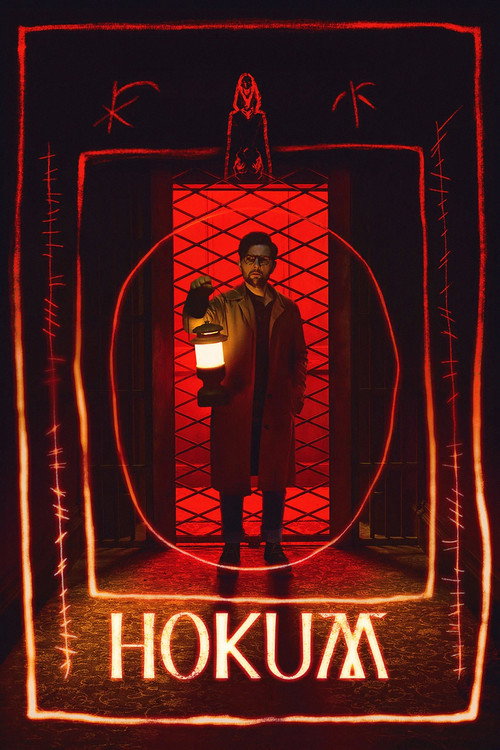
Damian McCarthy directs Hokum, a Gothic horror-thriller that blends supernatural dread with personal grief. The film follows novelist Ohm Bauman, played by Adam Scott, who travels to a secluded inn in Ireland to scatter his parents' ashes. Instead of finding peace, he encounters the spirit of a witch tied to the hotel's honeymoon suite. Peter Coonan and David Wilmot join the cast as Mal and Jerry, adding layers of tension to the eerie atmosphere.
Released on April 29, 2026, this production marks a shift for Scott, moving away from his comedic roots into a dark exploration of addiction and loss. The movie was shot entirely on location in Ireland, utilizing historic estates that had been abandoned for decades to capture an authentic sense of decay. Composer Joseph Bishara crafted a score mixing traditional Irish folk instruments with dissonant electronic sounds to heighten the unsettling mood.
Availability and pricing can change. Confirm on the provider's site before purchasing.
Ohm Bauman arrives at a sprawling, decaying hotel deep in the rural Irish countryside, seeking a final moment of closure before returning to his life of public scrutiny. A famous but deeply troubled horror novelist, Ohm has spent years battling alcoholism and the trauma of his parents' death. He carries a simple urn containing their ashes, intending to scatter them at a specific spot within the property grounds. His goal is isolation, hoping the silence of the remote inn will finally quiet the noise in his head. The staff, including the polite but detached Mal and Jerry, greet him with a mix of hospitality and an unspoken warning about local legends they refuse to discuss in detail.
The hotel itself feels like a living entity, its creaking floorboards and shadowed corridors reacting to Ohm's presence. As he settles into the infamous honeymoon suite, the atmosphere shifts from merely spooky to actively hostile. Whispers echo through empty halls, shadows detach themselves from walls, and objects move without explanation. Ohm begins to drink heavily, a coping mechanism that blurs the line between hallucination and reality. He becomes obsessed with the legend of a witch said to haunt the room, a figure tied to the building's dark history and previous guests who vanished or went mad.
Other transient figures appear in the periphery, including a mysterious woman named Fiona and a man known only as Conquistador, though their allegiances remain ambiguous. The hotel seems to feed on Ohm's guilt, amplifying his fears until the boundaries between the living and the dead dissolve completely. He uncovers fragments of the past, learning that the "hokum" mentioned in the title is not just a literary device for his books but a literal manifestation of evil present in the room. The tension escalates as Ohm realizes he is not alone; the witch waits for him, not to kill him immediately, but to trap him in a cycle of eternal torment that mirrors his own self-destructive spiral. The narrative builds to a terrifying crescendo where Ohm must confront whether the witch is a real entity or a projection of his psyche, all while the hotel's walls seem to close in around him.
Throughout the journey, the film masterfully blends psychological horror with folk horror elements. Ohm's descent is gradual, marked by moments of black comedy that disarm the audience before the terror returns with full force. The setting remains a critical character, its gothic architecture and isolated location creating a pressure cooker for the protagonist's unraveling mind. As the story progresses, the true nature of the ritual Ohm unknowingly participates in begins to reveal itself, hinting at a darker purpose behind his arrival than mere grief.
Final Trailer
UK Trailer
Official Trailer
Critical Consensus
Hokum delivers a potent blend of gothic atmosphere and psychological dread, anchored by Adam Scott's career-best performance. While the plot occasionally leans on familiar horror tropes, the film's commitment to Irish folklore and its unflinching exploration of grief elevate it above standard genre fare. It is a chilling, stylish entry that proves McCarthy is a master of slow-burn terror.
“Scott is mesmerizing as a man unraveling, and McCarthy crafts a nightmare that feels both ancient and urgently contemporary.”
Manohla Dargis
The New York Times
“A hair-raising, often exhilarating Irish horror tale that disarms you with black comedy before scaring the heck out of you.”
Owen Gleiberman
Variety
“Hokum knows the horror genre's tricks, even if it can't escape them entirely, but it does so with such style and soul that it matters little.”
David Ehrlich
IndieWire
“An atmospheric, old-school horror that deserves to be a cult classic, driven by a lead performance that is nothing short of brilliant.”
Peter Debruge
Variety
“A private hell brought to life with hyper-stylized visuals and a soundtrack that lingers long after the credits roll.”
Richard Schanck
SomdNews
Adam Scott
Ohm Bauman
Peter Coonan
Mal
David Wilmot
Jerry
Florence Ordesh
Fiona
Austin Amelio
Conquistador
Sioux Carroll
Witch
Director
Damian McCarthy
Writer
Damian McCarthy
Composer
Joseph Bishara
Cinematographer
Colm Hogan
Producers
Roy Lee, Steven Schneider, Derek Dauchy, Ruth Treacy, Mairtín de Barra
Fangoria Chainsaw Awards (2026)
Best Supporting Actor: Won
Fangoria Chainsaw Awards (2026)
Best Director: Nominated
Sitges Film Festival (2026)
Best Special Effects: Won
SXSW Film Festival (2026)
Best Narrative Feature: Nominated
Toronto International Film Festival (2026)
Midnight Madness Award: Nominated
Join the community
fans discussing