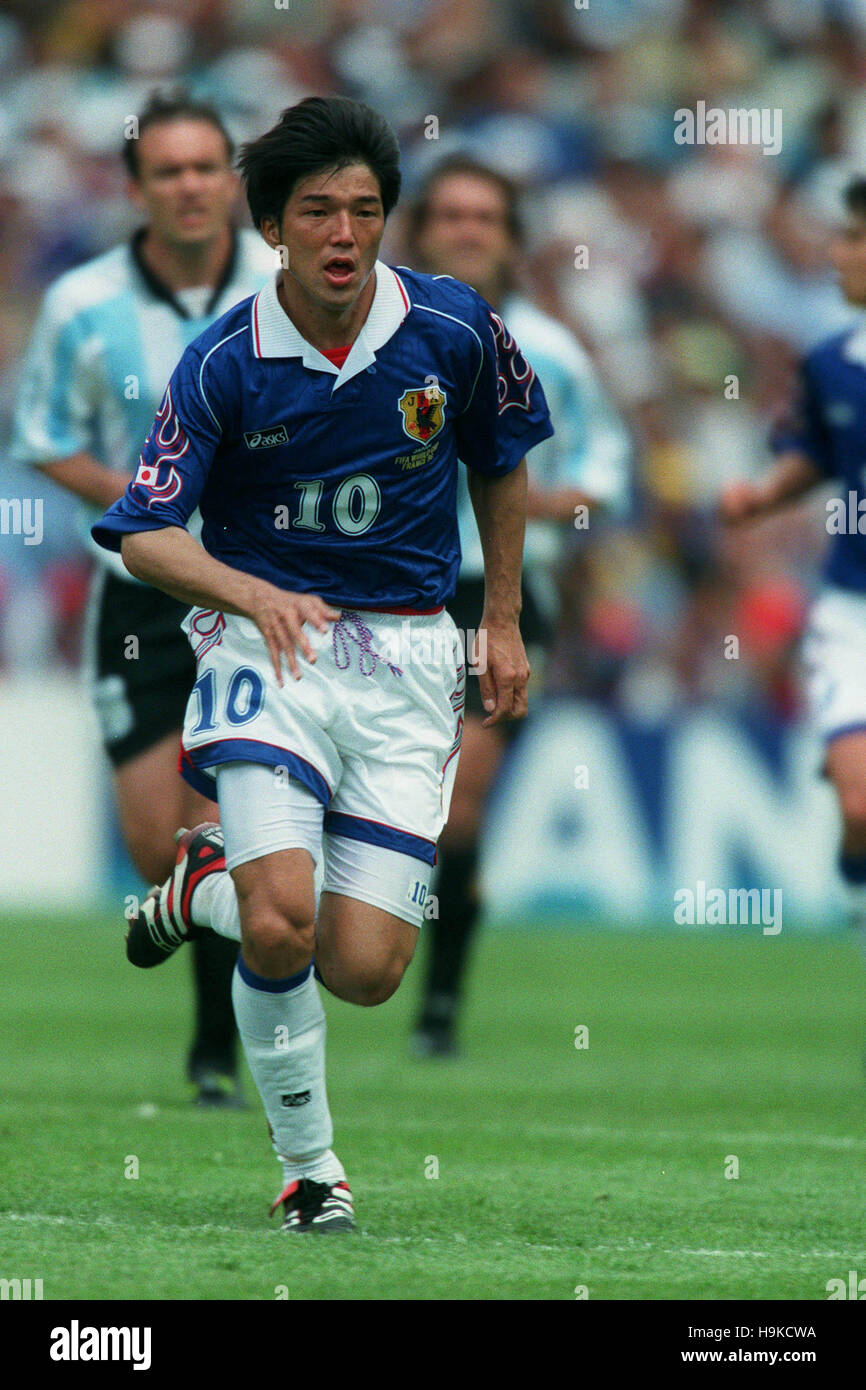
Hiroshi Nanami
 Japan
Japanassociation football player•association football coach
Also known as: 名波 浩
Birthday
November 28, 1972
Birth Sign
Sagittarius
Birthplace
Fujieda, Shizuoka Prefecture, Japan
Age
53 years old
Height
5 ft 10 in (177 cm)
About
Hiroshi Nanami is a Japanese former professional footballer and current assistant coach of the Japan national team. Born on November 28, 1972, in Fujieda, Shizuoka Prefecture, Nanami is celebrated as one of Japan's most technically gifted midfielders, a left-footed playmaker whose career spanned the J.League and Serie A.
Over a decade-long playing career, Nanami earned 67 caps for Japan, scoring 9 goals, and represented his country at two FIFA World Cups. He was part of the Japan squad that won the 2000 AFC Asian Cup. After retiring, he moved into coaching, managing Júbilo Iwata and later joining the national team staff under Hajime Moriyasu.
As of 2026, Nanami is widely respected in Japanese football circles and has been mentioned as a potential successor to Moriyasu as head coach. His low-key public profile and dedication to the sport have made him a revered figure among fans of Júbilo Iwata and Japanese football.
Early Life & Background
Hiroshi Nanami grew up in Fujieda, a city in Shizuoka Prefecture known for producing talented footballers. Shizuoka has long been a hotbed for Japanese soccer, and Nanami was part of that rich tradition. Details of his childhood are scarce, but he came through the youth ranks in an era when Japanese football was still developing its professional structure.
He turned professional in 1995 with Júbilo Iwata, one of the most successful clubs in the early J.League. Nanami quickly made a name for himself with his precise left foot and vision, becoming a key figure in the club's midfield. His performances in the J.League caught the attention of European scouts, leading to a historic move to Italy.
Career Growth
Nanami's breakthrough came in 1998 when he was selected for Japan's squad for the FIFA World Cup in France, the country's first appearance at the tournament. He played in the group-stage matches against Argentina and Jamaica, gaining valuable experience on the world stage.
In 1999, Nanami made a pioneering move to Venezia FC in Italy's Serie A, becoming one of the first Japanese players to compete in a top European league. His time in Italy was brief but significant, paving the way for later stars like Shunsuke Nakamura.
After returning to Júbilo Iwata, Nanami continued to excel, winning multiple J.League titles, including in 1997 and 1999. He was also part of the Japan squad that won the 2000 AFC Asian Cup. His international career culminated with a second World Cup appearance in 2002, co-hosted by Japan and South Korea.
Following his retirement, Nanami transitioned into coaching. He managed Júbilo Iwata, guiding the club back to the J.League top flight in 2016. He later joined the Japan national team as an assistant coach under Hajime Moriyasu, a role he continues to hold as of 2026.
Career Timeline
Public Image & Style
Nanami is regarded as a technically skilled, left-footed midfielder with exceptional playmaking abilities. Japanese football media often describe him as a "legendary" figure, particularly for his contributions to Júbilo Iwata's golden era in the 1990s.
His public persona is that of a thoughtful, grounded professional. He rarely seeks media attention and maintains a modest presence on social media, with an Instagram account that has around 2,100 followers.
Fans appreciate his dedication to Japanese football, both as a player and a coach. He is seen as a mentor figure, helping to develop the next generation of talent through his work with the national team.
Fame & Fandom
Hiroshi Nanami does not carry a formal fandom name, as is typical for Japanese footballers whose loyalty remains anchored to clubs like Júbilo Iwata or the national team rather than individual stars. While pop idols often command organized fanbases with specific rituals and campaigns, Nanami's supporters operate within the traditional structure of the sport, celebrating his technical mastery without the viral machinery seen in entertainment. His legacy is built on decades of consistent performance rather than singular, crowd-disrupting moments. Despite this lack of a branded following, his standing among purists remains immense, a fact reflected in his global evaluation. According to iFANN data from August 2026, Hiroshi Nanami is currently evaluated but holds no placement in the published Global Top 1,000 rankings. He is not ranked within any Top-100 scope list, meaning he does not currently occupy a specific numeric slot in the world's most famous personalities. This unranked status does not diminish his historical significance; it simply indicates that while his influence is deep within football circles, his broad global celebrity metrics do not yet cross the threshold required for a top-tier ranking. The scale of fame measured here accounts for worldwide media coverage, search consumption, and public engagement signals across all demographics. Even without a numerical rank, his reputation persists as a pillar of Asian football history.
Interesting Facts and Legends
Nanami is celebrated for his distinctive left foot, which earned him the nickname 'the left foot of God' among devoted fans. He was part of a pioneering wave of Japanese players moving to Europe in the late 1990s, predating the more famous transfers of Hidetoshi Nakata and Shunsuke Nakamura. A defining moment in his career occurred at the 1998 World Cup, where a photo of him tackling Argentine star Ariel Ortega became an iconic image of the tournament. Another legendary story from that era centers on Japan's match against Argentina; despite losing 1-0, Nanami's midfield control was so impressive that it shifted global perceptions of Asian football from underdogs to competitive contenders. Fans still retell how this performance proved Japan could stand toe-to-toe with South American giants. His name in Japanese kanji is 名波 浩, and he is often referred to simply as 'Nanami' in football circles. Nanami has been associated with Júbilo Iwata in multiple capacities: as a player, manager, and now as a club legend. Recent discussions in July 2026 highlight him as a leading candidate to succeed Hajime Moriyasu as head coach of the national team, further cementing his status as a foundational figure in Japanese football.
Notable Quotes
“I'm not expecting instant miracles. We need to be patient and work hard.”
“Playing in Serie A was a dream come true. It was a great experience for me.”
“The World Cup is the ultimate stage. I was proud to represent Japan.”
Family & Personal Life
Hiroshi Nanami keeps his personal life private, and little is known about his family. He has not publicly shared details about his parents, siblings, spouse, or children. This level of privacy is typical for Japanese footballers of his generation, who often separate their professional and personal lives.
There are no public records of Nanami's current household or any pets. He appears to live a quiet life away from the spotlight, focusing on his coaching career.
Notable Connections
Hajime Moriyasu is the head coach of the Japan national team, and Nanami serves as his assistant. The two have worked together closely in recent years.
Shigeyoshi Mochizuki was a teammate who scored the winning goal in the 2000 Asian Cup final. Ariel Ortega was an Argentine opponent at the 1998 World Cup, and Shunsuke Nakamura followed Nanami's path to Italian football.
Relationships & Dating History
Hiroshi Nanami has kept his romantic life entirely private. There are no public records of any relationships, marriages, or divorces. This is consistent with the low-key personal lives led by many Japanese footballers of his era.
As of 2026, his relationship status remains unknown. He has never discussed his personal life in interviews, and no tabloid or credible media outlet has reported on his dating history.
Salary, Net Worth In 2026
$10 Million
iFANN Editorial Team estimate
As of 2026, iFANN currently estimates Hiroshi Nanami's net worth at $10 Million. His wealth primarily stems from his extensive playing career and subsequent coaching roles. During his time on the pitch, Nanami earned salaries from Júbilo Iwata in the J.League and Venezia FC in Serie A. While J.League salaries in the 1990s were modest by modern standards, they were respectable for the era. His move to Italy likely brought a higher wage, though specific figures remain private. Since retiring, Nanami has generated income through various coaching positions, including his current role as assistant coach of the Japan national team. He also reportedly maintains some endorsement deals, although these are not well-documented. Nanami has not been publicly involved in major business ventures or real estate investments beyond his professional earnings. His net worth has likely grown steadily over the years, reflecting a long and distinguished career in football.
Awards Won (3)
Hiroshi Nanami won several significant team honors during his career. With Júbilo Iwata, he claimed multiple J.League titles in the 1990s. He was also part of the Japan national team that won the 2000 AFC Asian Cup. Individually, he was selected for the J.League Best XI, though specific years are not confirmed.
2000 · Team
Japan national team
1999 · Team
Júbilo Iwata
1997 · Team
Júbilo Iwata
Known For
Júbilo Iwata
1995 · Midfielder
Venezia FC
1999 · Midfielder
Japan national team
1998 · Midfielder
Keywords
Sources
Quick Facts
- Profession
- association football player, association football coach
- Born
- +1972-11-28
- Birthplace
- Fujieda
- Gender
- Male
- Birth Sign
- Sagittarius
- Height
- 5 ft 10 in (177 cm)
Personal Details
- Height
- 5 ft 10 in (177 cm)
Frequently Asked Questions
How old is Hiroshi Nanami?
What is Hiroshi Nanami's net worth in 2026?
Is Hiroshi Nanami married?
What is Hiroshi Nanami best known for?
Where was Hiroshi Nanami born?
Social Media
Similar People


Join the community
fans discussing