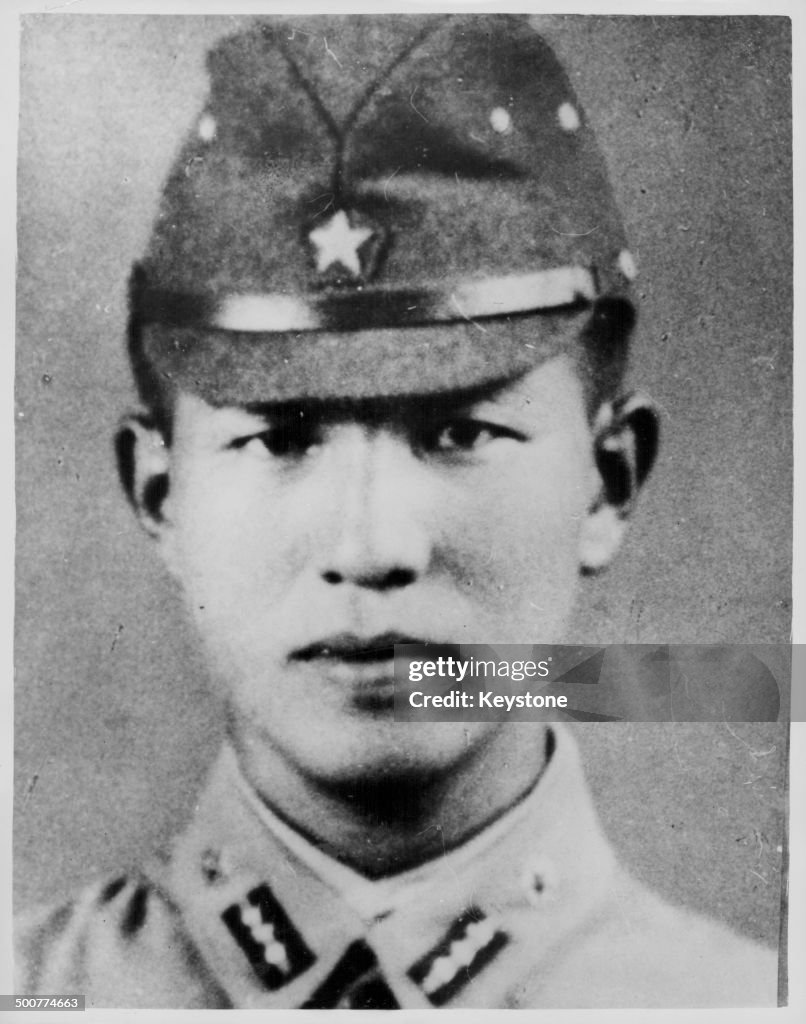
Hiroo Onoda
 Japan
Japanmilitary officer•autobiographer•teacher
Also known as: Onoda Hiroo, The Last Japanese Soldier
Birthday
March 19, 1922
Birth Sign
Pisces
Birthplace
Kainan, Japan
Age
Died at 91
About
Hiroo Onoda was a Japanese Imperial Army intelligence officer who became one of the last holdouts of World War II, continuing his mission on Lubang Island in the Philippines for nearly 29 years after the war had officially ended in 1945. Born in 1922, he was a second lieutenant in the army's elite Special Intelligence Squadron, a commando unit that prepared him for guerrilla warfare. He was famously ordered never to surrender under any circumstances, a directive he took literally for decades. His story of unwavering duty, survival skills, and loyalty to his mission made him a symbol of commitment and a subject of international fascination, though his prolonged conflict also led to civilian deaths, making his legacy complex and debated.
Onoda's unwavering adherence to his orders, even when presented with evidence that the war had concluded, highlights the profound psychological impact of wartime directives and the difficulty of letting go of conflict. His survival for nearly 30 years in the jungle, relying on his wits and the land, is a testament to his resilience. The recent film adaptation of his story, 'Onoda: 10000 Nights In The Jungle,' released in 2022, continues to explore themes of nationalism and misinformation that resonate today, indicating a sustained public interest in his extraordinary life and the enduring questions it raises about duty, war, and perception.
Early Life & Background
Hiroo Onoda was born on March 19, 1922, in Kainan, Japan. Growing up in a militaristic era, he was instilled with a strong sense of duty and discipline. After completing his education, he worked at a trading company in China, where he learned Mandarin and developed early survival skills. In 1942, he was conscripted into the Imperial Japanese Army. He underwent rigorous training, distinguishing himself and eventually being selected for the elite Special Intelligence Squadron. This commando unit specialized in espionage and guerrilla warfare, preparing him for covert operations behind enemy lines.
In late 1944, Onoda was deployed to Lubang Island in the Philippines. His mission was to conduct sabotage and gather intelligence, and he was explicitly instructed never to surrender, no matter the circumstances. He arrived just as the war was turning decisively against Japan. Within months, Allied forces had overwhelmed the island, and Onoda, along with three other soldiers, retreated into the dense jungle to continue their mission, beginning a long ordeal that would last for nearly three decades.
Career Growth
Onoda's military career took an extraordinary and prolonged turn when he refused to accept Japan's surrender in 1945. For nearly three decades, he and his companions carried out guerrilla operations, surviving on wild fruits, game, and stolen rice, and engaging in sporadic skirmishes with local police and residents. Over the years, his group dwindled: one soldier surrendered in 1950, and his companions Kinshichi Kozuka was killed in 1954, and another soldier was killed in 1972. These soldiers did not believe the war had ended, even when presented with flyers and letters from their families.
In 1974, Japanese adventurer Norio Suzuki located Onoda in the jungle. However, Onoda still refused to surrender, believing he must await direct orders from his former commanding officer. Major Yoshimi Taniguchi traveled from Japan to Lubang and personally delivered the order to stand down on March 10, 1974, officially ending Onoda's 29-year holdout. He returned to Japan to a hero's welcome and published his autobiography detailing his experiences that same year. He later moved to Brazil to become a cattle rancher. In 1984, Onoda returned to Japan, where he resided until his death in 2014.
Career Timeline
Public Image & Style
Onoda's public image is a study in contradictions and enduring fascination. To many, he epitomizes unwavering loyalty and duty, a soldier who followed orders to the letter even when the world had irrevocably moved on. His return to Japan in 1974 was met with a remarkable hero's welcome, and he was celebrated for his incredible endurance and commitment. However, this image is complicated by the fact that civilian deaths occurred during his prolonged guerrilla campaign, leading some to view him as a war criminal. This duality has kept his story alive in documentaries and films, and his name remains a byword for stubborn commitment and the extreme psychological effects of war. His narrative also touches on themes of nationalism and misinformation that continue to resonate.
Fame & Fandom
The audience for Hiroo Onoda is a unique blend of military historians, survival enthusiasts, and general readers drawn to one of the most extraordinary human endurance stories of the twentieth century. Unlike modern celebrities who cultivate active communities with fan clubs or organized campaigns, Onoda's legacy rests entirely on his historical actions and the quiet dignity of his later years. He never engaged in fan service, avoided the spotlight after his surrender, and lived a private life until his passing in 2014, meaning there are no formal fan rituals, inside jokes, or dedicated social media movements bearing his name. His story functions more as a historical case study than pop culture property, captivating those interested in the psychology of duty and the realities of guerrilla warfare rather than generating a traditional celebrity following. Despite this lack of an organized fandom, the global reach of his narrative remains immense, sustained by books, documentaries, and recent cinematic adaptations that keep his experience alive for new generations. This enduring resonance places him firmly within the pantheon of notable Japanese figures recognized worldwide. According to the iFANN Global Fame Rankings, he holds the position of the 30th most famous person from Japan, a standing that has remained steady through recent measurement cycles. These placements reflect the continued scholarly and public interest in his decades-long isolation and his eventual return to civilization.
Interesting Facts and Legends
Hiroo Onoda was an intelligence officer trained in espionage and sabotage who famously took his orders never to surrender literally for decades. He survived nearly 30 years in the jungle, relying on his wits, the land, and the support of fellow soldiers who refused to believe the war had ended. His extraordinary story has been adapted into multiple films, including the 2022 release 'Onoda: 10000 Nights In The Jungle,' which chronicles his life after being stranded in the Philippines. He also established a nature school in Japan, 'Onoda Shizen Juku,' to teach children survival skills and the value of life, passing on lessons learned from his decades in isolation.
A defining legend surrounding his legacy involves the specific circumstances of his surrender when he initially dismissed news broadcasts and letters as enemy propaganda. It was only the physical presence of his former commander, Major Yoshimi Taniguchi, whom Onoda trusted implicitly, that convinced him to lay down his arms. This encounter is often recounted as the ultimate test of obedience and the tragic disconnect between military orders and geopolitical reality. While some accounts mention that he killed up to 30 Filipinos during his time in the jungle, these figures vary slightly across reports but are generally accepted as part of the historical record of his guerrilla activities.
Notable Quotes
“I was ordered to fight until the end, and I did.”
“Every Japanese soldier was prepared for death, but I was ordered to survive.”
“I am not a hero. I just followed my orders.”
“The war ended, but my mission did not.”
Family & Personal Life
Hiroo Onoda was married to Machie Onoda. She remained loyal throughout his nearly three-decade ordeal in the jungle and provided unwavering support after his eventual return to civilization. The couple had no children. After his surrender and return to Japan, they lived in Brazil for a time, where Hiroo worked as a cattle rancher. They eventually returned to Japan in 1984, settling in Tokyo, where Hiroo lived until his death. Machie Onoda was a constant presence in his later years and survived him.
Notable Connections
Relationships & Dating History
Hiroo Onoda married Machie Onoda. While he was still engaged in his prolonged mission on Lubang Island, his wife, Machie, remained steadfastly loyal and supportive of him. They were finally reunited after his surrender in 1974. They remained married until Hiroo Onoda's death in 2014. There are no other known significant romantic relationships in his life.
- MarriedMachie Onoda1954 - 2014Onoda married Machie while he was still in hiding; they were together until his death.
Death & Aftermath
Died
January 16, 2014 (aged 91)
Death Place
Unknown
Cause of Death
Unknown
Net Worth (Estate Value)
$1 Million
iFANN Editorial Team estimate
Information regarding Hiroo Onoda's net worth as of 2026 reflects his status as a deceased figure who passed away in 2014. Per iFANN's editorial analysis, his estate is currently valued at $1 Million. During his lifetime, his income was derived from royalties on his autobiography, fees for public appearances, and potentially a government pension provided after his surrender. Following his death, his estate likely continued to generate revenue from book sales and film rights related to his life story. The significant media attention and continued public interest in his narrative, evidenced by productions like 'Onoda: 10000 Nights In The Jungle,' suggest that his estate maintains ongoing value from these intellectual property sources. While exact figures fluctuate based on market conditions, the estimated total represents the accumulated wealth from his unique path as a soldier, author, and teacher.
Awards & Accolades
View 2 records, honours and achievementsKnown For
Lubang Island holdout
1944 · Imperial Japanese Army officer
Autobiography
1974 · Author
Keywords
Sources
Quick Facts
- Profession
- military officer, autobiographer, teacher
- Born
- March 19, 1922
- Birthplace
- Kainan, Japan
- Died
- January 16, 2014
- Death Place
- Tokyo, Japan
- Gender
- Male
- Spouse
- Machie Onoda
- Birth Sign
- Pisces
Personal Details
- Full Name
- Hiroo Onoda
- Spouse
- Machie Onoda
Filmography
1
Total
1
Film
0
TV
Frequently Asked Questions
Who was Hiroo Onoda?
Why did Hiroo Onoda continue fighting after WWII?
When and where did Hiroo Onoda surrender?
What happened to Hiroo Onoda after he surrendered?
How long did Hiroo Onoda stay in hiding?
Similar People
Join the community
fans discussing