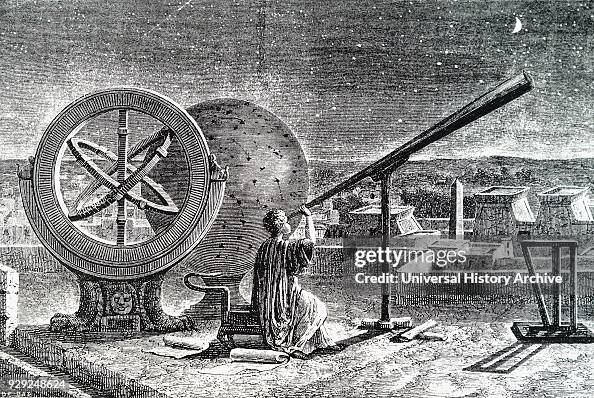
Hipparchus
astronomer•mathematician•geographer
Also known as: Hipparchus of Nicaea, Hippias
Birthday
-190
Birth Sign
Aquarius
Birthplace
Nicaea
Age
Died at 70
About
Hipparchus (Greek: Ἵππαρχος, Hípparkhos; c. 190 – c. 120 BC) stands as the preeminent astronomer of antiquity, earning the enduring title "the father of astronomy" for his transformative contributions to science. Born in Nicaea, Bithynia, he revolutionized celestial mechanics between 162 and 127 BC by developing the first quantitative models for the motion of the Sun and Moon. His discovery of the precession of the equinoxes fundamentally corrected the prevailing belief in a static universe, while his compilation of the first comprehensive star catalog of the western world served as the foundation for all subsequent Western astronomy for centuries. He also founded trigonometry by constructing the first known system of chords to solve problems in spherical astronomy. Beyond these pillars, Hipparchus contributed to optics with an atomist theory of light and introduced the magnitude system for classifying stellar brightness, a convention still used today where brighter stars have lower numbers.
His legacy is defined by a rigorous, data-driven approach that transformed astronomy from a qualitative discipline into a quantitative science. Modern recognition places him at the pinnacle of historical achievement alongside figures like Ptolemy and Copernicus. In 2026, his influence was further revitalized when scientists successfully decoded his lost star catalog from a medieval palimpsest using particle accelerator technology, proving the durability of his methods and allowing modern astronomers to compare ancient stellar positions with current data. This recent breakthrough underscores his status as the greatest astronomical observer of antiquity, whose work bridged Babylonian records with Greek mathematics.
Early Life & Background
Details about Hipparchus's childhood are sparse due to the immense distance of time, but historical consensus places his birth in Nicaea, a city in Bithynia located in modern-day Turkey. He received an education that allowed him to master the accumulated mathematical and observational techniques of his predecessors. This included studying Babylonian records and the works of Meton of Athens, Timocharis, Aristyllus, Aristarchus of Samos, and Eratosthenes. His upbringing in the Hellenistic world provided access to the rich intellectual traditions of Alexandria and Rhodes, where he eventually established his observatory around 150 BC.
Before his fame as the "father of astronomy," Hipparchus immersed himself in the study of geometry and trigonometry, fields that were nascent at the time. His pivotal moment before widespread recognition came when he began systematically comparing his own observations with those of earlier astronomers around 140 BC. This methodical approach led to his most famous discovery, transforming astronomy from a qualitative discipline into a quantitative science long before he achieved global renown. He initially focused on refining existing models of planetary motion, a task that required him to critique the heliocentric ideas of Aristarchus and utilize geographical measurements from Eratosthenes to refine his own calculations.
Career Growth
Hipparchus's career is defined by a series of chronological breakthroughs that transformed astronomy. Between 162 and 127 BC, he actively worked as an astronomer, establishing his observatory on the island of Rhodes. By comparing his own star catalog with those of Timocharis and Aristyllus from over a century prior, he discovered that the position of the equinoxes shifts slowly westward along the ecliptic. This phenomenon, known as the precession of the equinoxes, was a monumental finding that corrected the prevailing belief in a static universe.
To solve problems related to spherical astronomy, he developed the first known system of trigonometry, constructing the first trigonometric table of chords. He compiled the first comprehensive star catalog of the western world, listing approximately 850 stars with their positions and magnitudes. Tradition attributes the invention or significant refinement of the astrolabe and the armillary sphere to him, tools essential for measuring the positions of stars and planets. He also created the first quantitative and accurate models for the motion of the Sun and Moon, introducing the concept of eccentric orbits and epicycles to explain irregularities in their movements. Additionally, he developed an atomist theory of light in optics, suggesting vision occurs via particles emitted from objects, showcasing his versatility across scientific domains.
Career Timeline
Public Image & Style
Hipparchus is portrayed as the archetype of the rigorous, data-driven scientist. Media portrays him as a solitary figure working under the stars, driven by a quest for precision. His content, what survives of his writings, is technical, mathematical, and devoid of the mystical elements common in other ancient texts. He is often depicted as a man of quiet observation who let his data speak for itself, contrasting sharply with the more philosophical approaches of his contemporaries. His image appears in modern textbooks, encyclopedias, and digital publications such as Scientific American, Smithsonian Magazine, and Science News when discussing the decoding of his lost star catalog. He is frequently cited in mathematical timelines and educational curricula as a foundational figure in the history of science, recognized as the founder of trigonometry and placed among the top mathematicians in human history.
Fame & Fandom (iFAMOUS Rankings)
iFANN has not yet collected fame data for this person. He is not featured on the September 2026 iFAMOUS Rankings flagship list. While there is no organized fandom name or fanbase in the pop-culture sense, he maintains a dedicated following among historians of science, astronomers, and students of mathematics. Fan-like engagement manifests through academic conferences, educational campaigns, and the global scientific community celebrating the decoding of his star catalog. His legacy is actively discussed on platforms like YouTube, Twitter/X, and Reddit through educational channels and science news outlets sharing updates on the star catalog discovery. He is often ranked as the "greatest astronomer of antiquity" alongside figures like Ptolemy and Copernicus in terms of foundational impact.
Interesting Facts and Legends
For centuries, Hipparchus's star catalog was thought lost forever until the realization that it might be hidden beneath the ink of a later religious text. His work was heavily dependent on Babylonian astronomical records, which he translated and integrated into Greek mathematics, bridging two distinct scientific cultures. Instead of sine functions, Hipparchus used chords of angles to perform calculations, a precursor to modern trigonometry. He introduced the system of classifying stars by brightness (magnitude), a convention still used today where brighter stars have lower numbers. The story of his star catalog being "lost" and then "found" via particle accelerators in 2026 has become a modern legend of scientific detective work.
In January 2026, researchers using a particle accelerator at SLAC National Accelerator Laboratory successfully decoded a medieval manuscript containing a copy of his lost star catalog. The original text had been erased and overwritten by monks in the Middle Ages in a process known as palimpsest. Using advanced imaging, scientists revealed the underlying text, effectively reviving the oldest map of the night sky ever made. This discovery allows modern astronomers to compare ancient stellar positions with current data, further validating Hipparchus's measurements of precession and stellar drift. While tradition attributes the invention of the astrolabe to him, some historians consider this a point of scholarly debate rather than confirmed fact.
Notable Quotes
“He [Hipparchus] was the first to determine the length of the tropical year with great accuracy...”
“The observed positions of the stars could not be explained by the existing theories of uniform circular motion without modification.”
Family & Personal Life
As an ancient scholar from the Hellenistic period, detailed records of Hipparchus's personal life, romantic relationships, marriages, or children do not exist. Historical documentation from this era focuses almost exclusively on scientific output rather than private biography. Consequently, there are no verified accounts of partners, engagements, divorces, or family members beyond general biographical notes regarding his place of origin and death. No physical descriptions such as height, weight, or eye color survive from antiquity, as ancient biographies rarely recorded such details unless the subject was a legendary hero or political figure. The vast temporal distance has erased any specifics regarding his household, siblings, or daily domestic life, leaving only his professional footprint.
Notable Connections
Relationships & Dating History
As an ancient scholar from the Hellenistic period, detailed records of Hipparchus's personal life, romantic relationships, dating history, marriages, or children do not exist. Historical documentation from this era focuses almost exclusively on scientific output rather than private biography. Consequently, there are no verified accounts of partners, engagements, divorces, or family members beyond general biographical notes regarding his place of origin and death. As of 2026, his relationship status remains unknown due to the lack of surviving historical records. No information exists regarding his social interactions outside of his professional collaborations with contemporaries like Eratosthenes or his critiques of Aristarchus's heliocentric theories.
Death & Aftermath
Died
-120 (aged 70)
Death Place
Rhodes
Cause of Death
Unknown
Hipparchus passed away around 120 BC on the island of Rhodes, where he had established his observatory and spent the majority of his professional life. No primary source from antiquity preserves the specific circumstances of his final days or the precise medical cause that ended his life. The vast temporal distance of over two millennia has erased details regarding any autopsy, coroner's report, or sudden illness that might have occurred. It is likely he passed away while continuing his work or shortly after completing major projects, though the timeline remains uncertain. Specific details regarding his burial site, interment, or funeral remain lost to history despite his prominence in both Nicaea and Rhodes.
While contemporary records do not describe a funeral or memorial service with specific dates, locations, or attendees, later generations immediately recognized him as the greatest ancient astronomical observer. His legacy was cemented through the preservation of his work rather than ceremonial honors at the time of his death. The aftermath of his passing saw his findings integrated into the works of Claudius Ptolemy, whose Almagest preserved many of Hipparchus's calculations for centuries. Ptolemy noted Hipparchus's dissatisfaction with existing models of uniform circular motion and his determination to find accurate solutions.
Modern dedications include the naming of the lunar crater Hipparchus and asteroid 4055 Hipparchus. Recent scientific efforts in 2026 have further revitalized interest in his contributions by decoding his lost star catalog from a medieval palimpsest using particle accelerator technology. This breakthrough proved the durability of his methods and reignited public interest in his contributions. Jean Baptiste Joseph Delambre formally conferred the title "Father of Astronomy" upon him in 1817, acknowledging his status as the greatest ancient astronomical observer. His work continues to be recognized as a foundational pillar in the history of science, influencing everything from mathematical timelines to modern educational curricula.
Net Worth (Estate Value)
$0
iFANN Editorial Team estimate
As a figure who lived in the 2nd century BC, Hipparchus had no net worth in the modern currency sense. There are no financial records, salary data, or business ventures associated with him. Any estimates of wealth are purely speculative and historically irrelevant. His "wealth" was measured in knowledge, instruments, and the enduring legacy of his work. The iFANN Editorial Team's analysis of his historical impact points to a value that cannot be quantified in dollars, though his estate's influence on science remains invaluable. He lived long before the establishment of modern award ceremonies, so he holds no awards won in the contemporary sense, yet his posthumous honors form the bedrock of scientific history.
Awards & Accolades
View 8 records, honours and achievementsKnown For
Discovery of Precession of the Equinoxes
-135 · Astronomer
Founding of Trigonometry
-130 · Mathematician
First Comprehensive Star Catalog
-129 · Astronomer
Keywords
Sources
Quick Facts
- Profession
- astronomer, mathematician, geographer
- Born
- -190
- Birthplace
- Nicaea
- Died
- -120
- Death Place
- Rhodes
- Gender
- Male
Personal Details
- Children
- Education
- Studied under predecessors including Meton of Athens, Timocharis, Aristyllus, Aristarchus of Samos, and Eratosthenes; likely educated in Alexandria and Rhodes.
Frequently Asked Questions
Who was Hipparchus?
Where was Hipparchus born?
Did Hipparchus discover precession?
What happened to Hipparchus's star catalog?
How did Hipparchus die?
Similar People
Join the community
fans discussing