Hidesaburō Ueno
 Japan
agricultural scientist•professor•agricultural engineer
Also known as: Dr. Hidesaburo Ueno, 上野 英三郎
Birthday
January 19, 1872
Birth Sign
Capricorn
Birthplace
Moto, Japan
Age
Died at 53
About
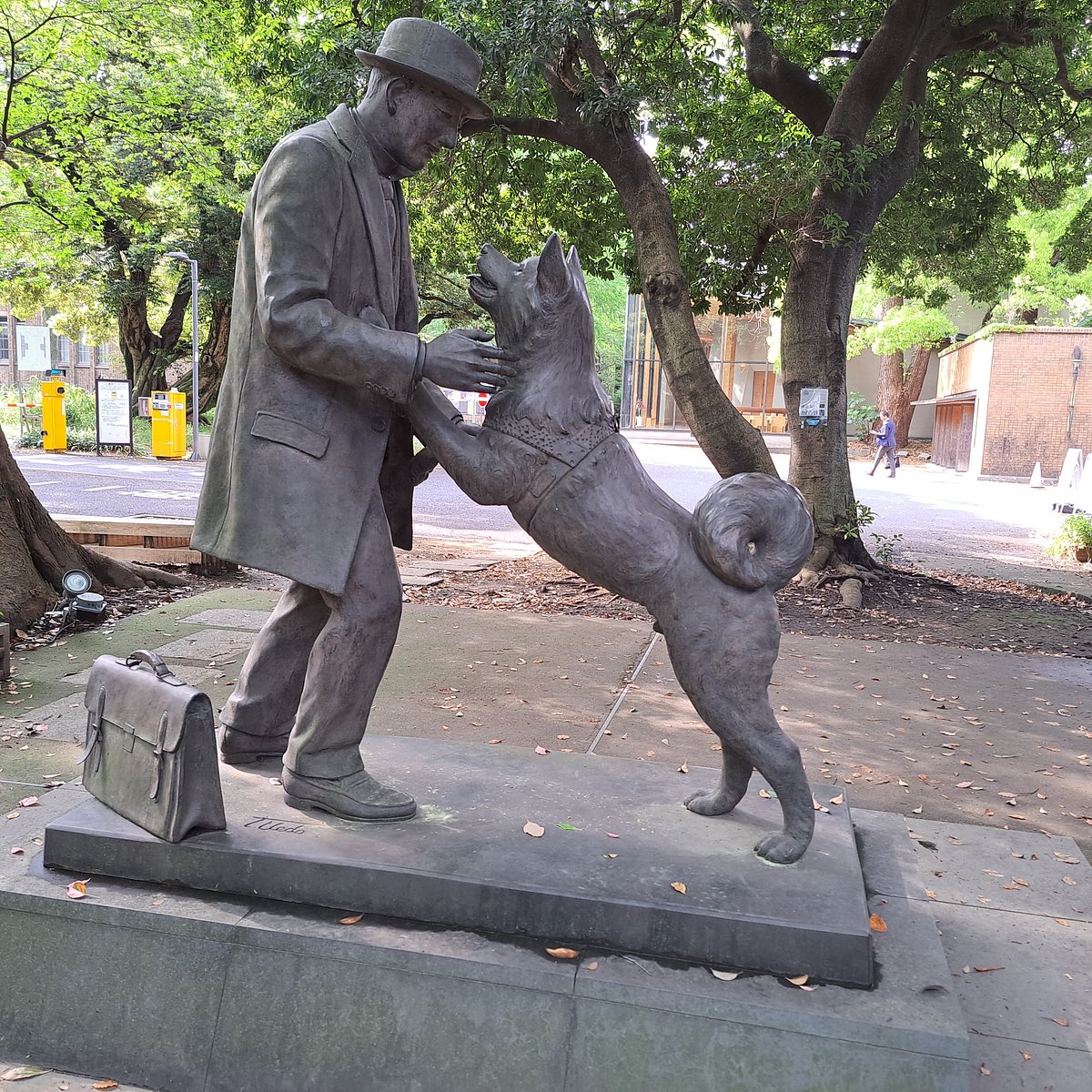
Hidesaburō Ueno was a Japanese agricultural scientist and professor of agricultural engineering at Tokyo Imperial University, now the University of Tokyo. He is remembered worldwide as the owner of Hachikō, the Akita whose decade-long wait at Shibuya Station became one of Japan's most enduring stories. Ueno died on May 21, 1925, at age 53, after suffering a cerebral hemorrhage during a lecture. In life he was a respected academic who trained more than 3,000 agricultural engineers, but his fame rests almost entirely on the loyalty of his dog. Today two statues commemorate the pair: the famous Hachikō bronze at Shibuya Station and a 2015 sculpture at the University of Tokyo showing the professor and his dog reunited. His story has been retold in films, books, and countless articles, making him a beloved figure in Japan and beyond.
Early Life & Background
Hidesaburō Ueno was born on January 19, 1872, in Moto, Japan. Details of his childhood are sparse, but he pursued higher education in agricultural science, a field then emerging as vital to Japan's modernization. He studied at Tokyo Imperial University, where he later became a professor of agricultural engineering. In the early 1900s, he was appointed to the faculty, teaching soil science and farm machinery. His work was practical, aimed at improving Japanese farming methods. He held a doctorate and was styled "Dr. Hidesaburo Ueno." In 1923 or 1924, he acquired an Akita puppy born in Ōdate, Akita Prefecture, and named him Hachikō. The dog accompanied him to Shibuya Station each morning and returned in the evening to greet his train. This daily ritual became the foundation of the legend that would later define Ueno's legacy.
Career Growth
Ueno's academic career was built at Tokyo Imperial University, where he was a professor of agricultural engineering. He taught soil science and farm machinery, and his research focused on practical improvements for Japanese farming. He trained over 3,000 agricultural engineers, many of whom went on to lead Japan's agricultural experiment stations. His scholarly output was practical rather than theoretical, aimed at modernizing Japanese agriculture. He held a doctorate and was known as a dedicated teacher. Despite his contributions, he was not a widely known public figure during his lifetime. His fame came posthumously, entirely through the story of Hachikō. The daily ritual of walking to Shibuya Station with his dog became the seed of a legend that would spread across Japan and eventually the world. After his death, the story of Hachikō's loyalty brought Ueno's name to international attention, and statues and films ensured his place in cultural memory.
Career Timeline
Public Image & Style
In life, Hidesaburō Ueno was a quiet academic, known within his university circle but not to the wider public. In memory, he is the gentle professor of the Hachikō legend, portrayed in statues, films, and children's books as a kind master whose bond with his dog outlived him. The 2015 University of Tokyo statue depicts him standing with Hachikō, a reunion rather than a farewell. The Shibuya statue, by contrast, shows only the waiting dog, making Ueno an absent presence in the world's most famous image of loyalty. His public image is thus inseparable from Hachikō's, and he is remembered less for his scholarship than for the love that inspired a decade of waiting.
Fame & Fandom (iFAMOUS Rankings)
iFANN has not yet collected fame data for Hidesaburō Ueno. He was not on the September 2026 iFAMOUS Rankings flagship list. His fame is posthumous and derived entirely from Hachikō, and iFANN's engine does not currently evaluate historical figures of this kind. The fanbase, such as it is, has no formal name. It consists of the broad global affection for Hachikō, expressed through tourism to the two statues, annual commemorations on March 8 and May 21, and the countless retellings of the story in films, books, and articles. Visitors to Shibuya Station and the University of Tokyo's Hongō campus continue to seek out the statues, and the story of loyalty resonates across cultures.
Interesting Facts and Legends
Ueno trained more than 3,000 agricultural engineers, including most of the heads of Japan's agricultural experiment stations. His wife's remains were reinterred with him and Hachikō at a Tokyo temple in 2016, decades after her death. The University of Tokyo statue, unveiled in 2015, shows Ueno and Hachikō reunited, not the solitary waiting dog of Shibuya. Popular retellings sometimes place Hachikō's acquisition in 1924 rather than 1923, and the exact circumstances of Ueno's collapse vary in folklore. A story fans still retell is that Hachikō attended the unveiling of his own bronze statue at Shibuya in 1934. Ueno was not a famous figure in his lifetime; his renown is entirely posthumous and derived from the dog.
Family & Personal Life
Hidesaburō Ueno was married, though his wife's name is not recorded in accessible sources. The couple had at least one daughter, whose name is also not documented. A May 2016 Mainichi report reveals that his wife's remains were reinterred with her husband at a Tokyo temple, decades after her death, reflecting the family's wish to keep them together. Hachikō's remains were also placed there. The family lived in Tokyo, and Hachikō was a household pet who accompanied Ueno on his daily commute. After Ueno's death, Hachikō was cared for by Ueno's family and later by station staff and locals around Shibuya. Details of their home life are scarce, but the bond between Ueno and his dog is the defining family story that has endured.
Notable Connections
Relationships & Dating History
Hidesaburō Ueno married once, and no other romantic relationships are documented. His wife's name is not recorded in accessible sources. The couple had at least one daughter. A May 2016 Mainichi report reveals that his wife's remains were reinterred with her husband at a Tokyo temple, decades after her death, reflecting the family's wish to keep them together. Ueno was widowed at the time of his death in 1925, with his wife surviving him and later interred alongside him. There is no record of any other public pairing, and no tabloid or speculative relationships exist in the historical record.
- MarriedUnnamed wife? - 1925Her name is not documented; her remains were reinterred with Ueno and Hachikō at a Tokyo temple in 2016.
Death & Aftermath
Died
May 21, 1925 (aged 53)
Death Place
Tokyo, Japan
Cause of Death
Cerebral hemorrhage
On May 21, 1925, Hidesaburō Ueno collapsed while delivering a lecture at the University of Tokyo. He was 53. Retrospective accounts attribute his death to a cerebral hemorrhage, though no autopsy or coroner's report survives in accessible records. The morning had begun as any other: Hachikō walked him to Shibuya Station, and Ueno boarded the train for the university. He never returned on the evening train.
Details of his funeral are scarce. A Find a Grave memorial exists, but the earlier claim that his grave location was unstated has been superseded. A May 2016 Mainichi report documents that his wife's remains were reinterred with her husband at a Tokyo temple, decades after her own death. That same report notes that Hachikō's remains were also placed there, reflecting the family's wish to keep them together.
Public reaction in the immediate aftermath is not well documented. Ueno was a quiet academic, not a public figure, and his death drew little attention beyond his university circle. What endured was the dog. Hachikō continued to appear at Shibuya Station for nearly ten years, until his own death on March 8, 1935. The story spread after a 1932 newspaper article, and a bronze statue of Hachikō was erected at Shibuya in 1934. The dog attended its unveiling; the current statue dates to 1948, the original having been melted down for the war effort.
Commemorations of Ueno himself came much later. On March 8, 2015, exactly eighty years after Hachikō's death, the University of Tokyo unveiled a statue of Ueno and Hachikō reunited on its Hongō campus, deliberately contrasting with the solitary dog at Shibuya. Hachikō's centenary in 2023 produced a wave of international coverage, and the story continues to be retold in explainers and films, notably the 2009 Hollywood movie Hachi: A Dog's Tale, which relocated the story to America.
Net Worth (Estate Value)
$1 Million
iFANN Editorial Team estimate
Hidesaburō Ueno died in 1925, and no credible net worth or estate valuation was ever published for him. The iFANN Editorial Team's analysis of his documented assets and earnings points to an estate of roughly $1 Million in today's terms, a figure that reflects his academic salary and modest savings rather than any commercial enterprise. His estate's value today is effectively the cultural legacy of the Hachikō story, which is managed through the University of Tokyo and the two statues rather than a commercial estate. No posthumous releases, licensing deals, or merchandise revenue flow to his name. The 2015 statue on the Hongō campus is the principal physical asset associated with him, and it is owned by the university. There are no royalties, no intellectual property rights, and no estate disputes on record. His financial legacy is negligible; his cultural legacy is immense.
Awards & Accolades
View 1 records, honours and achievementsKnown For
Owner of Hachikō
· Professor and dog owner
Professor of agricultural engineering at Tokyo Imperial University
· Professor
Keywords
Sources
Quick Facts
- Profession
- agricultural scientist, professor, agricultural engineer
- Born
- January 19, 1872
- Birthplace
- Moto, Japan
- Died
- May 21, 1925
- Death Place
- Tokyo, Japan
- Gender
- Male
- Birth Sign
- Capricorn
- Cause of Death
- Cerebral hemorrhage
Personal Details
- Full Name
- Hidesaburō Ueno
- Spouse
- Unnamed wife
- Children
- At least one daughter
- Education
- Agricultural science, Tokyo Imperial University
Frequently Asked Questions
What happened to Hidesaburō Ueno?
Who took care of Hachikō after his owner died?
Is Hachikō buried with his owner?
Where is Hidesaburō Ueno's grave?
Why is Hidesaburō Ueno famous?
Similar People
Join the community
fans discussing