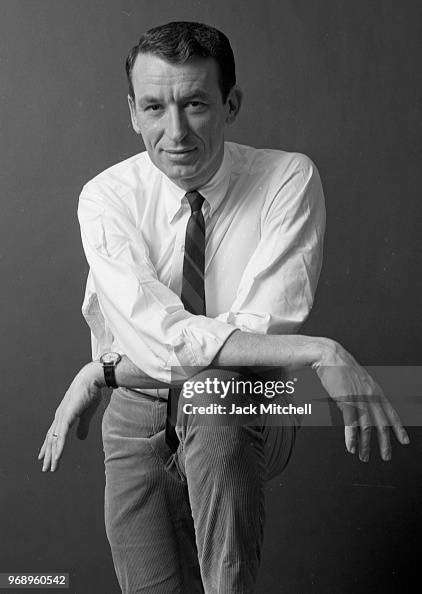
Herbert Ross
film director•choreographer•producer
Birthday
May 13, 1927
Birth Sign
Taurus
Birthplace
Brooklyn, New York
Age
Died at 74
Height
5 ft 8 in (173 cm)
About
Herbert Ross was an American director and choreographer. He is celebrated for helming a string of successful films that blended music and drama, leaving a lasting impact on American pop culture. His most notable works include the blockbuster hit *Footloose* (1984), the ensemble dramedy *Steel Magnolias* (1989), and the critically acclaimed ballet drama *The Turning Point* (1977), for which he received a Golden Globe Award for Best Director. Throughout his career, Ross collaborated with numerous acclaimed actors, including Barbra Streisand, Kevin Bacon, and Julia Roberts, frequently eliciting performances that became career highlights. His distinctive directorial style and ability to connect with audiences solidified his legacy, with his films continuing to be cherished by fans today. Ross passed away, but his cinematic contributions endure.
Early Life & Background
Herbert David Ross was born on May 13, 1927, in Brooklyn, New York. His formative years unfolded amidst the challenging backdrop of the Great Depression in his hometown. As a young child, Ross contracted polio, an illness that left one of his legs permanently weakened. In an effort to aid his recovery and physical development, his mother, a dancer herself, enrolled him in dance classes as a form of therapy. This initial therapeutic intervention unexpectedly sparked a profound passion within young Ross, as he quickly fell in love with the expressive power and physical demands of movement.
Ross pursued his education through the New York public school system, all while his dedication to dance continued to grow. He later studied briefly at the University of Miami, but his burgeoning passion for movement soon overshadowed his academic pursuits, prompting him to leave before graduating to fully commit himself to a career in dance. By his teenage years, Ross was already making his mark, performing in various nightclubs and gracing the stages of Broadway productions. His talent and commitment soon led him to join the prestigious corps de ballet of the American Ballet Theatre in the late 1940s, solidifying his professional standing as a dancer.
It was during his time with the American Ballet Theatre that a pivotal shift in his career began to emerge. The renowned choreographer Jerome Robbins recognized Ross's unique artistic potential, not just as a performer but as a creator, and actively encouraged him to explore choreography. This encouragement marked a significant turning point, guiding Ross towards a new dimension of his craft. His developing choreographic skills led to a notable opportunity when he was initially hired as a choreographer for the Broadway production of the groundbreaking musical, West Side Story. However, creative differences with Robbins ultimately led to his departure from the project, signaling the end of his early career phase and the beginning of his journey towards independent artistic direction.
Career Growth
Ross's first major Broadway choreography credit was A Tree Grows in Brooklyn in 1951. He gained attention for I Can Get It for You Wholesale (1962), which launched Barbra Streisand, and earned a Tony nomination for Anyone Can Whistle (1964). He moved to film in 1969 with Goodbye, Mr. Chips, then directed a series of hits: The Owl and the Pussycat (1970), Play It Again, Sam (1972), The Sunshine Boys (1975), and Funny Lady (1975). In 1977, The Turning Point earned him two Oscar nominations and a Golden Globe for Best Director. He followed with The Goodbye Girl (1977) and California Suite (1978). His biggest commercial success came with Footloose in 1984, which grossed over $80 million domestically. Later films include Steel Magnolias (1989) and his final directorial effort, Boys on the Side (1995). He turned down the chance to direct Saturday Night Fever (1977) because he thought the subject matter was too dark. Ross was the only director to work with both Barbra Streisand and Katharine Hepburn in multiple films.
Career Timeline
Public Image & Style
Ross was respected as a craftsman rather than a flashy auteur. Critics praised his ability to handle actors and blend drama with musical numbers, though some found his visual style conventional. His films, especially Footloose and Steel Magnolias, have passionate followings. Footloose fans hold 1980s-themed dance parties, and Steel Magnolias is a staple at women's film festivals. Ross's own public persona was reserved; he rarely gave extensive interviews and let his work speak for itself. He was known for his perfectionism on set, often doing dozens of takes for dance sequences. He received the American Choreography Awards Lifetime Achievement Award in 1998 and was posthumously inducted into the Brooklyn Jewish Hall of Fame in 2002.
Fame & Fandom (iFAMOUS Rankings)
Herbert Ross commands a legacy defined by critical reverence and industry respect rather than the fervent, organized adoration typical of modern pop icons. His work as a director and choreographer established him as a master craftsman who elevated dance to high art within mainstream cinema, yet his fanbase lacks a formal name or active ritualistic structure. Unlike contemporary stars who sustain massive digital followings with specific campaigns or fan clubs, Ross is celebrated through academic retrospectives, film studies, and enduring appreciation for films like *Footloose* and *Steel Magnolias*. These works maintain passionate niches among enthusiasts of 1980s culture and women's film festivals, but they do not coalesce into a unified movement bearing his name. The absence of a documented fandom reflects his reserved public persona and the nature of his contributions, which are honored by historians and peers rather than crowds. While legends persist regarding his mentorship of talent and his pivot from dancer to filmmaker, these stories serve as professional lore rather than viral phenomena driving a living cult following. Consequently, the audience remains a diffuse collection of admirers appreciating his artistic output without a centralized identity. As of August 2026, the iFANN system has evaluated this individual but does not currently assign a placement in the published rankings, reflecting his status as an EVALUATED_UNRANKED figure outside the Global Top 1,000 scope.
Interesting Facts and Legends
Herbert Ross discovered Barbra Streisand during her audition for *I Can Get It for You Wholesale*, initiating a lifelong friendship. He directed Neil Simon's plays more frequently than any other director, collaborating on productions such as *The Sunshine Boys*, *The Goodbye Girl*, *California Suite*, and *I Ought to Be in Pictures*. Known for his perfectionism, Ross often filmed dozens of takes for complex dance sequences. He declined the opportunity to direct *Saturday Night Fever* (1977), deeming the subject matter too dark. Notably, he was the only director to work with both Barbra Streisand and Katharine Hepburn in multiple films. *Footloose* marked its 40th anniversary in 2024 with a 4K restoration and theatrical re-release, while *Steel Magnolias* adapted into a stage production that toured nationally in 2023. A recurring story in his biography involves his early career as a dancer; after breaking his ankle while performing in America, he pivoted to choreography and eventually became one of Broadway's most successful directors before moving to film. Industry lore also highlights his keen eye for talent, with accounts noting he predicted Matthew McConaughey would become a major star while filming *Boys on the Side*. Additionally, his 1993 production of Puccini's *La Bohème* for the L.A. Opera remains a perennial hit, bridging his cinematic success with high art.
Notable Quotes
“I don't think of myself as a director of musicals. I think of myself as a director who uses music to tell stories.”
“The Turning Point was my most personal film. It was about my wife's life, and I put everything I knew about ballet into it.”
“Barbra Streisand is the most talented person I have ever worked with. She has an instinct for performance that is unmatched.”
“Footloose was a movie about the joy of dancing, but also about the importance of freedom and self-expression.”
Family & Personal Life
Ross was born to a Jewish family in Brooklyn, the only child of a dancer mother who encouraged his early dance training. He had no siblings. He attended New York public schools and studied at the University of Miami but did not graduate. Ross died on October 9, 2001, in New York City at age 74 from complications of heart surgery.
Notable Connections
Ross collaborated frequently with Barbra Streisand, directing her in The Owl and the Pussycat and Funny Lady, and choreographing her Broadway debut. He directed four Neil Simon adaptations: The Sunshine Boys, The Goodbye Girl, California Suite, and I Ought to Be in Pictures. He also worked with Anne Bancroft, Shirley MacLaine, Kevin Bacon, Dolly Parton, Sally Field, and Julia Roberts.
Relationships & Dating History
Ross married ballet dancer Nora Kaye in 1959. They met through the American Ballet Theatre, and Kaye's experiences as a dancer inspired Ross's film The Turning Point. They remained married until Kaye's death from cancer on February 28, 1989. Later that year, Ross married socialite Lee Radziwill, the sister of Jacqueline Kennedy Onassis. The marriage surprised many of Ross's friends, who felt it came too soon after Kaye's death. They stayed together until Ross's death in 2001. He had no children from either marriage.
- MarriedNora Kaye1959 - 1989Met through American Ballet Theatre; her ballet career inspired The Turning Point.
- MarriedLee Radziwill1989 - 2001Married shortly after Kaye's death; remained together until Ross's death.
Death & Aftermath
Died
October 9, 2001 (aged 74)
Death Place
Unknown
Cause of Death
Unknown
Net Worth (Estate Value)
$10 Million
iFANN Editorial Team estimate
At the time of his death in 2001, Herbert Ross's estate was valued at approximately $10 million. His wealth accumulated from directing fees, which peaked between $500,000 and $1 million per film, alongside producing credits that secured backend profit participation on hits like *The Turning Point* and *Steel Magnolias*. He owned a Manhattan townhouse and a Connecticut country home, both sold following his passing. Posthumous earnings from film residuals and licensing, particularly for *Footloose* and *Steel Magnolias*, have provided modest ongoing income. The estate was managed by his widow Lee Radziwill until her death in 2019, after which it folded into the Radziwill family trust. Per iFANN's editorial analysis, the estate's value remains around $10 million as of 2026.
Awards Won (8)
Ross won a Golden Globe for Best Director for The Turning Point in 1978. He was nominated for two Academy Awards for the same film (Best Director and Best Picture) and received a Tony nomination for choreography for Anyone Can Whistle in 1965.
1978 · Best Director
The Turning Point
1977 · Best Director
The Turning Point
Known For
Footloose
1984 · Director
Steel Magnolias
1989 · Director
The Turning Point
1977 · Director
The Goodbye Girl
1977 · Director
California Suite
1978 · Director
Keywords
Quick Facts
- Profession
- film director, choreographer, producer
- Born
- +1927-05-13
- Birthplace
- Brooklyn
- Died
- +2001-10-09
- Death Place
- New York City
- Gender
- Male
- Spouse
- Nora Kaye, Lee Radziwill
- Birth Sign
- Taurus
Personal Details
- Full Name
- Herbert David Ross
- Height
- 5 ft 8 in (173 cm)
- Spouse
- Nora Kaye, Lee Radziwill
- Education
- University of Miami (dropped out)
Filmography
30
Total
25
Film
5
TV
Frequently Asked Questions
What is Herbert Ross best known for?
Did Herbert Ross win an Oscar?
Who was Herbert Ross married to?
How did Herbert Ross die?
Did Herbert Ross have children?
Join the community
fans discussing