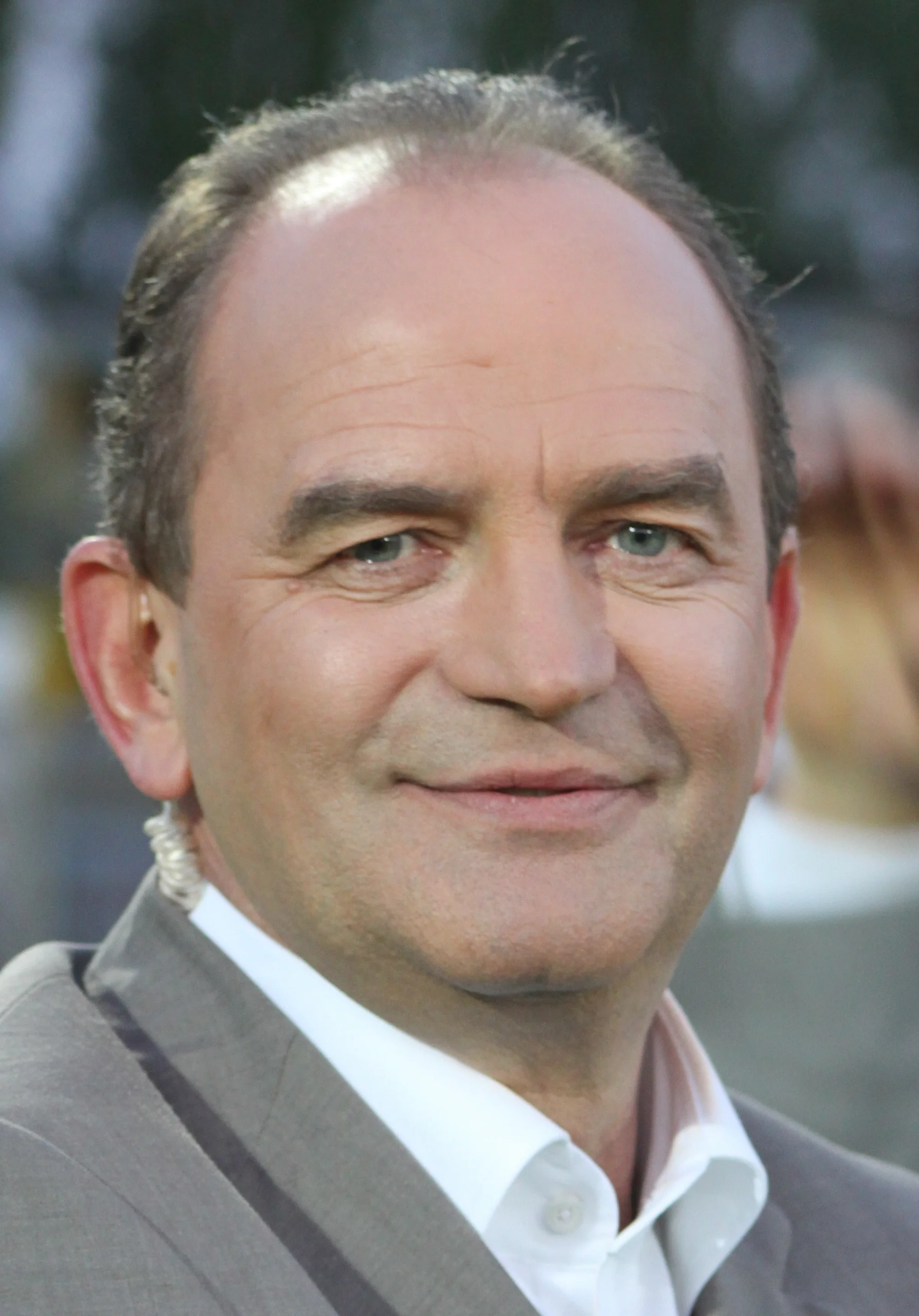
Herbert Prohaska
 Austria
association football player•association football coach
Also known as: Schneckerl
Birthday
August 8, 1955
Birth Sign
Leo
Birthplace
Vienna, Austria
Age
71 years old
Height
6 ft 0 in (1.82 m)
About
Herbert Prohaska is an Austrian former footballer and coach, widely considered one of the greatest Austrian players of all time. A creative midfielder with rare elegance and tactical intelligence, he earned 82 caps for Austria and scored 10 goals. He is best remembered as the architect of the "Miracle of Córdoba" in 1978, when Austria defeated West Germany 3-2 at the World Cup.
After retiring, Prohaska became a beloved pundit for ORF, Austria's public broadcaster, known for his sharp analysis and dry humor. He remains a revered figure in Austrian football culture, celebrated for his contributions both on and off the pitch.
Early Life & Background
Born in Vienna on August 8, 1955, Prohaska grew up in the city that would remain his home throughout his life. His passion for football was evident from a young age, and he joined the youth system of FK Austria Wien, the club where he would spend the majority of his career. His technical ability and vision set him apart early, leading to his professional debut on November 11, 1972, at just 17 years old.
Before achieving international fame, Prohaska established himself as a prodigy in the Austrian Bundesliga. His playing style combined defensive grit with playmaking flair, a rare blend that caught the attention of national team selectors. By the mid-1970s, he was a regular in the Austria squad, and his performances laid the groundwork for the historic success that would follow in Argentina in 1978.
Career Growth
Prohaska's club career was marked by domestic dominance and significant European experience. He began at FK Austria Wien in 1972, winning multiple Austrian championships and cups. In 1979, he moved to Italy to join Inter Milan, where he spent two seasons in Serie A. His most successful period came at AS Roma, where he won the Scudetto in the 1982-83 season and the Coppa Italia in 1980-81.
Returning to Austria Wien in 1984, he led the team to further titles before retiring in 1989. After his playing days, he managed Austria Wien in 2005-06 and briefly coached the Austrian national team in 1999-2000. Since then, he has been a prominent pundit for ORF, where his candid commentary and tactical insight have made him a household name in Austrian football.
Career Timeline
Public Image & Style
Prohaska is regarded as an elegant, intelligent midfielder on the pitch, and as a straightforward, no-nonsense pundit off it. His curly hair in his youth gave him a distinctive look that fans remember fondly. As a broadcaster, he is known for his sharp wit and occasional bluntness, which has endeared him to Austrian audiences. He is seen as a guardian of the golden era of Austrian football, often reflecting on the past with a mix of nostalgia and critical insight.
Fame & Fandom (iFAMOUS Rankings)
Herbert Prohaska stands as the 43rd most famous person from Austria, a standing confirmed by the iFANN Global Fame Rankings and held steady through the latest cycle. This placement reflects his enduring status as a cultural touchstone within the nation, recognized not merely for past glories but for a sustained presence in public consciousness that spans decades of football history. While he does not command a formal, organized fandom name like those found in modern pop culture, his following remains deeply rooted in the heritage of FK Austria Wien and AS Roma, where fans revere him as a tactical genius and a symbol of the golden era. The affectionate moniker "Schneckerl" serves as his primary identifier, appearing on social media handles and in casual conversation across Vienna, yet no specific club or national group claims him exclusively under a unique banner.
His legend is built on verified achievements rather than manufactured hype, anchored by his instrumental role in securing the UEFA Cup Winners' Cup with AS Roma and his four league titles at home. A singular moment of viral notoriety further cemented his place in the national zeitgeist: a fiery outburst during a 2010 broadcast where he used strong language to critique players, showcasing a blunt character that contrasted sharply with his elegant playing style. Though there are no documented fan-funded projects or rituals dedicated solely to him, his influence persists through the institutional memory of Austrian football, where he is celebrated annually as a living link to the sport's most revered generation.
Interesting Facts and Legends
Prohaska's nickname "Schneckerl" originates from Viennese dialect, translating to "curly hair" and referencing his youthful ringlets. His career extended beyond the pitch into minor acting roles in films such as Tohuwabohu (1990), Trautmann (2000), and Dolce Vita & Co (2001). He also maintains a musical presence on Spotify with releases including Die Sunn and The Real Holy Boys. In 2010, he sparked controversy with an unfiltered, strong-language outburst during a live television appearance, a moment that highlighted his no-nonsense persona.
A cornerstone of his legendary status involves his time at AS Roma between 1978 and 1983, where he became the first Austrian to achieve significant success in Serie A. Fans still retell the story of how he helped secure the UEFA Cup Winners' Cup in 1984, a feat that proved an Austrian midfielder could conquer the notoriously defensive Italian leagues. At his home club, FK Austria Wien, his legacy is defined by securing four league titles and two cup victories, establishing him as the tactical heartbeat of the team during its dominant years. Another widely cited chapter in his folklore is the 2010 incident on the show Das Sportstudio, where his use of the slur "Hurenkinder" transformed him into a viral figure, demonstrating a fiery temperament that contrasts with his elegant on-field reputation.
Notable Quotes
“The Miracle of Córdoba is something that will stay with me forever. It was a gift to the Austrian people.”
“Football has changed, but the passion of the fans in Austria remains the same.”
“I always tried to play with elegance, but also with the necessary toughness.”
Family & Personal Life
Details about Prohaska's family are scarce, as he has kept his personal life private. There are no public records of his parents, siblings, or children. He has never shared details about his household or pets. This discretion suggests he values his privacy intensely, focusing public attention on his football career and punditry work.
Notable Connections
Prohaska played alongside Erich Obermayer, Hans Krankl, and Bruno Pezzey in the legendary 1978 World Cup squad. His club career saw him at FK Austria Wien, Inter Milan, and AS Roma. He has worked with the ORF sports team as a pundit.
Relationships & Dating History
Herbert Prohaska has kept his personal life extremely private, and there are no credible reports of any romantic relationships, marriages, or children. He has never publicly discussed his dating history, and the media has respected his privacy. As of 2026, his relationship status remains unknown, but it is clear he values his personal life away from the spotlight.
Salary, Net Worth In 2026
$5 Million
iFANN Editorial Team estimate
iFANN currently estimates Herbert Prohaska's net worth at $5 Million as of 2026. This figure reflects a lifetime of contribution to Austrian football, derived from his long playing career, various coaching stints, and extensive work as a television pundit for ORF. Unlike modern athletes, his earnings from playing days were modest, but his broadcasting career has provided a steady income over the years. Prohaska has not been involved in major business ventures or endorsements, yet his longevity in the public eye has ensured a comfortable financial standing. The valuation represents a steady accumulation of wealth earned through consistent professional service rather than fleeting commercial spikes.
Awards Won (16)
Prohaska won the Austrian Footballer of the Year three times, the Serie A title with AS Roma in 1983, and the Coppa Italia in 1981. With Austria Wien, he claimed seven Austrian Bundesliga titles and four Austrian Cups, cementing his status as a domestic legend.
1983 · Player of the Year
AS Roma
1978 · Player of the Year
Austria national team
1976 · Player of the Year
Austria national team
1983 · League Title
AS Roma
Known For
Miracle of Córdoba
1978 · Midfielder for Austria
AS Roma
1983 · Midfielder
FK Austria Wien
1989 · Midfielder
Keywords
Sources
Quick Facts
- Profession
- association football player, association football coach
- Born
- August 8, 1955
- Birthplace
- Vienna, Austria
- Gender
- Male
- Height
- 6 ft 0 in (1.82 m)
- Position
- Attacking Midfielder
- Caps
- 82
- Goals
- 10
Personal Details
- Full Name
- Herbert Prohaska
- Height
- 6 ft 0 in (1.82 m)
Filmography
3
Total
3
Film
0
TV
Frequently Asked Questions
How old is Herbert Prohaska in 2026?
What is Herbert Prohaska's net worth in 2026?
Is Herbert Prohaska still active in football?
Why is Herbert Prohaska famous?
What teams did Herbert Prohaska play for?
Similar People
Join the community
fans discussing