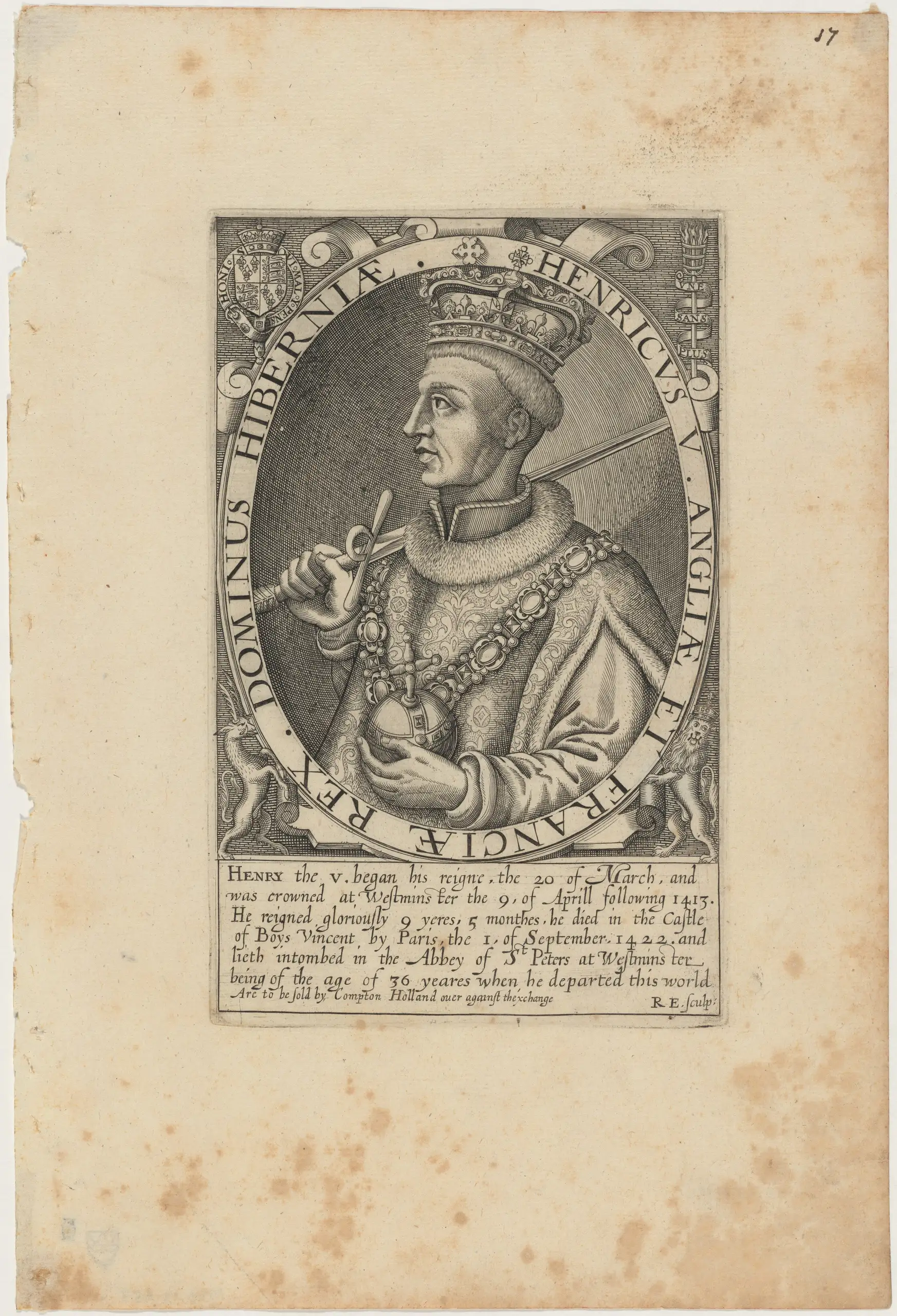
Henry V of England
 United Kingdom
Also known as: Henry of Monmouth, Harry of Monmouth
Birthday
September 16, 1386
Birth Sign
Virgo
Birthplace
Monmouth Castle, Monmouthshire, Wales
Age
Died at 35
Height
5 ft 9 in (175 cm)
About
Henry V of England was a medieval monarch who ruled from 1413 until his death in 1422. He is best known for his military campaigns in France during the Hundred Years' War and for revitalizing English national identity. As the eldest son of King Henry IV, he initially faced political turbulence but eventually proved himself a capable leader and warrior. His reign marked a turning point for the English crown, shifting from defensive postures to aggressive expansion across the Channel.
Upon ascending the throne, Henry revived England's claim to the French crown, signaling a bold shift in policy. His most famous victory came at the Battle of Agincourt in 1415, where his forces achieved a stunning triumph against overwhelming odds. This success bolstered morale and paved the way for further conquests in Normandy. Through diplomatic maneuvering and military strength, he secured the Treaty of Troyes in 1420, which named him regent and heir to the French throne.
Early Life & Background
Born on September 16, 1386, at Monmouth Castle in Wales, Henry entered a world defined by dynastic struggle. His father, Henry IV, had usurped the throne from Richard II, creating an atmosphere of instability that surrounded Henry's childhood. As the heir apparent, he faced immediate scrutiny regarding his loyalty and character. Early accounts describe a youth marked by what historians call prodigality, involving reckless behavior and association with a rowdy group of friends in Eastcheap. While later popularized by Shakespeare as the transformation from Prince Hal to King Harry, these years may have served as a strategic performance to lower expectations before he proved his worth.
His reputation began to solidify at age 16 during the Battle of Shrewsbury in 1403. Fighting against rebel forces led by Henry Percy, known as Hotspur, young Henry demonstrated remarkable bravery. He was reportedly wounded in the face by an arrow yet remained on the field, killing Hotspur and securing a decisive victory for his father. This battle silenced critics and established his image as a brave warrior. Following this, he spent years governing Wales and fighting the Glyndŵr rebellion, gaining significant administrative and military experience. In 1405, he was created Duke of Cornwall, and in 1411, he was appointed Lieutenant of Ireland, further solidifying his role in governance before becoming king.
Career Growth
Henry V ascended to the throne on March 21, 1413, following the death of his father. His reign was defined by an ambitious campaign to reclaim the French throne and restore English dominance in the Hundred Years' War. In 1415, he launched his first major campaign in France, besieging and capturing the port city of Harfleur. Despite suffering heavy losses due to disease, he achieved one of history's most famous military victories at the Battle of Agincourt on October 25, 1415. Against overwhelming odds, his longbowmen decimated the French cavalry and infantry, resulting in a decisive English win that boosted national morale.
Capitalizing on internal French conflict between the Armagnacs and Burgundians, Henry invaded Normandy between 1417 and 1419. By 1419, he had conquered the region, including Rouen, and stood before Paris. The murder of John the Fearless, Duke of Burgundy, by the Armagnacs allowed Henry to forge a crucial alliance with the Burgundians. This diplomatic triumph culminated in the Treaty of Troyes in 1420, which disinherited the Dauphin and recognized Henry V as the Regent and heir to the French throne. The treaty also arranged his marriage to Catherine of Valois, daughter of King Charles VI of France. Henry returned to England briefly in 1421 but left again in 1422 to continue the war effort.
Career Timeline
Public Image & Style
Henry V is portrayed in media and history as the archetypal 'Warrior King', brave, pious, and charismatic. His image is one of leadership under pressure, famously encapsulated by the St. Crispin's Day speech. Modern portrayals often emphasize the duality of his character: the ruthless conqueror and the loving husband and father. Historians debate his legacy; some view him as a warmonger whose ambitions bankrupted the realm, while others see him as England's greatest monarch. His reign restored order after the chaos of his father's rule, and he worked closely with Parliament to enforce justice.
Fame & Fandom (iFAMOUS Rankings)
As a historical figure, Henry V does not have a modern fandom in the celebrity sense, but he commands a dedicated following among history enthusiasts, medieval scholars, and Shakespeare fans. The 'St. Crispin's Day' speech remains a staple of patriotic rhetoric, and his story is frequently revisited in educational contexts and theatrical circles. Fan campaigns are rare but sometimes emerge around anniversaries of Agincourt or major theatrical releases. iFANN has not yet collected fame data for this person. He is not on the September 2026 iFAMOUS Rankings flagship list.
Interesting Facts and Legends
Henry V was instrumental in transitioning England from French to English as the language of government, a move that helped unify the nation and promote its use in official documents over Latin. He was a staunch defender of the Church and actively suppressed the Lollard movement, which challenged Catholic doctrines. Before becoming king, he was rumored to be a wild youth who associated with thieves and gamblers, a narrative largely shaped by Shakespeare but rooted in some contemporary gossip about his association with the 'riotous' group of friends in Eastcheap. Historical descriptions suggest he was of average height for a medieval man, estimated around 5 feet 9 inches, with a robust build suitable for warfare. He was known for his physical stamina and ability to endure long campaigns.
Notable Quotes
“Once more unto the breach, dear friends, once more...”
“We should yet do well to trust in God.”
“God and Saint George!”
Family & Personal Life
Henry V was the eldest son of King Henry IV and Mary de Bohun. His birth name was simply Henry, though he is historically distinguished by his regnal number to separate him from his grandfather and his son. He married only once, to Catherine of Valois, in 1420. Their relationship was politically motivated but developed into a genuine partnership. They had one child together: Henry VI, born December 6, 1421, at Windsor Castle. Henry died in 1422, making Catherine a widow at age 20. She did not remarry until 1428, when she wed Owen Tudor, a Welsh courtier. There are no recorded public romantic relationships or engagements prior to his marriage.
Notable Connections
Henry IV, Mary de Bohun, Catherine of Valois, Henry VI, John of Gaunt, Owen Glendower, Hotspur, Alfred Enoch
Relationships & Dating History
Henry V was married only once. His relationship with his wife, Catherine of Valois, was politically motivated but developed into a genuine partnership. They met in Troyes in June 1420 as part of the Treaty of Troyes. Catherine was approximately 19 years old, while Henry was 33. The couple had one child together: Henry VI, born December 6, 1421, at Windsor Castle. Henry died in 1422, making Catherine a widow at age 20. She did not remarry until 1428, when she wed Owen Tudor, a Welsh courtier, though this marriage occurred after Henry V's death and is not part of his direct romantic timeline. There are no recorded public romantic relationships, engagements, or flings prior to his marriage. Historical accounts focus almost exclusively on his duty and his singular marriage to Catherine.
- MarriedCatherine of Valois1420 - 1422Marriage arranged by Treaty of Troyes; they had one son, Henry VI.
Death & Aftermath
Died
August 31, 1422 (aged 35)
Death Place
Château de Vincennes, Île-de-France, France
Cause of Death
Dysentery
The news of the king's passing triggered a period of profound national mourning across England and the occupied territories of France, with prayers offered for his soul in churches throughout the realm. Tributes from peers and officials immediately followed, marking the loss of a warrior king whose victories at Agincourt had secured significant gains for the crown. This grief stemmed from the shock of losing a leader who had dominated the Hundred Years' War, leaving a power vacuum that historians later noted as a pivotal moment leading to the eventual collapse of English claims in France.
Henry V died early on the morning of August 31, 1422, at the Château de Vincennes near Paris while campaigning in Normandy. His decline followed a grueling siege of Meaux that began in June, where harsh conditions and the spread of dysentery within the camp led to his rapid deterioration. By late August, he was too weak to move, having made his final public appearance or received confessions on August 30. The cause is historically recorded as dysentery based on contemporary chronicles and eyewitness accounts from his military entourage, though some narratives suggest the stress of war and previous injuries contributed to his susceptibility.
A grand state funeral occurred on November 7, 1422, at Westminster Abbey, attended by high-ranking clergy, nobility, and foreign dignitaries. The service featured religious chants and hymns appropriate for a royal requiem before his body was interred in the Lady Chapel alongside other members of the House of Lancaster. Over centuries, he has been immortalized primarily through literature and theater, most famously in William Shakespeare's play Henry V, cementing his legacy as a symbol of English nationalism and chivalry.
Net Worth (Estate Value)
$0
iFANN Editorial Team estimate
As a medieval monarch, Henry V did not accumulate personal wealth in the modern sense of liquid assets or investments. His financial power derived from the royal treasury, land revenues, and the spoils of war. The concept of net worth as understood today does not apply to his estate. However, his reign generated significant revenue through taxation and the seizure of French lands. The value of his kingdom's economy during his reign was substantial, contributing to the stability of the English crown. Posthumously, his legacy has generated immense cultural value through literature, theater, and historical study, particularly through works like Shakespeare's Henry V.
Awards & Accolades
View 7 records, honours and achievementsKnown For
Battle of Agincourt
1415 · Commander
Treaty of Troyes
1420 · Signatory
Conquest of Normandy
1417 · King
Keywords
Sources
Quick Facts
- Profession
- King
- Born
- September 16, 1386
- Birthplace
- Monmouth Castle
- Died
- August 31, 1422
- Death Place
- Château de Vincennes
- Gender
- Male
- Spouse
- Catherine of Valois
- Birth Sign
- Virgo
Personal Details
- Full Name
- Henry of Monmouth
- Height
- 5 ft 9 in (175 cm)
- Spouse
- Catherine of Valois
- Children
- Henry VI
- Education
- Private tutors; trained in warfare and governance
Frequently Asked Questions
What is Henry V most famous for?
What caused the death of Henry V?
Was Henry V good or bad?
Did Henry V love Catherine of Valois?
How old was Henry V when he became King?
Similar People
Join the community
fans discussing