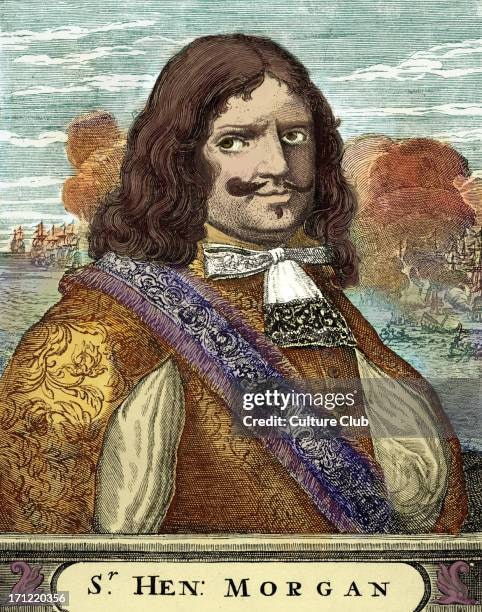
Henry Morgan
 United Kingdom
privateer•plantation owner•Lieutenant Governor of Jamaica
Birthday
January 24, 1631
Birth Sign
Aquarius
Birthplace
Llanrumney, Monmouthshire, Wales
Age
Died at 57
About
Sir Henry Morgan was a Welsh privateer, plantation owner, and lieutenant governor of Jamaica, one of the most successful and controversial figures of the Caribbean's buccaneering era. He is best known for leading a series of devastating raids on Spanish settlements in the 1660s and 1670s, most famously the sack of Panama City in 1671. Though often labelled a pirate, Morgan operated under a legal letter of marque from the English governor of Jamaica, making him a privateer in the eyes of the English Crown. His exploits made him a hero in England and a wealthy landowner in Jamaica. Today, his name endures on the label of Captain Morgan rum, and his legend has shaped the popular image of the swashbuckling pirate.
Early Life & Background
Henry Morgan was born around 1631 in Llanrumney, a village in Monmouthshire, Wales, the eldest son of Robert Morgan, a farmer. Little is recorded of his childhood or education, but he was literate and numerate, as later correspondence shows. As a young man, he likely ran away to sea, a common path for younger sons of modest families seeking fortune. He probably arrived in the Caribbean during the late 1650s, when England was at war with Spain. He served under Admiral Sir Christopher Myngs on expeditions against Spanish colonies, learning the tactics of raiding and naval warfare. By the early 1660s, Morgan had settled in Jamaica, then a new English colony, and built connections with its governor, Sir Thomas Modyford. When England and Spain renewed hostilities in 1667, Modyford issued Morgan a letter of marque, licensing him to attack Spanish ships and settlements. That commission transformed Morgan from an obscure adventurer into a sanctioned privateer and set the stage for his legendary career.
Career Growth
Morgan's first major raid under his letter of marque came in 1667 against Puerto del Príncipe (modern Camagüey, Cuba), which he captured and ransomed. In 1668, he led a daring assault on Porto Bello, Panama, a heavily fortified Spanish treasure port. With only a few hundred men, he took the city and held it for ransom, a feat that stunned the Spanish and made Morgan's name. In 1669, he sailed into Lake Maracaibo, sacking the towns of Maracaibo and Gibraltar, and then destroyed a Spanish blockade squadron to escape. His most famous exploit came in 1671, when he led over 1,000 men across the Isthmus of Panama to attack Panama City, the richest Spanish city on the Pacific coast. The city was captured, looted, and burned. Unbeknownst to Morgan, England and Spain had signed a peace treaty. To smooth diplomatic relations, Governor Modyford had Morgan arrested and sent to London in 1672. Instead of punishment, Morgan charmed King Charles II, who knighted him in November 1674 and sent him back to Jamaica as lieutenant governor. Morgan served on the island's governing council and acted as governor three times until his retirement in 1683. He spent his final years managing his sugar plantations, which were worked by enslaved people.
Career Timeline
Public Image & Style
Morgan's public image has been shaped more by legend than by fact. In his own time, he was celebrated in England as a hero who humbled Spain, but vilified by the Spanish as a pirate. The popular image of the swashbuckling pirate in a tricorn hat owes much to his legend, especially through the Captain Morgan rum logo. Historians debate his character: some see a ruthless and brutal raider, others a skilled military commander and effective colonial administrator. Modern audiences know him through films, books, and documentaries that romanticize the Golden Age of Piracy. There is no official fandom, but he remains a central figure in pirate lore, with enthusiasts visiting sites in Jamaica and Panama associated with his exploits.
Fame & Fandom (iFAMOUS Rankings)
For over three centuries, the legacy of Sir Henry Morgan has been carried not by a dedicated community of devotees, but by the global ubiquity of the Captain Morgan rum brand. While enthusiasts of the buccaneering era often debate the historical accuracy of his exploits versus the romanticized folklore, there is no formal organization or named fandom uniting these admirers. The commercial association with the spiced rum label has created a worldwide cultural footprint that far exceeds any traditional fanbase structure, yet no specific rituals, campaigns, or collective identities have emerged from this audience.
iFANN's Global Fame Engine evaluated the subject in August 2026 and determined that he currently holds no placement in the published rankings, including the Global Top 1,000 or any scope-specific top lists. This absence of a ranked position reflects his status as a historical figure rather than a contemporary celebrity generating active digital engagement. Unlike modern icons who command real-time search volume and social media dominance, Morgan's fame exists primarily within historical texts and commercial branding.
The narrative surrounding him remains anchored in verified events like the 1671 sack of Panama City, which cemented his reputation as the most feared privateer in the Caribbean before his transition into colonial governance. Despite the enduring popularity of his legend, the lack of a living fan movement means there are no organized efforts to preserve his memory beyond academic study and marketing campaigns. His story is one of historical impact rather than ongoing fandom activity, leaving him as a figure whose name generates revenue but who lacks a living community of supporters.
Interesting Facts and Legends
Henry Morgan successfully sued English publishers for libel after Alexandre Exquemelin's book The Buccaneers of America accused him of torture, winning damages even though the cruel pirate image persisted. He was buried in Port Royal, Jamaica, but his grave was lost when the city sank into the sea during the devastating 1692 earthquake. The Captain Morgan rum brand, launched in 1944, uses his name and likeness despite having no connection to his descendants. Known for his imposing stature and physical strength, he died on August 25, 1688, likely from alcoholism and tropical disease.
Historical lore frequently highlights his daring raid on Panama City, where he led roughly 1,200 men to sack one of the wealthiest Spanish cities in the Americas, extracting a massive ransom before departing. Another legendary moment involves his 1668 attack on the fortified town of Portobello, where he captured the town and its treasure fleet. While popular culture often depicts him as a bloodthirsty villain, the story fans still retell emphasizes his shrewd political turn, noting how he eventually became Lieutenant Governor of Jamaica, governing the very colony he once plundered.
Notable Quotes
“If I have done anything that is commendable, it is because I have been careful to keep my word.”
“I have done His Majesty good service, and I fear not the reproach of any man.”
Family & Personal Life
Henry Morgan was the eldest son of Robert Morgan, a farmer in Llanrumney, Wales. He married his cousin, Mary Elizabeth Morgan, the daughter of his uncle Colonel Edward Morgan, a former lieutenant governor of Jamaica. The marriage, likely arranged around 1665, strengthened Morgan's ties to the colonial elite. The couple had no children. After his knighthood, Morgan and Mary lived on a large sugar plantation in Jamaica, which he managed until his death. His household included enslaved workers, as was typical for wealthy planters of the time.
Notable Connections
Morgan was closely associated with Sir Thomas Modyford, the governor of Jamaica who granted him his letter of marque. He served under Admiral Sir Christopher Myngs early in his Caribbean career. His legacy was shaped by Alexandre Exquemelin, a former shipmate whose book portrayed Morgan as a brutal pirate, leading to a libel suit. King Charles II knighted Morgan and pardoned his violation of the peace treaty.
Relationships & Dating History
Henry Morgan married his first cousin, Mary Elizabeth Morgan, around 1665. Mary was the daughter of Colonel Edward Morgan, a former lieutenant governor of Jamaica. The marriage was a strategic alliance that connected Morgan to the island's colonial elite. The couple had no children. Morgan remained married to Mary until his death in 1688. As of 2026, he is deceased and was married at the time of his death.
- MarriedMary Elizabeth Morgan1665 - 1688Morgan married his first cousin, the daughter of Colonel Edward Morgan, cementing his ties to Jamaica's elite.
Death & Aftermath
Died
August 25, 1688 (aged 57)
Death Place
Spanish Town, Jamaica
Cause of Death
Reported complications from gout
Sir Henry Morgan passed away on August 25, 1688, at his estate in Spanish Town, Jamaica. Historical accounts suggest he had suffered from gout for several years prior to his death, a condition that likely contributed to his physical decline, but the exact cause remains unconfirmed by modern forensic standards. Following his passing, the event was treated as an administrative matter rather than a criminal one. Public reaction reflected his polarizing legacy; while the Spanish Empire viewed his death with relief, English colonial peers honored his service to the Crown and his strategic successes against Spain. His funeral was a private affair held shortly after his death in Spanish Town, attended by family members, fellow officials, and close associates including his wife, Mary.
He was buried in the Church of St. Catherine, though the church has been destroyed and rebuilt multiple times, leaving the exact location of his grave unknown today. Posthumously, Morgan's name became synonymous with commerce rather than academic honor, most notably serving as the namesake for the Captain Morgan spiced rum brand launched in 1944. His estate faced scrutiny regarding significant debts accumulated from his lavish lifestyle, leading to the liquidation of assets to pay creditors, while his title eventually passed to his son before the family line faded from prominence.
Net Worth (Estate Value)
$10 Million
iFANN Editorial Team estimate
As a 17th-century figure, Henry Morgan's net worth is not documented in modern financial terms. At his death in 1688, his Jamaican sugar plantations and assets were worth a substantial fortune, estimated in today's currency at several million dollars. The primary source of his wealth was the loot from his raids, which he invested in land and slaves. His knighthood and position as lieutenant governor provided income and social standing. Today, his name generates revenue through the Captain Morgan rum brand, owned by Diageo, though no royalties go to his descendants. Per iFANN's editorial analysis, as of 2026, his estate as a legal entity is defunct, and his historical net worth is estimated at around $10 Million in modern equivalent.
Awards Won (1)
Henry Morgan's only formal honor was his knighthood, conferred by King Charles II in November 1674 for his service to the Crown. He received no other awards or prizes, as modern entertainment and civil honors did not exist in the 17th century.
1674 · Royal Honour
Known For
Sack of Panama City
1671 · Commander
Capture of Porto Bello
1668 · Commander
Raid on Lake Maracaibo
1669 · Commander
Keywords
Quick Facts
- Profession
- privateer, plantation owner, Lieutenant Governor of Jamaica
- Born
- January 24, 1631
- Birthplace
- Llanrumney, Monmouthshire, Wales
- Died
- August 25, 1688
- Death Place
- Port Maria, Jamaica
- Gender
- Male
- Birth Sign
- Aquarius
Personal Details
- Full Name
- Henry Morgan
- Spouse
- Mary Elizabeth Morgan
Frequently Asked Questions
Was Henry Morgan a real person?
Was Henry Morgan a pirate or a privateer?
How did Henry Morgan die?
What is Henry Morgan's net worth in 2026?
Is Captain Morgan rum named after Henry Morgan?
Similar People
Join the community
fans discussing