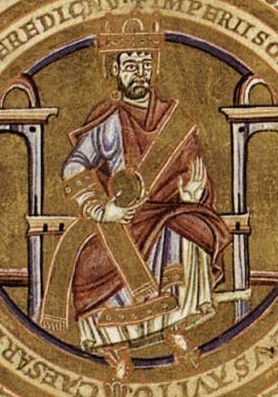
Henry II, Holy Roman Emperor
 Germany
Birthday
+0973-05-06
Birth Sign
Taurus
Birthplace
Bad Abbach
Age
Died at 51
About
Henry II, also known as Saint Henry, was the Holy Roman Emperor from 1014 until his death in 1024. Born on May 6, 973, in Bad Abbach, he was the last ruler of the Ottonian dynasty. His reign marked a period of centralized authority and close ties with the Catholic Church, earning him canonization in 1146, the only medieval German monarch to receive that honor. Henry's path to the throne was anything but straightforward. As the son of Henry II, Duke of Bavaria, and Gisela of Burgundy, he spent much of his early life in exile after his father rebelled against two emperors. He found refuge with Bishop Abraham of Freising and later studied at the cathedral school in Hildesheim. In 995, he succeeded his father as Duke of Bavaria, becoming Henry IV. When Emperor Otto III died suddenly in 1002, Henry overcame several rivals to be crowned King of Germany on July 9, 1002, adopting the title Rex Romanorum. Two years later, on May 15, 1004, he was anointed King of Italy, and in 1014, Pope Benedict VIII crowned him emperor in Rome. Unlike his predecessor Otto III, who focused on Italy, Henry concentrated on strengthening the empire north of the Alps, a policy he summed up on his seal as Renovatio regni Francorum. He spent years in political and military maneuvering against the Polish Duke Bolesław I, who had conquered many surrounding territories. Henry also led three expeditions into Italy to enforce his feudal claims, dealing with secessionist revolts and Byzantine ambitions in the south. His reign saw the incorporation of Bohemia into the Holy Roman Empire when he supported Duke Jaromír against the Poles. Henry's rule was defined by his partnership with the Church. He expanded the Ottonian tradition of using clerics as counterweights to secular nobles, donated extensively to the Church, and established new dioceses. His personal piety and promotion of monastic reform were so remarkable that Pope Eugene III canonized him in 1146. His wife, Empress Cunigunde, was also canonized in 1200. The couple had no children, so upon Henry's death on July 13, 1024, the German nobles elected Conrad II, the first Salian emperor, marking the end of the Ottonian line.
Fame & Fandom
Henry II, Holy Roman Emperor, remains a figure of profound historical resonance rather than modern celebrity status. As the last ruler of the Ottonian dynasty and the only medieval German monarch to be canonized, his legacy endures through centuries of veneration within the Catholic Church. In August 2026, the iFANN Global Fame Engine evaluated his standing and determined that he currently holds no placement in the published rankings, including the Global Top 1,000 or any Top-100 scope list. This absence from contemporary fame charts reflects his status as a deceased historical figure whose influence is spiritual and institutional rather than driven by commercial metrics or viral trends. While living celebrities command fanbases with organized campaigns and social media followings, Henry II's adherents are devotees observing his feast day on July 13 or historians studying his role in European politics. There is no formal name for this group beyond the general designation of Catholic faithful or medievalists. His most enduring narrative involves his childless death in 1024, which ended the Ottonian line and paved the way for the Salian dynasty. The founding of Bamberg Cathedral stands as a verified reflection of his piety, serving as a pilgrimage site nearly a millennium later. Recent scientific efforts in 2026 further cemented his historical identity through ancient DNA analysis, yet these academic milestones do not translate into a modern fandom structure. Unlike pop culture icons who generate street-level reactions or digital hashtags, Henry II interacts with his followers solely through liturgy and the study of hagiography. The Great Schism context surrounding his posthumous canonization adds a layer of theological complexity to his story, distinguishing his veneration from the casual admiration found in entertainment spheres. Ultimately, his fame exists in the quiet reverence of cathedrals and the pages of history books rather than the noisy arenas of global popularity contests.
Interesting Facts and Legends
Henry II died without an heir in 1024, marking the definitive end of the Ottonian dynasty and triggering the election of the Salian dynasty. He was canonized in 1146, becoming the sole medieval German monarch to receive sainthood, a distinction granted roughly a century after his death. A significant historical detail involves the tension his canonization caused between Rome and Constantinople prior to the Great Schism of 1054. He founded the Diocese of Bamberg and the city itself, establishing centers of worship that remain active today. In 2026, ancient DNA analysis successfully verified the identities of Henry II alongside Otto I, providing scientific validation to historical remains. A widely retold aspect of his legend focuses on his humility and personal devotion, contrasting him with other emperors known primarily for military conquest. His coronation by Pope Benedict VIII in St. Peter's Basilica in 1014 stands as a verified event that reshaped the political landscape of Europe. Modern commemorations include the 1,000th anniversary of his feast day celebrated in 2025, where religious organizations honored his memory through articles and special services.
Death & Aftermath
Died
+1024-07-13 (aged 51)
Death Place
Grona, Lower Saxony, Germany
Cause of Death
Natural causes
Henry II passed away at his palace in Grona, situated near Göttingen in present-day Germany, bringing an end to a reign that had stabilized the realm through close ties with the Catholic Church. The event occurred on July 13, 1024, when the monarch was approximately fifty-one or fifty-two years old, and historical records attribute the passing to natural causes consistent with the health standards of the era rather than any specific illness or injury. Contemporary chronicles recorded the loss as significant for the Empire. His final resting place is the Cathedral of Bamberg, a structure he founded during his lifetime, where his burial served as a high-profile ecclesiastical event attended by the German episcopacy.
The Catholic Church subsequently canonized him as Saint Henry, fixing his feast day on the anniversary of his death, July 13, ensuring his veneration continues through religious observances and educational resources. Recent developments include the use of ancient DNA to verify his royal lineage, confirming the identity of the emperor whose legacy endures in the Diocese of Bamberg.
Awards & Accolades
Keywords
Quick Facts
- Profession
- ruler, emperor
- Born
- +0973-05-06
- Birthplace
- Bad Abbach
- Died
- +1024-07-13
- Death Place
- Grone
- Gender
- Male
- Spouse
- Cunigunde of Luxembourg
- Birth Sign
- Taurus
Personal Details
- Spouse
- Cunigunde of Luxembourg
Join the community
fans discussing