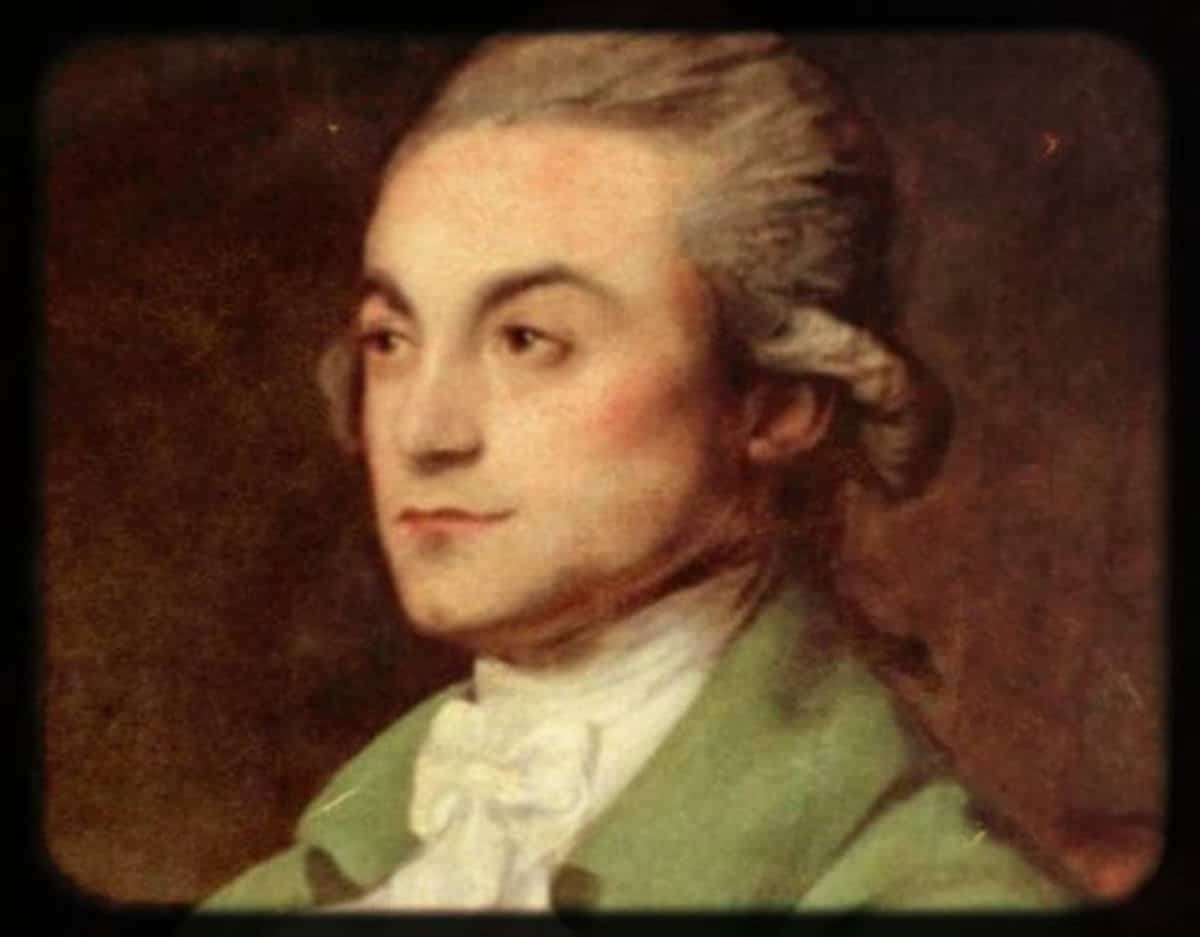
Henry Cavendish
chemist•physicist•mathematician
Also known as: The man who weighed the world
Birthday
October 10, 1731
Birth Sign
Libra
Birthplace
Nice, Kingdom of Sardinia
Age
Died at 78
About
Henry Cavendish was an English experimental and theoretical chemist and physicist, and one of the most exacting laboratory minds of the eighteenth century. He is known for two feats that still anchor physics textbooks: isolating and describing hydrogen, which he called "inflammable air," and devising the experiment that weighed the Earth. The 1766 paper On Factitious Airs gave the density of the new gas and showed it formed water on combustion. Three decades later, his 1798 torsion-balance work produced a value for Earth's mean density that stood essentially unchallenged for generations.
What sets Cavendish apart is not just the results but the precision behind them. He worked alone, funded by an inherited fortune, answerable to no patron or institution. His inquiries ranged across the composition of the atmosphere, the synthesis of water, the law of electrical attraction and repulsion, a mechanical theory of heat, and the mass and density of the planet. Britannica ranks him among the greatest experimental scientists, and the Cavendish Laboratory at Cambridge, founded in 1874, carries his name into modern physics.
He is also remembered for the life around the work: a painfully shy, reclusive bachelor who communicated with his housekeeper through written notes. That image of the solitary experimenter at Clapham Common has become as familiar as the experiments themselves.
Early Life & Background
Henry Cavendish was born on 10 October 1731 in Nice, then part of the Kingdom of Sardinia, where his family was living. He arrived into one of England's wealthiest aristocratic households: his father was Lord Charles Cavendish, youngest son of the 2nd Duke of Devonshire, and his mother was Lady Anne Grey, daughter of the 1st Duke of Kent. She died when Henry was very young, and he was raised largely by his father, a man with scientific interests of his own. The Devonshire connection placed him by birth in the highest social circles, though he showed little appetite for them.
His education began at Hackney Academy and continued at Peterhouse, Cambridge, which he entered in the late 1740s. He left in 1753 without taking a degree, a detail that says less about his abilities than about the independence of a young man who already knew what he wanted to do. Cambridge in that period offered mathematics and natural philosophy, but Cavendish's real training came afterward, in the private laboratory and the company of his father's scientific acquaintances.
He never held a university post or a paid scientific position. That was not a failure but a choice made possible by money: his father's household gave him access to instruments, books, and the Royal Society circle without the need to earn. He was elected a Fellow of the Royal Society in 1760, at twenty-eight, on the strength of work already circulating among the fellows. The first published result came in 1766, when On Factitious Airs appeared in Philosophical Transactions. That paper described "inflammable air," gave its density, and showed that it formed water on combustion. It was the moment his reputation began, and it is where the story of his public career properly starts.
Career Growth
The 1766 paper On Factitious Airs made Cavendish a known name in European chemistry. It isolated what he called inflammable air, reported its density with unusual care, and demonstrated that burning it produced water. Antoine Lavoisier later repeated the work and gave the element its modern name, hydrogen. Cavendish's account was the one that stood.
He followed it with a series of investigations that kept him at the center of chemical debate for two decades. In the early 1780s he studied the synthesis of water and the composition of atmospheric air, separating and identifying the gases involved. His 1785 paper "Experiments on Air," published in Philosophical Transactions, set out his findings on the atmosphere's makeup. He also worked on carbon dioxide and on the properties of different gases, and he formulated a law of electrical attraction and repulsion that anticipated later work by Coulomb and Ohm. A mechanical theory of heat occupied him as well, though it was not published in his lifetime.
The experiment that secured his place in physics came in 1798. Using a torsion balance and two lead balls in a closed room, Cavendish measured the gravitational attraction between masses and from it derived the mean density of the Earth. The result, close to the modern value, is now called the Cavendish experiment, and it remains the basis for calculating the gravitational constant. In 1874, sixty-four years after his death, Cambridge founded the Cavendish Laboratory and named it for him. It went on to host some of the most important physics of the twentieth century.
Career Timeline
Public Image & Style
The image of Cavendish that has come down to us is the solitary experimentalist: a rich man in a private laboratory, working with instruments of his own design, publishing only when the result was beyond doubt. He is portrayed as reclusive and idiosyncratic, a figure who avoided society and distrusted strangers, yet whose measurements were marked by exceptional precision. That contrast, the eccentric who could weigh a planet, is central to how he is remembered. His signature is less a style than a method: patient, exact, and self-funded. Popular accounts dwell on the shyness and the notes to the housekeeper, but the scientific reputation rests on accuracy. Britannica's description of him as one of the greatest experimental scientists captures the public image better than any anecdote.
Fame & Fandom (iFAMOUS Rankings)
Fame data for Henry Cavendish has not yet been gathered by iFANN, so no ranking is available for him at this time. He is not on the September 2026 iFAMOUS Rankings flagship list. That is unsurprising for a man who died in 1810 and who avoided public life while he lived.
There is no fandom name and no organized fanbase. His audience is not a fandom in the modern sense but a readership: students, physicists, and historians of science who encounter him through the Cavendish experiment and the laboratory that bears his name. The closest thing to fan culture is the way his story gets retold in classrooms and popular science: the shy aristocrat who weighed the Earth with two lead balls, the man who discovered hydrogen and called it inflammable air. Those stories circulate widely, but they are not organized campaigns or rituals. His reputation lives in textbooks, in the Cavendish Laboratory at Cambridge, and in the occasional news story when a modern experiment revisits his methods.
Interesting Facts and Legends
Cavendish measured electrical current by the strength of the shock he felt when completing a circuit, a method that required a certain willingness to suffer for the data. He was so shy that he communicated with his housekeeper almost entirely through written notes left on a table. Born into one of England's richest families, he nonetheless lived simply and spent his money mainly on instruments and books. He left Cambridge without a degree, and he never held a teaching or paid research post. The 1798 experiment in which he weighed the Earth with two lead balls in a closed room is the story fans of physics still tell first, and it is entirely documented. A more folklore-tinged tale, retold in popular accounts, has him testing current on himself; the biography supports the habit, though the finer details blur with time. His extreme reclusiveness is well attested and has become part of the Cavendish legend as much as the science.
Family & Personal Life
Cavendish's family was the Devonshire Cavendishes, one of the great aristocratic houses of England. His father, Lord Charles Cavendish, was the youngest son of the 2nd Duke of Devonshire and a man with his own scientific interests; his mother, Lady Anne Grey, was a daughter of the 1st Duke of Kent and died when Henry was very young. He was raised largely by his father, and the two shared a household and a laboratory for years. He never married and had no children. His fortune, inherited from his father in 1783 and from an uncle, passed at his death to his Devonshire relatives. He lived much of his later life at his house on Clapham Common, where he kept his experiments and his routines.
Notable Connections
Cavendish's closest scientific associations were with his father, Lord Charles Cavendish, and with the Royal Society, where his papers appeared. His work on hydrogen was later taken up by Antoine Lavoisier, who repeated the experiment and named the element. The Cavendish Laboratory at Cambridge, founded in 1874, carries his name and his method into modern physics.
Relationships & Dating History
Henry Cavendish never married and had no documented romantic relationships. He was a lifelong bachelor, and the sources record no engagements, no long-term partners, and no children. His social circle was small and largely scientific; he was famously shy and reclusive, communicating with his housekeeper through written notes. The latest reported status, of necessity, is the historical record: he died unmarried in 1810. There is no dating history to trace, and no partner to name.
Death & Aftermath
Died
February 24, 1810 (aged 78)
Death Place
Clapham Common, London, England
Cause of Death
Undisclosed
There were no crowds outside the house on Clapham Common, no procession, no public notice beyond the bare fact of a death. Henry Cavendish had spent decades making himself difficult to find, and on 24 February 1810, at 78, he was found for the last time: dead at his residence, a wealthy bachelor with no close confidants beyond a small circle of scientific acquaintances. The date and place are the firm record. The final illness, the physician's account, the cause itself, were never made public.
What is known of his last years is consistent with the rest of his life. He had withdrawn from public scientific life well before the end, working privately at Clapham, communicating with his housekeeper largely through written notes. Accounts of his stranger habits, such as measuring electrical current by the strength of shocks he administered to himself, belong to his biography rather than to any deathbed narrative. The precise circumstances of his final days remain, in the historical record, unrecorded.
Reaction came from the Royal Society rather than from the street. His papers had been published there, including the 1785 "Experiments on Air" in Philosophical Transactions, and his standing was scientific. The tributes that followed took the form of recognition of the work: the isolation of hydrogen in 1766, the study of carbon dioxide, the synthesis of water, and the 1798 experiment that weighed the Earth and determined its mean density. The funeral appears to have been a private family affair; the available record does not establish its date, location, or place of burial.
His scientific afterlife has been longer than most. The Cavendish experiment and the Cavendish Laboratory at Cambridge, founded in 1874 and named in his honour, carry his name forward. Recent coverage has revisited his 1773 experiment as a possible dark-matter detector and returned to the still-unresolved precision of the gravitational constant "Big G." He died a wealthy bachelor, and his fortune passed to his Devonshire family line.
Net Worth (Estate Value)
$2 Million
iFANN Editorial Team estimate
Henry Cavendish died in 1810, so any figure here is an estimate of his estate's value in modern terms, not a living fortune. The iFANN Editorial Team's analysis of his inherited wealth and assets points to roughly $2 Million as a present-day equivalent. He was born into the Devonshire family, one of England's richest aristocratic houses, and he inherited a large fortune from his father in 1783 and from an uncle. That money made him financially independent for life and allowed him to build and equip a private laboratory without patronage.
His income came from land and inherited capital rather than from salary or fees. He never held a paid academic post, never took a scientific commission, and never married, so there were no direct heirs. At his death his fortune passed to his Devonshire relatives. The estate's value in the early nineteenth century was substantial, but no detailed probate figure is recorded in the sources available. The modern equivalent is necessarily approximate, reflecting the purchasing power of a large aristocratic inheritance rather than a documented sum.
Unlike a modern celebrity estate, there are no posthumous royalties, licensing deals, or merchandise revenue. His scientific papers are in the public domain and his name survives through institutions rather than through commercial exploitation. The Cavendish Laboratory at Cambridge, founded in 1874, is named for him but is not part of his estate. The financial story of Henry Cavendish is therefore the story of inherited wealth used to fund private research, not of earnings or business ventures.
Awards & Accolades
View 4 records, honours and achievementsKnown For
Discovery of hydrogen (inflammable air)
1766 · Chemist and physicist
Cavendish experiment (weighing the Earth)
1798 · Experimental physicist
On Factitious Airs
1766 · Author
Experiments on Air
1785 · Author
Keywords
Sources
Quick Facts
- Profession
- chemist, physicist, mathematician
- Born
- October 10, 1731
- Birthplace
- Nice, Kingdom of Sardinia
- Died
- February 24, 1810
- Death Place
- Clapham Common, London, England
- Gender
- Male
- Birth Sign
- Libra
Personal Details
- Full Name
- Henry Cavendish
- Education
- Hackney Academy; Peterhouse, Cambridge (left 1753 without a degree)
Frequently Asked Questions
What was Henry Cavendish best known for?
How did Henry Cavendish discover hydrogen?
What did the Cavendish experiment measure?
Did Henry Cavendish ever marry?
How wealthy was Henry Cavendish?
Join the community
fans discussing