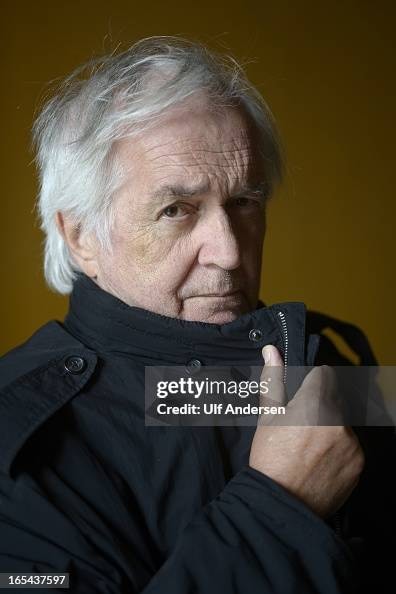
Henning Mankell
 Sweden
writer•playwright•children's writer
Birthday
February 3, 1948
Birth Sign
Aquarius
Birthplace
Stockholm, Sweden
Age
Died at 67
About
Henning Mankell was a Swedish author best known for creating the internationally acclaimed Inspector Kurt Wallander crime series. His novels have sold over 40 million copies worldwide and been translated into more than 40 languages. Mankell's work extends beyond crime fiction into plays, children's books, and social commentary, reflecting his deep engagement with global issues. As of 2026, his legacy continues through ongoing adaptations and reissues of his extensive body of work.
Mankell was also a committed activist, particularly involved in African causes and the Palestinian solidarity movement. He split his time between Sweden and Mozambique, where he founded a theater company. His writing is noted for its psychological depth and sharp critique of Swedish society, earning him a dedicated readership that spans generations.
Early Life & Background
Henning Mankell was born in Stockholm in 1948 to Ivar Mankell, a lawyer, and Ingrid Mankell, a nurse. His parents divorced when he was young, and he moved with his father to the small town of Sveg in Härjedalen, where he was raised by his father and grandmother. He left school at sixteen and worked odd jobs in Paris and Stockholm before finding his way into theater.
In the late 1960s, Mankell briefly attended the Dramatiska Institutet in Stockholm but dropped out to pursue practical theater work. He joined the Stockholm City Theatre and later worked as a stage director and playwright in various provincial theaters. His early writing included plays and a handful of novels, but none achieved commercial success. In the 1970s, he traveled to Africa for the first time, a trip that profoundly shaped his worldview and later writing. He spent extended periods in Mozambique, where he helped establish a theater company and wrote about the country's struggles.
Mankell's first published novel was The Stone Blaster (1973), but it was largely ignored. Throughout the 1980s, he continued writing plays and novels while working as a theater director. His breakthrough came only in 1991 with the publication of Faceless Killers, the first book featuring Inspector Kurt Wallander, a character he had developed over several years.
Career Growth
Mankell's career transformed with the 1991 release of Faceless Killers, which introduced the brooding detective Kurt Wallander. The novel won the Swedish Crime Writers' Academy prize for best crime novel and was translated into multiple languages. Over the next two decades, Mankell wrote ten Wallander novels, including The White Lioness (1993), The Fifth Woman (1996), and The Troubled Man (2009). The series became a global phenomenon, selling over 40 million copies and spawning film and television adaptations in Sweden, the UK, and Japan.
Beyond Wallander, Mankell wrote several standalone novels that explored historical and social themes, such as The Eye of the Leopard (1990) and Chronicler of the Winds (1995). He also wrote a popular series of children's books about a boy named Joel. His playwriting continued throughout his career, with works performed in Sweden and abroad. In 2010, Mankell's activism drew international attention when he was aboard the MV Mavi Marmara during the Gaza flotilla raid. He was diagnosed with lung cancer in 2014 and continued writing until his death in 2015.
Career Timeline
Public Image & Style
Mankell was widely regarded as a serious literary figure who elevated crime fiction to social commentary. Critics praised his ability to weave complex plots with deep character studies and political themes. He was known for his modest demeanor and intellectual rigor, often engaging in public debates on immigration, racism, and global inequality. Fans appreciated the authenticity of his settings and the moral dilemmas faced by Wallander. Mankell's work continues to be studied in academic circles for its portrayal of contemporary Swedish society.
Fame & Fandom (iFAMOUS Rankings)
Henning Mankell remains a towering figure in global literature, though his standing is defined by enduring influence rather than current chart positions. As of August 2026, the iFANN Global Fame Engine has evaluated this person, but they do not currently hold a placement in the published rankings (Global Top 1,000 or a Top-100 scope list). While he never secured a specific numeric rank in recent cycles, his legacy as a pioneer of Nordic noir ensures his name persists in academic and literary circles long after his passing. The fanbase for Mankell is characterized by its literary nature rather than performative activism; fans are primarily readers who engage through book clubs, academic analysis, and streaming discussions of the various television adaptations of his work. There is no documented collective name for this audience, nor are there organized campaigns comparable to pop culture phenomena. Instead, the community sustains itself through the quiet appreciation of his novels and their atmospheric settings. The cultural mythology surrounding him is less about viral moments and more about the profound impact of his life story. A widely retold narrative centers on his decision to chronicle his own battle with pancreatic cancer, a choice that humanized the author and added poignancy to his final years. His death in 2015 marked a significant moment of international mourning, cementing his status as an icon who helped launch the modern era of crime fiction. Posthumous releases like The Madman continue to draw attention, proving that his work resonates deeply without needing active fan rituals or social media engagement.
Interesting Facts and Legends
Mankell named his detective Wallander after a street in Ystad, the town where the novels are set. He was an avid reader of crime fiction, especially the works of Maj Sjöwall and Per Wahlöö. The author once remarked that writing the Wallander series was a way to explore the darker sides of Swedish society. A keen jazz enthusiast, he often listened to music while crafting his narratives. His son Jonas Mankell followed in artistic footsteps as a musician and composer. Mankell was also a passionate supporter of the Swedish football club Malmö FF. Beyond these facts, legends surround his final chapter. Fans still speak of his public announcement of his pancreatic cancer diagnosis in January 2014, where he chose to document his suffering rather than hide it, adding a layer of raw honesty to his biography. The definitive event solidifying his iconic status occurred on October 5, 2015, when he died at age 67 in Maputo, Mozambique, sparking widespread international mourning for the man who redefined the genre. Another key part of his lore involves the anticipation of his final works, such as After the Fire, described by critics as "Mankell's full stop," which marked the end of his career before new posthumous titles like The Madman emerged in 2026.
Notable Quotes
“I think it's important to write about the darkness in society, because if we don't acknowledge it, we can't change it.”
“I am not a passenger. I am a participant.”
“A writer must be a witness.”
“The Wallander books are about Sweden and the world today.”
Family & Personal Life
Mankell was married twice. His first marriage was to Ingrid Milde, with whom he had a son, Jonas Mankell, born in 1970. In 1998, he married Eva Bergman, the daughter of filmmaker Ingmar Bergman. The couple lived in Sweden and Mozambique until Mankell's death. Mankell's father, Ivar, was a lawyer, and his mother, Ingrid, was a nurse. His grandmother played a significant role in his upbringing after his parents' divorce.
Notable Connections
Henning Mankell is indelibly linked to his creation Inspector Kurt Wallander, whose novels have been adapted into multiple film and television series. He was married to Eva Bergman, daughter of legendary filmmaker Ingmar Bergman. Mankell also collaborated with various Swedish theaters and was a mentor to younger writers in Mozambique.
Relationships & Dating History
Mankell's first marriage was to Ingrid Milde in the late 1960s. The couple had a son, Jonas, born in 1970. They divorced in the 1980s. In 1998, Mankell married Eva Bergman, daughter of Ingmar Bergman. They remained together until his death in 2015, dividing their time between Sweden and Mozambique.
- MarriedIngrid Milde1969 - 1985First marriage; had one son, Jonas.
- MarriedEva Bergman1998 - 2015CurrentSecond marriage; remained together until Mankell's death.
Death & Aftermath
Died
October 5, 2015 (aged 67)
Death Place
Stockholm, Sweden
Cause of Death
Lung cancer
The literary world marked Henning Mankell's passing with immediate retrospectives and a renewed surge in sales for his extensive catalog, as major publications like The Atlantic published tributes titled Remembering Henning Mankell on the very day of his death. His final novel, After the Fire, was later described by critics in October 2018 as Mankell's full stop, while posthumous releases such as The Madman continued to appear years later, ensuring his unfinished manuscripts remained accessible to international audiences. This enduring interest followed the quiet end of his life at his home in Stockholm, Sweden, where he passed away on Monday, October 5, 2015, at the age of 67.
Mankell had publicly disclosed his battle with lung cancer several years prior, announcing in January 2014 that he was writing about the disease to highlight its pain and suffering, and he continued working on memoirs and novels until his condition became terminal. The cause of death was established through family statements and his own public disclosures regarding his long-term health struggle. Tributes poured in from peers and institutions globally upon the announcement, with outlets like the BBC highlighting his role as the creator of the Wallander series and noting his impact across dozens of languages.
While specific details of the service were kept private consistent with his wishes, his legacy was honored through the continued publication of his works and the management of his estate to release new translations. A welcome reappraisal of his first novel, Faceless Killers, arrived five years after his death in March 2020, cementing the status of a writer whose body of work continues to generate revenue and admiration.
Net Worth (Estate Value)
$5 Million
iFANN Editorial Team estimate
At the time of his death in 2015, Henning Mankell's estate was estimated at around $5 million. His income derived primarily from book sales, film and television adaptations, and royalties from his plays. The Wallander series alone has sold over 40 million copies globally, providing a steady stream of royalties. Posthumous reissues and new translations continue to generate revenue for his estate, which is managed by his family. In 2026, the estate's value remains stable, supported by ongoing adaptations and the enduring popularity of his work. Per iFANN's editorial analysis, the total net worth stands at $5 Million.
Awards Won (5)
Mankell won the Swedish Crime Writers' Academy prize for best crime novel in 1991 for Faceless Killers. He received the Gold Dagger from the Crime Writers' Association in 1993 for the same novel. He was also awarded the Martin Beck Award and the Swedish Booksellers' Prize. In 2006, he received the Litteris et Artibus medal from the Swedish king for his contributions to culture.
1993 · Best Crime Novel
Faceless Killers
1991 · Best Crime Novel
Faceless Killers
Known For
Faceless Killers
1991 · Author
The White Lioness
1993 · Author
The Fifth Woman
1996 · Author
The Troubled Man
2009 · Author
Keywords
Quick Facts
- Profession
- writer, playwright, children's writer
- Born
- February 3, 1948
- Birthplace
- Stockholm, Sweden
- Died
- October 5, 2015
- Death Place
- Gothenburg, Sweden
- Gender
- Male
- Spouse
- Eva Bergman
- Birth Sign
- Aquarius
Personal Details
- Full Name
- Henning Georg Mankell
- Spouse
- Eva Bergman
- Children
- Jonas Mankell
- Education
- Dramatiska Institutet (did not complete)
Frequently Asked Questions
Who created Inspector Kurt Wallander?
What is Henning Mankell's net worth in 2026?
What were Henning Mankell's main themes?
How did Henning Mankell die?
Is the Wallander series still popular in 2026?
Similar People
Join the community
fans discussing