 Finland
About
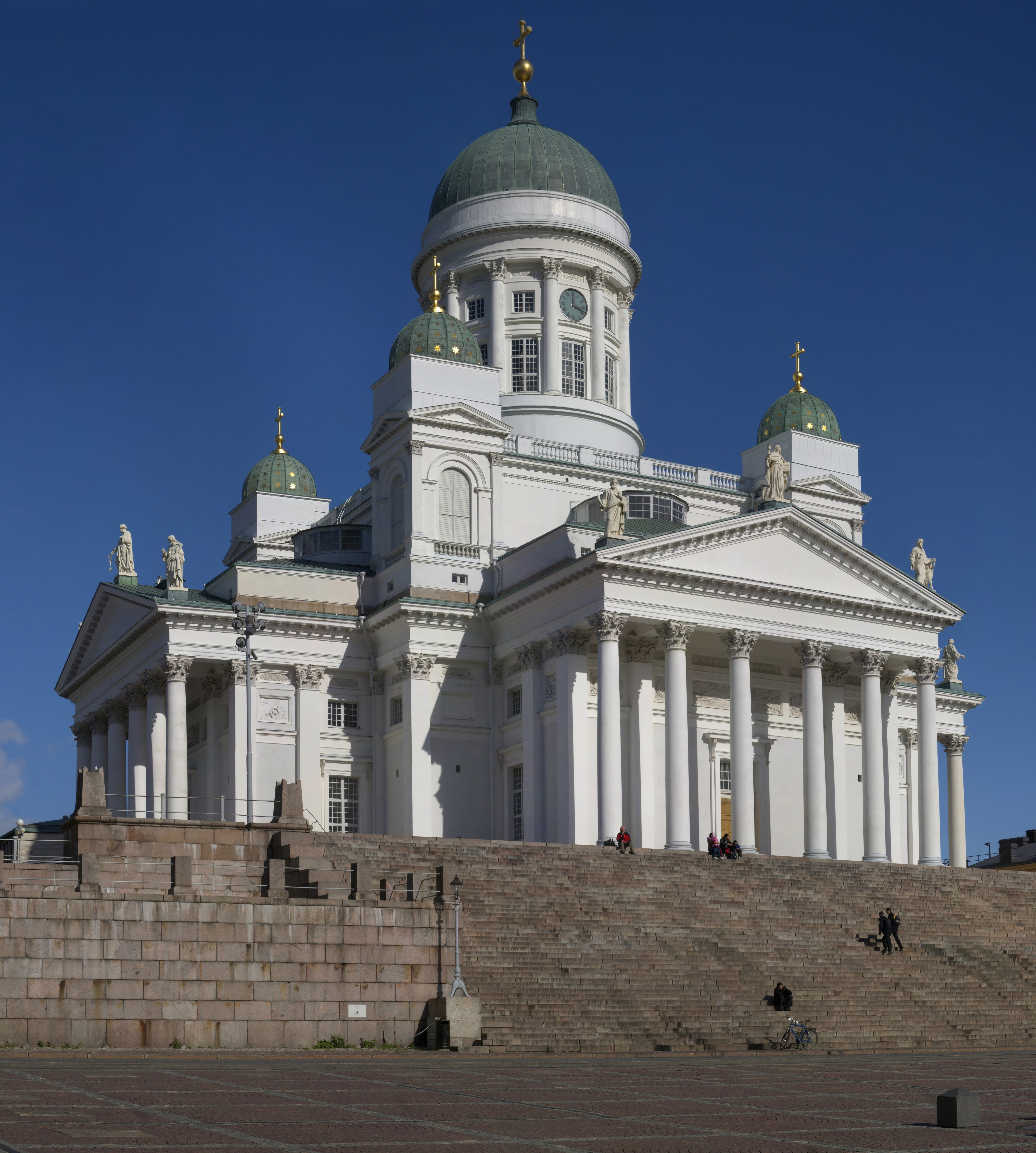
Helsinki Cathedral, known in Finnish as Helsingin tuomiokirkko or Suurkirkko, and in Swedish as Helsingfors domkyrka or Storkyrkan, is the Lutheran cathedral of the Diocese of Helsinki. It sits at the heart of the Finnish capital, in the Kruununhaka district, commanding the Senate Square with its iconic green dome and white neoclassical facade. This isn't just a place of worship; it's a symbol of Helsinki and one of the most photographed landmarks in Finland.
The cathedral was built between 1830 and 1852, a grand tribute to Grand Duke Nicholas I of Russia, who was also the Emperor of Russia. Originally known as St Nicholas's Church, it was designed by the architect Carl Ludvig Engel, who shaped much of the city's monumental center. The church is part of a larger complex that includes the Senate Square and other government buildings, all in the same neoclassical style. It stands as a testament to the period when Finland was an autonomous grand duchy under Russian rule.
Today, Helsinki Cathedral is not only an active church but also a major tourist attraction, drawing visitors who come to admire its architecture and the panoramic views from its steps. The cathedral's interior is simple and elegant, a contrast to its imposing exterior. While it doesn't have a huge budget or box office to speak of, its cultural and historical significance is immense, and it remains a beloved fixture in the city's skyline.
Mission
Helsinki Cathedral serves as the spiritual heart of the Diocese of Helsinki, hosting regular Lutheran worship services, including national celebrations and academic ceremonies. Its mission extends beyond the congregation, welcoming visitors from around the world to experience its architectural beauty and the tranquility of its interior. The cathedral also functions as a cultural venue, renting space for concerts and hosting art installations, thereby bridging faith and culture in the Finnish capital.
History
The story of Helsinki Cathedral begins with the ambition of a young nation. In the early 19th century, Helsinki was a modest town, but after Finland became an autonomous grand duchy within the Russian Empire in 1809, Tsar Alexander I decided to make it the capital. He commissioned town planner Johan Albrecht Ehrenström to design a new center, and architect Carl Ludvig Engel to bring it to life. The cathedral was the crowning piece of this grand plan, its construction starting in 1830.
Engel drew inspiration from St. Isaac's Cathedral in St. Petersburg, and the result is a masterpiece of neoclassical design. The church was originally named St Nicholas's Church, honoring the reigning Grand Duke Nicholas I. When Engel passed away in 1840, his assistant Ernst Bernhard Lohrmann took over the project, making a few modifications including the addition of the twelve zinc statues of the apostles that now adorn the roofline. The cathedral was completed in 1851 and consecrated the following year.
Following Finland's independence in 1917, the church was renamed Helsinki Cathedral and became the seat of the Diocese of Helsinki. Over the decades, it has witnessed countless national events, from presidential inaugurations to memorial services. Today, it remains a living church, hosting services every Sunday and welcoming thousands of visitors each day.
Subdivisions
Old Church
One of the churches in the Diocese of Helsinki, included in the combined admission ticket with Helsinki Cathedral.
St John's Church
Another church in the Diocese of Helsinki, part of the combined ticket offering.
Notable People
Carl Ludvig Engel
Architect · 1830-1840
Designed the cathedral and much of Helsinki's neoclassical center.
Ernst Bernhard Lohrmann
Architect · 1840-1852
Completed the cathedral after Engel's death.
Johan Albrecht Ehrenström
Town planner · 1810s-1830s
Developed the urban layout for the Empire-style center of Helsinki.
Nicholas I of Russia
Grand Duke of Finland · 1825-1855
The cathedral was originally named in his honor as St Nicholas's Church.
Milestones
1830
Construction begins, designed by Carl Ludvig Engel.
1840
Engel dies; Ernst Bernhard Lohrmann takes over the project.
1851
Construction is completed.
1852
The cathedral is consecrated as St Nicholas's Church.
1917
After Finnish independence, the church is renamed Helsinki Cathedral.
2026
Admission fees introduced for visitors; hosts Luke Jerram's 'Helios' art installation.
Sources
Organization Info
- Founded
- 1852
- Headquarters
- Senate Square, Kruununhaka, Helsinki, Finland
- Country
- Finland
- Parent
- Evangelical Lutheran Church of Finland
- Type
- Religious
- Architect
- Carl Ludvig Engel
- Style
- Neoclassical
- Height
- 62 meters
Official Website
helsingintuomiokirkko.fi/
Join the community
fans discussing