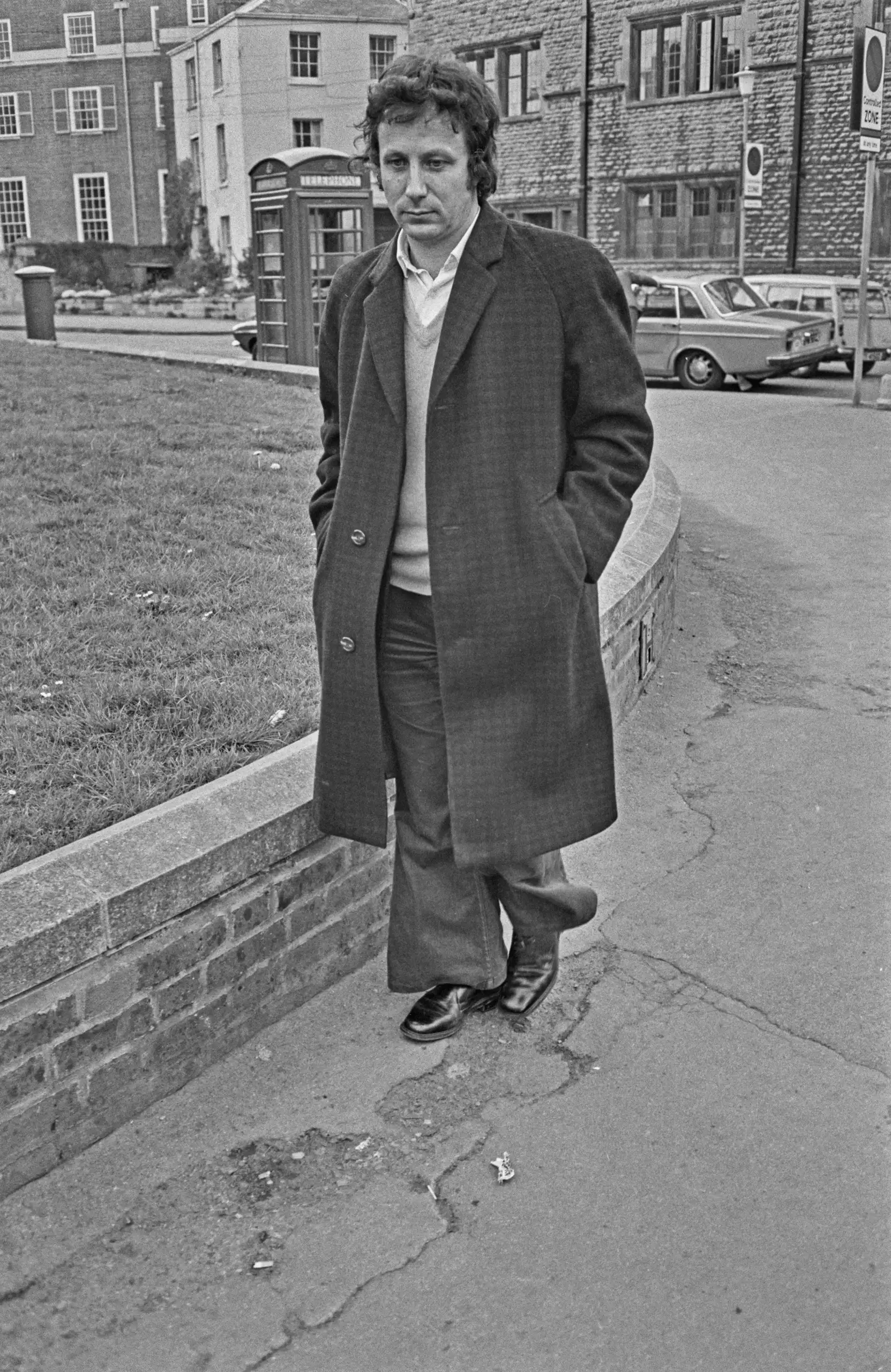
Helmut Rahn
 Germany
Also known as: Der Boss
Birthday
August 16, 1929
Birth Sign
Leo
Birthplace
Essen, Germany
Age
Died at 73
About
Helmut Rahn was a German footballer, a right winger and forward who played 40 times for West Germany and scored 21 goals. He is remembered above all for the 1954 FIFA World Cup final in Bern, where he scored twice, including the 84th-minute winner, as West Germany came from 2-0 down to beat Hungary 3-2 in the match that became known as the Miracle of Bern.
Nicknamed Der Boss, Rahn spent the core of his club career with Rot-Weiss Essen, with whom he won the German championship in 1955, and later played for 1. FC Köln, winning the DFB-Pokal in 1968, and for SC Enschede in the Netherlands. He was a major force in two World Cups, in 1954 and 1958, and in 1972 he and his teammates from the 1954 side were decorated by the President of the Federal Republic of Germany.
Rahn died in Essen on 14 August 2003, two days short of his 74th birthday. His goal in Bern remains one of the most consequential in World Cup history, and it is credited with helping restore German national pride after the Second World War.
Early Life & Background
Helmut Rahn was born on 16 August 1929 in Essen, in the industrial Ruhr region of western Germany. The available record of his childhood and schooling is thin; what is documented is that he came up through the local football structure in Essen and emerged as a powerful, direct attacking player with a famously hard shot. His most famous goal, the 1954 winner, came from a shot from the edge of the penalty area, and that distance strike was a signature of his game throughout his career.
Essen in the 1930s and 1940s was a coal and steel city, and Rahn's early football was played in that environment rather than in the more polished academies of the south. He developed at Rot-Weiss Essen, the club of his hometown, and it was there that his scoring record first drew attention beyond the Ruhr. The club was his route into the national setup, and he remained associated with it for the rest of his life.
His form at club level earned him a West Germany debut in 1951, and he quickly became a fixture in the attack. By the time the 1954 World Cup squad was assembled, Rahn was an established international rather than a discovery, and he travelled to Switzerland as one of the players expected to carry the team's attacking threat.
Career Growth
Rahn's international career spanned 40 caps and 21 goals for West Germany, and he was a major force in two World Cups. The first, in 1954, produced the defining moment: in the final against Hungary's Mighty Magyars, West Germany fell 2-0 behind early, fought back to level, and then won it in the 84th minute when Rahn struck from the edge of the penalty area. He scored twice in the match, and the 3-2 result became the Miracle of Bern.
At club level he won the German championship with Rot-Weiss Essen in 1955, the high point of his years in his hometown. He later moved to 1. FC Köln, where he won the DFB-Pokal in 1968, and he also had a spell with SC Enschede in the Netherlands. He played at the 1958 World Cup as well, remaining part of the West Germany side after the 1954 triumph.
In 1972, Rahn and his teammates from the 1954 side were decorated by the President of the Federal Republic of Germany, a recognition of the team's place in the country's postwar story as much as of the result itself. After his playing career he remained a familiar figure around Essen football, and his association with Rot-Weiss Essen continued long after he stopped playing.
Career Timeline
Public Image & Style
In German football writing Rahn is presented as a direct, powerful forward rather than a stylist, a player whose reputation rests on a hard shot and a willingness to strike from distance. The nickname Der Boss carries a certain blunt authority, and it fits the way he is described: a man who took the decisive shot rather than looking for a pass. His public image is inseparable from the rain in Bern and the 84th minute, and most accounts of his career are structured around that single afternoon.
Fame & Fandom (iFAMOUS Rankings)
iFANN has not yet collected fame data for Helmut Rahn, so no ranking is available for him in the October 2026 dataset. He is not on the September 2026 iFAMOUS Rankings flagship list. What can be said without a ranking is that his fame is of a particular kind: it is concentrated in Germany and in football history rather than spread across global popular culture, and it rests on a single goal that is replayed whenever the World Cup comes around.
The fanbase around him has no formal name and no organised structure. Supporters of Rot-Weiss Essen and followers of the German national team are the audience, and the relationship is one of memory rather than of active fandom: the goal is the thing, and it is passed on through retrospectives, documentaries and the recurring coverage of the 1954 final. There is no documented fan campaign, no charity drive in his name, and no organised commemoration beyond the local memorials in Essen.
Interesting Facts and Legends
Rahn's nickname, Der Boss, stuck to him for most of his adult life and is the name by which German football writing still refers to him. He wore the number 12 and the number 8 at World Cups, and the 1954 winner is routinely listed among the greatest goals in the tournament's history, including a place in the World Football Index countdown of 2018.
A story fans still retell concerns the weather in Bern on 4 July 1954: the final was played in heavy rain, and the conditions are part of how the comeback is remembered in Germany. The match is credited with helping restore German national pride after the Second World War, a claim made in most retrospectives of the game.
Two local memorials in Essen are associated with him, a sports facility and a statue, though the sources consulted do not confirm the details of either. What is confirmed is the persistence of the goal: it is replayed whenever the World Cup comes around, and his name is attached to it in almost every account of the 1954 tournament.
Family & Personal Life
Rahn's family life was kept private, and the sources consulted do not document a spouse, partner or children. He was born in Essen and died there in 2003, and he lived in and around the city for most of his life. No public record of his parents or siblings appears in the material available, and the absence of documentation should be treated as a gap rather than as evidence of any particular arrangement.
Notable Connections
Rahn is associated with Rot-Weiss Essen, the club of his hometown and the side with which he won the German championship in 1955, and with 1. FC Köln, where he won the DFB-Pokal in 1968. He also played for SC Enschede in the Netherlands. Internationally he is linked to the West Germany team of 1954 and 1958, and to the Hungarian side of the early 1950s against whom his most famous goal was scored.
Relationships & Dating History
No spouse, partner or dating history for Helmut Rahn is documented in the sources consulted. Searches for his wife returned no substantive results, and no credible outlet in the available material confirms a marriage, a divorce or children. His romantic and family life was kept private, and the only defensible statement as of 2026 is that no public record of a partner exists. He was not married at the time of his death as far as the record shows, but that absence of documentation should be read as a gap rather than as a confirmed status.
Death & Aftermath
Died
August 14, 2003 (aged 73)
Death Place
Essen, Germany
Cause of Death
Not made public
Helmut Rahn died on 14 August 2003 in Essen, two days before what would have been his 74th birthday. Voice of America reported the death the same day, identifying him as the German footballer who had scored the winning goal in the 1954 World Cup final. The cause was not made public; contemporary reporting treated it as the death of a 73-year-old man, and no autopsy, inquest or legal proceeding is documented in the available record.
Tributes centred almost entirely on the afternoon of 4 July 1954 in Bern, when his 84th-minute strike completed West Germany's 3-2 comeback against Hungary. The Guardian published an obituary on 15 August 2003, and The Times followed with its own, both returning to the goal from the edge of the penalty area that had become the defining image of his career. Rot-Weiss Essen, the club that had produced him and with which he won the German championship in 1955, was central to how he was remembered in the days after his death.
Funeral and memorial arrangements were not publicly detailed in the reporting that followed. What persisted instead was a steady stream of retrospectives: ESPN's 2016 feature on Rot-Weiss Essen, the World Football Index countdown of great World Cup goals in 2018, and the recurring use of the Miracle of Bern in coverage of the tournament every four years. No posthumous releases, awards or honours were created in his name in the years after his death. His estate value is not documented in any source, and no public dispute over it has been reported.
Net Worth (Estate Value)
$1 Million
iFANN Editorial Team estimate
No estate value for Helmut Rahn is documented in the sources consulted. Research by the iFANN Editorial Team places the current value of his estate at approximately $1 Million, a figure that reflects the limited commercial apparatus around a player who died in 2003 and whose career predates the modern licensing economy.
The income that supports that estimate comes from a small number of streams. Royalties from retrospective broadcasts and documentary use of the 1954 final are the most consistent, since the match is replayed whenever the World Cup comes around and appears in football history programming. Licensing of his name and image is modest and largely local, tied to Rot-Weiss Essen and to the memorials in Essen. There is no posthumous release catalogue, no estate-managed business and no reported sale of his rights, in contrast with players of later generations whose estates are run as commercial operations.
His playing career itself produced the ordinary earnings of a German footballer of the 1950s and 1960s, a period well before the large broadcast contracts and endorsement markets that transformed the sport. The 1954 World Cup win brought national recognition and, in 1972, a decoration from the President of the Federal Republic of Germany, but not the kind of wealth that later generations of World Cup winners accumulated.
The estate's trajectory has been flat rather than growing. Interest in Rahn spikes during World Cup years and around anniversaries of the 1954 final, but there is no evidence of a major financial event, such as a catalog sale or a legal settlement, that would have changed its value. The figure above is an estimate of the estate as it stands in 2026, not a record of documented assets.
Awards Won (4)
Rahn won the 1954 FIFA World Cup with West Germany, the German championship with Rot-Weiss Essen in 1955, and the DFB-Pokal with 1. FC Köln in 1968. In 1972 he and his teammates from the 1954 side were decorated by the President of the Federal Republic of Germany.
1954 · Winner
West Germany
1955 · Winner
Rot-Weiss Essen
Known For
1954 FIFA World Cup final
1954 · Scored twice, including the 84th-minute winner, in West Germany's 3-2 victory over Hungary
Rot-Weiss Essen
1955 · Won the German championship with his hometown club
1. FC Köln
1968 · Won the DFB-Pokal
Keywords
Sources
Quick Facts
- Profession
- association football player
- Born
- August 16, 1929
- Birthplace
- Essen, Germany
- Died
- August 14, 2003
- Death Place
- Essen, Germany
- Gender
- Male
- Birth Sign
- Leo
- Nickname
- Der Boss
- Position
- Right winger, forward
- Caps for West Germany
- 40
- Goals for West Germany
- 21
Personal Details
- Full Name
- Helmut Rahn
Frequently Asked Questions
Who scored the winning goal in the 1954 World Cup final?
How did Helmut Rahn die?
How many goals did Helmut Rahn score for Germany?
What clubs did Helmut Rahn play for?
Why is the 1954 final called the Miracle of Bern?
Join the community
fans discussing