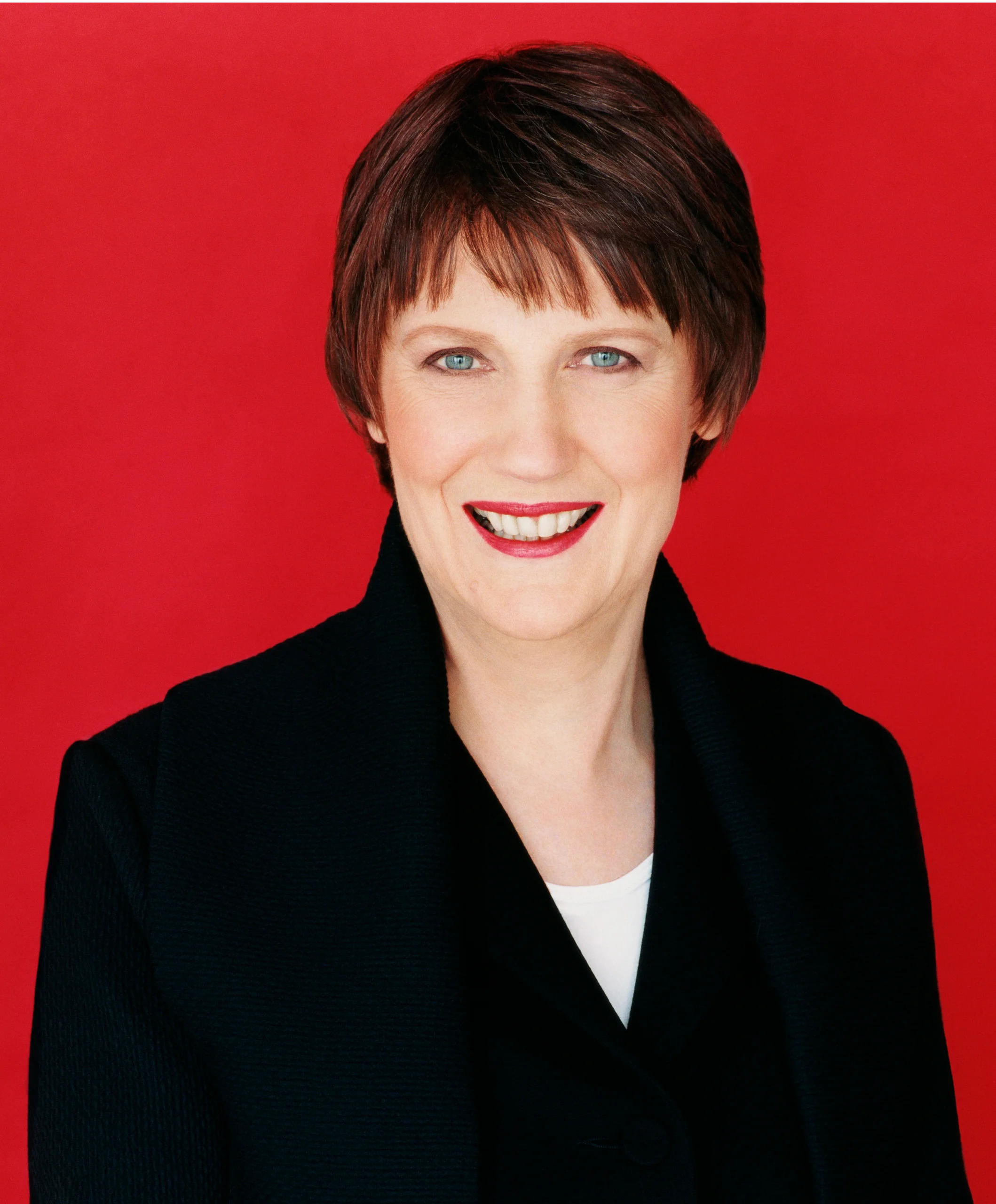
Helen Clark
 New Zealand
politician•university teacher•political scientist
Birthday
February 26, 1950
Birth Sign
Pisces
Birthplace
Te Pahu, Waikato, New Zealand
Age
76 years old
Height
5 ft 7 in (170 cm)
About
Helen Clark is a New Zealand politician and former prime minister who led the country for nine years, from 1999 to 2008, and then became the first woman to head the United Nations Development Programme. She has spent her post-premiership years working on global health, climate change, and gender equality, and in January 2026 she took over as chair of the Gavi Vaccine Alliance board, one of the most influential roles in international public health.
Clark's career has been defined by a willingness to take principled stands, most famously her refusal to join the 2003 invasion of Iraq. She remains a prominent voice in New Zealand politics and international affairs, and her policy think tank, the Helen Clark Foundation, continues to shape debate at home. Known for her direct manner and marathon-running hobby, she has earned respect across the political spectrum for her integrity and long view.
Early Life & Background
Helen Clark grew up on a sheep and cattle farm near Te Pahu, a tiny settlement in the Waikato region, about 30 kilometres from Hamilton. She was the eldest of four daughters of Margaret and George Clark, and her childhood was steeped in the rhythms of rural life and the values of hard work and community responsibility. She attended Te Pahu Primary School and then Matamata College, where her academic abilities began to show.
She went on to the University of Auckland, earning a Bachelor of Arts in politics in 1971 and a Master of Arts with First Class Honours in 1974. Her master's thesis examined rural political behaviour, a subject she knew from growing up on a farm. From 1973 to 1981 she lectured in political studies at the same university, which gave her a deep academic grounding in the system she would later lead.
Clark joined the Labour Party in 1971, at age 21, and stood for the Auckland City Council in 1974, winning a seat. She ran unsuccessfully for Parliament in the Piako electorate in 1977, but kept at it. In 1981 she won the Labour nomination for the Auckland seat of Mount Albert and took the seat in that year's general election, beginning a parliamentary career that would last nearly three decades.
Career Growth
Clark's rise through Labour's ranks was rapid. When the party won government in 1984 under David Lange, she entered Cabinet as minister of housing, conservation, and tourism. In 1987 she became minister of health, and in 1989 she was named deputy prime minister under Geoffrey Palmer, a role she kept when Mike Moore took over in 1990.
After Labour lost the 1990 election, Clark stayed in Opposition. In December 1993, following a narrow defeat, she challenged Moore for the party leadership and won. She led Labour to victory in the 1999 election, becoming New Zealand's 37th prime minister and the first woman elected to the office at the ballot box. Her government created Kiwibank, the New Zealand Superannuation Fund, and the Emissions Trading Scheme, and passed the contentious Foreshore and Seabed Act 2004. She sent troops to Afghanistan after 9/11 but refused to join the Iraq War, a decision that strained relations with Washington but won broad support at home. In April 2008 she signed a free-trade agreement with China, making New Zealand the first developed country to do so.
After Labour's defeat in November 2008, Clark stepped down as prime minister and party leader. In 2009 she resigned from Parliament to become Administrator of the UNDP, a post she held until 2017. In 2016 she ran for UN Secretary-General, finishing second in the Security Council straw polls. Since then she has co-chaired the WHO's Independent Panel for Pandemic Preparedness and Response, served as President of Chatham House, and, in October 2025, was appointed chair of the Gavi Board, starting in January 2026.
Career Timeline
Public Image & Style
Clark's public image is one of seriousness, principle, and pragmatism. She is known for her direct communication style and her willingness to take unpopular positions when she believes they are right, most notably on the Iraq War. Her signature style includes her silver hair, glasses, and business attire, and she is frequently photographed in formal international settings. In New Zealand, she retains a strong following among Labour supporters, who often refer to her as 'our Helen'. Her social media voice is professional and policy-focused, with occasional personal touches. There is no formal fandom name, but she has a dedicated following in progressive circles.
Fame & Fandom
Helen Clark's public following is notable for its loyalty and longevity, but it does not carry a formal name. Her supporters, particularly within New Zealand's Labour Party, have long referred to her affectionately as 'our Helen,' a phrase that captures the personal connection many feel toward her. Yet there is no organized fan club, no official fandom title, and no documented fan campaigns or rituals. Her verified social media presence and personal website serve as the primary channels for engagement, but they do not appear to have spawned a distinct fan community.
In the broader context of global fame, Helen Clark's standing is measured by iFANN's Global Fame Engine, which as of August 2026 has evaluated her but does not currently place her within the published rankings, neither the Global Top 1,000 nor any Top-100 scope list. This means that while her name is well known in political and international development circles, her overall global fame does not currently reach the threshold for a ranked placement. iFANN's evaluation considers a wide range of signals, from media coverage to search and consumption patterns worldwide, but the absence of a placement is stated plainly: she holds no current rank.
Interesting Facts and Legends
Clark is a lifelong marathon runner, often photographed jogging in Auckland's parks during her premiership. She was the second female prime minister of New Zealand, but the first to be elected to the office at a general election. In 2026, she joined fellow Elders Mary Robinson, Graça Machel, and Hina Jilani on a visit to the Middle East, issuing a statement titled 'Palestine must not disappear.' She has been a vocal advocate for gender equality, chairing the UN Development Group and championing the Sustainable Development Goals. Her refusal to join the Iraq War in 2003 is widely cited as one of her most defining foreign policy decisions. In August 2026, with less than 100 days to the New Zealand general election, she told RNZ that New Zealand 'can't afford another three years of short-term policies,' calling for less 'clickbait politics' and more long-term thinking.
Notable Quotes
“It's true that as a woman leader you attract probably a disproportionate amount of attention.”
“New Zealand can't afford another three years of short-term policies.”
“Palestine must not disappear.”
Family & Personal Life
Helen Clark was born on 26 February 1950, the eldest of four daughters to Margaret and George Clark. Her father was a sheep and cattle farmer, and the family lived on the farm near Te Pahu where she grew up. Her parents instilled in her a strong sense of social justice and community responsibility. Clark has spoken about the challenges of balancing public life and marriage, crediting her husband's support as crucial to her ability to serve as prime minister and later at the UN. The couple have lived in Auckland and Wellington over the years. They have no children, and Davis has maintained his own academic career, which allowed flexibility to support Clark's political ambitions.
Notable Connections
Helen Clark has worked alongside many global figures. Her husband, Peter Davis, is a sociologist. In government, she served under David Lange, Geoffrey Palmer, and Mike Moore. As a member of The Elders, she has collaborated with Mary Robinson, Graça Machel, and Hina Jilani. She has also worked with WHO leadership and Gavi partners in her recent roles.
Relationships & Dating History
Helen Clark's romantic history is notably private and stable. She married Peter Davis, a sociology professor, in 1981, the same year she first entered Parliament. The couple met during their academic careers in Auckland. They have no children. Their marriage has endured throughout her entire political career and her subsequent international roles. Davis has been described as a supportive partner who maintained his own academic career while Clark pursued politics. As of 2026, Clark remains married to Davis. There are no documented instances of separation, divorce, or other public relationships.
- MarriedPeter Davis1981 - presentCurrentMarried in 1981; no children; Davis is a sociology professor.
Salary, Net Worth In 2026
$2 Million
iFANN Editorial Team estimate
iFANN's editorial analysis currently estimates Helen Clark's net worth at $2 million as of 2026. Unlike celebrities with entertainment earnings, her wealth comes from a career in public service. She earned ministerial and prime ministerial salaries during her political career, with the New Zealand prime ministerial salary around NZ$330,000 per annum during her tenure. As UNDP Administrator, she received a UN Under-Secretary-General-level salary, typically in the range of US$180,000 to $200,000 per year. Her current roles, including President of Chatham House and Chair of the Gavi Board, provide honoraria or stipends, and she commands significant fees for speaking engagements and advisory work. Her net worth has grown steadily through accumulated salaries, pensions, and speaking income.
Awards Won (3)
Helen Clark has received New Zealand's highest honours, including the Order of New Zealand in 2009 and the Companion of the Order of St Michael and St George in 1986. She was appointed to the Privy Council in 1990. She holds numerous honorary doctorates from universities worldwide and has been recognised for her work in sustainable development and gender equality.
2009 · National Honour
Public service
1986 · National Honour
Political service
Known For
Prime Minister of New Zealand
1999 · 37th Prime Minister
Administrator of UNDP
2009 · First female Administrator
Chair of Gavi Board
2026 · Chair
Keywords
Sources
Quick Facts
- Profession
- politician, university teacher, political scientist
- Born
- February 26, 1950
- Birthplace
- Te Pahu, Waikato, New Zealand
- Gender
- Female
- Spouse
- Peter Davis
- Birth Sign
- Pisces
Personal Details
- Full Name
- Helen Elizabeth Clark
- Height
- 5 ft 7 in (170 cm)
- Spouse
- Peter Davis
- Education
- University of Auckland (BA, MA with First Class Honours)
Frequently Asked Questions
Is Helen Clark married?
How old is Helen Clark?
Was Helen Clark the first female prime minister of New Zealand?
What is Helen Clark doing now?
Does Helen Clark have children?
Similar People

Join the community
fans discussing